+41 44 223 54 33
Open: Tue-Fri 10am-6pm, Sat 12-4pm
Visit
Open: Tue-Fri 10am-6pm, Sat 12-4pm
Obere Zäune 12, CH-8001, Zürich, Switzerland
Open: Tue-Fri 10am-6pm, Sat 12-4pm
Visit
twenty thousand years
Galerie Fabian Lang, Zürich
Thu 5 Mar 2026 to Sat 27 Jun 2026
Obere Zäune 12, CH-8001 twenty thousand years
Tue-Fri 10am-6pm, Sat 12-4pm
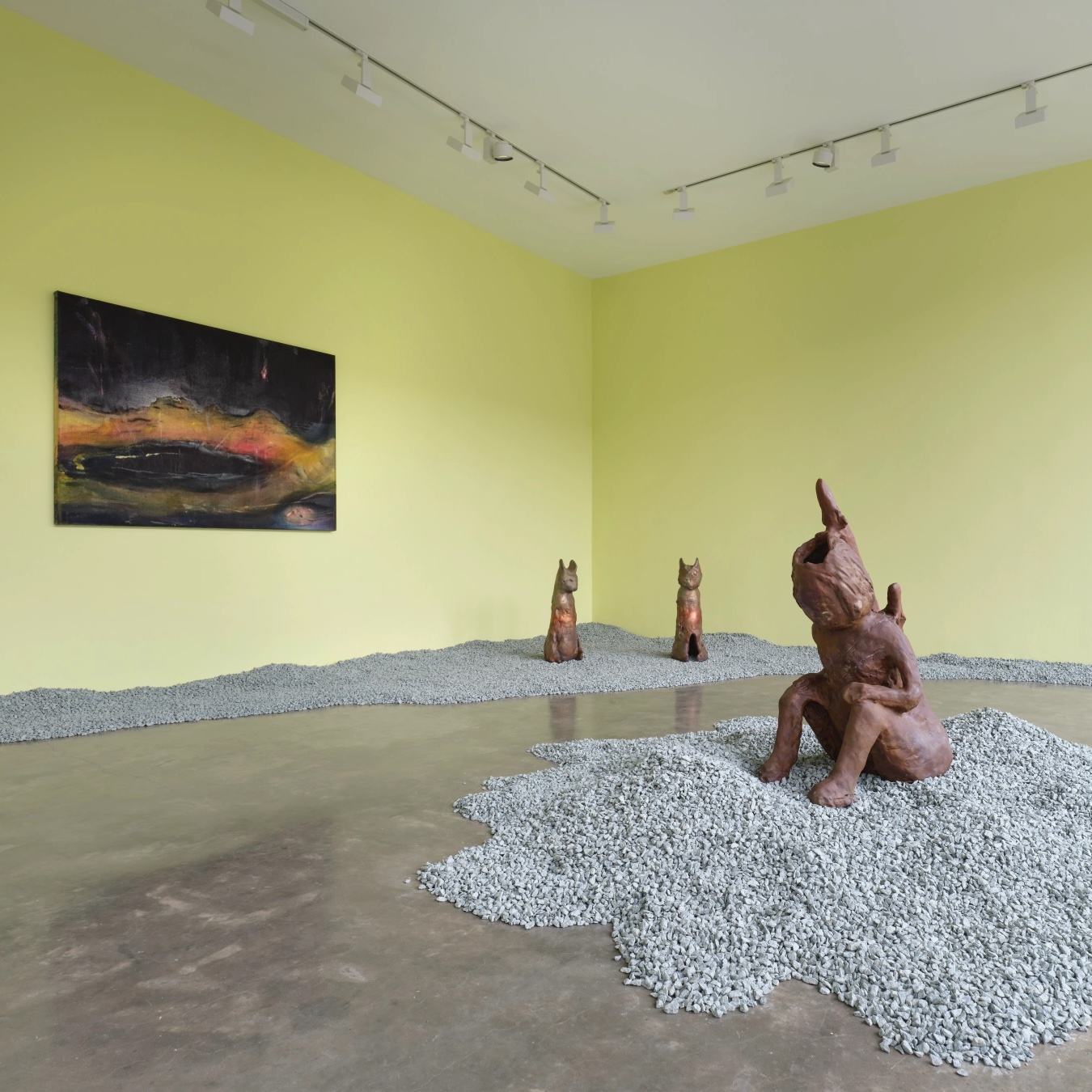
Galerie Fabian Lang presents twenty thousand years, showcasing ceramic works by Caroline Achaintre, Carl Anderson, Perrine Boudy, Gabi Deutsch, Sarah Dwyer, Clare Goodwin, Hippolyte Hentgen, Yulia Iosilzon, Guillaume Martin-Taton, Grayson Perry, Becky Tucker, Betty Woodman and Rita Zurbrügg.
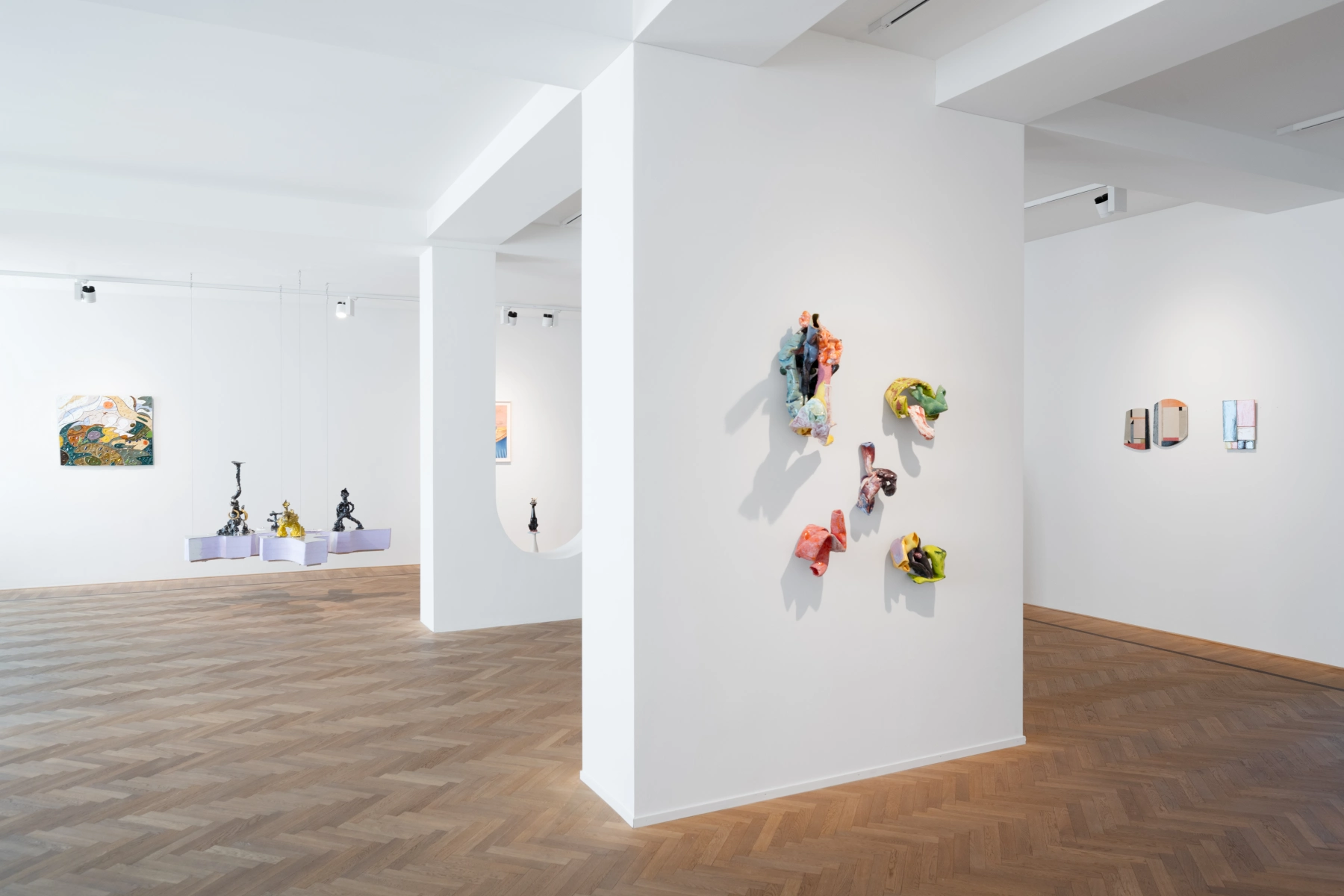

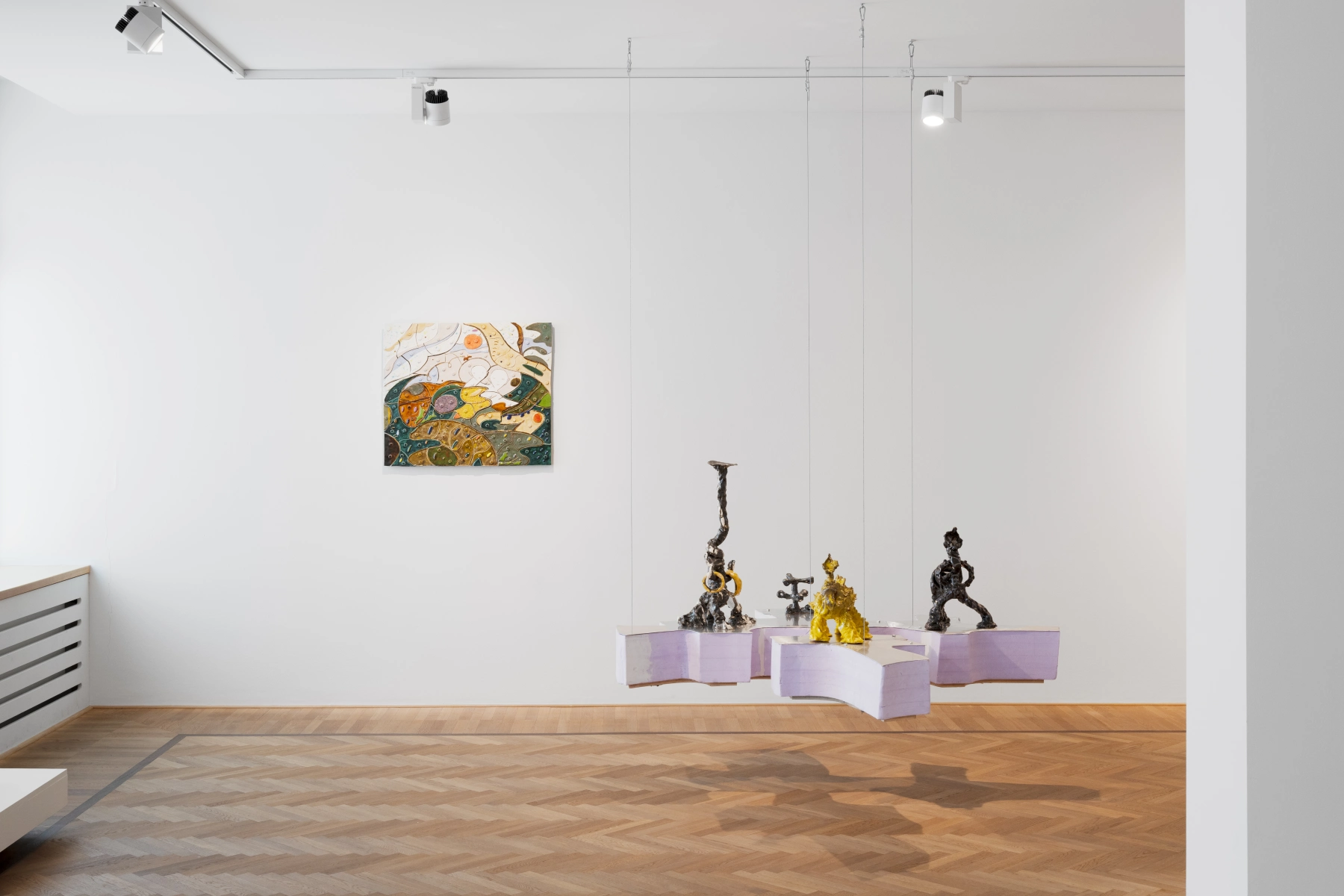
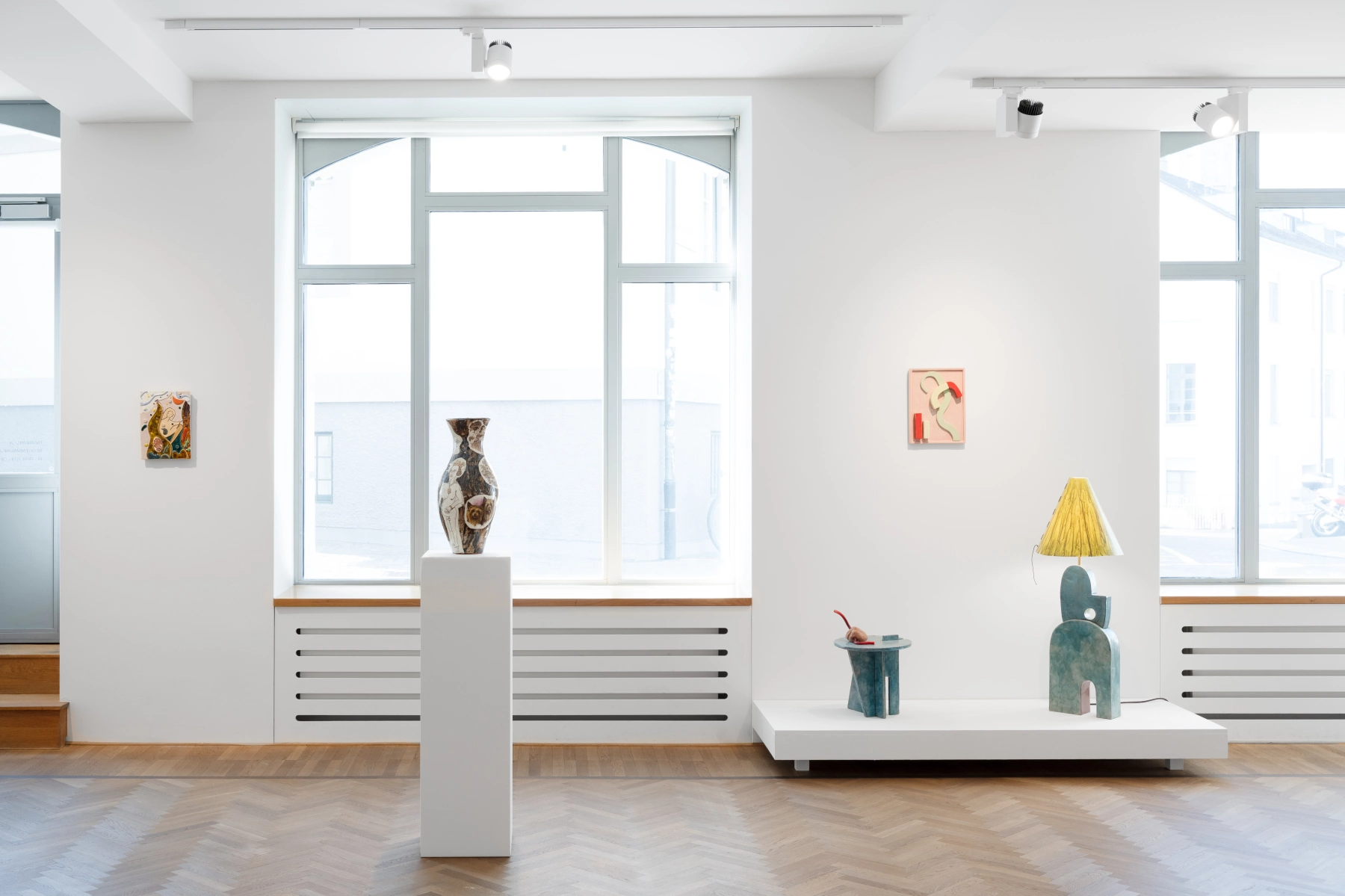
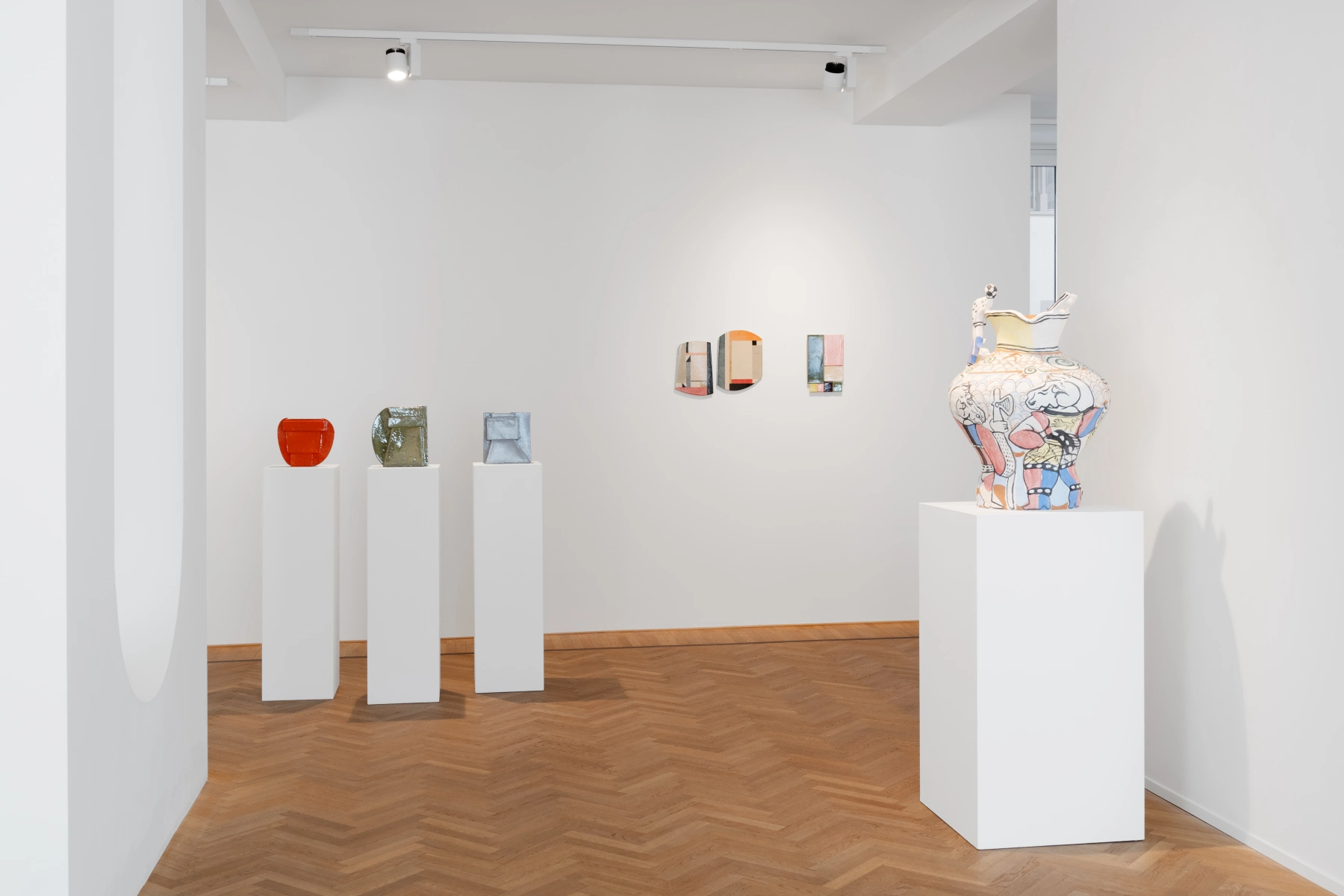
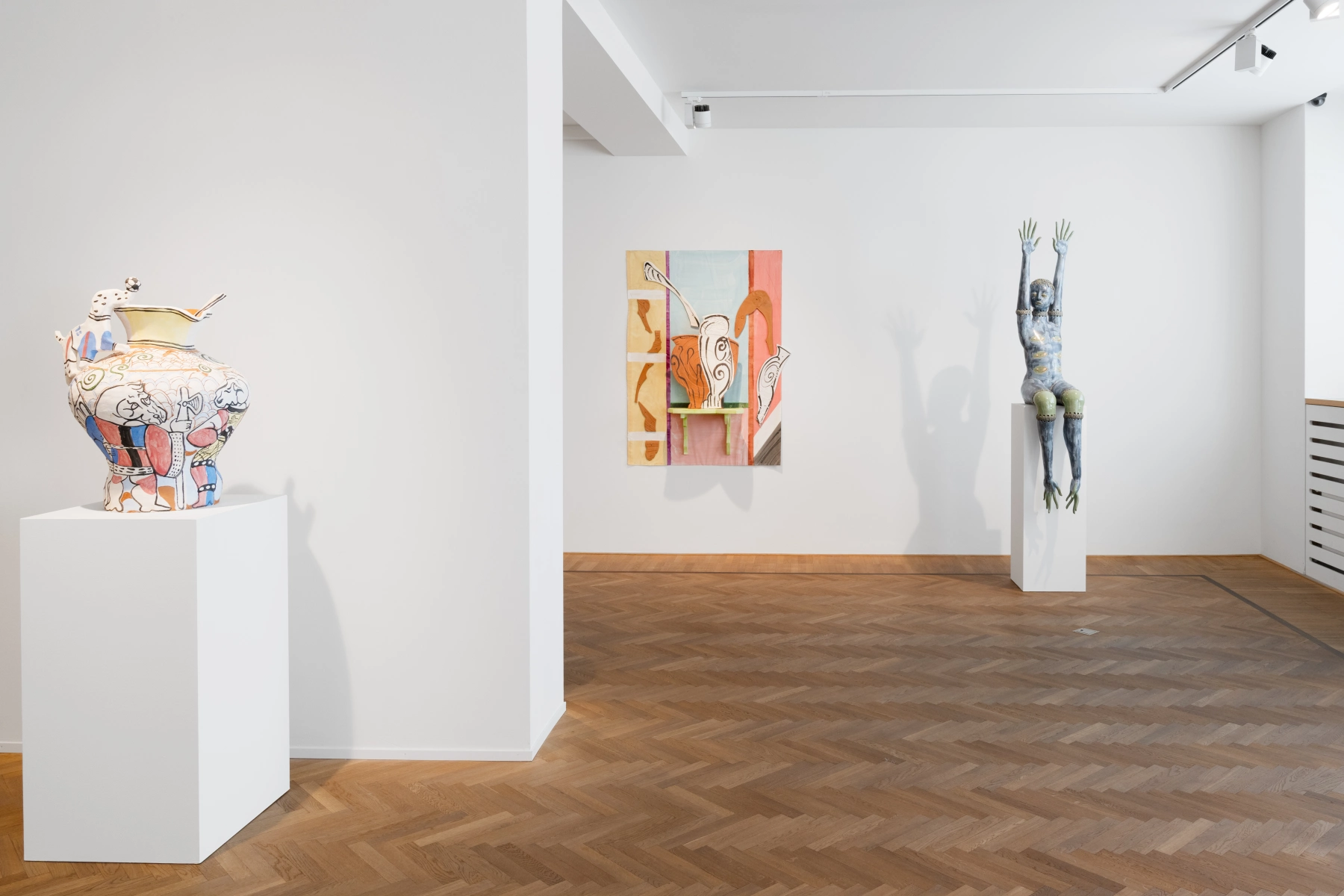
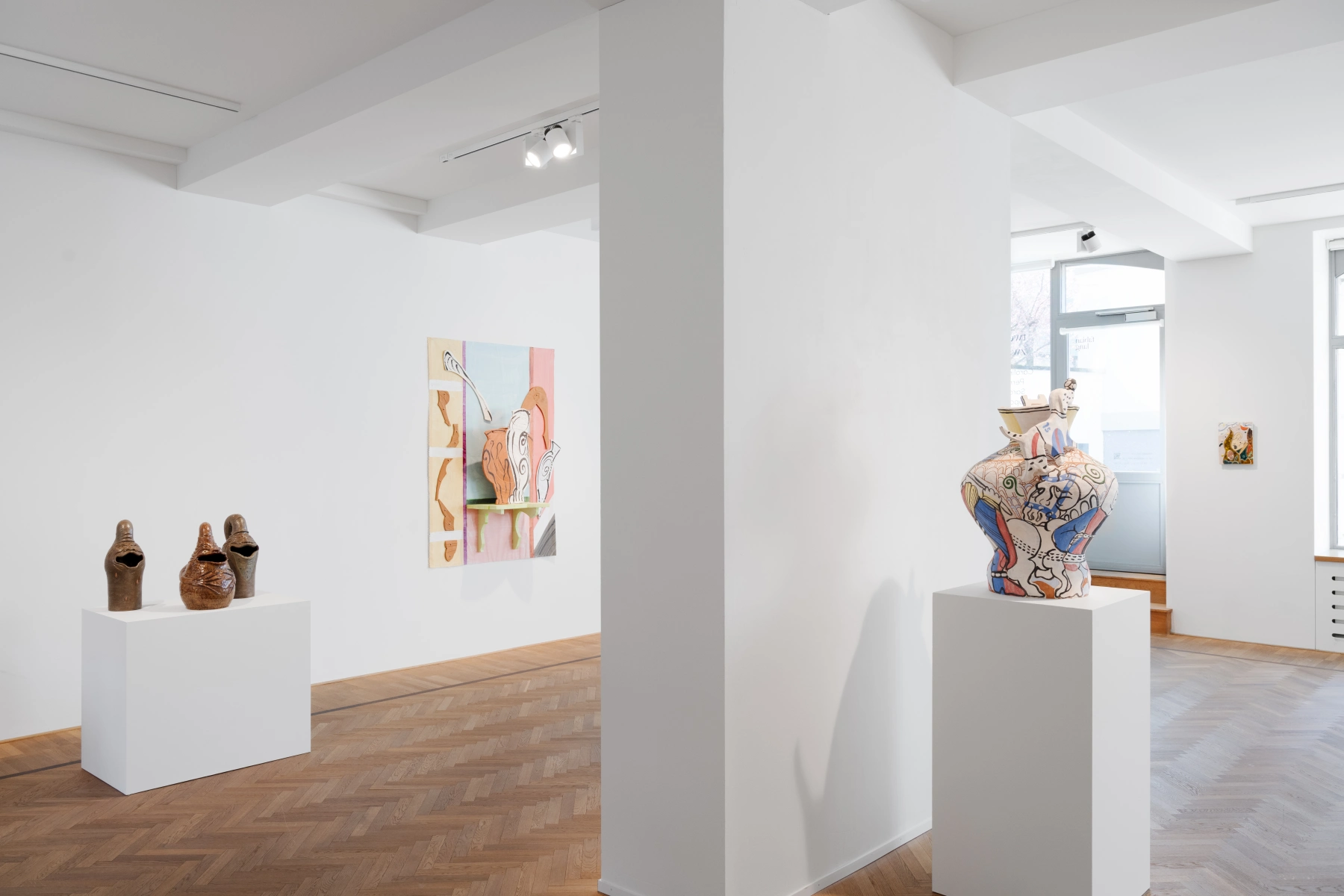
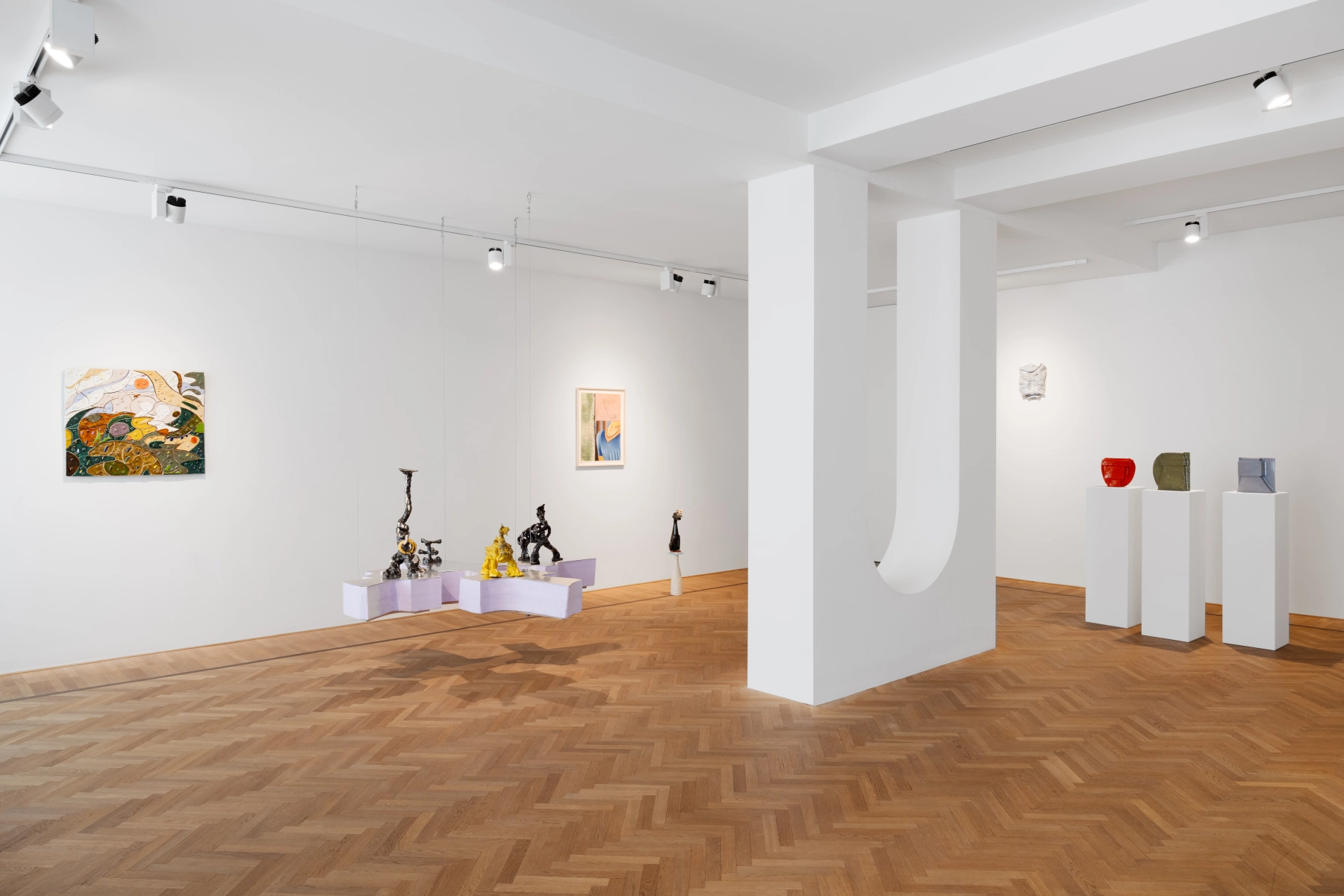
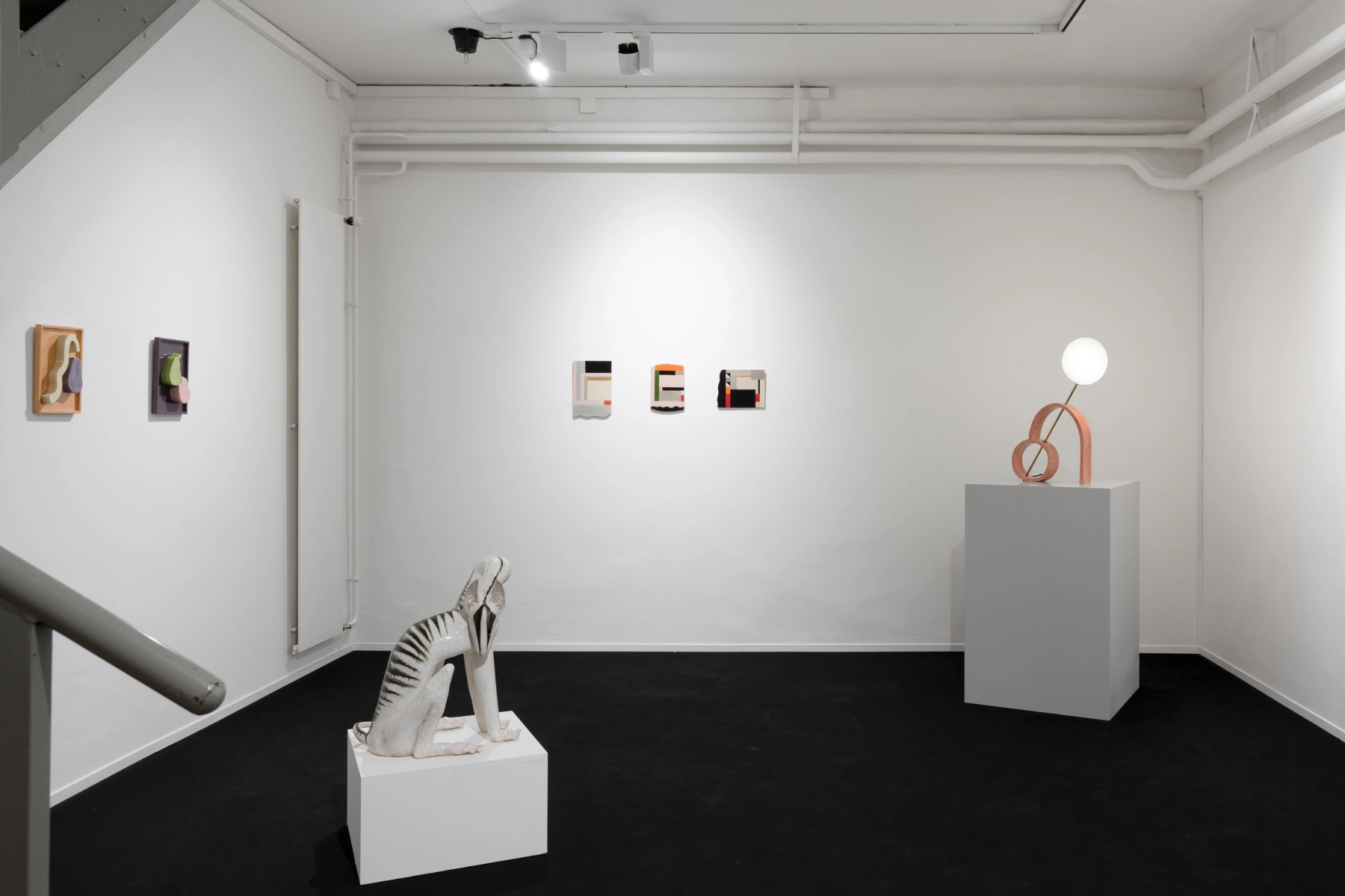
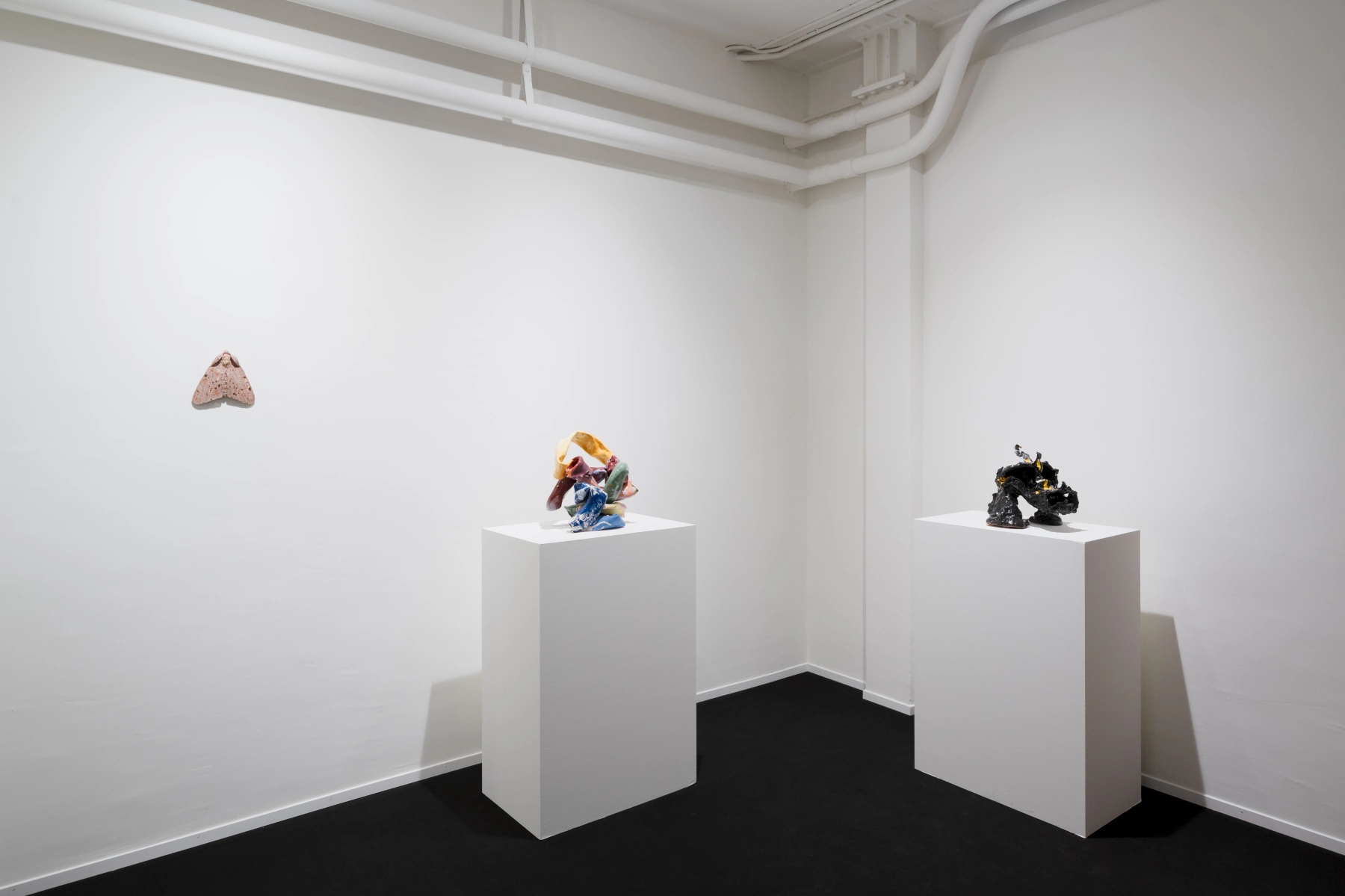
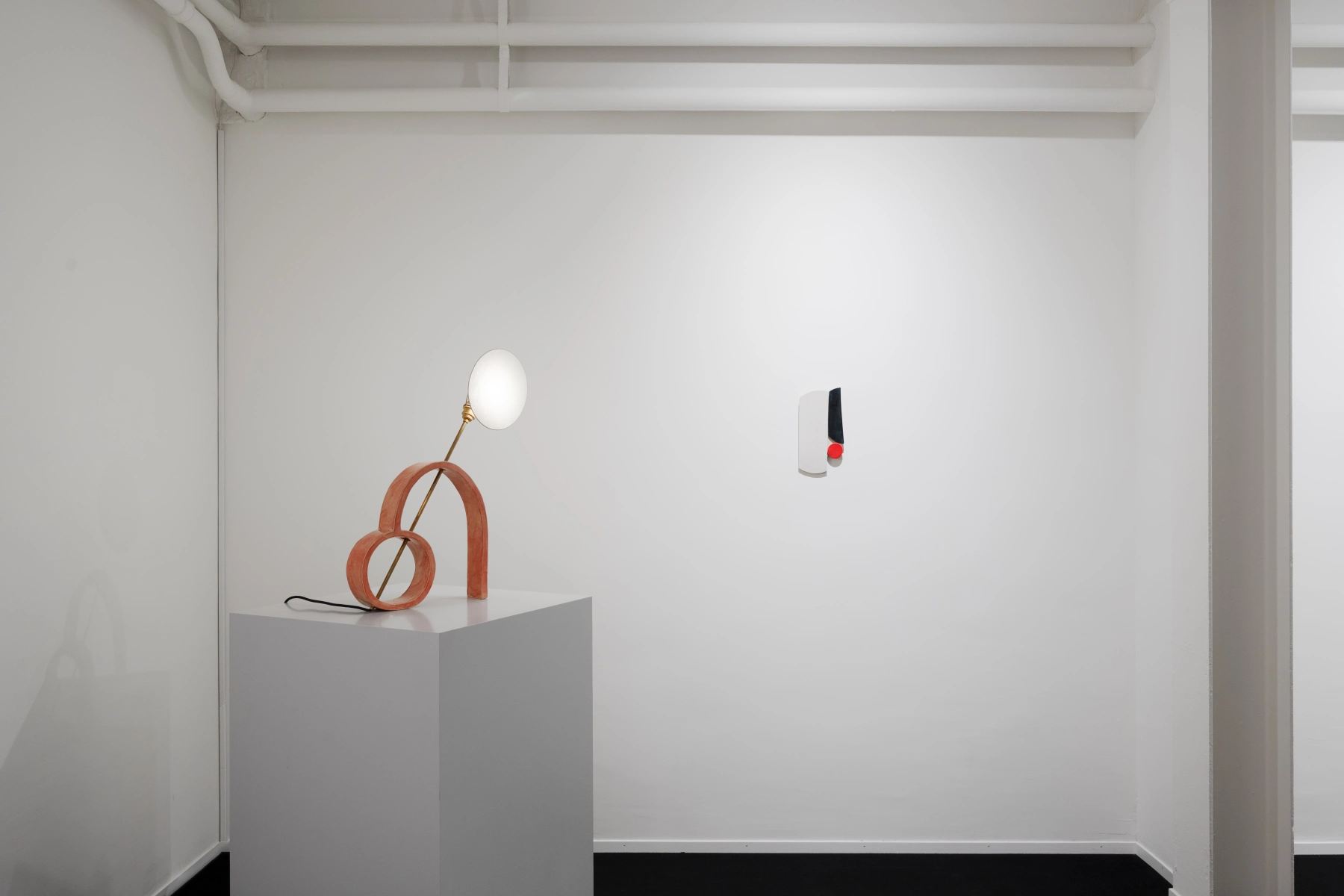
Oh, dear ceramics. You ware of the earth. You have something primal about you; you ground us. You feel like a deep breath of fresh Alpine air or like looking up from below into the crown of a thick tree trunk.
This is not an exhibition of historical antiquities, but perhaps a declaration of love. An exhibition about what today's generation of artists can do with ceramics. Works that are equally virtuosic in terms of craftsmanship as they are in terms of artistry. Because that is precisely the crucial relationship. Nothing here is classical anymore, and yet the view on tradition plays a role for all artists here. We celebrate both how far the medium has come and how far one can go with it.
Everything made of ceramic is fragile, and yet it is the most long-lasting earth material that can be shaped by hand. Just think of the millennia-old ceramic treasures that we can still admire today in almost intact condition. It is one of the oldest means of artistic expression. Hundreds, thousands of years ago, our Palaeolithic ancestors must have noticed the material properties of clay. They must have seen the footprints of their prey – and their own heavy footsteps – pressed into the riverbanks, retaining their shape even when water collected in them. But there was still a long way to go before clay could be processed into ceramics. (1)
Ceramics is a much broader concept than many might assume. It has long since emancipated itself from the ‘ceramics is just design’ pit. Interestingly, the first ceramic objects were not practical bowls, but works of art. Around 28,000 years ago, the Pavlovian culture of Gravettian Europe – a highly developed society of mammoth hunters – began using special clay kilns to fire small animal and human figures. Their most legendary work remains the Venus of Dolní Věstonice, a curvaceous figure considered to be the oldest known ceramic in the world.
Still until today, it is considered one of the most direct means of expression. Nearly all of the artists here in the exhibition spoke of the immediacy to the material in translating what they want to create. In today's world, ceramics might even act therapeutic and keep us sane in the digital terror jungle. Philosophically, you can treat ceramics as this thing that turned against modernism. Today, perhaps even as the thing that turns against digitalisation. Because, and this is also intrinsic to ceramics, you have to experience it. Images of the works shown here can never do justice to their surface texture, the reflections of light, their multi-sidedness and multi-dimensionality.
If you leave aside the function of ceramics, what do you hold on to? From the exhibition catalogue of Hans Coper's exhibition at the Victoria & Albert Museum in 1969, he says: ‘Practising a craft with ambiguous reference to purpose and function, one has occasion to face absurdity. (2) More than anything, somewhat like a demented piano-tuner, one is trying to approximate a phantom pitch.’ This is probably an apt description for what we find here in terms of virtuosity and ‘pitches’.
Perhaps the most radical artist working with ceramics, and an inspiration to many of the artists featured here, is the late Betty Woodman (1930–2018, USA). Betty’s ceramic practice shifted from the functional to the increasingly conceptual, drawing on the generous sculpturalism of Italian pottery for her Etruscan Vases works (1965-66) and – also on show – for her Pillow Pitchers (1970s-2000s), imbued too with the tradition of Chinese ceramic pillows, gloriously unwieldy in Betty’s reinterpretation. It was a time of ‘broadening my understanding of what clay could be’, said Betty, an early foretelling of her radical ceramic and painting assemblages, such as Summer View, (2014), which is on view in the exhibition: a protruding trompe l’oeil tabletop inhabited by spliced clay vessels. (3)
The artist Perrine Boudy (born in Versailles in 1995) is, by her own admission, a great admirer of Woodman. Her creations are also sculptures and should not really be understood as vases. They are inspired by Greco-Roman krater vases, but are unglazed and porous, and therefore unusable. She prefers not to be surprised by the colours of the glaze after firing and instead plays with engobes, which she uses ‘like aquarelle paints or ink’ before firing the piece in a single pass. The vase thus becomes three-dimensional paper. Drawing transformed into volume, striving to play with the boundary between drawing and ceramics. Boudy uses the vehicle of vases, which are charged with meaning and are ingrained in all our memories as irrefutable cultural heritage, and, in the spirit of a simulacrum, transforms them into a platform on which one can play around at will. Omage and transfigured comic drawing at the same time. She makes use of obsessively recurring motifs such as dots, volutes and stripes, purely ornamental, or comic book-like animals such as horses or dogs.
Caroline Achaintre (born 1969 in Toulouse, France / lives and works in London, UK) also toys with two- and three-dimensionality. She creates various characters, half fantastical, half ghostly, sometimes made of wool, sometimes of ceramic, in different dimensions. Solaroid appears like a carnival mask dazzled by the sun. In general, the European carnival, with its shape-shifting, plays an important role as a source of inspiration for Achaintre. The sun forces a squinting of the eye area and shrinks the ceramic sheet into a three-dimensional mask. Something that was originally two-dimensional becomes something animated and three-dimensional. Achaintres' thought experiment perhaps goes even a step further, one might think: don't you suddenly see things you didn't see before when you yourselves squint your eyes and focus on a blurred spot?
For Sarah Dwyer (born 1974 in Ireland. Lives and works in London, UK), everything begins with drawing, but first on paper. Starting with life drawings, she reworks her life figures on canvas again and again, reducing them, stretching them lengthwise or widthwise, or squashing them together, until they have the right shape. For this, she uses her own abstract vocabulary of mark-making, which she has developed over a period of fifteen years, with a wink to the history of abstract figuration. Recently, she has been transferring the discourse she developed in painting to experimental ceramic sculptures. Between figuration and abstraction, her exploration of the nature of the gestural sign, the line, continues. The sculptures are like physical three-dimensional manifestations of brushstrokes. What is astonishing is how spontaneous and free they appear, completely concealing the fact that they have been so carefully layered and fired so many times to achieve the different surface textures, until just before the heat in the kiln would break them.
Like Dwyer, Gabi Deutsch (born 1973. Lives and works in Zurich, CH) explores forms of abstraction and translations into three-dimensional sculpture in her work. She probes the potential of the material, its structure and its possibilities for transformation, making the nature of the process visible. Forms from the history of architecture, art and design serve as references for her work. Deutsch has been working mainly with ceramics for several years. She creates hand-formed unique pieces that are situated between works of art and functional design objects.
As the only self-confessed designer in the group, Rita Zurbrügg comes very close to the boundary between the supposedly different worlds of art and design. As impressively artistic as they are, there should no longer be any distinction between the two. Also inspired by architecture, visual arts and the diversity of forms found in nature, Zurbrügg transforms clay into masterful sculptural objects for everyday use.
Since 2018, Guillaume Martin-Taton (born 1991 in Nîmes, FR. Lives and works in Geneva, CH) has been developing a ceramic practice in which chimera-like animals play a central role. These hybrid figures, which emerged from his research into signage systems and the Manitou alphabet, function as three-dimensional signs – simultaneously sculptural forms and coded presences. Drawing on aposematism and the visual warning strategies of the animal kingdom, he composes surfaces characterised by strong contrasts, rhythmic patterns and symbolic motifs. These creatures, which lie somewhere between artefact and totem, embody a language in which colour, ornament and volume serve as signals. Through them, ceramics become a space in which the sign detaches itself from the wall, takes on volume and transforms into a living, ambiguous figure – archaic and contemporary at the same time.
Becky Tucker's (born 1993 in Scarborough, UK. Lives and works in Glasgow, UK) shape- and genre-transcending sculptures and reliefs explore the intersection between ceramic tradition, cultural symbolism and the emotional intensity of contemporary cultural Angst. Her latest work, Hyades, addresses the revered awe towards water and floods, an overwhelming, unstoppable force. It builds on the long tradition of rain/water deities and folkloric spirits. From the Greek Hyades – nymphs who bring rain – to Oya, the goddess of violent rainstorms in Yoruba mythology, to the Kelpies – malevolent water spirits in Scottish folklore. The figure stretches upwards towards the rain and downwards towards the earth – in searching. The barely human figure is ambiguous in terms of gender and age; it is unclear what is costume and what is skin. She sits there, seemingly oblivious, except for her six eternally open eyes.
As already mentioned, ceramics have been attributed with a kind of healing effect. This may be due to the immediately fulfilling haptic qualities of clay and the variety of possibilities it offers. Carl Anderson (born 1990 in Shoreham-by-Sea, UK. Lives and works in West Sussex, UK) regards ceramics as a form of trauma therapy. A rather serious trauma that he has to cope with. Anderson was the victim of a knife attack that nearly cost him his life. His series ‘Spoon Warmer’ shows various grinning trolls whose protruding ‘head world’ forms a mysterious arm that hides an object or a hand signal behind their backs. Their grin is intended to distract from the secret code, but at the same time arouses suspicion about their true intentions. The title and the comic-like, playful appearance of the now obsolete spoon warmer play with the feeling of feel-good domesticity, while the sculpture tells of hidden threat and deception. A tense dialogue emerges between harm and care, digital and physical, violence and safeguarding, absurdity and seriousness. Anderson questions what can still be trusted in today's world.
Clare Goodwin's (born 1973 in Birmingham, UK. Lives and works in Zurich, CH) ceramic works are an extension of her painting practice. With them, she challenges her own paintings on canvas, which are rooted in hard-edge abstraction. Glaze becomes colour field and line, blurring the hard structures of her paintings and introducing a softer, tactile, architectural presence between object, surface and image. Sometimes she also breaks up the forms and reassembles them like a mosaic. In doing so, Goodwin introduces a pattern-based colour scheme that reflects personal and found objects with abstract representations of domestic interiors. A quiet beauty emerges, a kind of ‘constructive nostalgia’ that allows geometric fragments and muted colour relationships to integrate between painting, tile and object.
Yulia Iosilzon's (born 1992 in Moscow, RU. Lives and works in London, UK) work also straddles the boundary between painting, ceramics and world-building, and likewise consists of mosaic fragments. Less tied to abstraction than Goodwin, and more to figurativeness, Iosilzon merges narrative and ornament into a single pictorial logic. They transport the viewer into landscapes that appear both mythical and interior. Iosilzon deepens her exploration of translucency and fluidity—qualities that extend beyond the material surface into the architecture of her compositions. These new ceramic paintings open a dialogue between the personal and the cosmic, between the remembered structures of mythology and the instability of contemporary experience. The visual language unfolds through a series of scenes in which human and natural forms are intertwined, creating moments of transformation. Through this ongoing tension between disintegration and creation, Iosilzon transforms inherited symbolic narratives into psychological dramas full of ambiguities. The mythical no longer dictates moral consequences, but provides a framework for exploring porous identities, shifting emotional states, and the generative instability between form and feeling.
The Tribu series by artist duo Hippolyte Hentgen (Gaëlle Hippolyte born 1977 in Perpignan, FR. Lina Hentgen born 1980 in Clermont-Ferrand, FR. Live and work in Paris, FR) ties in with the tradition of the objet trouvé and is perhaps the third strand in the field of mosaic creations. Originally conceived at the invitation of the Cristallerie Saint Louis Museum (Hermès Foundation) in Saint Louis les Bitches, France, the duo worked with remnants from the Cristallerie that revealed imperfections in the crystal. Each sculpture was an assemblage of crystal elements, objects found at flea markets and cut-out images. In the case of Tribu here, all the elements consist of ceramic objects found at flea markets. These sculptures function like rebuses. As in collages, analogies or connections between new ideas arise through the association of the visible and hidden original history of the objects used.
The sculpture is combined with one of the artists' latest drawings from the ‘Patterns’ series. The Patterns are based on fragments or close-ups of elements from Italian Renaissance paintings, combined with abstract motifs resembling fabric patterns, just like Goodman's work. A postmodern pop effect is achieved by using art history to address and change the discussion about representation.
British artist Grayson Perry (born 1960 in Chelmsford, UK. Lives and works in London, UK), winner of the 2003 Turner Prize, creates, among others, enchantingly beautiful pots, hand-sewn quilts and extravagant clothing designs that convey provocative themes. At the heart of his work is a passionate desire to comment on profound injustices in society. Perry uses pots as a narrative and figurative medium, as a round, curved surface for bizarre or bitter stories. In the richly textured work Untitled (1992), the sentence "Are not murder, pollution, perversion and all forms of evil natural as well? appears alongside photo transfers of an innocent horse, cute dogs, hands praying to God and an engraving of a king and his mistress, both naked. The king has grown breasts, he has a pregnant belly and has to stand on platform shoes to be at least as tall as his much younger lover with her iron corset. Need we say more?
(1) From The World's First Pottery is Older Than You Think by Dan Davis
(2) Louise, Long, “Betty Woodman and George Woodman on Show at Charleston, TheSpaces.com, April 19, 2023
(3) Louise, Long, “Betty Woodman and George Woodman on Show at Charleston, TheSpaces.com, April 19, 2023