+33 9 79 26 16 38
Open: Tue-Sat 11am-7pm
Visit
Open: Tue-Sat 11am-7pm
44 rue Quincampoix, 75004, Paris, France
Open: Tue-Sat 11am-7pm
Visit
Paul Gondry: VALIS
Semiose, Paris
Artist: Paul Gondry

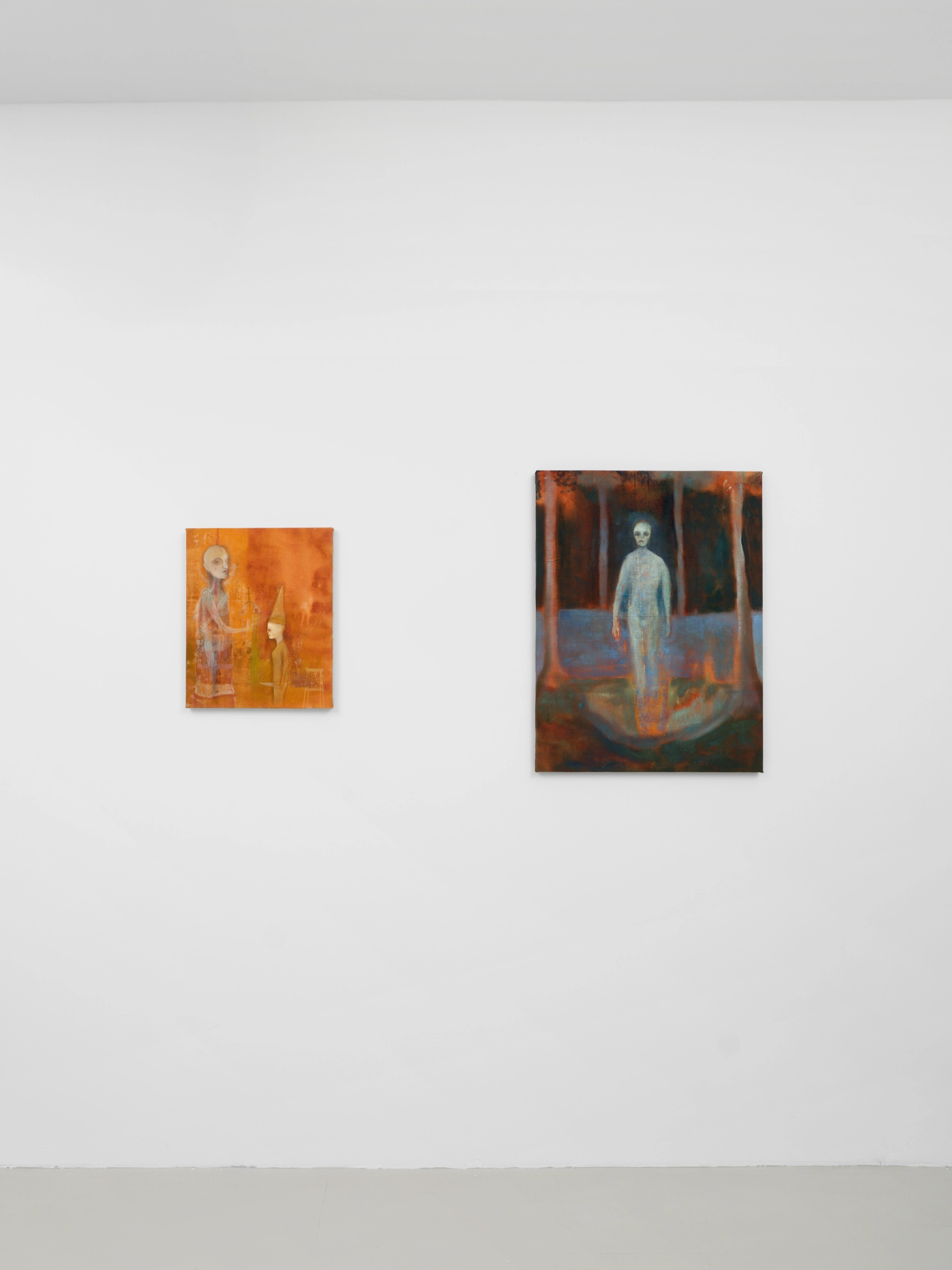
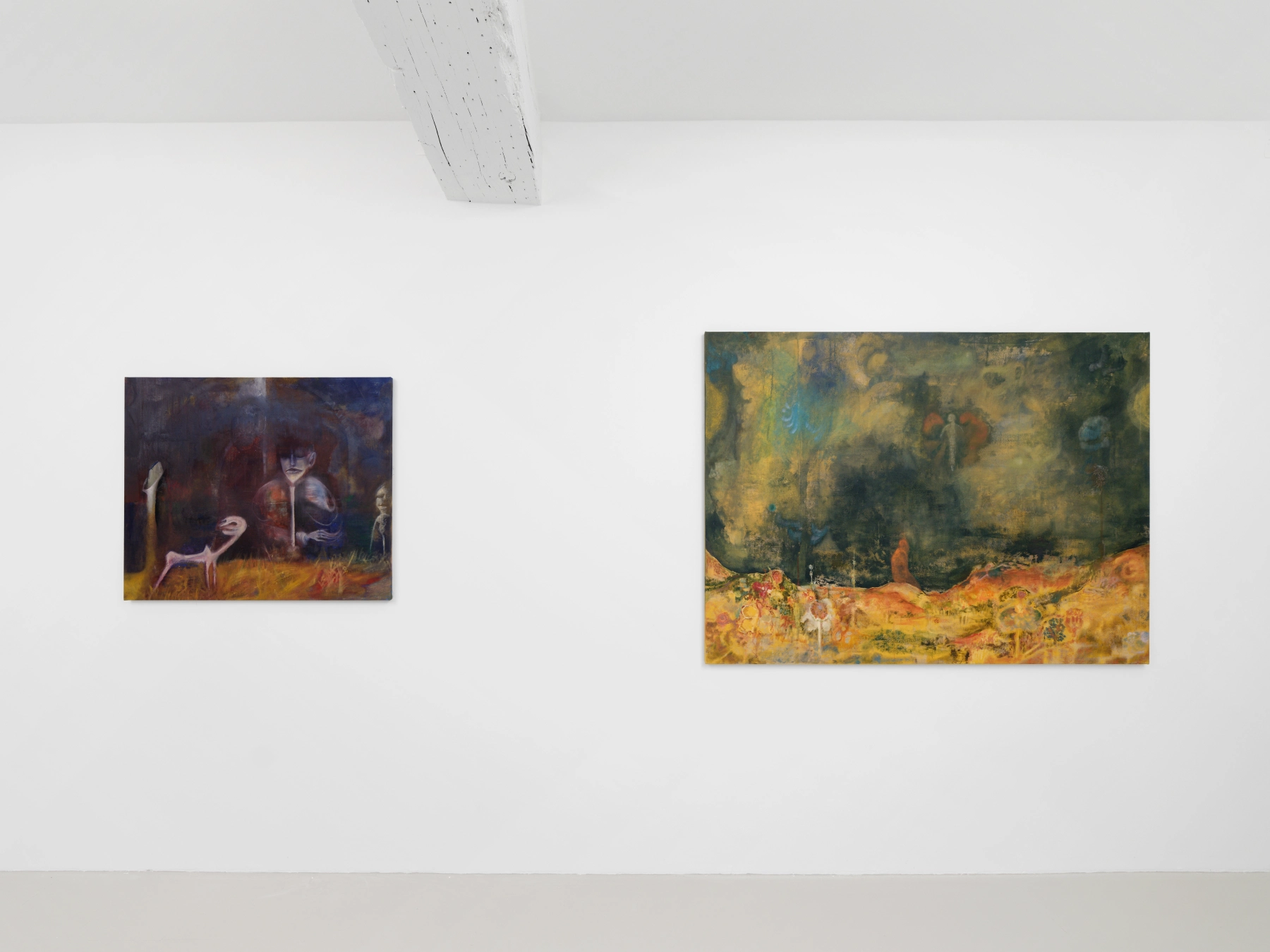
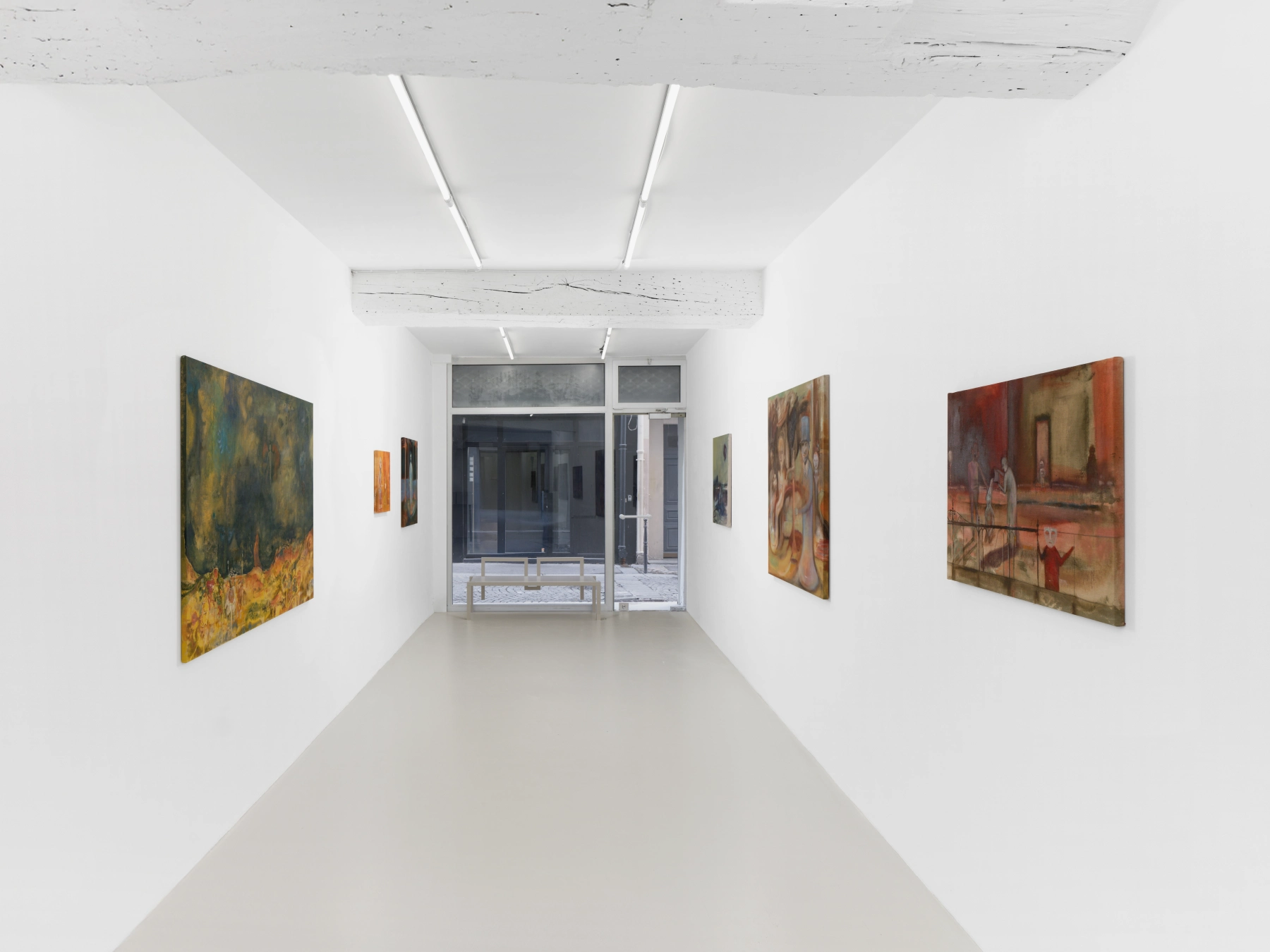
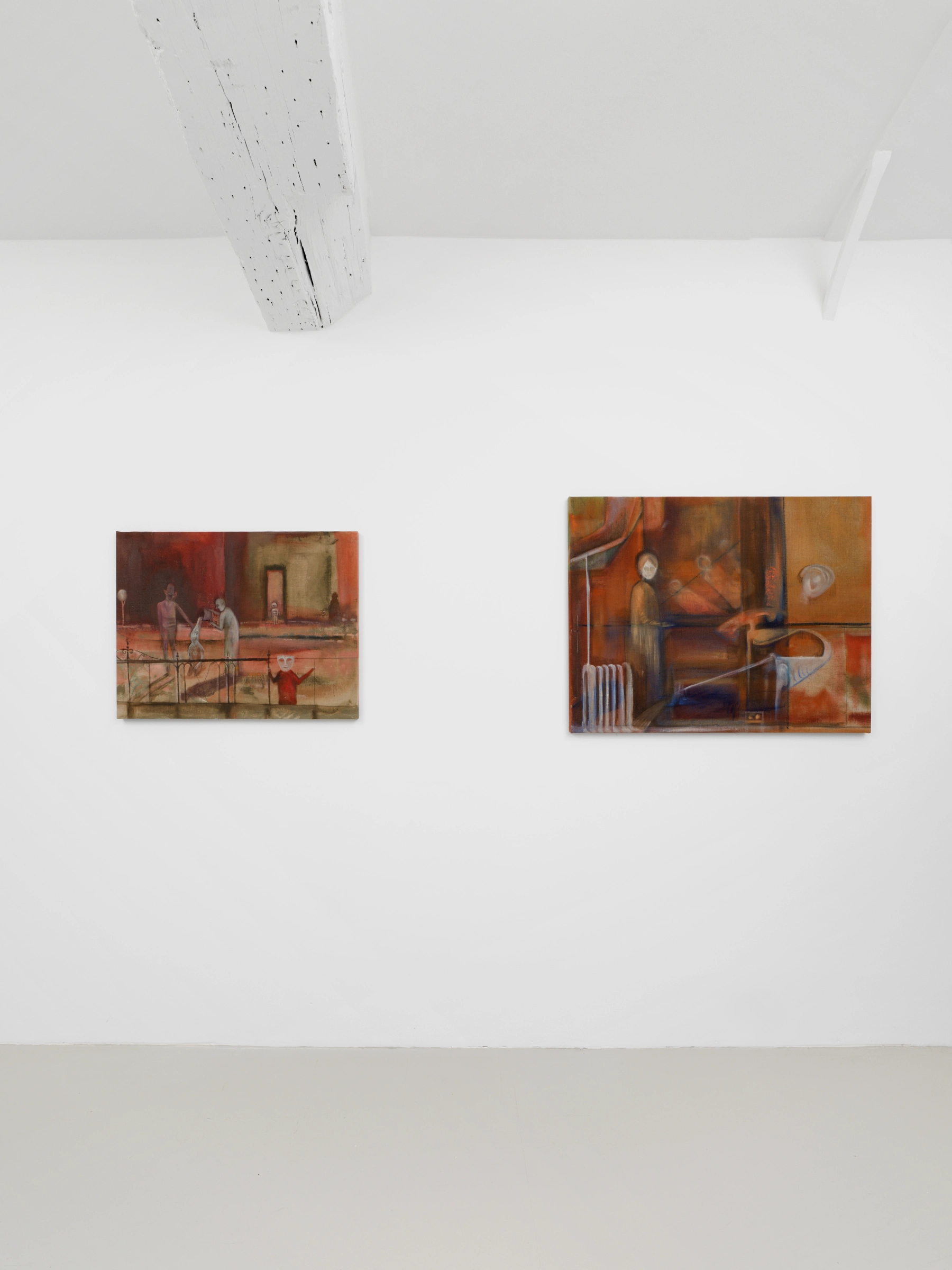
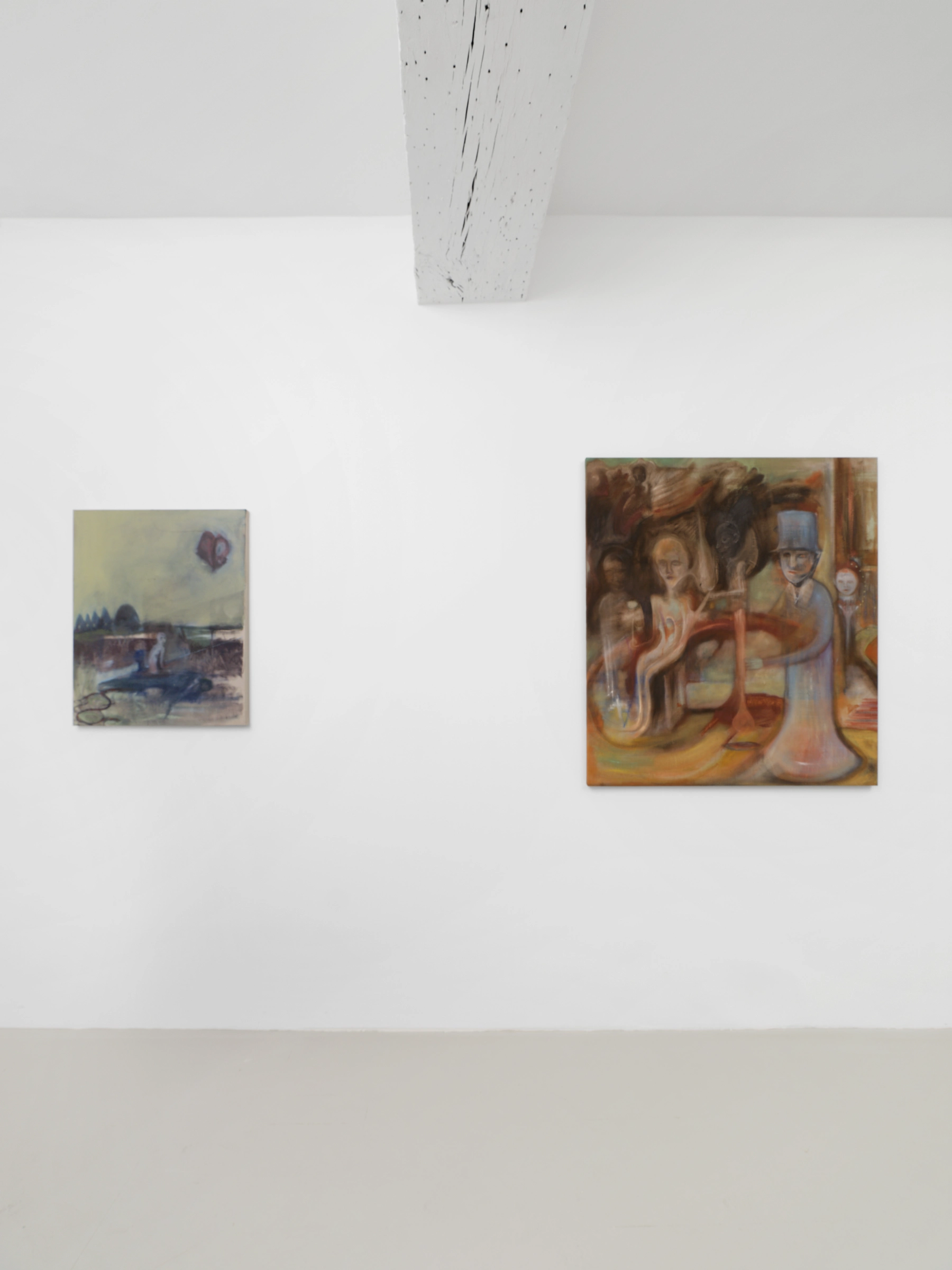
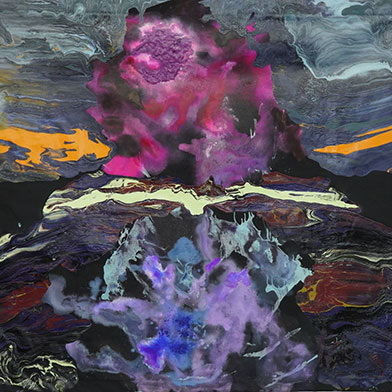
Spectral presences drifting across colourful clouds, dramatic tension focused on gestures and objects, atmospheres sculpted by supernatural lights—Paul Gondry's artworks hone their appearances to tease the viewer’s imagination, inviting them to decipher the signs beneath the surface. From these paintings, there emanates a dense mystery as well as the calculated concision of a storyboard, organising the characters, placing them on the stage and setting up the steps in the ritual. Is this based on experience? Is it a representation? Or is it a completely fabricated dream?
Despite having studied cinema, animation and video, Paul Gondry always comes back to graphic arts. A question that haunts every film-maker's painting is: what is the need for leaving the moving image to one side, at least temporarily, for paint? Why prefer painting—the art of the fixed image, made of poor material and which has hardly changed over centuries—to the art of modernity that is film, with the continuity of its twenty-four images per second, sound, light and movement? Not that cinema surpasses painting, but when you make, as Paul Gondry does, clips, short films or video games such as role-playing games, what more can painting offer?
The answer is in the medium's very nature, its artificiality being the best means of translating the visions the artist seeks to display. Painting is a must when suggestion takes precedence over narration, apparitions over incarnations, fantasy over reality. Paul Gondry’s painting is not merely about set images. Rich in details, textures and lights, it installs an atmosphere and retains a specific, haunted moment. It precipitates, focuses and emblematises. More than a picture, it is about seeking the “image's feeling,” says the painter.
The artist likes to describe his painting as a receptacle, a tomb, a manuscript. It is the opposite of film, its residual shimmering, what survives once the screen and the light have been turned off. His painting plunges all the deeper into darkness and formlessness, from which springs the unknown, even the monstrous. His drawings search through the depths of the human psyche, examining its fantasies, illusions and dreams. It brings out images shaped by the universal unconscious, on the edge of fantasy and nightmare. Shadows, silhouettes and profiles cross the frame, as if returning from the depths and margins: they portray ghosts, elderly children, hieratic magicians or celebrants of a nocturnal ritual. This dark, almost sticky, universe is reminiscent of some of F. W. Murnau’s visions or scenes from Salò, or the 120 Days of Sodom (1975) by Pier Paolo Pasolini. This world is also very Lynchian in its atmospheres and intrigues, flirting with Eraserhead (1977) or Twin Peaks: Fire Walk with Me (1992).
All painting, at least when informed, also incessantly crosses the infinite territories of art history and the works of the past. In Paul Gondry’s painting, such dialogues can be perceived, changing from one canvas to the next: we recognise the Nabis is some of the colour arrangements, Edvard Munch in the distorted figures, and the Surrealist painters in the chimerical visions encased in a symbolic system. Watching films by Paul Gondry, connections can also be made with the contemporary artists Mike Kelley and Paul McCarthy.
His pictorial practice, which he started aged twelve, extending to comics and graphic novels, developed like an obvious path, a natural inclination. Today, this fully embraced painterly practice follows a set process: it often begins with flat areas of colour on a linen canvas in order to master the texture, then it gradually lets the drawing emerge through numerous layers of paint. Some series are based on a collage of various photographic material, reworked beyond recognition. Painting, carried out in the domestic space, surrounded by personal objects, is a solitary activity that fosters an intimate relationship with the medium: time stands still, it is “mummified,” and a personal feeling is extracted out of it.
Metamorphosis is a crucial motif in this painting: the transformation of bodies and nature, transmutation of matter, slow fading towards death. The colours contribute to this feeling. To quote Edward James about Leonora Carrington, it is as if they “have materialised in a cauldron at the stroke of midnight.” At the bottom of his alchemical crucible, Paul Gondry constructs his palette with bold, acidic montages, at the risk of dissonance: cooked and re-cooked reds, the colour of dried blood, sooty blacks, but also the somewhat supernatural light blues and greens of the aurora borealis. Colour does not describe the object; it projects the symbolic qualities and contributes to the internal balance of the composition. By so doing, Paul Gondry leans towards Symbolism, but of an esoteric kind. The picture is deciphered like a secret grimoire. Midnight suns and Van Gogh-styled starry nights make up the sky in Paul Gondry’s scenes, which are impossible to place— day interior? night exterior? The whole thing is theatrically set up, lit up by artificial lights.
Unlike cinema, where images follow each other, painting can combine several pictures in one, becoming a fixed panorama where characters and new stories coexist, like many threads towards possible narratives. Some of Paul Gondry's compositions are reminiscent of Hieronymus Bosch's kaleidoscopic paintings, which must be explored slowly to be understood.
In some places, a wealth of details evoke the Orientalists’ ornamental trend, as in Gustave Moreau’s works: wrought-iron gates and other minutely worked, but never common, motifs. Paul Gondry transports his subjects into fictional spaces out of time. The pictures are inhabited by masked creatures, either naked or dressed with large togas. An elongated presence in the water inevitably brings to mind the iconography of Ophelia and the Pre-Raphaelites. The pictorial treatment varies depending on the area: passages with myriad details are juxtaposed with more abstract backgrounds, which provide projection surfaces for the viewer. Figures emerge from this substance as if on the screen of a silent film, undergoing transformations, in states of limbo.
The name of the artist-run space Paul Gondry has co-founded in New York, 15 Orient, reveals his taste for esotericism, which he shares with the Surrealists and Leonora Carrington. Some titles—such as Nigredo, an alchemical term referring to the phase of putrefaction, calcination and decomposition, the first step towards the philosopher's stone—leave room for doubt as to his possible initiation. The artworks themselves also maintain ambiguity and resist any unequivocal interpretation. They have tipped over into the occult, where secrecy is the order of the day and words are superfluous.
Laetitia Chauvin
----
Des nuées colorées, traversées de présences spectrales, une tension dramatique focalisée sur des gestes et des objets, des atmosphères sculptées par des lumières surnaturelles : les œuvres de Paul Gondry travaillent leurs effets en vue d’exciter l’imagination du spectateur, appelé à déchiffrer les signes sous la surface. De cette peinture se dégage l’épaisseur d’un mystère en même temps que la concision calculée d’un story-board, distribuant les personnages, les plaçant dans la scène, établissant les étapes du rituel. Est-ce vécu ? Est-ce une représentation ? Ou bien encore, un rêve monté de toutes pièces ?
Formé au cinéma, à l'animation et à la vidéo, Paul Gondry ne cesse pourtant de revenir aux arts graphiques. Une question hante toute peinture de cinéaste : quelle nécessité de laisser de côté, temporairement du moins, l’image en mouvement pour la peinture ? Pourquoi préférer la peinture – art de l’image fixe, fait de moyens pauvres, pratiquement inchangé depuis plusieurs siècles – à l’art de la modernité qu’est le film, avec la continuité de ses vingt-quatre images par seconde, enrichies de son, de lumière et de mouvement ? Non que le cinéma surpasse la peinture, mais lorsque l’on réalise, comme Paul Gondry, des clips, des courts-métrages ou des jeux vidéo de type Role Playing Game, que peut encore la peinture ?
La réponse réside dans la nature même du médium, son artificialité étant la plus à même de retranscrire les visions que cherche à dépeindre l’artiste. La peinture s’impose quand la suggestion prime sur la narration, les apparitions sur les incarnations, le fantasme sur la réalité. La peinture de Paul Gondry n’est pas une simple image arrêtée. Avec force détails, textures et lumières, elle installe une ambiance et préserve un moment spécifique, hanté. Elle précipite, concentre et emblématise. Plus qu’une image, c’est le « sentiment de l’image » que le peintre dit poursuivre.
L’artiste décrit volontiers sa peinture comme un réceptacle, un tombeau, un manuscrit. Elle serait l’envers du film, son miroitement résiduel, ce qui survit lorsque l’écran s’éteint et que la lumière disparaît. Sa peinture n’en plonge que plus profondément dans la noirceur et l’informe, d’où surgit l’inconnu, voire le monstrueux. Son dessin fouille les tréfonds de la psyché humaine, auscultant ses fantasmes, ses illusions, ses rêves. Il en retire des images forgées par l’inconscient universel, aux confins du fantastique et du cauchemar. Ombres, silhouettes ou profils traversent le cadre, comme revenus des bas-fonds et des marges : ils figurent des revenants, enfants-vieillards, mages hiératiques ou officiants d’un rite nocturne. Cet univers noir, presque poisseux, rappelle certaines visions de F. W. Murnau ou des scènes de Salò, ou les 120 jours de Sodome (1975) de Pier Paolo Pasolini. Ce monde est également très lynchien par ses atmosphères et intrigues, flirtant avec Eraserhead (1977) ou Twin Peaks: Fire Walk with Me (1992).
Toute peinture, du moins quand elle est initiée, arpente aussi incessamment les territoires infinis de l’histoire de l’art et des œuvres du passé. Dans la peinture de Paul Gondry, on distingue de tels dialogues, changeants d’un tableau à l’autre : on reconnaît les Nabis dans certains accords colorés, Edvard Munch dans les figures déformées ou les peintres Surréalistes dans les visions chimériques enchâssées dans un système symbolique. À regarder le cinéma de Paul Gondry, des filiations se dessinent aussi avec les artistes contemporains Mike Kelley et Paul McCarthy.
Sa pratique picturale, commencée dès l’âge de douze ans, prolongée par la bande dessinée et le graphic novel, s’est développée comme une évidence, comme un penchant naturel. Aujourd’hui, la pratique assumée de la peinture suit un processus réglé : il débute souvent par des aplats sur une toile de lin afin de maîtriser la texture, puis il laisse le dessin progressivement émerger, au fil de nombreux repeints. Certaines séries procèdent du collage de sources photographiques diverses, retravaillées jusqu’à en être méconnaissables. La peinture, réalisée dans l’espace domestique, au milieu des objets personnels, relève d’une activité solitaire qui favorise un rapport intime au médium : elle suspend le temps, le « momifie », pour en extraire un sentiment personnel.
La métamorphose constitue un motif crucial de cette peinture : transformations des corps et de la nature, transmutation de la matière, lent fading vers la mort. Les couleurs participent de ce sentiment. Elles sont, pour reprendre les mots d’Edward James à propos de Leonora Carrington, comme « matérialisées dans un chaudron sur les coups de minuit ». Au fond de son creuset alchimique, Paul Gondry assemble sa palette au gré de montages audacieux, acides, au risque de la dissonance : des rouges cuits et recuits, couleur de sang séché, des noirs de suie mais aussi des bleus et verts clairs d’aurores boréales, un peu surnaturels. La couleur ne décrit pas l’objet ; elle en projette les qualités symboliques et participe à l’équilibre interne du tableau. En cela, Paul Gondry se rapproche du symbolisme, mais d’un symbolisme ésotérique. Le tableau se déchiffre comme un grimoire secret. Des soleils de minuit, des nuits étoilées à la Van Gogh, composent le ciel des scènes insituables de Paul Gondry : intérieur jour ? extérieur nuit ? L’ensemble est théâtralisé, éclairé de feux artificiels.
Contrairement au cinéma, où les images se succèdent, la peinture peut en combiner plusieurs en une seule : elle devient un panoramique fixe où coexistent personnages et amorces narratives, comme autant d’échappées vers des récits possibles. Par certaines de ses compositions, Paul Gondry se rapproche des tableaux kaléidoscopiques de Jérôme Bosch, à parcourir lentement, pour en décoder le sens.
À certains endroits, un luxe de détails évoque la vogue ornementaliste des orientalistes, à la Gustave Moreau : grilles en fer forgé et autres motifs minutieusement traités, mais jamais communs. Paul Gondry transporte ses sujets dans des espaces fictionnels et hors du temps. Les tableaux sont habités de créatures masquées, nues ou recouvertes de grandes toges. Une présence allongée dans l’eau ne manque pas de faire penser à l’iconographie d’Ophélie et aux préraphaélites. Le traitement pictural varie selon les zones : à des passages fouillés répondent des fonds plus abstraits, qui ménagent des surfaces de projection pour le regardeur. Des figures émergent de cette substance comme sur l’écran d’un film muet, en proie aux transformations, dans des états d’entre-deux.
Le nom de l’artist-run space qu’il a cofondé à New York, 15 Orient, manifeste son goût pour l’ésotérisme, qu’il a en commun avec les surréalistes et Leonora Carrington. Certains titres, tel Nigredo – terme alchimique désignant la phase de putréfaction, calcination et décomposition, première étape vers la pierre philosophale – laissent planer le doute sur son initiation possible. Les œuvres aussi, enfin, entretiennent l’ambiguïté et résistent à toute interprétation univoque. Elles ont basculé dans l’occulte, où le secret est de mise et les mots superflus.
Laetitia Chauvin