Sign Up & Never Miss a Show
- free weekly opening and closing emails
- free weekly exhibition selection emails
- save and favourite exhibitions
511 W 21st Street, NY 10011, New York, United States
Open: Tue-Sat 10am-6pm
Curated by Luis Pérez-Oramas
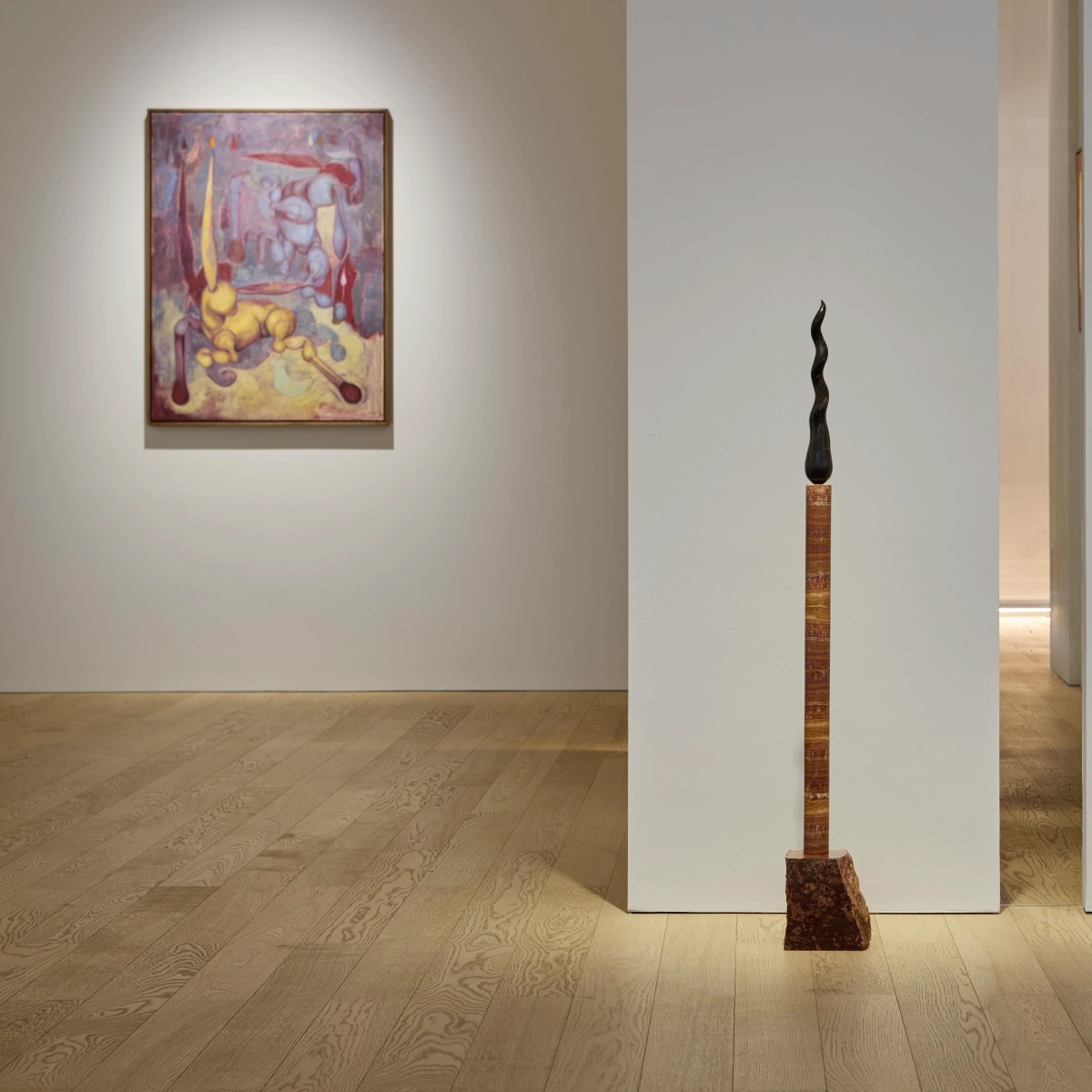
Nara Roesler New York presents Mirroring Nature, a group exhibition bringing together works by Amelia Toledo, Brígida Baltar, Bruno Dunley, Cao Guimarães, Dávila&Portillo, Cássio Vasconcellos, Jonathas de Andrade, Karin Lambrecht, Laura Vinci, Manoela Medeiros, Marcelo Silveira, Gego, Amparo de la Sota, Maria Klabin, and Gerardo Rosales. The exhibition considers nature not merely as a subject or landscape, but as the constellation of phenomena, forces, and forms of life through which the world is structured and continually transformed.
In Amelia Toledo’s sculptures from the Dragão cantor series; Laura Vinci’s Folhas avulsas #1, Galhinho, and Muda; Manoela Medeiros’s phytoliths; and Marcelo Silveira’s fire-marked cajacatinga wood, mineral and plant matter meet in distinct states of transformation. Meanwhile, the documentation of A coleta da neblina, Brígida Baltar’s brick-dust works, alongside the embroideries from A pele da planta, Conexiones, a hand embroidery by Amparo de la Sota, and Gego’s Drawing Without Paper #11 transform the surface into a space where time, gesture and matter are embedded, evoking rhizomatic, synaptic, cellular or inner organic configurations.
Through photography, the exhibition brings together different scales of observation. In Clinâmen, Cao Guimarães revisits the notion of Cao Guimarães revisits the notion of ‘minimal deviation’ developed by the Greek philosopher Epicurus to explain the dynamism of atoms whereby small, unpredictable shifts in movement make the formation of worlds possible. In O espírito das águas, Jonathas de Andrade begins with the proximity between fish and fishermen to expand his investigation into the relationship between the human body and aquatic environments. Through themes of life, death, water, air and contact between species, the work reveals a world where affection and violence are intertwined.
In Viagem Pitoresca pelo Brasil #142, Cássio Vasconcellos revisits the tradition of artistic and scientific expeditions that documented a then little-known territory, questioning the ways in which the Atlantic Forest was framed and transformed into landscape. Nebula, an intricated and complex weaving by Davila&Portillo, reveals through its astrophysical title both the clouds of celestial dust and the starry night that modern artists transformed into an all-over modern visual language.
In visual arts nature does not only appear as an external world to be reproduced, but as a repertoire of materials, forms, and processes. Natural forms and materials can be either figured as in Troféu III by Bruno Dunley operating the very construction of the image, or either physically used and transformed as in Fragmento, where Karin Lambrecht combines pigments in acrylic emulsion and vegetal charcoal on canvas, bringing organic matter onto the surface of the work. Either representational and mimetic as in Maria Klabin’s observations of fruits and landscapes or symbolic and allegorical in the works on paper Culebra y llantén, Icaco, Planta 1, Hormiga culona, Lineas cruzadas, Fence-A, and Frailejones, in which Gerardo Rosales brings together plants, snakes, and insects in images that combine observation, popular culture, fabulation, and a contemporary queer imaginary.
Sign Up & Never Miss a Show