+43 1 50 31 167
Open: Tue-Fri 11am-6pm, Sat 11am-4pm
Visit
Open: Tue-Fri 11am-6pm, Sat 11am-4pm
Brucknerstrasse 4, 1040, Vienna, Austria
Open: Tue-Fri 11am-6pm, Sat 11am-4pm
Visit
Karl Karner: Wasserspiele
Galerie Kandlhofer, Vienna
Fri 22 May 2026 to Sat 20 Jun 2026
Brucknerstrasse 4, 1040 Karl Karner: Wasserspiele
Tue-Fri 11am-6pm, Sat 11am-4pm
Artist: Karl Karner
-
THU 21
MAY
Galerie Kandlhofer presents the new solo exhibition Wasserspiele by the artist Karl Karner.
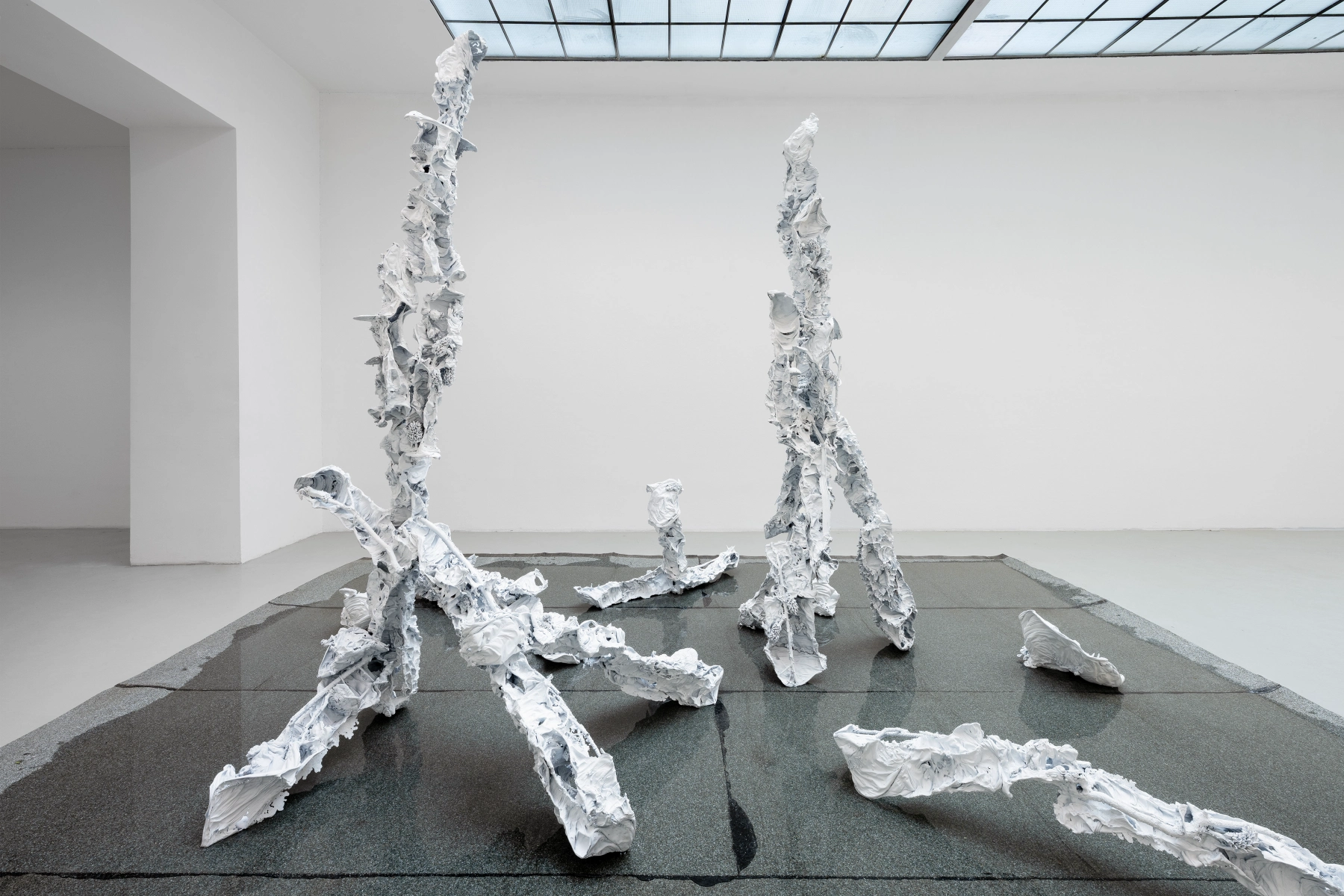
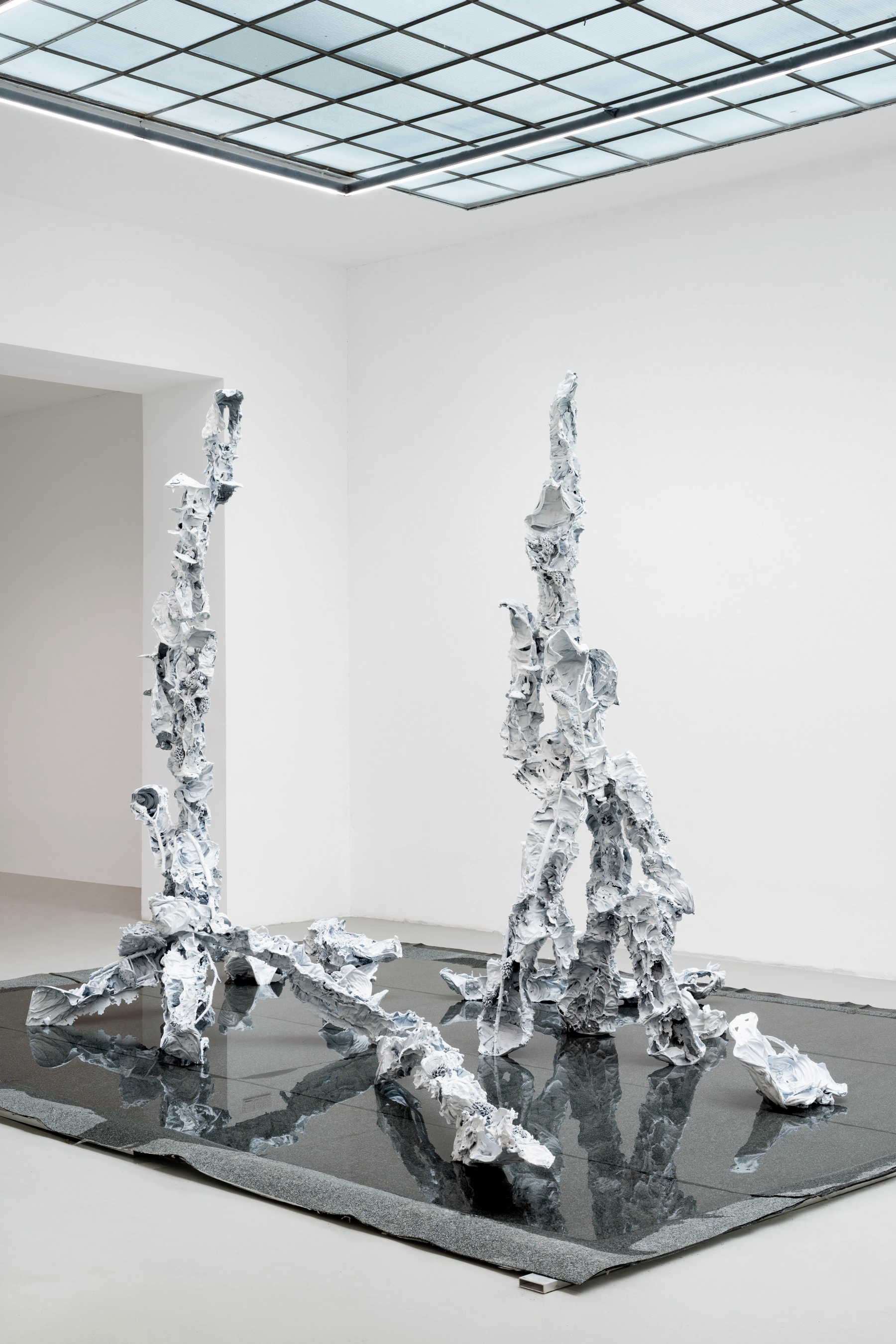
Karl Karner’s exhibition, WASSERSPIELE (water feature), marks a significant and timely development in his practice, bringing into focus his longstanding engagement with ecology, materiality, and the complex relationship between humans and the natural world. Rooted in his sustained research on environmental precarity, particularly the urgent need for water and the impact of human activity on land, this exhibition emphasizes the pressing situation of what is truly at stake with water and asks what we are willing to do for it?
Karner’s connection to these concerns is not merely conceptual but comes directly from his lived experience. Since his twenties, he has been actively engaged in re-naturalization projects, including the Tümpel-Projekt, an initiative in which all proceeds from his work supported the acquisition of protected land for the Nature Conservation Association Styria. This direct involvement grounds his artistic approach, positioning his work as both a reflection on and an extension of ecological responsibility.
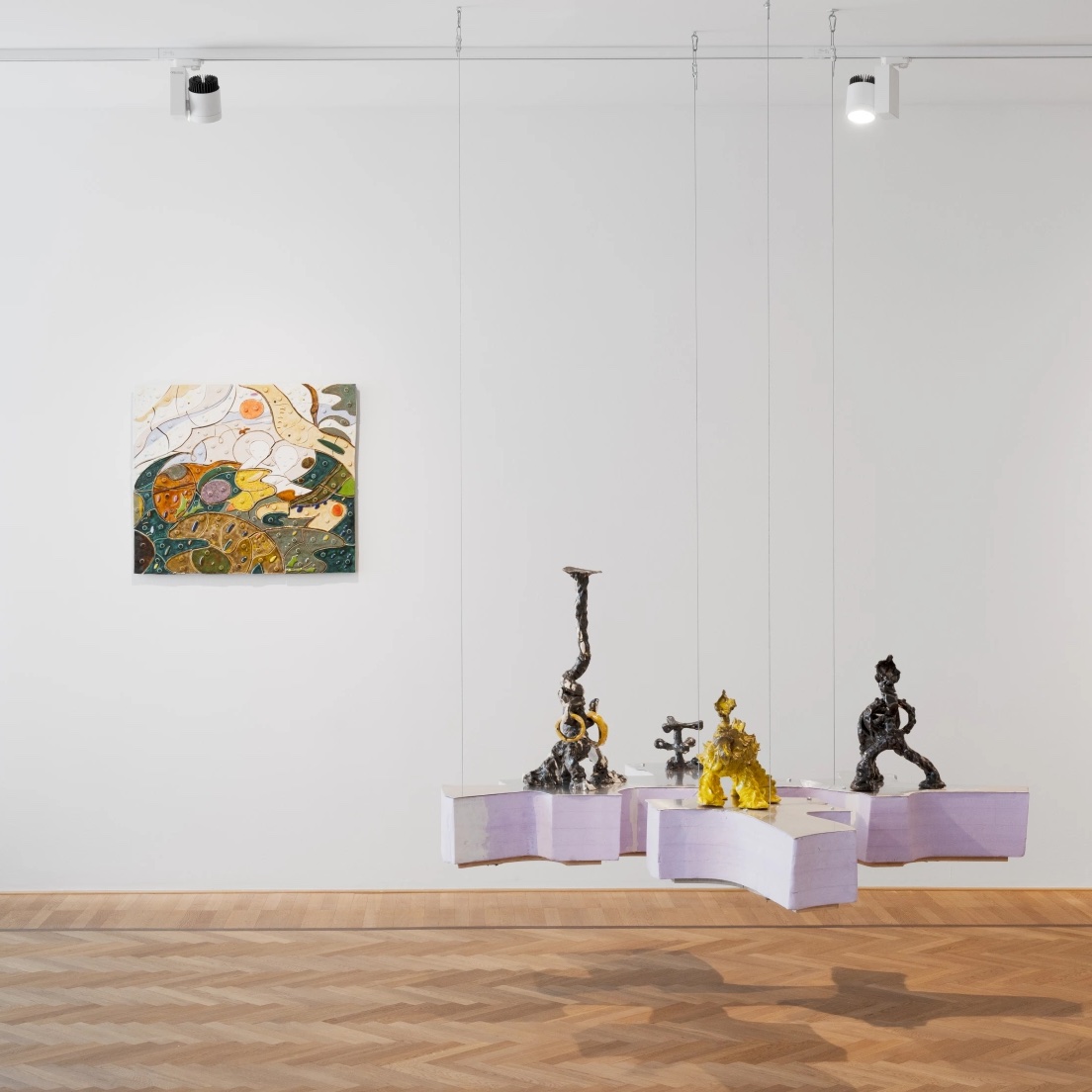
In WASSERSPIELE, Karner brings the outside into the exhibition space, constructing an ambiguous, carefully staged environment. Using tar paper typically employed for waterproofing roofs, he creates a sealed floor within which pools of water form quiet, reflective surfaces that recall ponds or sites of stillness. Within and around this artificially constructed landscape, sculptures emerge to activate a tension between imitation and autonomy. Nature is referenced but not replicated. Instead, Karner is actively engaged with the impossibility of fully capturing or controlling it.
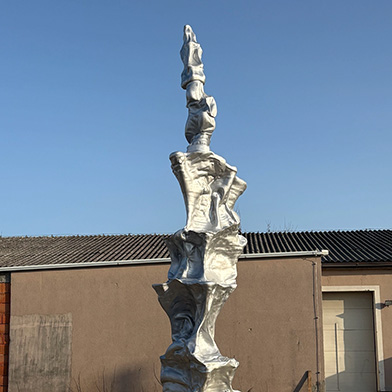
This focus on imitation and control is central to the exhibition. Key conceptual threads—the fear of water (wasserangst) and the unlearning of habitual relationships to nature—unfold through his new body of work. Fluid gestures are captured, expanded, and then cast into aluminum or bronze, transforming the ephemeral gesture into frozen monuments. Two contrasting sculptural surfaces, one smooth and one visibly hand-worked create a tension between control and surrender, process and final product.
Karner’s sculptures draw from a variety of organic forms like mushrooms, bark, branches, and magnolia cones yet they coalesce into hybrid, often grotesque, magical growths that resist clear classification. These works remain dynamic and responsive. They interact with their surroundings and shift in meaning depending on their environmental conditions and placement. Whether indoors or outdoors, they operate less as fixed objects and more like participants in an unfolding dialogue between material, space, and viewer interaction.
Participation is essential in Karner’s installations. They invite viewers into a shared field of encounter, where distinctions between observer and observed begin to dissolve. Space itself is reimagined as a platform for exchange and unpredictability.
Wasserspiele marks a pivotal moment in Karner’s career. Moving fluidly between performance, drawing, and sculpture, he is entering new territory, forging a compelling bridge between his sculptural practice and constructing land art interventions and environments. His work resonates within a broader lineage of artists engaging landscape and material, from land artists working with water to contemporary sculptors such as Urs Fischer, Roxy Paine, and Ursula von Rydingsvard, while maintaining a distinctly personal vocabulary rooted in gesture, process, and place.
This exhibition is deep reflection on water as both substance and symbol: an essential source of life, a site of potential danger, a marker of privilege, and an increasingly endangered resource. Karner does not attempt to pin down these meanings. Instead, he’s created a situation allowing materials, forces, and viewers to interact in ways that exceed his control. In doing so, he proposes a mode of collaboration and co-creation and invites us to reconsider how we inhabit and shape the world around us.
– Text by DJ Hellermann