41 East 57th Street, Floor 9, NY 10022, New York, United States
Open: Mon-Fri 9.30am-5pm
Thu 30 Apr 2026 to Fri 5 Jun 2026
41 East 57th Street, Floor 9, NY 10022 Julie Heffernan: Nutmeg’s Curse
Mon-Fri 9.30am-5pm
Artist: Julie Heffernan
Hirschl & Adler Modern presents Nutmeg’s Curse, Julie Heffernan’s second solo exhibition with the gallery. Across six new paintings, Julie Heffernan engages the tradition of the Old Masters to address contemporary preoccupations with the self, the body, and ecological anxiety about the fate of the natural world. Her influences range widely from Northern Renaissance artists and Dutch genre painting to the Hudson River School, literature, mythology, and the Catholic iconography of her upbringing.
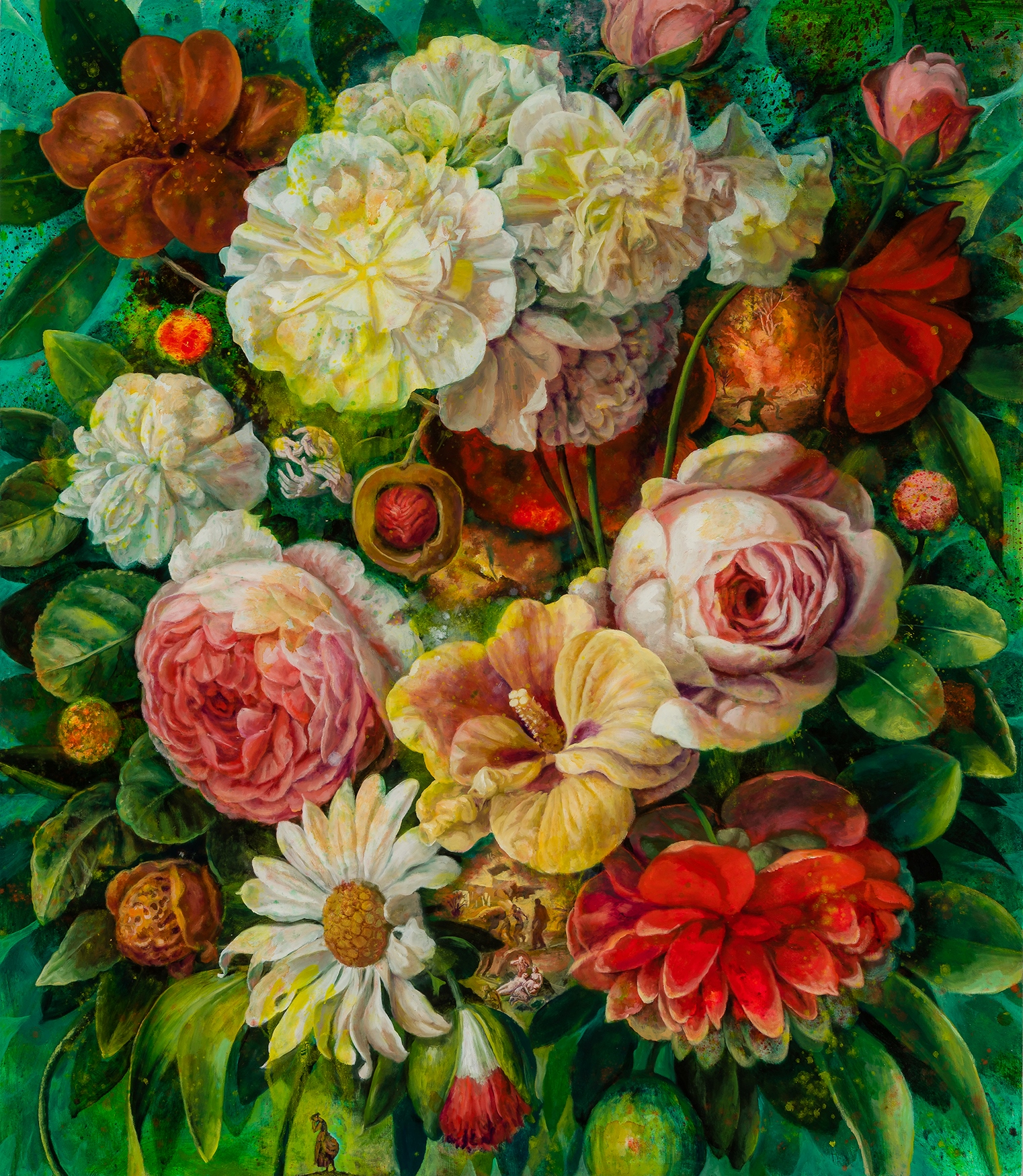
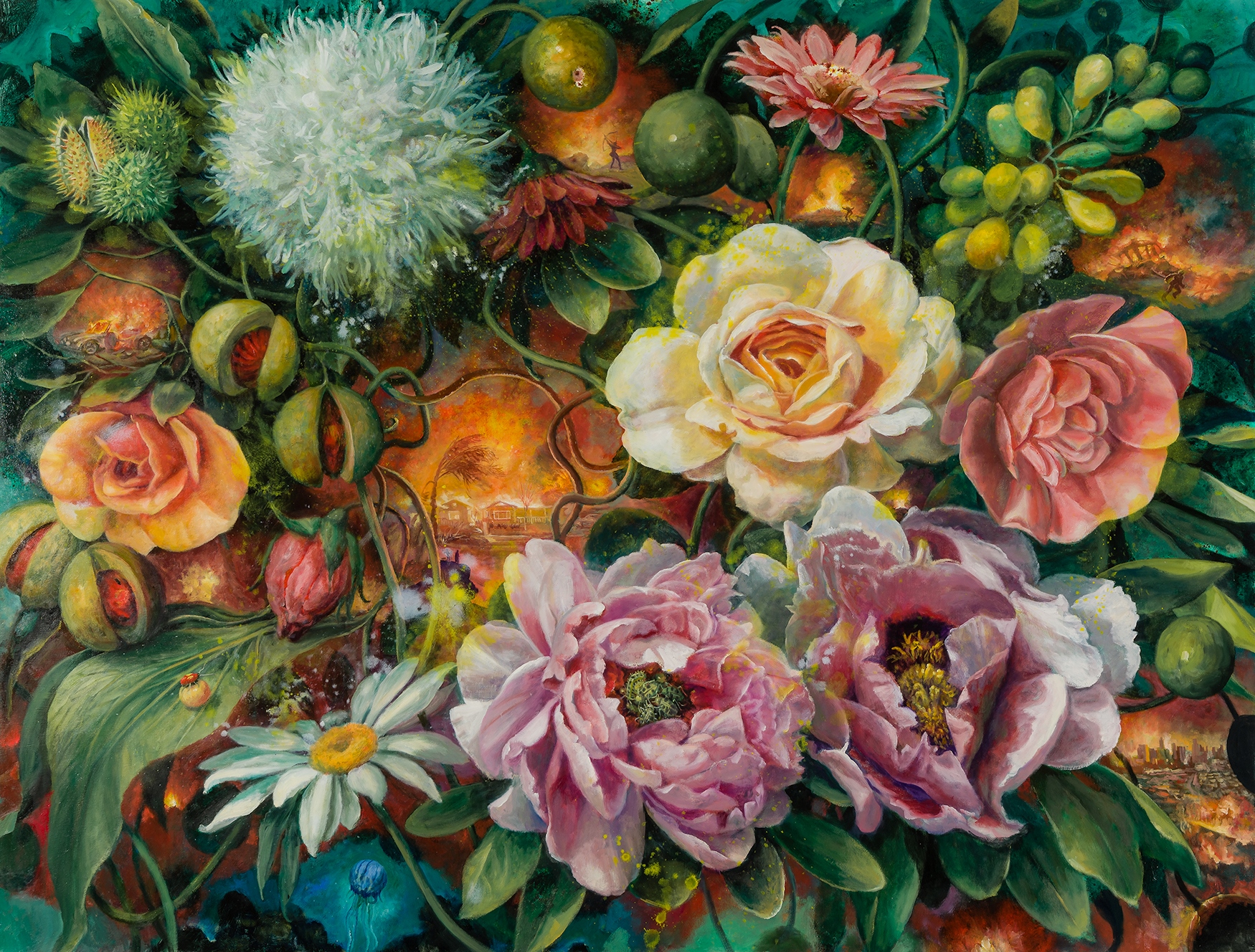
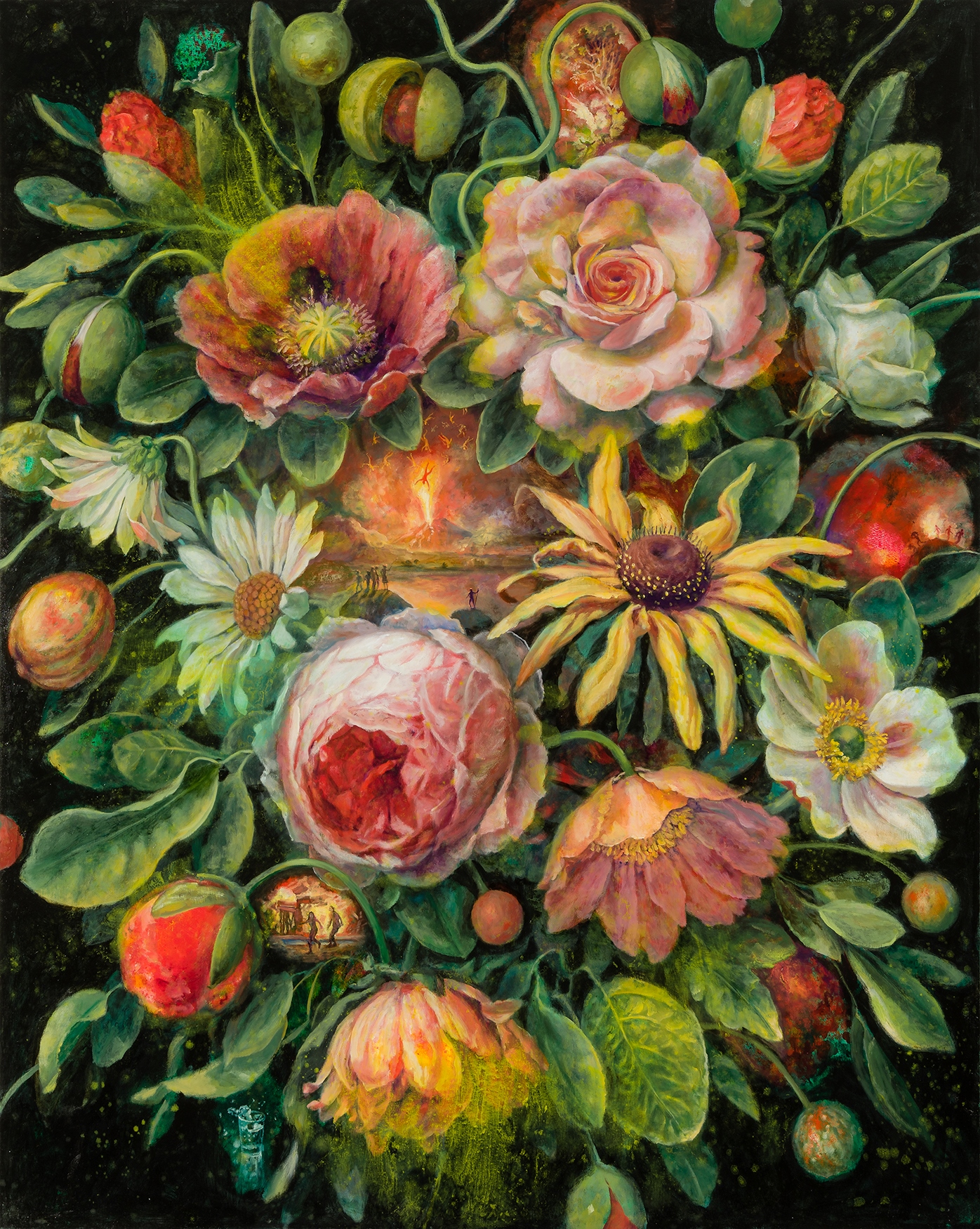
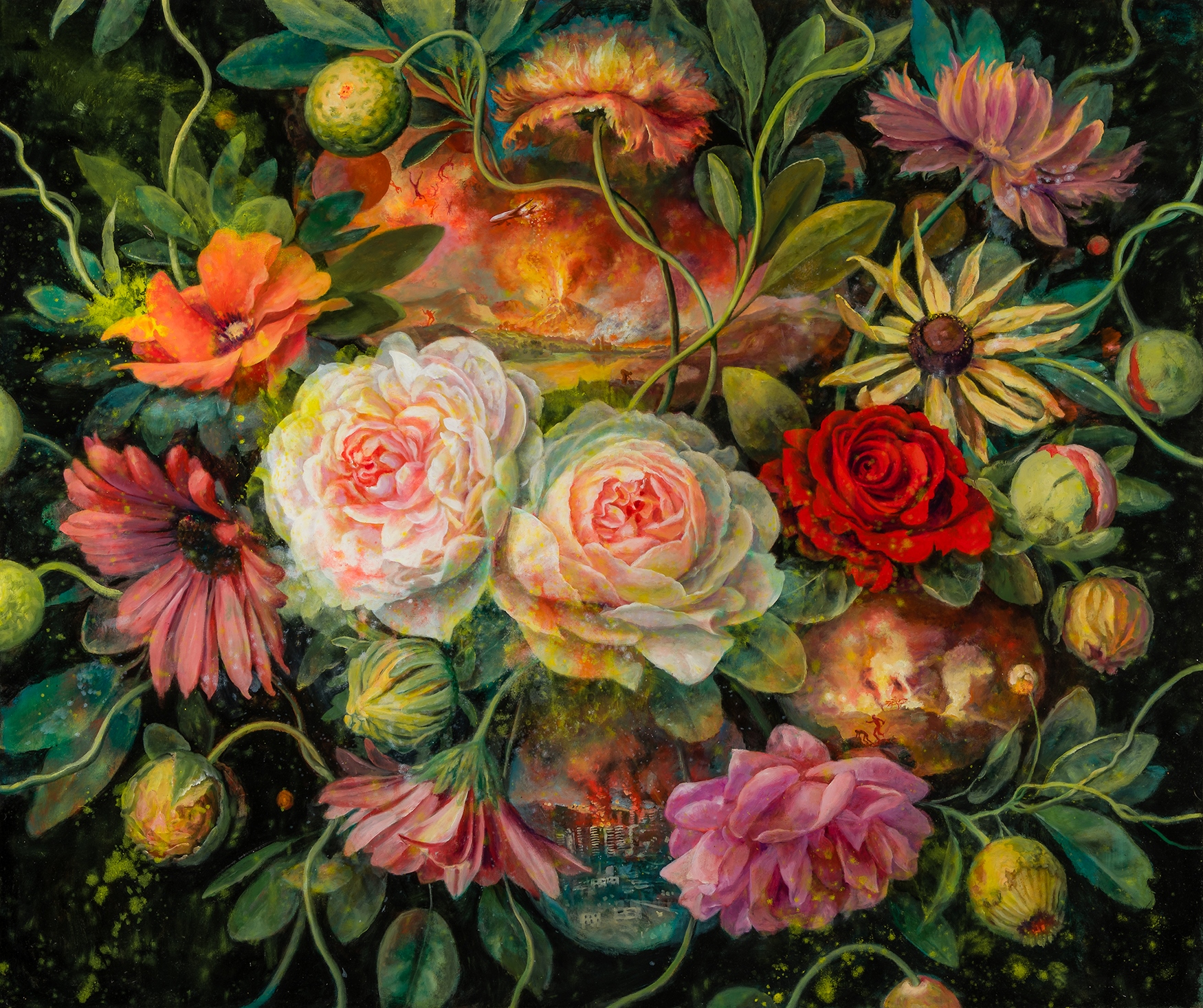
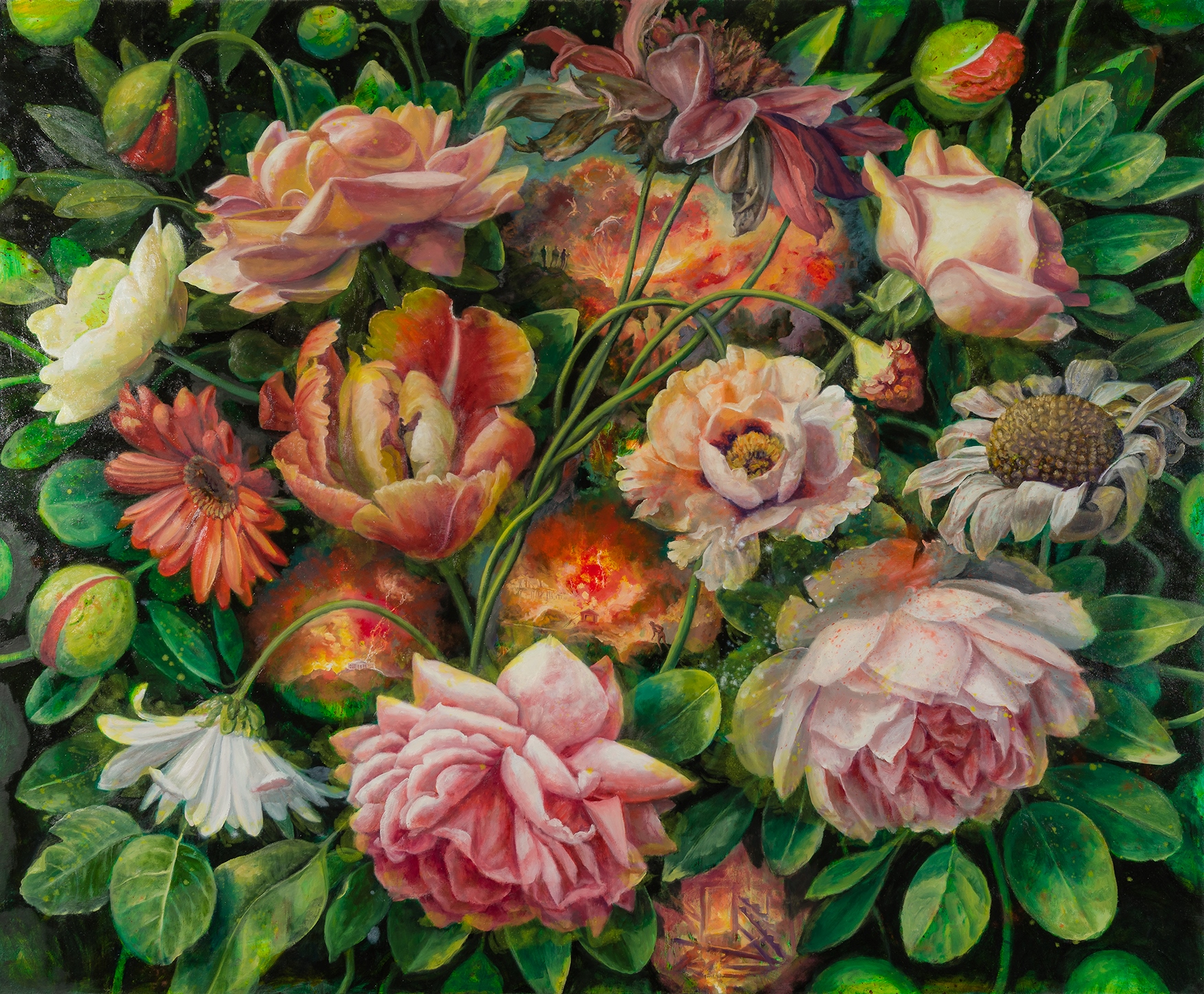
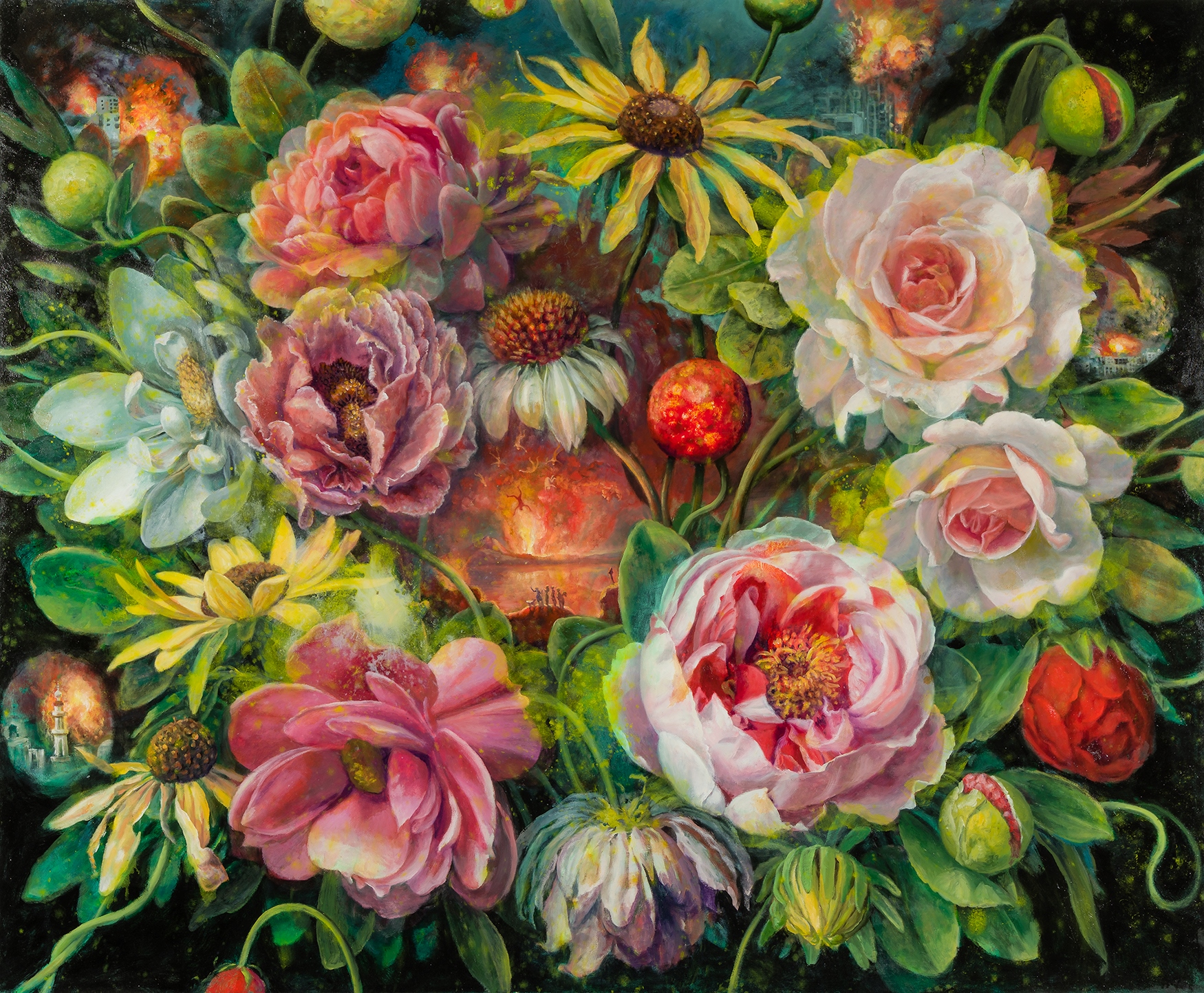
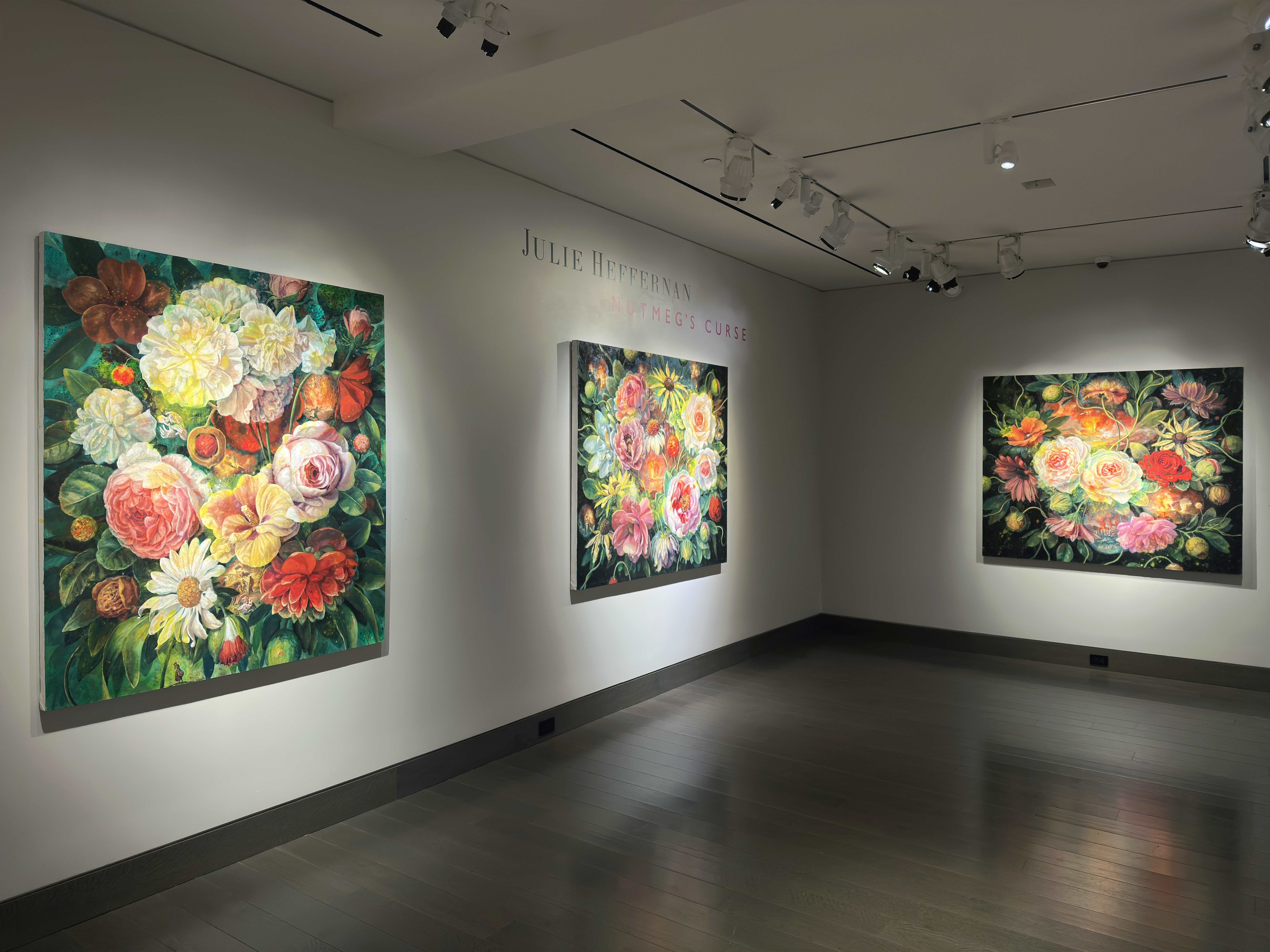
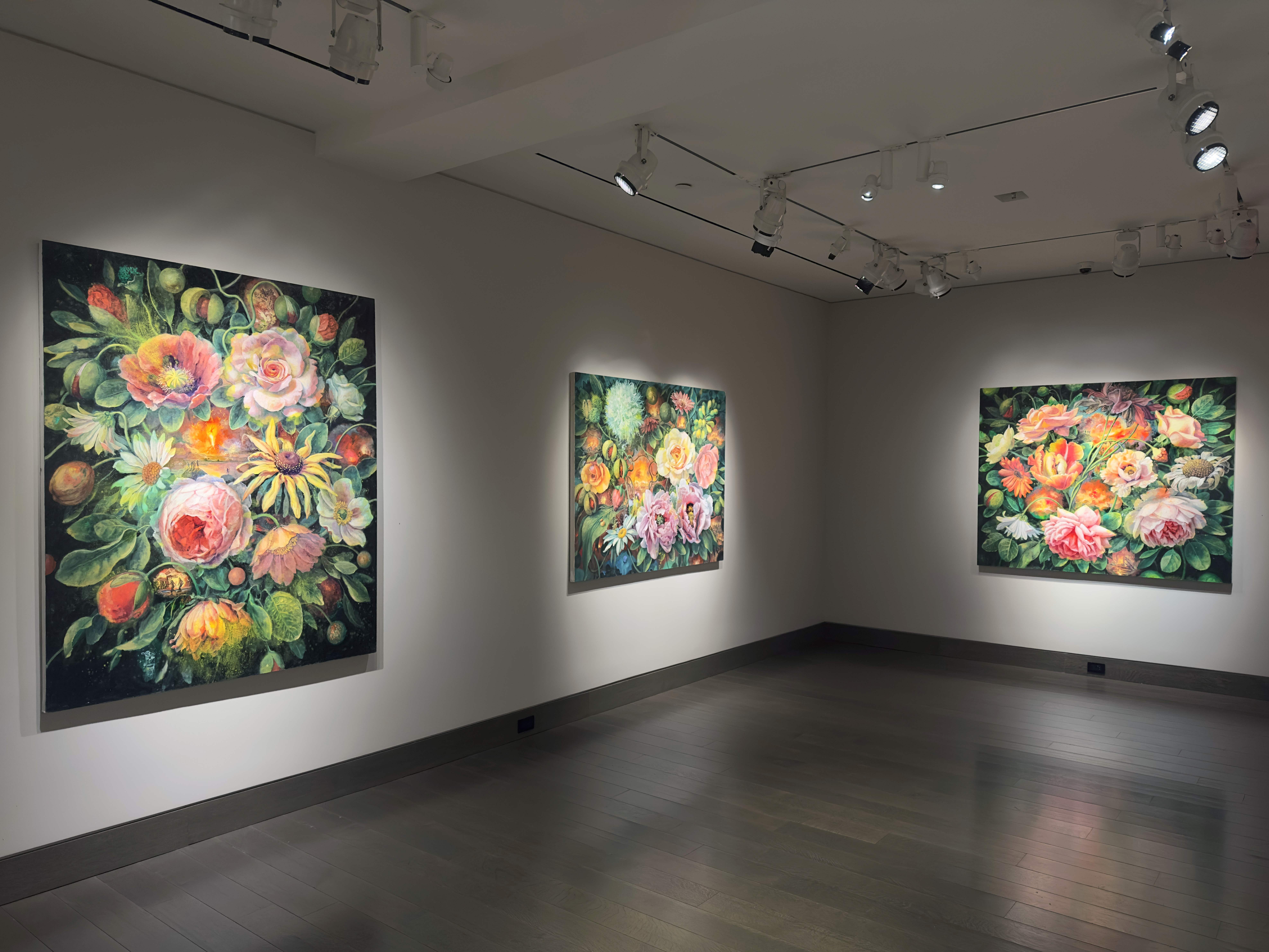
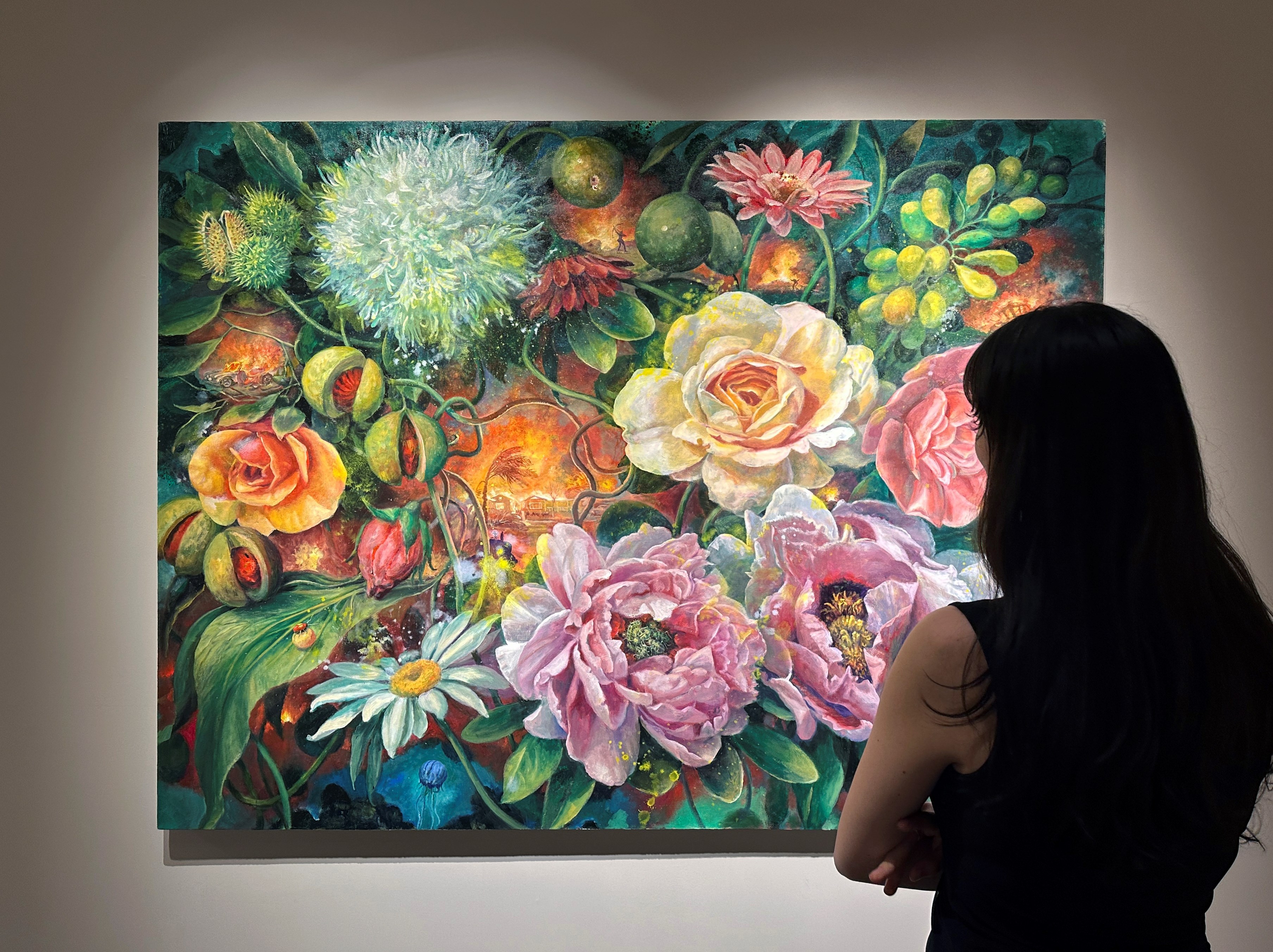
This exhibition takes its title from Amitav Ghosh's powerful critique connecting the spice trade and its controversial legacy to our contemporary climate crisis. Ghosh's book sent Heffernan back to the Dutch still-life paintings she has long admired and radically altered how she viewed the genre and the artists who painted them.
Dutch masters rendered their botanicals with trompe l'oeil precision, but Heffernan redefines that convention. Across six new paintings, dramatically scaled roses, peonies, daisies, tulips, and poppies erupt beyond the canvas. Painted with vivid color and explosive brushwork, Heffernan's compositions are not exercises in quiet contemplation. They seduce and entangle the viewer in the disorienting scene.
Heffernan's flora also appears in various states of bloom and decay, an impossible abundance, a fantasy of plenty. But where the Dutch masters embedded their vanitas symbolism in skulls, hourglasses, and porcelain, Heffernan gives us nutmegs on the vine. Small, irresistible, devastating. The nutmeg is the object whose powdered spice launched genocidal atrocities, the forbidden fruit of its time. The Dutch masters memorialized an individual human life, while Heffernan scales memento mori to the entire planet. The dying flowers are not only a reminder of human mortality. They are a warning that the world itself is in peril.
In Ghosh's view, the colonial atrocities of the past and the disasters of our present moment are not separate histories but a single unbroken line. As the eye moves deeper into Heffernan's canvases, narrative scenes unfold in miniature among the stems and petals as if seen through the wrong end of a telescope, Bosch-like in their fevered intensity, at once nightmarish and documentary. Planes crash, volcanoes erupt, cities burn. Heffernan's titles read like dispatches from an unrelenting news cycle — LA Fires, Gaza, Venezuela, Evacuations, Eruptions.
Heffernan's audience has come to expect self-portraits, women or men inserted as protagonist and avatar. In this exhibition, a significant shift occurs: the central figure is absent. Yet these may be her most personal paintings to date. Her monumental blooms become her stand-in, as both still life and self-portrait, bearing witness to catastrophe. What remains is her conviction that we are slowly making our world unlivable. These paintings are a call to action. In Heffernan's hands, looking is never a passive act. It is the beginning of a reckoning.

Sign Up & Never Miss a Show