+33 1 42 16 79 79
Open: Tue-Sat 10am-6pm
Visit
Open: Tue-Sat 10am-6pm
76 rue de Turenne, 75003, Paris, France
Open: Tue-Sat 10am-6pm
Visit
Fri 5 Jun 2026 to Sat 25 Jul 2026
76 rue de Turenne, 75003 JR: Les esquisses de la Caverne
Tue-Sat 10am-6pm
Artist: JR
JR’s fifth exhibition at Perrotin coincides with the artist’s audacious unveiling of his monumental La Caverne du Pont Neuf in Paris (June 6–28, 2026). Strikingly original and destined to become legendary, this public art project temporarily transforms the Pont-Neuf, Paris’s oldest bridge, into a walkway reimagined as a cave of printed fabric: 120 meters long, 20 meters wide, and 18 meters high. For nearly a month, the immersive installation invites the public to experience it at all hours, day or night.
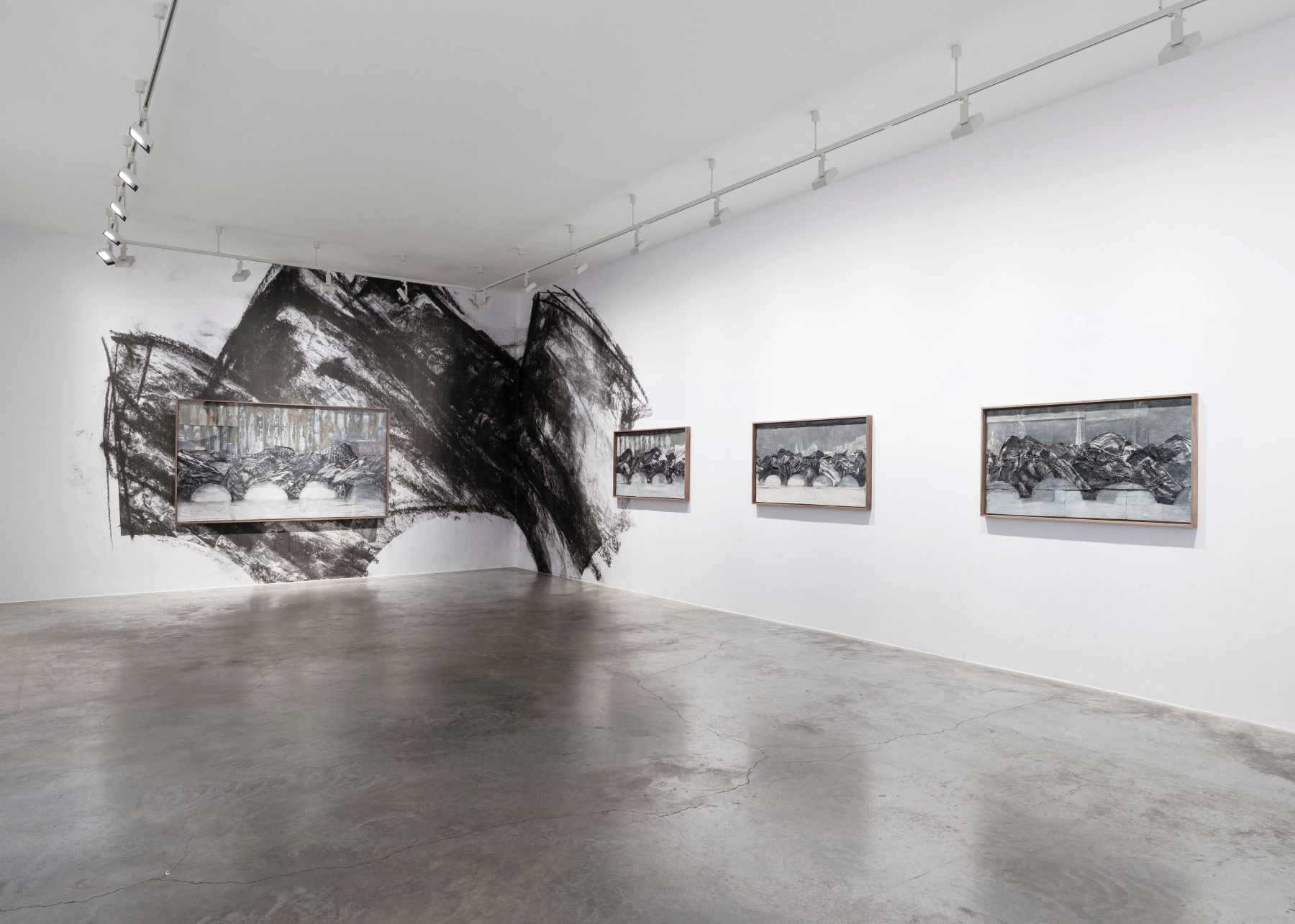
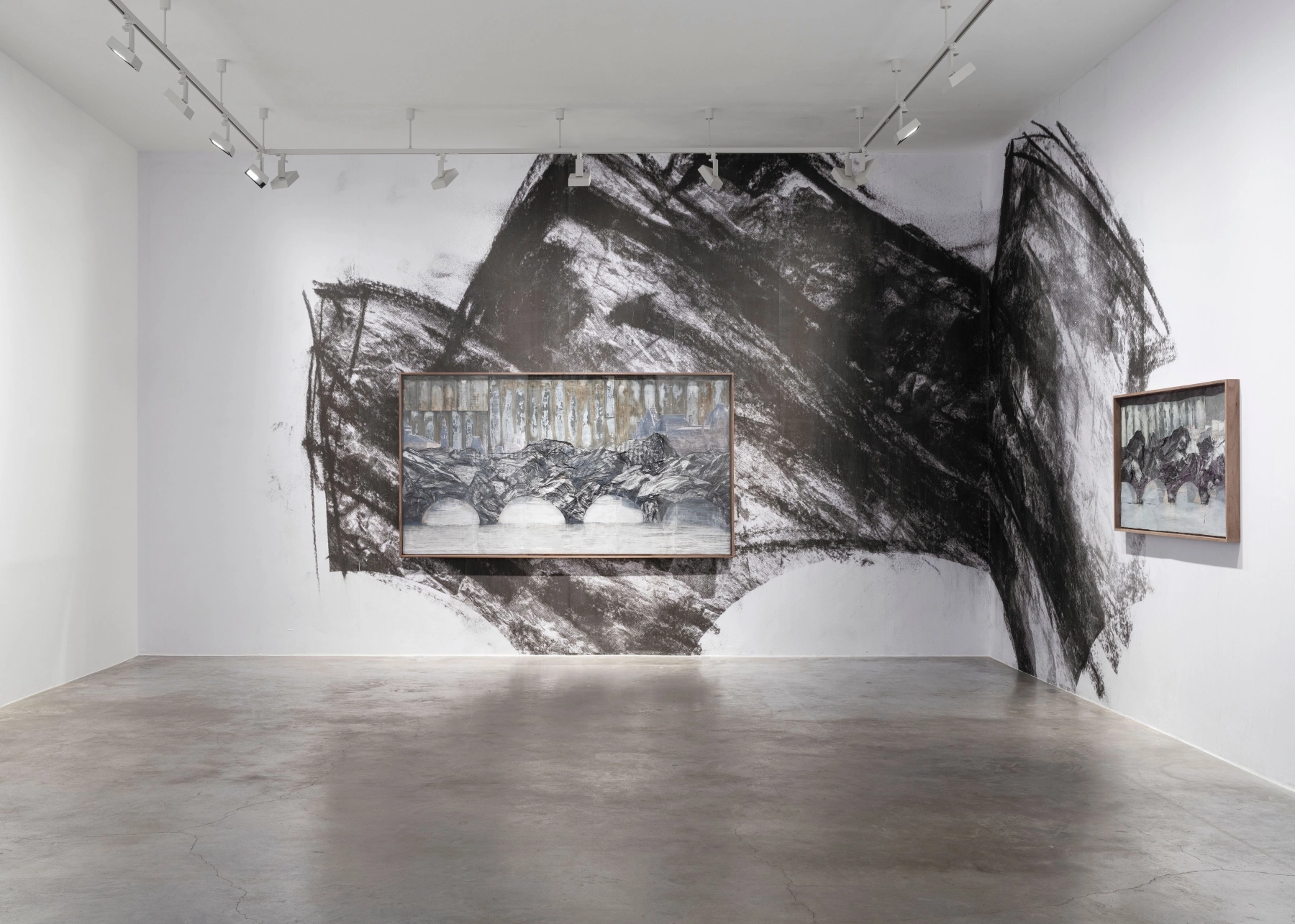
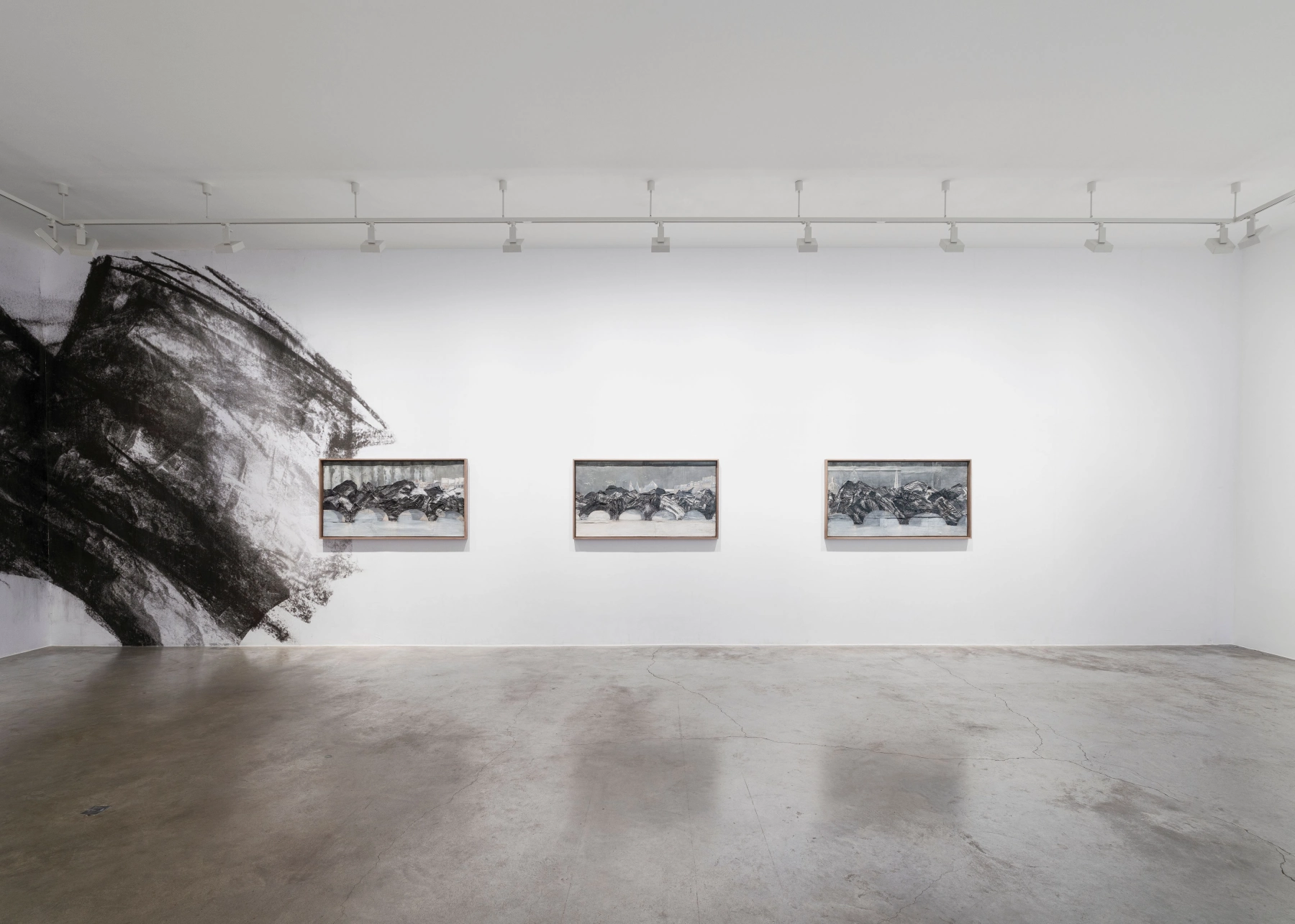
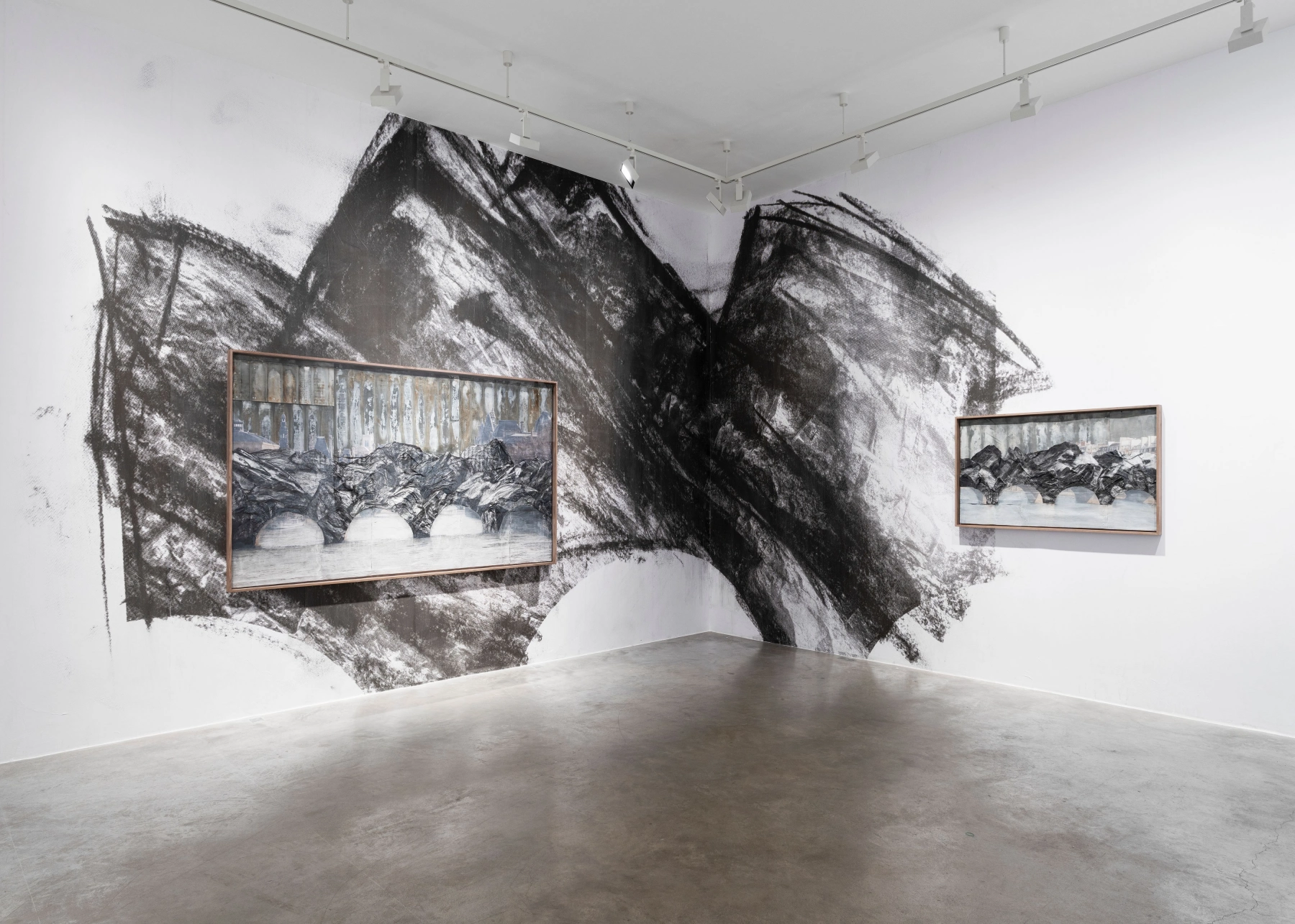
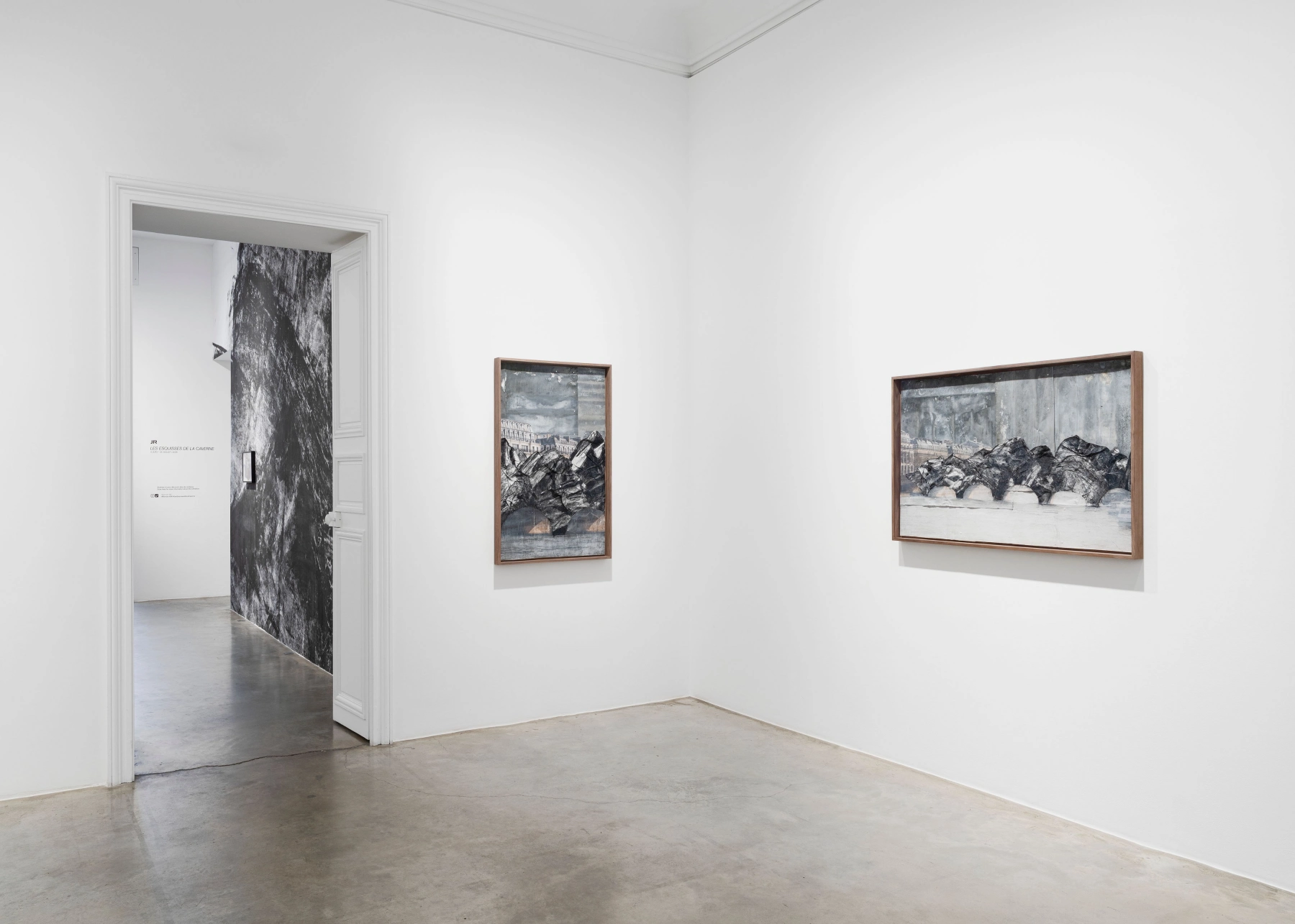
Forty-one years after Christo and Jeanne-Claude’s The Pont-Neuf Wrapped (1985), La Caverne du Pont Neuf continues JR’s tradition of large-scale trompe-l’oeil projects, which in recent years have adorned the Louvre, the Paris Opera, and the facades of Italian palaces. Inspired by Plato’s allegory of the cave and debates on perception (What does it mean to see? Does seeing evoke a sense of truth or imagination?), these works explore the nature of illusion, deception, and art’s extraordinary power to reshape the world. They carry consciousness into unprecedented, uncharted universes while their public dimension fosters collective experience and a sense of shared living. With La Caverne du Pont Neuf, JR once again transforms the urban landscape of Paris. Through the magic of art, a still-in-use historic landmark of the City of Light becomes a passage resembling a mountain tunnel, brought to life by a score from Thomas Bangalter, formerly of Daft Punk, and an interactive program to heighten the senses. “It’s a step into the unknown,” says the artist, “a journey. I designed the crossing of the Cave as an experience where fullness and emptiness exist in balance.” A guaranteed break from everyday life.
The plastic works in the gallery, displayed concurrently with the transformed Pont-Neuf, are deliberate thematic extensions of the project, much like the preparatory drawings Christo and Jeanne-Claude created in anticipation of their own installations. Forward-looking and descriptive, they form the very foundation of the project: a documented history of its step-by-step development, reflecting both a mental blueprint and the meticulous labor of design and arrangement.
These preparatory sketches, works of art in their own right, are crafted through a consistent technique that weaves together multiple media. The process begins with photography: JR “shoots” the Pont-Neuf from various angles and selects his images. It then moves into drawing: in his studio, the artist sketches and cuts out the mineral-like shapes for the actual La Caverne du Pont Neuf, drawing inspiration from landscapes observed in mountainous or underwater sites, prefiguring its final form. Another medium, zinc sheets, serves as the substrate onto which the photographs and drawings are assembled through collage. Salvaged from fragments of Parisian rooftops still bearing the marks and traces of time, they lend a contextual dimension to these works, giving them an unmistakably ‘Parisian’ character. To this process of collage and assembly, reminiscent of Robert Rauschenberg’s Combine Painting technique in its accumulation and juxtaposition of disparate elements, JR adds a final gesture: deliberate crumpling. The aim is to puff them up and give them volume. Photography, drawing, collage, and manual manipulation converge to create a seamless blend of two-and three-dimensional forms, once each element has been ‘mounted’ on the zinc base. The result is a construction plan conceived not so much as a technical diagram but as a reverie of the finished work, the completed La Caverne du Pont Neuf as it will appear to the visitor-viewer.
For the past quarter of a century, JR has accompanied his public artworks with a lighter aesthetic approach, such as his collages or what he himself calls Dé-compositions. Intended for private contemplation, these photographs or lithographs are unified by their focus on montage and the juxtaposition of visual fragments. In JR’s symbolic vision, the raw world is a jumble of distinct, separate, isolated forms. It falls to the artist to recompose what reality pulls apart: to gather these fragments together in a spirit of reconciliation, reunification, and harmony. It is as though he were orchestrating our universe, so full of discord and solitude, for our own well-being, aiming for harmony and the elation of the unexpected.
- Paul Ardenne, writer and art historian