+44 2077 348888
Open: Mon-Fri 11am-6pm, Sat 10.30am-2.30pm
Visit
Open: Mon-Fri 11am-6pm, Sat 10.30am-2.30pm
12 Brook’s Mews, W1K 4DG, London, United Kingdom
Open: Mon-Fri 11am-6pm, Sat 10.30am-2.30pm
Visit
José Parlá: ENGRAMS
Ben Brown Fine Arts, London
Wed 10 Jun 2026 to Fri 31 Jul 2026
12 Brook’s Mews, W1K 4DG José Parlá: ENGRAMS
Mon-Fri 11am-6pm, Sat 10.30am-2.30pm
Artist: José Parlá
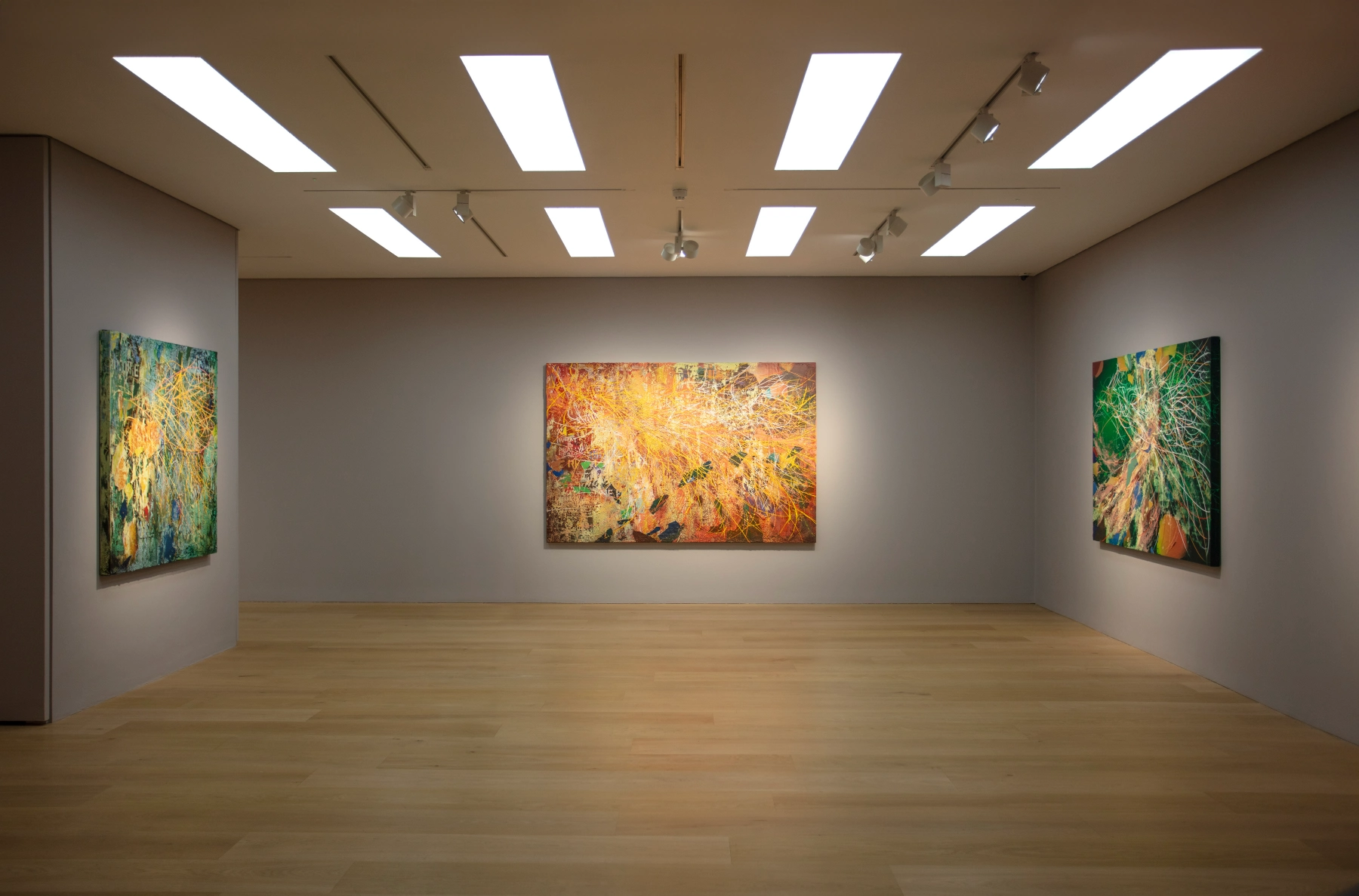
Ben Brown Fine Arts presents ENGRAMS, an exhibition of new paintings and works on paper by Brooklyn-based artist José Parlá, comprising nine new canvases and six paintings on paper.
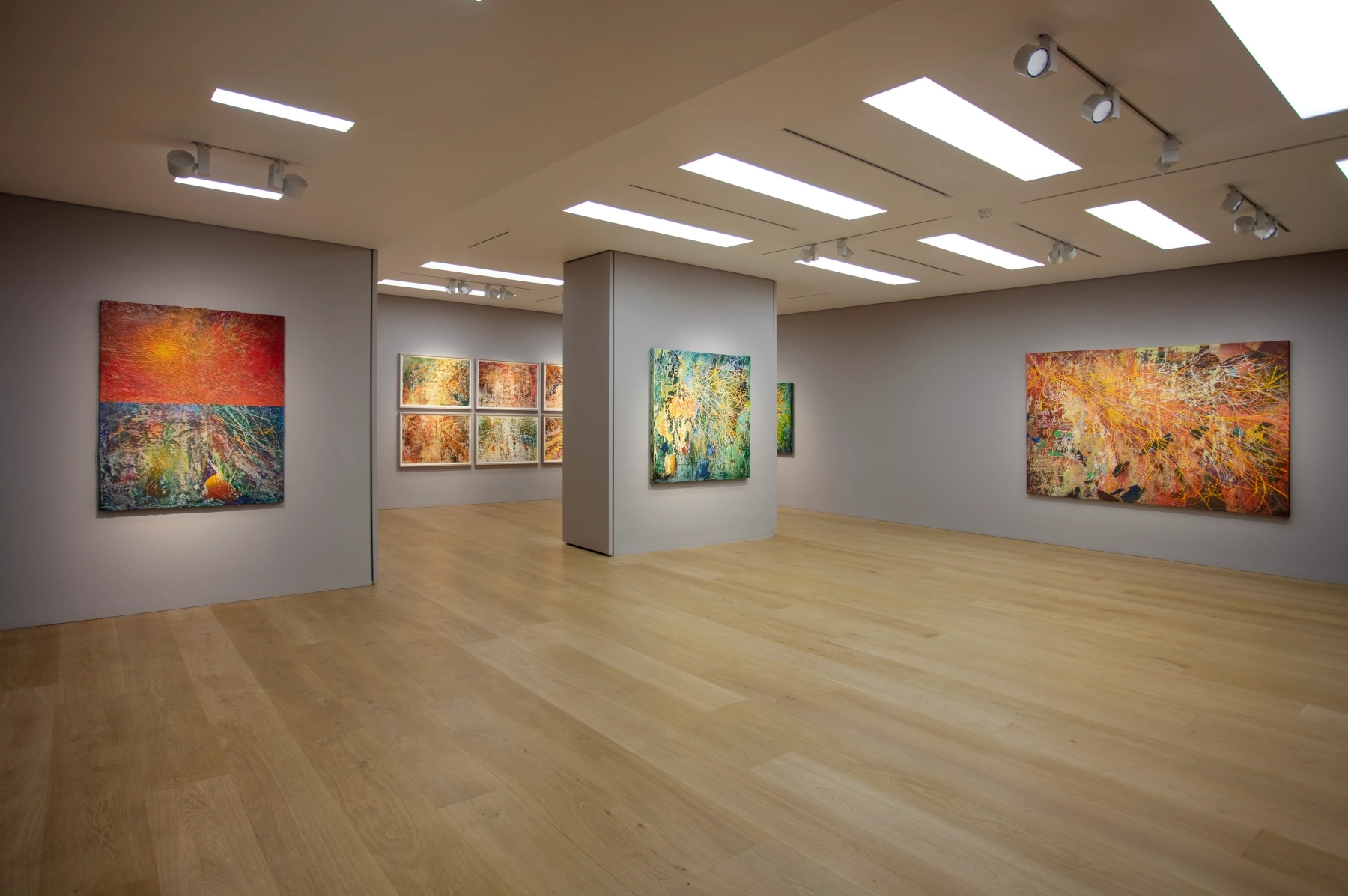
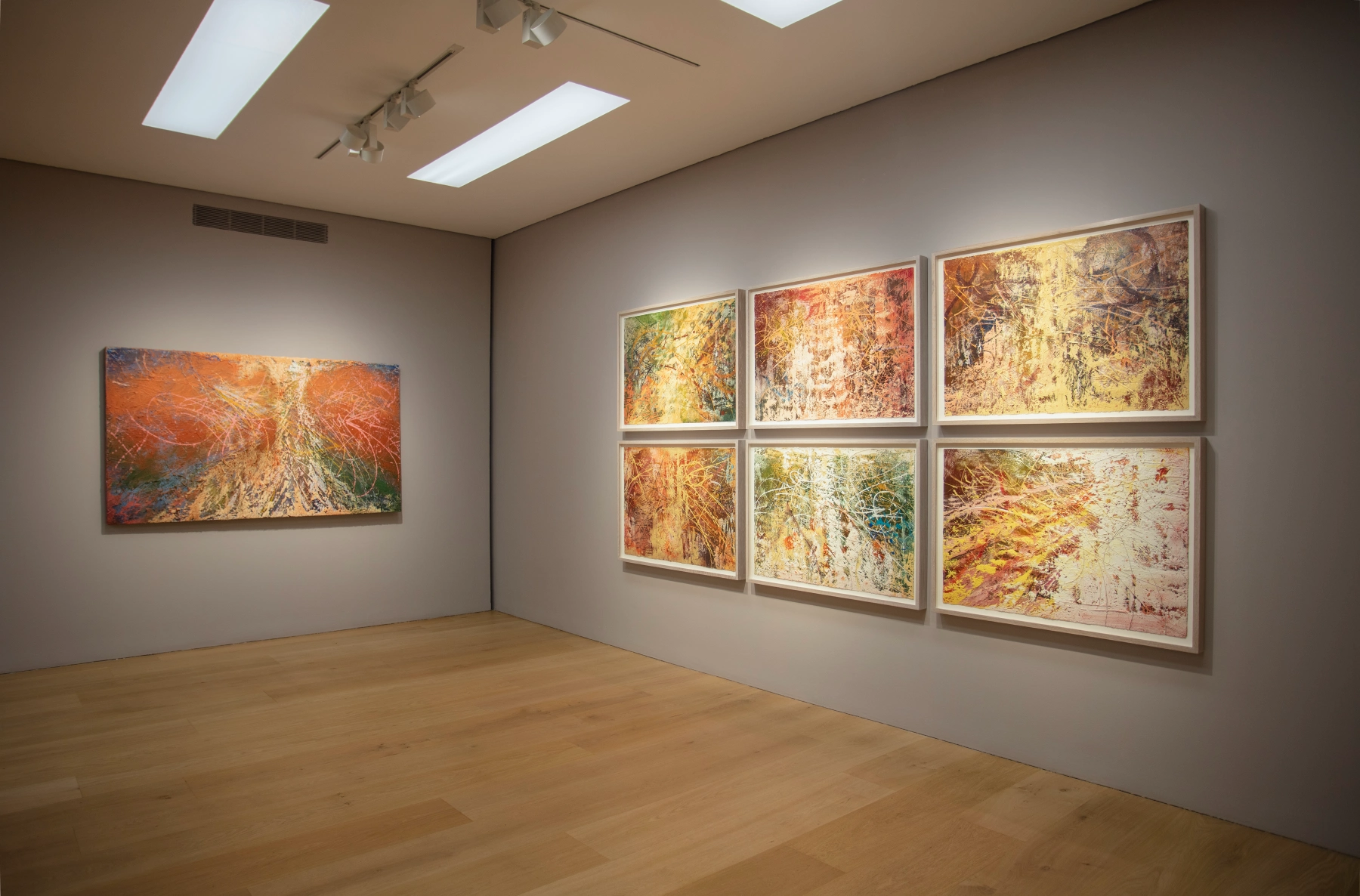
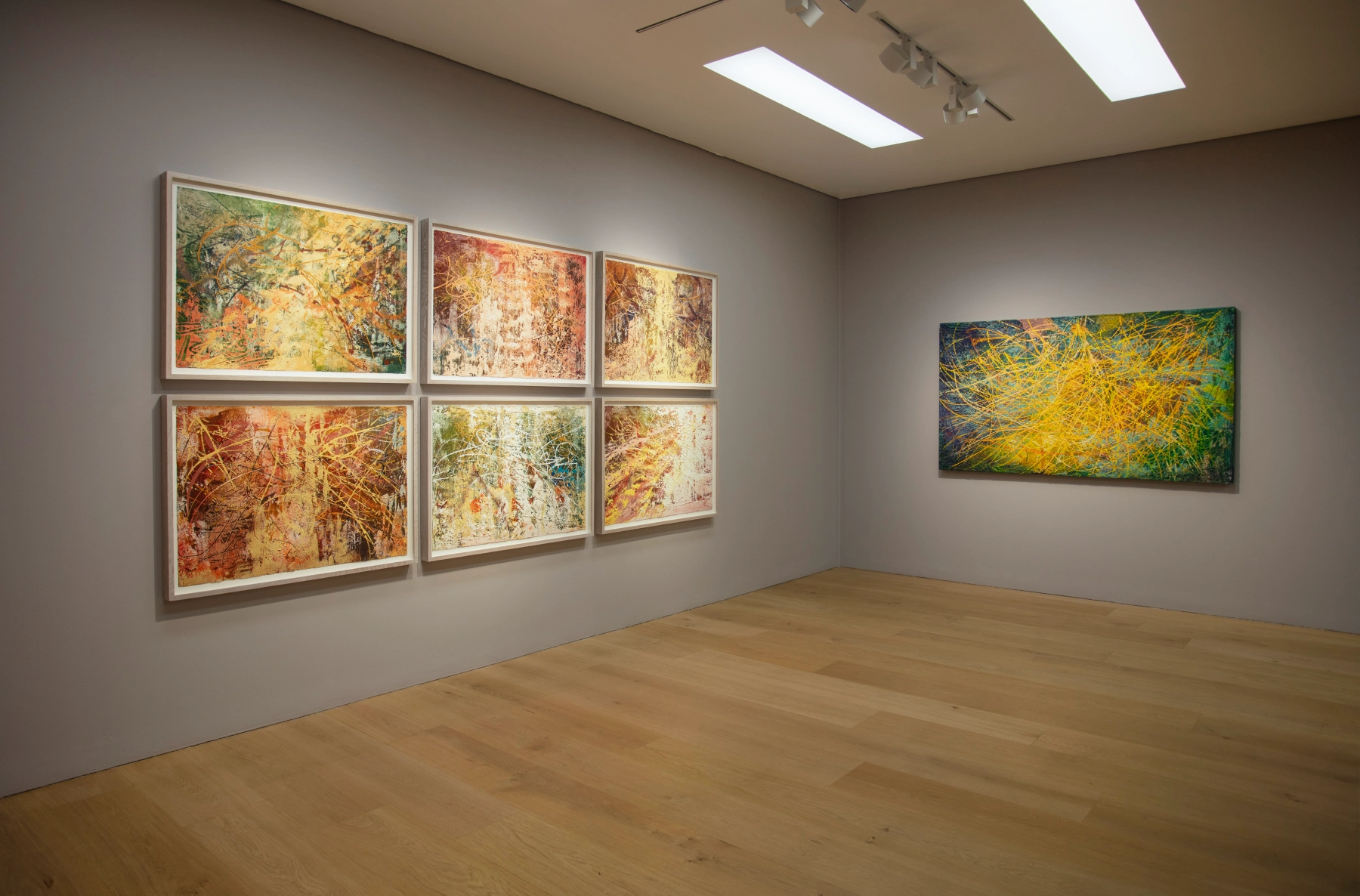
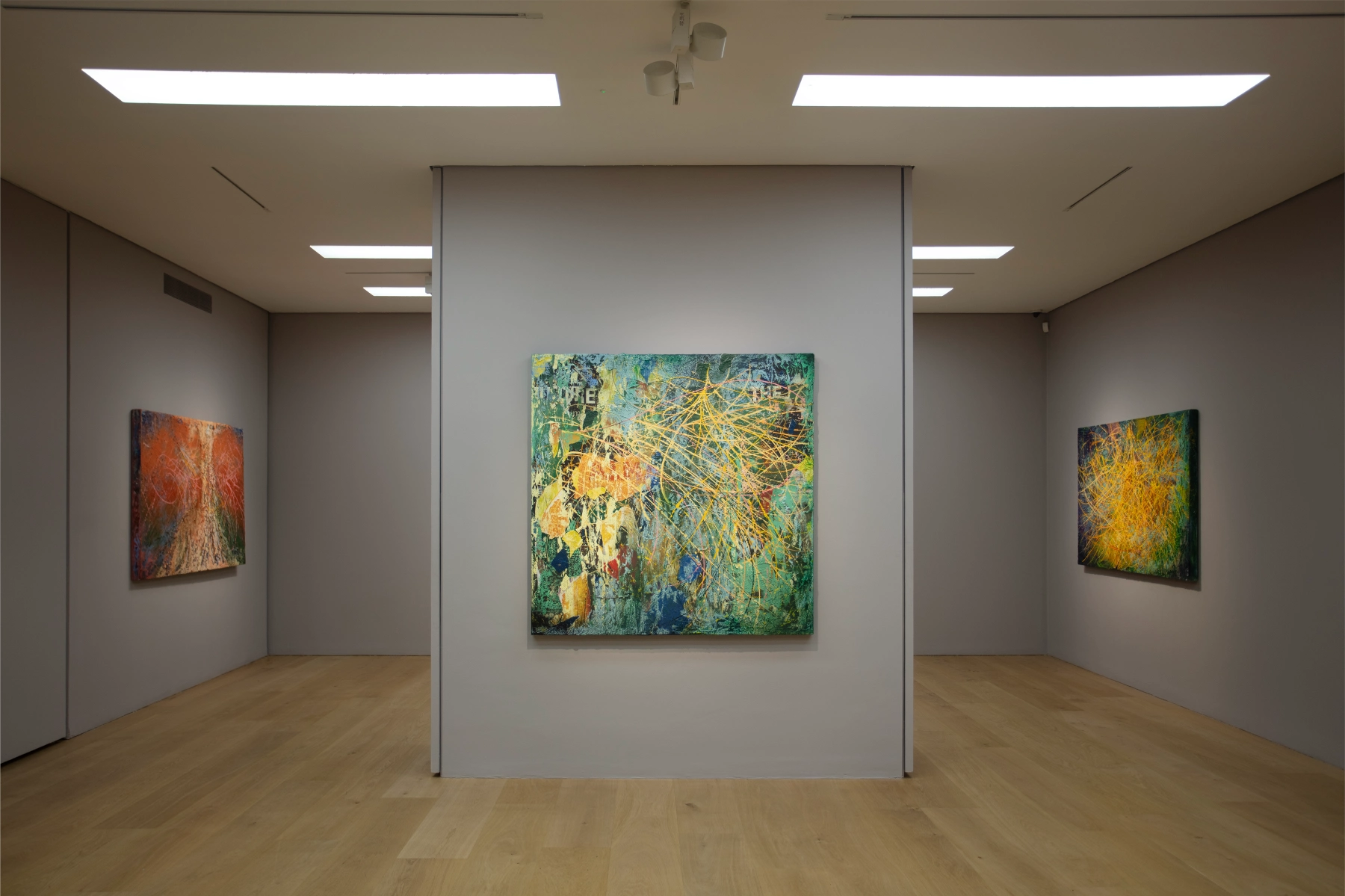
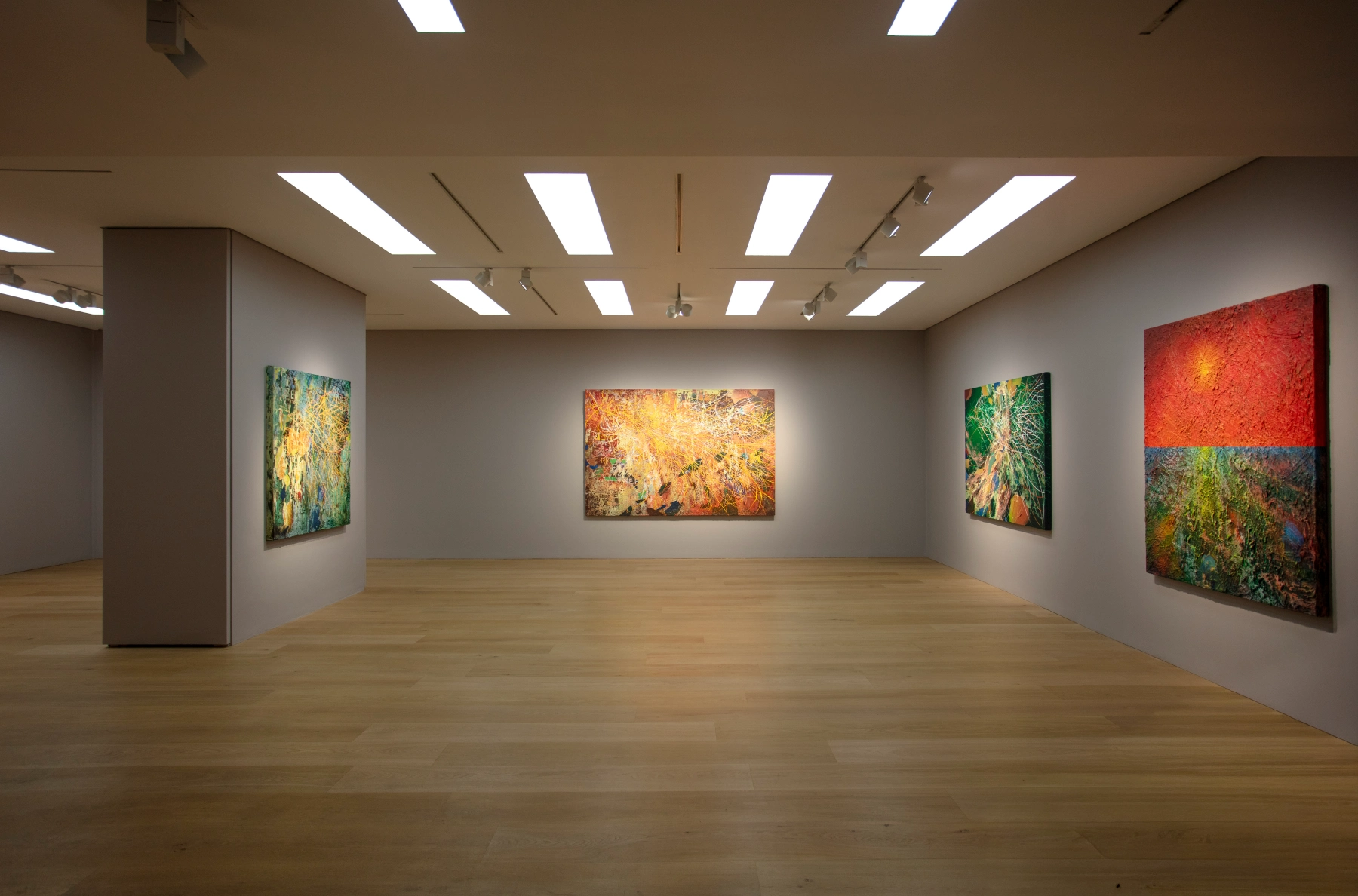
An engram is the physical trace a memory leaves in the brain – a living, ever-shifting pattern that reactivates and reshapes itself each time it is recalled. By this understanding, memory is reconstruction rather than retrieval, and the act of remembering becomes a creative gesture in its own right – the principle that underpins the series.
Three landscapes inform this body of work: the radiant, expansive sunsets of Havana, Cuba; the dense, immersive greenery of the forests in Hakone, Japan; and the subterranean energy of New York City's urban corridors. Where Old Master painters have historically returned to the same landscape day after day, documenting the shifting subtleties of light through direct observation, Parlá inverted this practice. He visited each site only once, then painted from memory alone, allowing the act of remembering, with all its stretching, reconfiguring and transforming, to do the compositional work. As he puts it, "by activating the same memory repeatedly, the accuracy of the image progressively starts dissolving, allowing doors of genuine imagination to swing open."
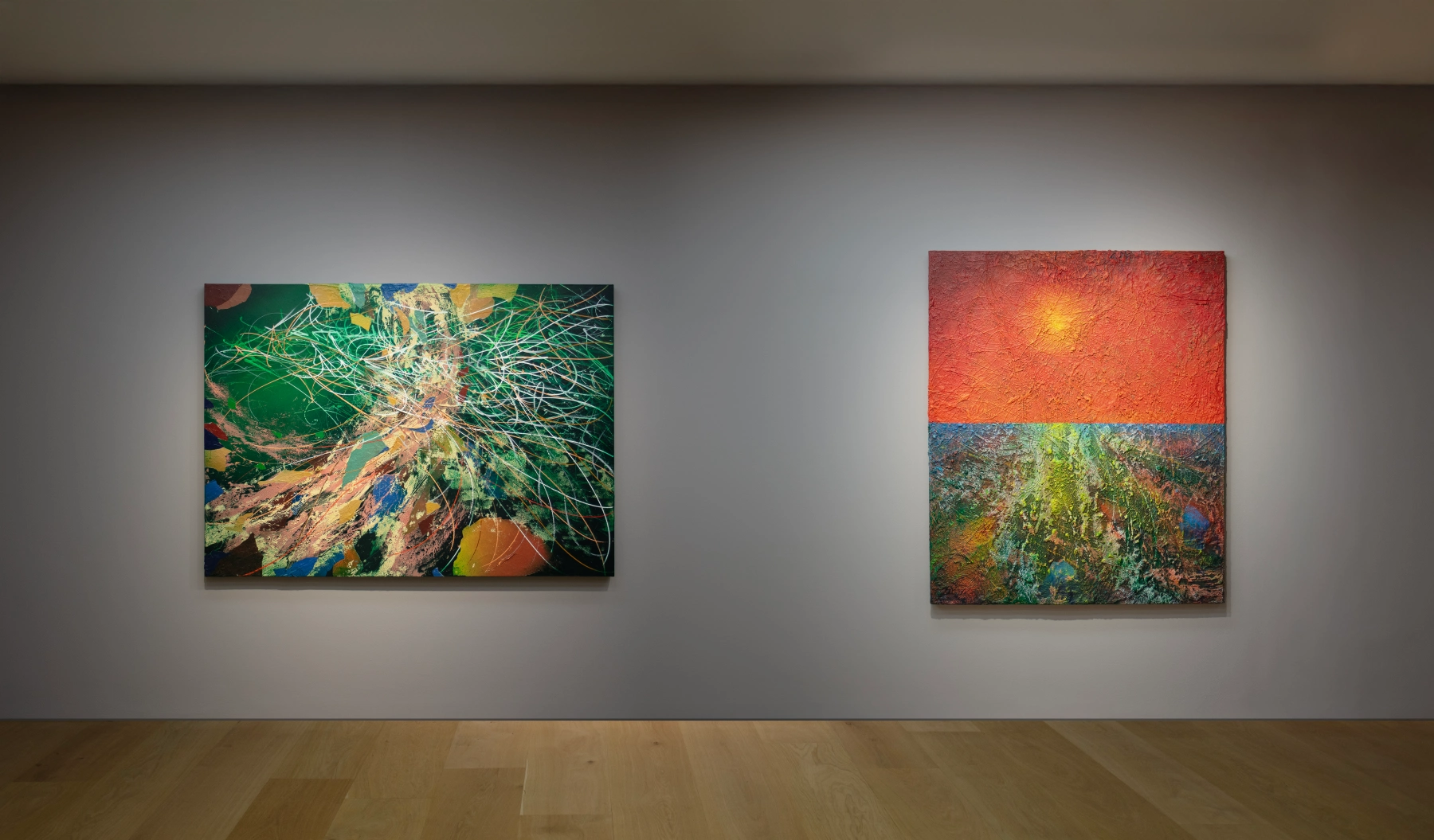
In Kinesthetic Memory Field (2026), Parlá bisects the canvas with a crisply delineated horizon, above which an eruption of saturated yellow gathers into the suggestion of a sun, its luminous presence answered by a shimmering reflection in the plane below. Havana's sunset operates here as a structuring armature rather than a subject, as the figurative dissolves into pure chromatic atmosphere, leaving only the essence of place. By contrast, Subterranean Trace of New York City (2026) presents a densely accreted surface in which fragments of collaged material, half-legible text and weathered passages of pigment emerge from a metallic palette of greys, ochres and oxidised silvers. The work reads as palimpsest – the layered visual record of a city continually overwritten – evoking the gritty texture, febrile energy and stratified density of New York's subterranean corridors and graffiti-strewn walls.
Engram Study 4 – Hakone Mindscape (2026) takes the mountainous terrain of the Japanese resort town as its point of departure. Brilliant white flecks scatter across the sheet like drifts of vapour, while gestural calligraphic marks weave through the composition, summoning the spectral fog that settles between Hakone's peaks and the verdant, leaf-dense slopes that surround them.
Treating memory as a biological as well as a creative process, Parlá inscribes his recollections onto the canvas through transparency, dry-brushing and collage, building up the layered imprints of time. This impulse is nowhere more apparent than in Inscriptions in Transit (2026), where his vibrant strokes branch and bifurcate across the surface in a manner that recalls the dendritic structures of neural pathways and the body's own circulatory networks, drawing a direct visual correspondence between body, mind and canvas. The paintings are, in a very real sense, neural events made visible, each work a record not of a place but of the mind's continuous work of remembering and rewriting it.
ENGRAMS is the first iteration of a broader investigation of the same name – an acronym for Exploring Neighborhoods, Gestures, Archived Memory Spaces. The research is being developed during Parlá's current residency at Columbia University's Zuckerman Institute, where he is this year's Alan Kanzer Artist Resident, and forms part of his ongoing exploration of the dialogue between art and neuroscience.