Sign Up & Never Miss a Show
- free weekly opening and closing emails
- free weekly exhibition selection emails
- save and favourite exhibitions
Brucknerstrasse 4, 1040, Vienna, Austria
Open: Tue-Fri 11am-6pm, Sat 11am-4pm
Fri 22 May 2026 to Sat 20 Jun 2026
Brucknerstrasse 4, 1040 Focus On: Crystin Moritz & Karl Karner
Tue-Fri 11am-6pm, Sat 11am-4pm
Artists: Karl Karner - Crystin Moritz
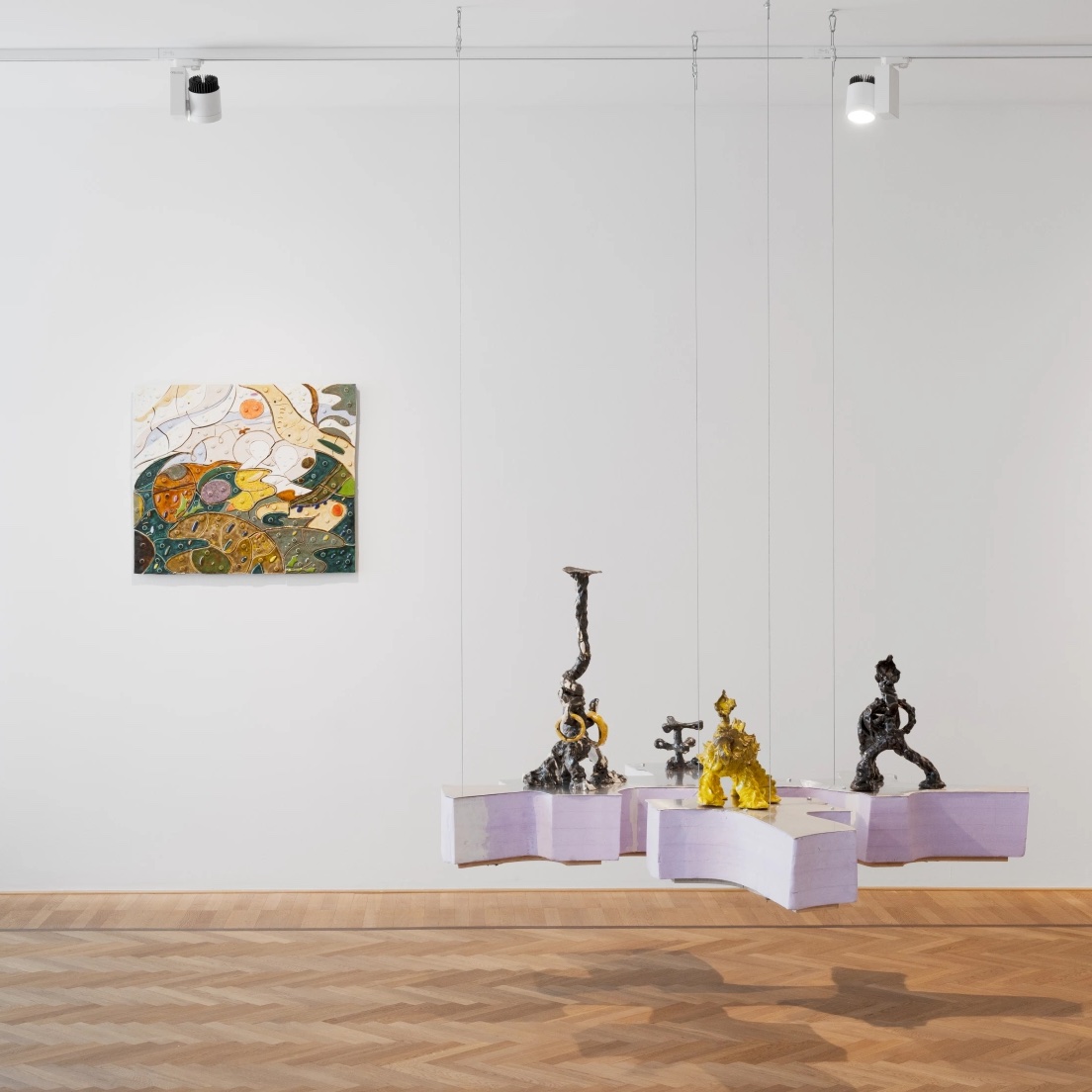
Galerie Kandlhofer presents at the Focus On an exhibition by artists Crystin Moritz and Karl Karner.
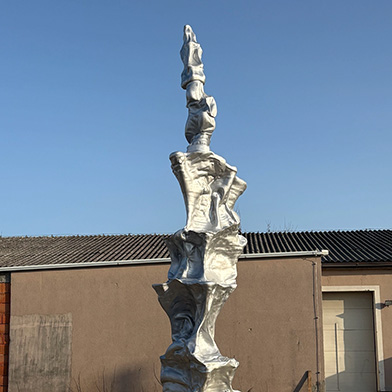
At the center of the Focus On Section stands Karl Karner’s the cow eat not the honey grows - a sculpture that grows, resonates, and tells stories: of bees and trees, of wounds and healing, of beings suspended between nature and imagination. As part of the FEED series, this work demonstrates how closely material, process, and interaction are interwoven in Karl Karner’s practice. Monumental from a distance, the work unfolds into a richly detailed scene upon closer inspection. Casts of feet, appearing like shadows fallen to the ground, invite viewers to enter this landscape. A multitude of natural forms, honeycombs, branches, mullein plants, emerge, while ghostly creatures rise from the surface. They imbue the sculpture with a surreal, almost dreamlike quality, situating it within an intermediate realm that is neither purely nature nor imagination.
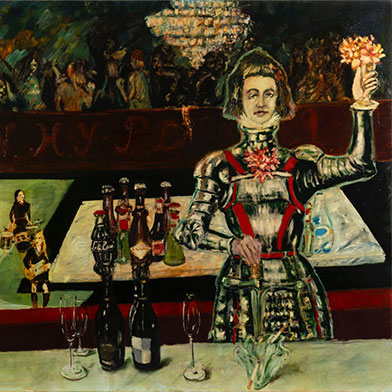
Karner’s installation steps into dialogue with the works of Crystin Moritz, whose practice focuses on AI-generated and hybrid image-making, where analogue aesthetics collide with digital processes. Moritz exhibitions construct precise and unsettling image systems that operate on a disturbing meta-level, collapsing boundaries between reality and simulation. Her work addresses underlying fears and destabilizes fixed ideas of identity and gender.
In LINEA, Crystin Moritz presents works from her new series of the same title, about which the artist states:
„LINEA emerged during a period spent in Sicily, engaging with the island’s history, mythology, and sagas, particularly those centered on women. Combining AI-generated images and videos, the series moves between historical narratives and contemporary perspectives on identity, ritual, and gender. References to traditions such as the Minne di Sant’Agata—small Sicilian pastries referencing the cut-off breasts of Saint Agatha after her martyrdom—point to the ways violence and collective memory become embedded within everyday rituals. Natural forces and symbolic imagery appear throughout the work, connecting Sicily’s layered past with present realities. The series reflects on how inherited social structures and motifs continue to shape society today.“
Sign Up & Never Miss a Show