+1 212 790 3900
Open: Mon-Fri 10am-6pm
Visit
Open: Mon-Fri 10am-6pm
542 West 22nd Street, NY 10011, New York, United States
Open: Mon-Fri 10am-6pm
Visit
Carol Rama. I See You You See Me
Hauser & Wirth 22nd Street, New York
Tue 12 May 2026 to Fri 31 Jul 2026
542 West 22nd Street, NY 10011 Carol Rama. I See You You See Me
Mon-Fri 10am-6pm
Artist: Carol Rama
Hauser & Wirth presents ‘I See You You See Me,’ the gallery’s first exhibition dedicated to the work of maverick Italian artist Carol Rama (1918 – 2015). Organized by Carlo Knoell, this presentation gathers work from six decades of Rama’s career to provide fresh insight into some of the less explored aspects of her wildly original, radically unfiltered experiments in painting, sculpture, textile and bricolage. In her lifetime, Rama’s ferociously non-conformist art was largely dismissed, even actively censored. But in the last several years, the artist’s practice has captivated new generations for whom our contemporary context of a world on the edge of madness makes Rama something of a seer.
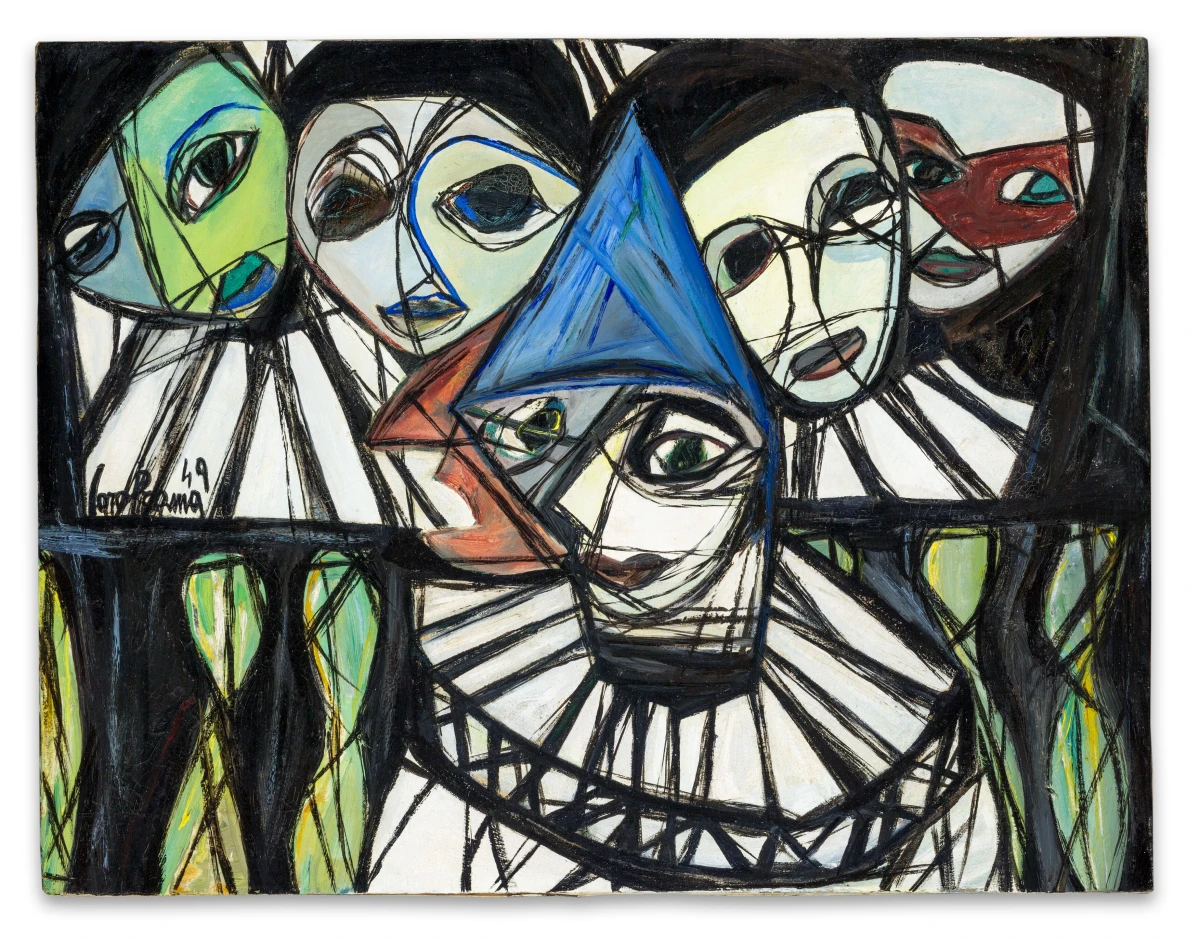
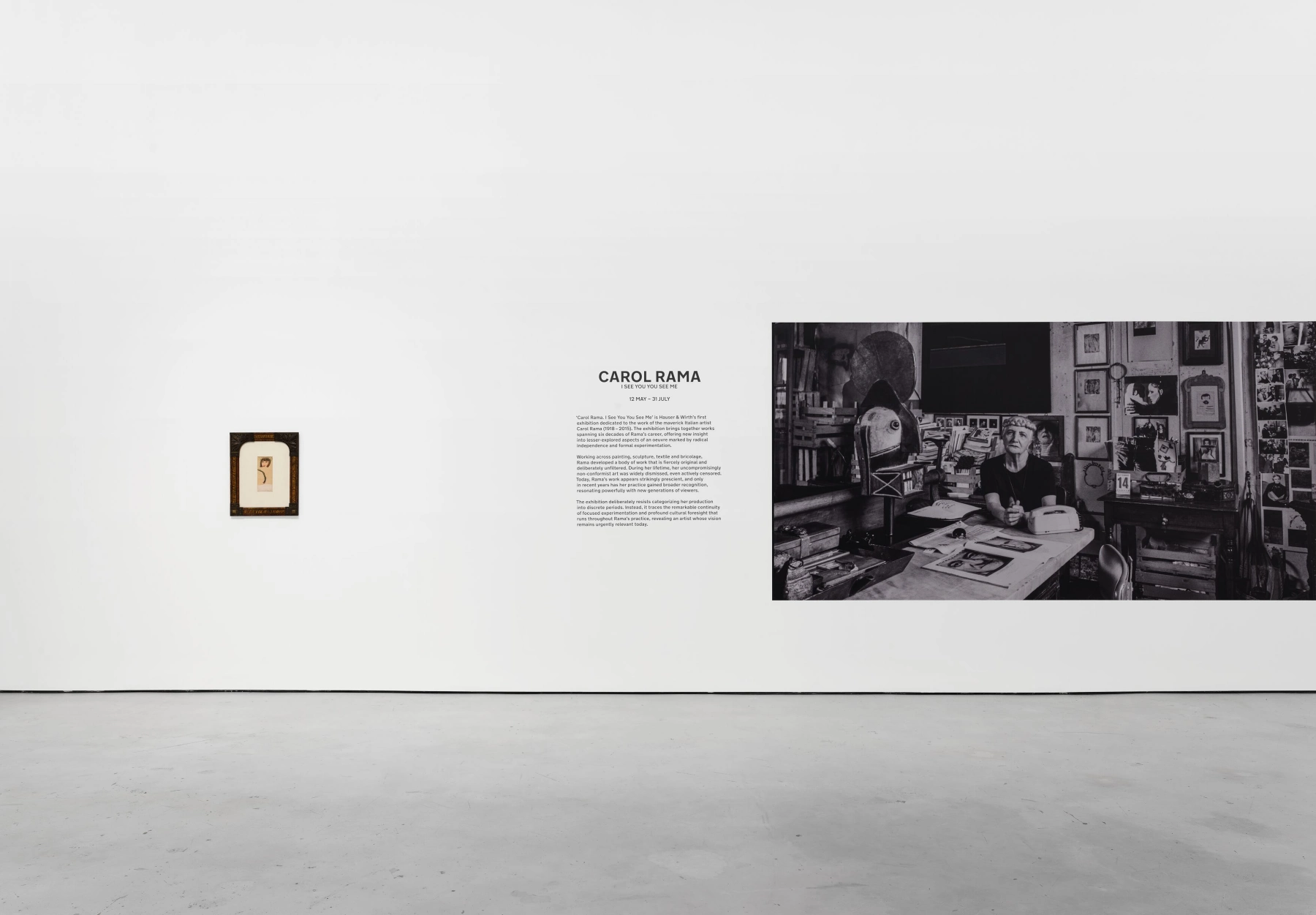
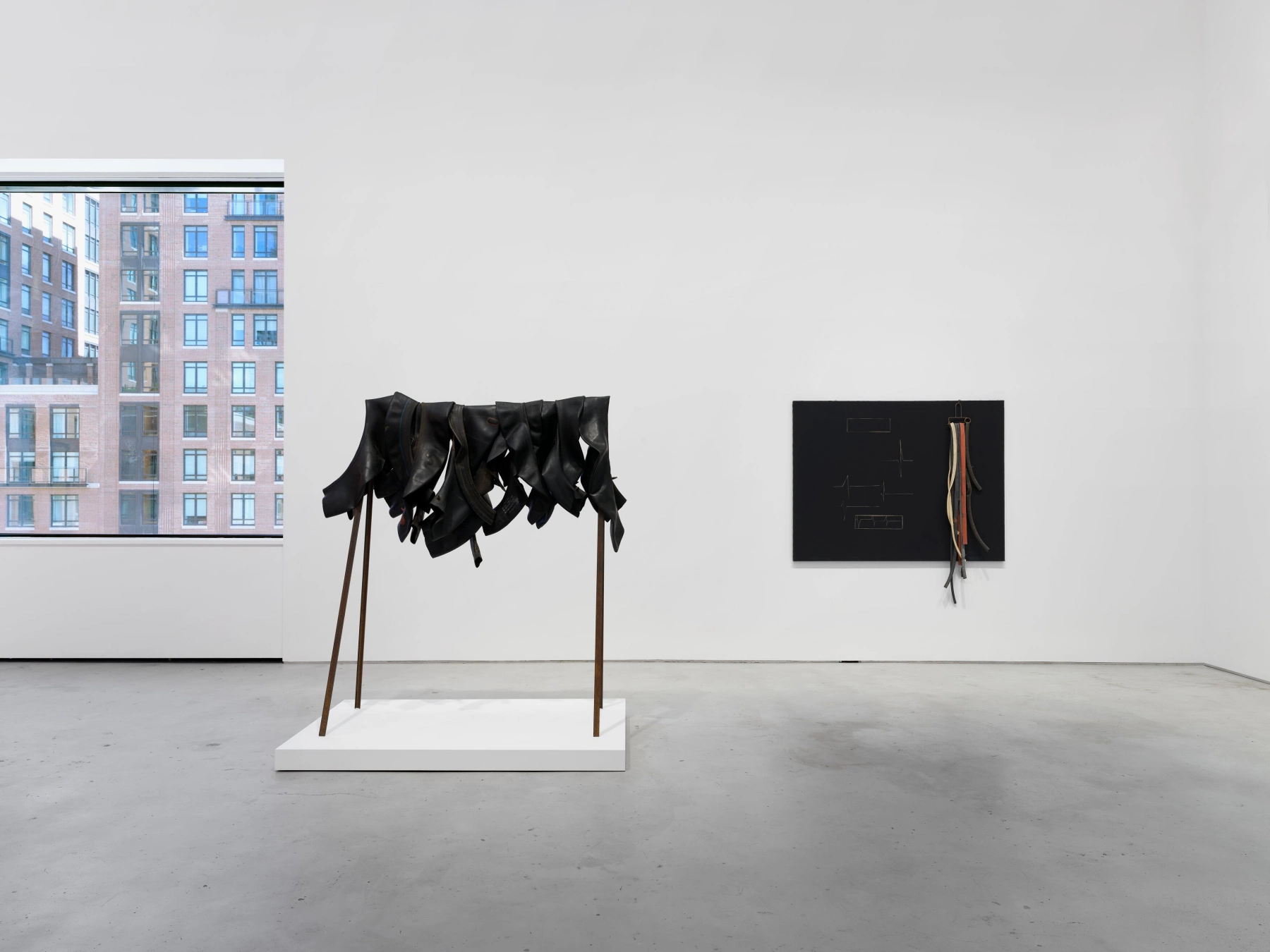
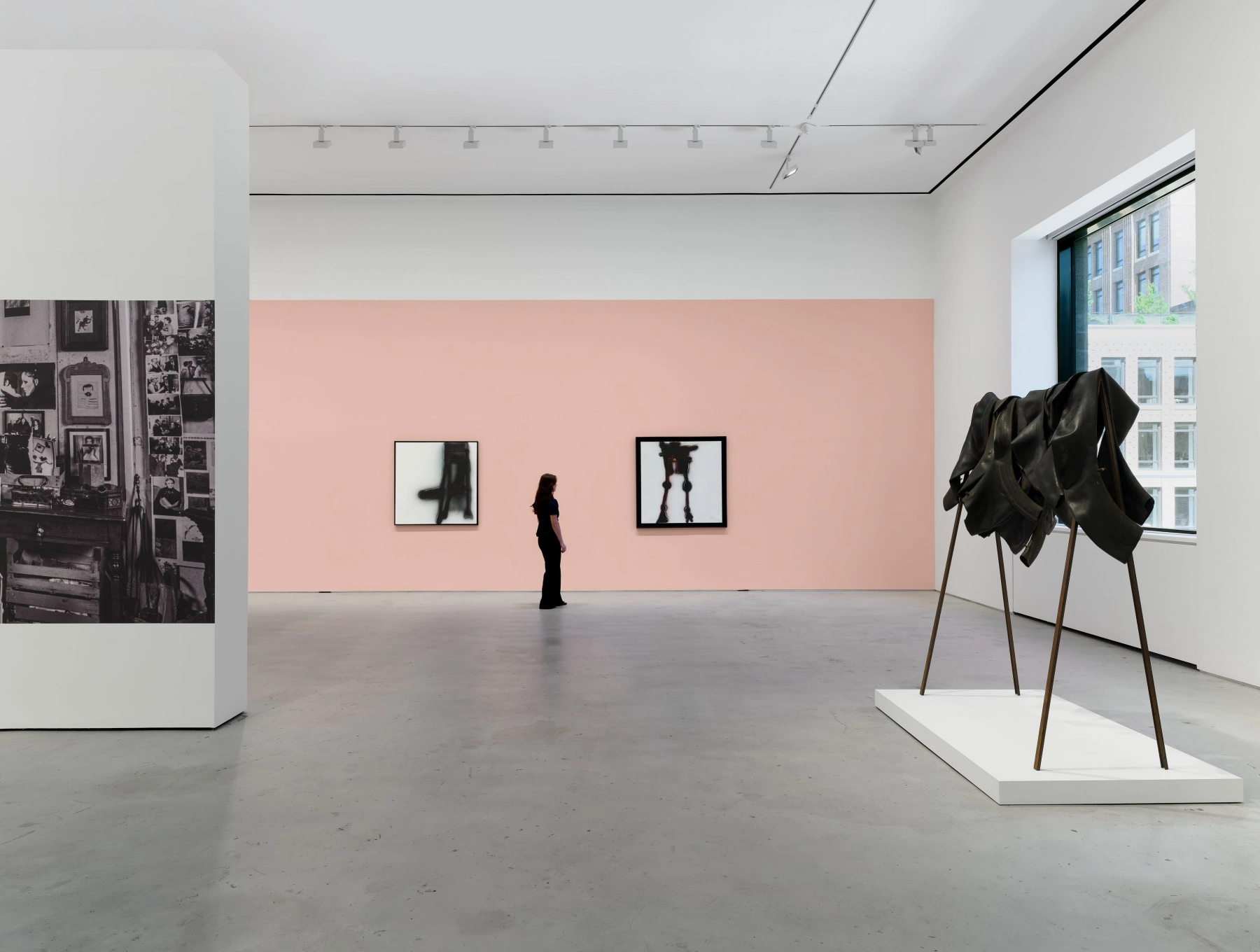
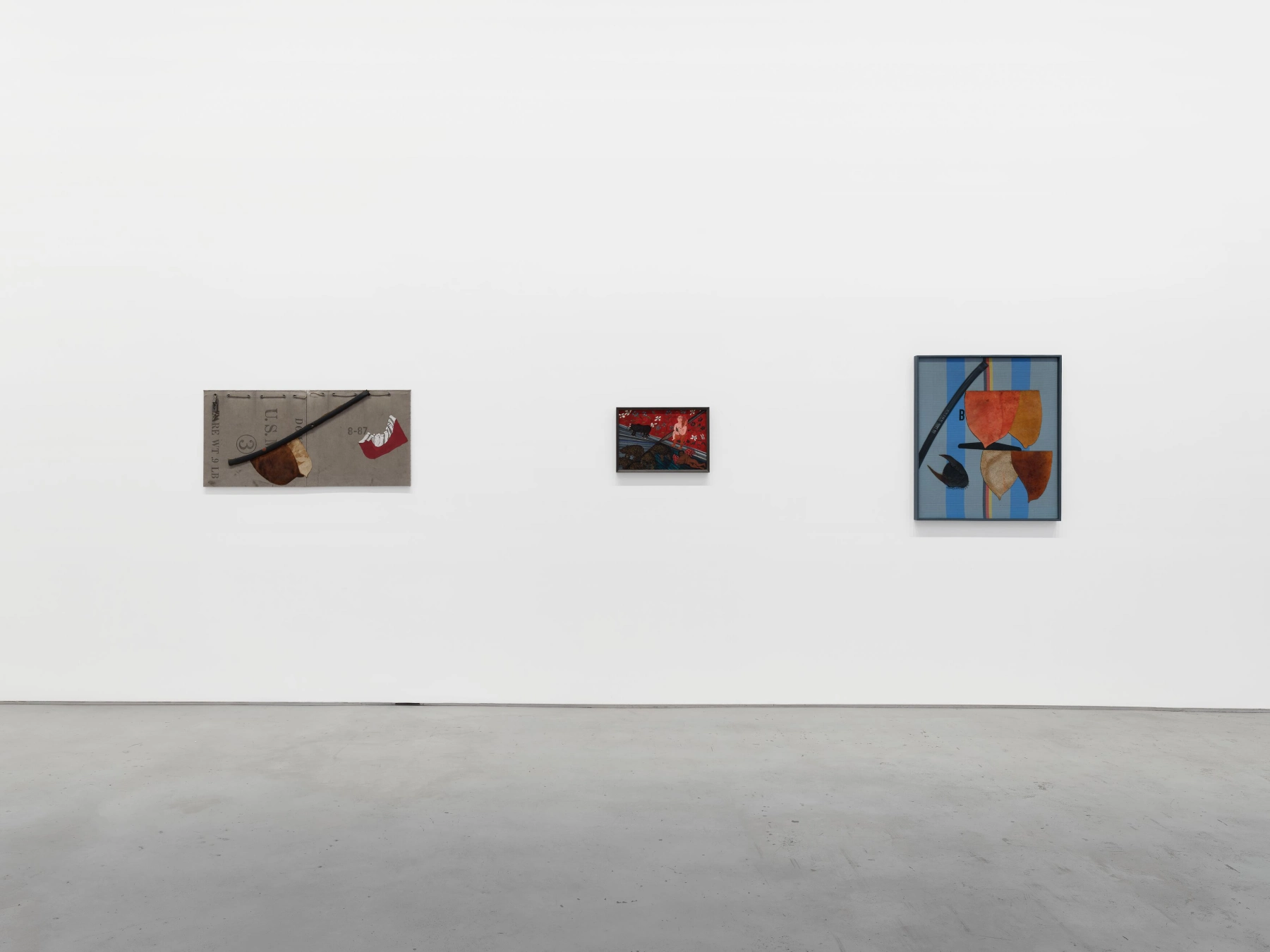
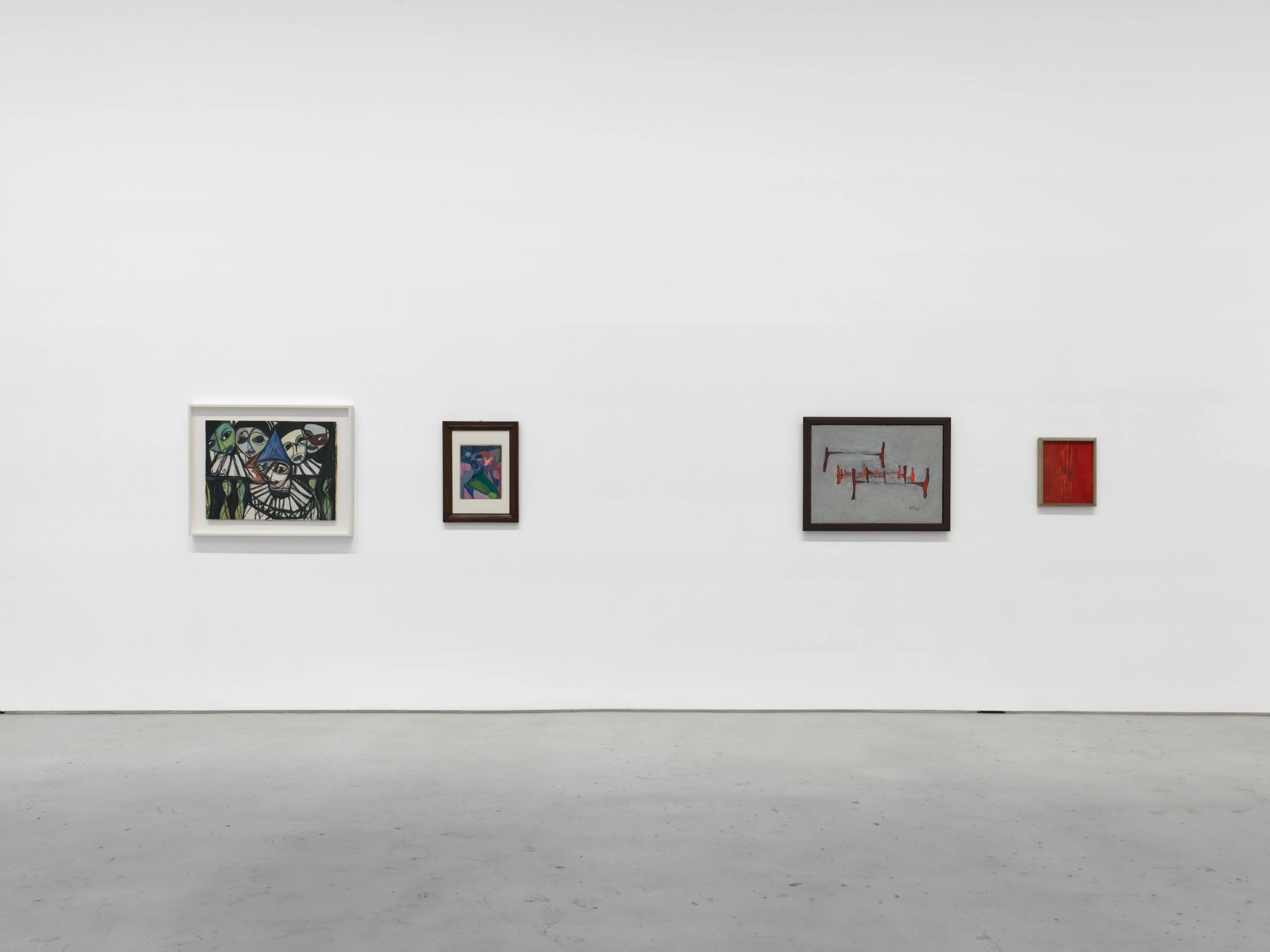
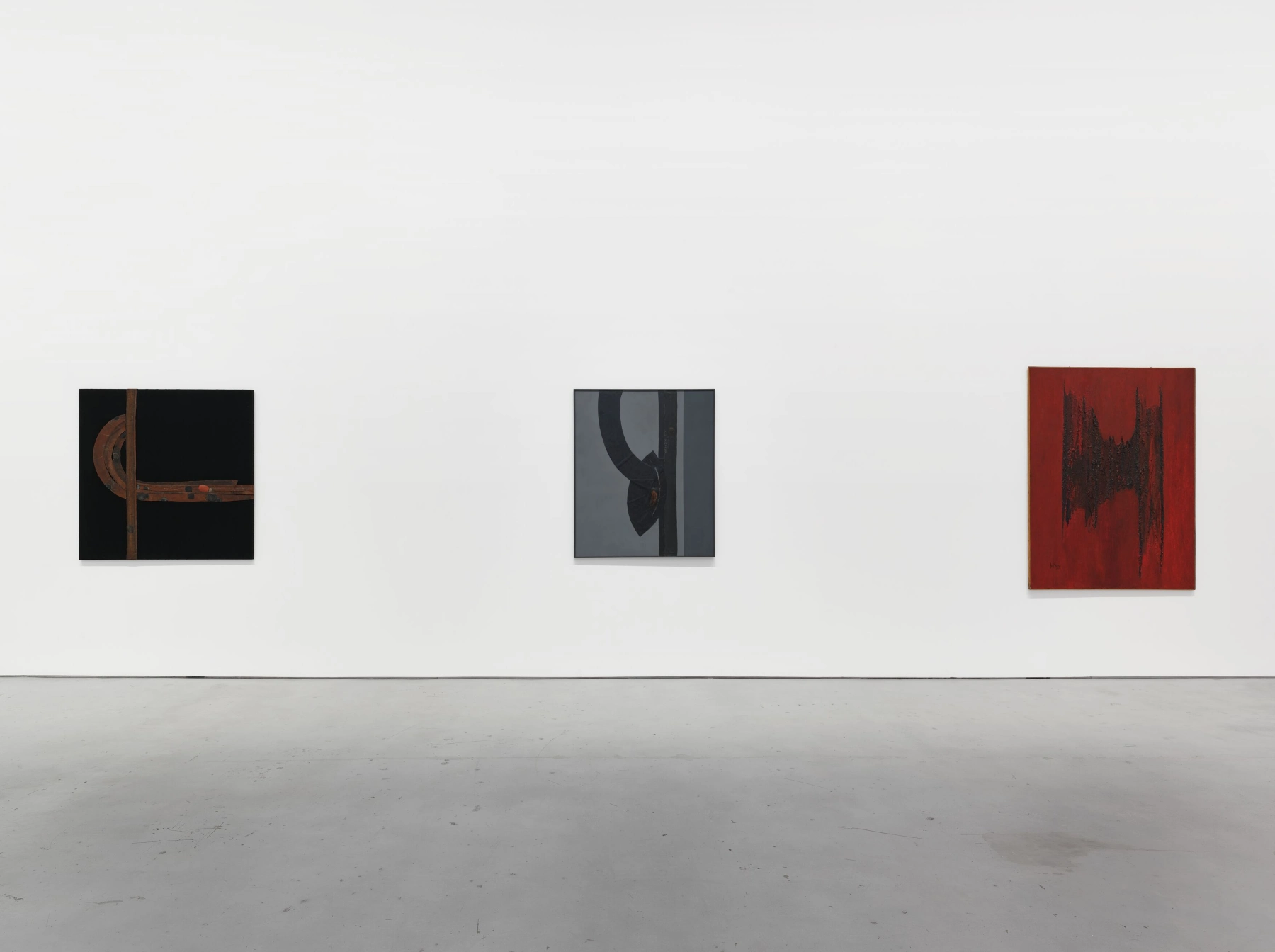
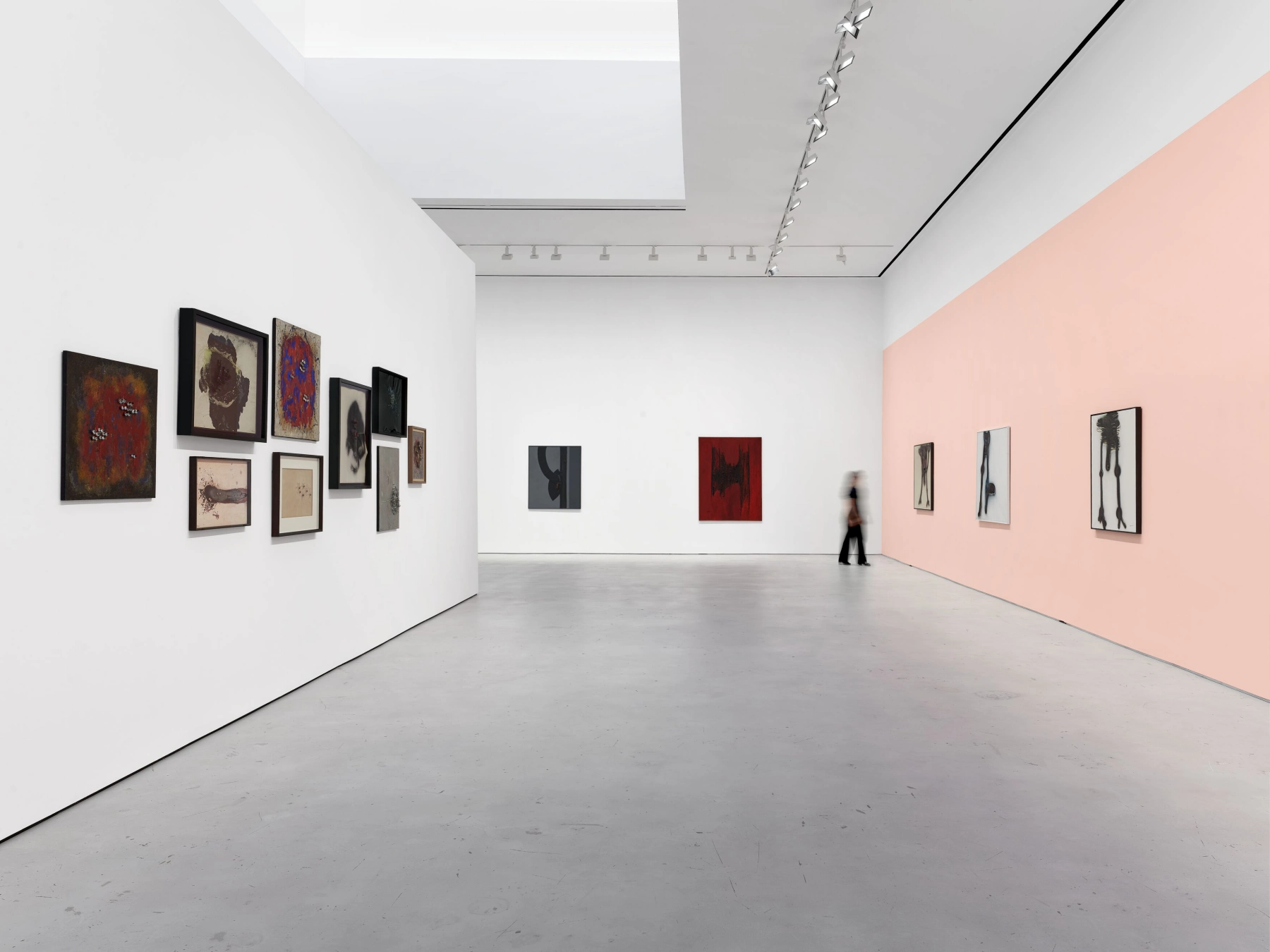
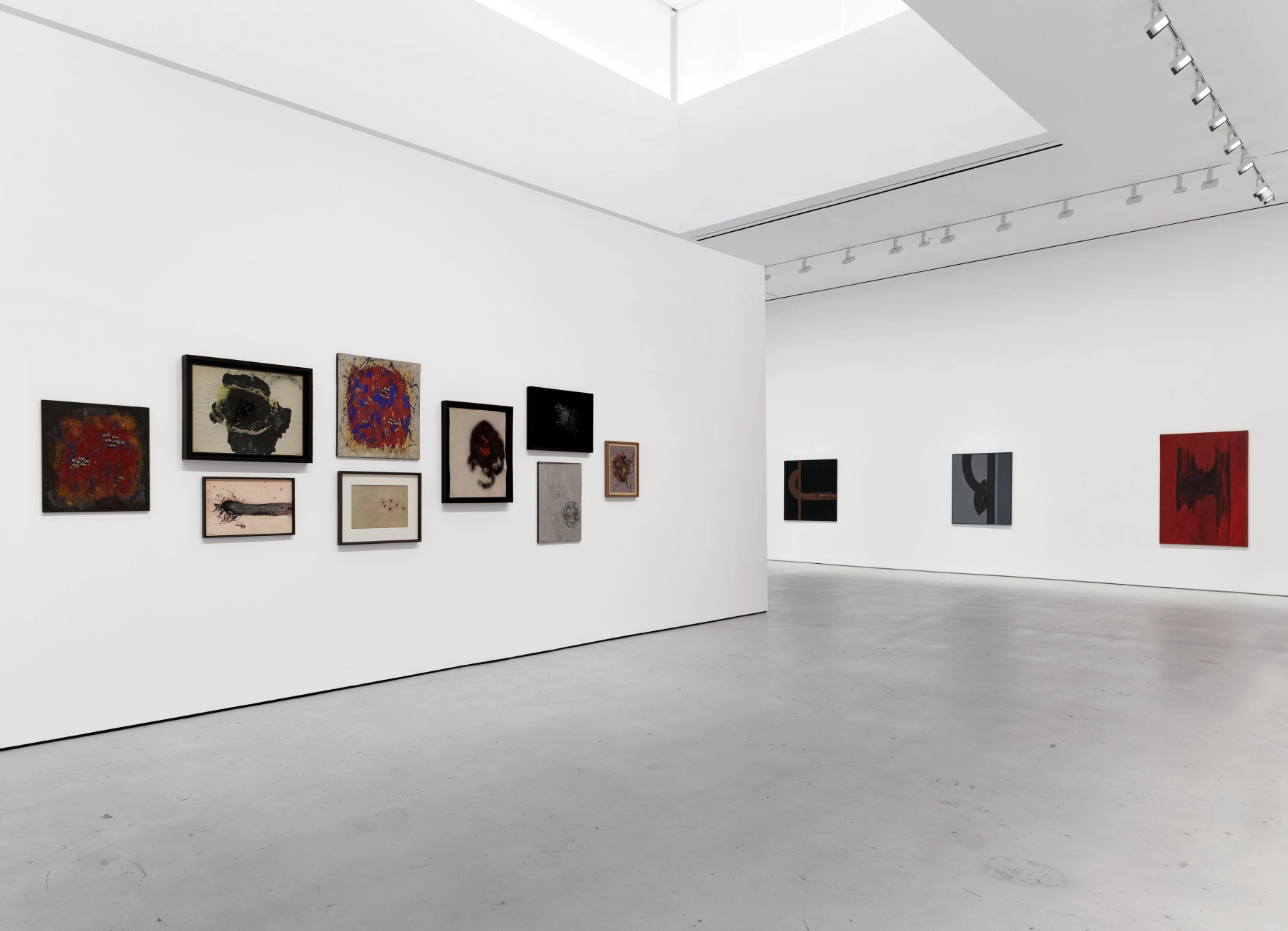
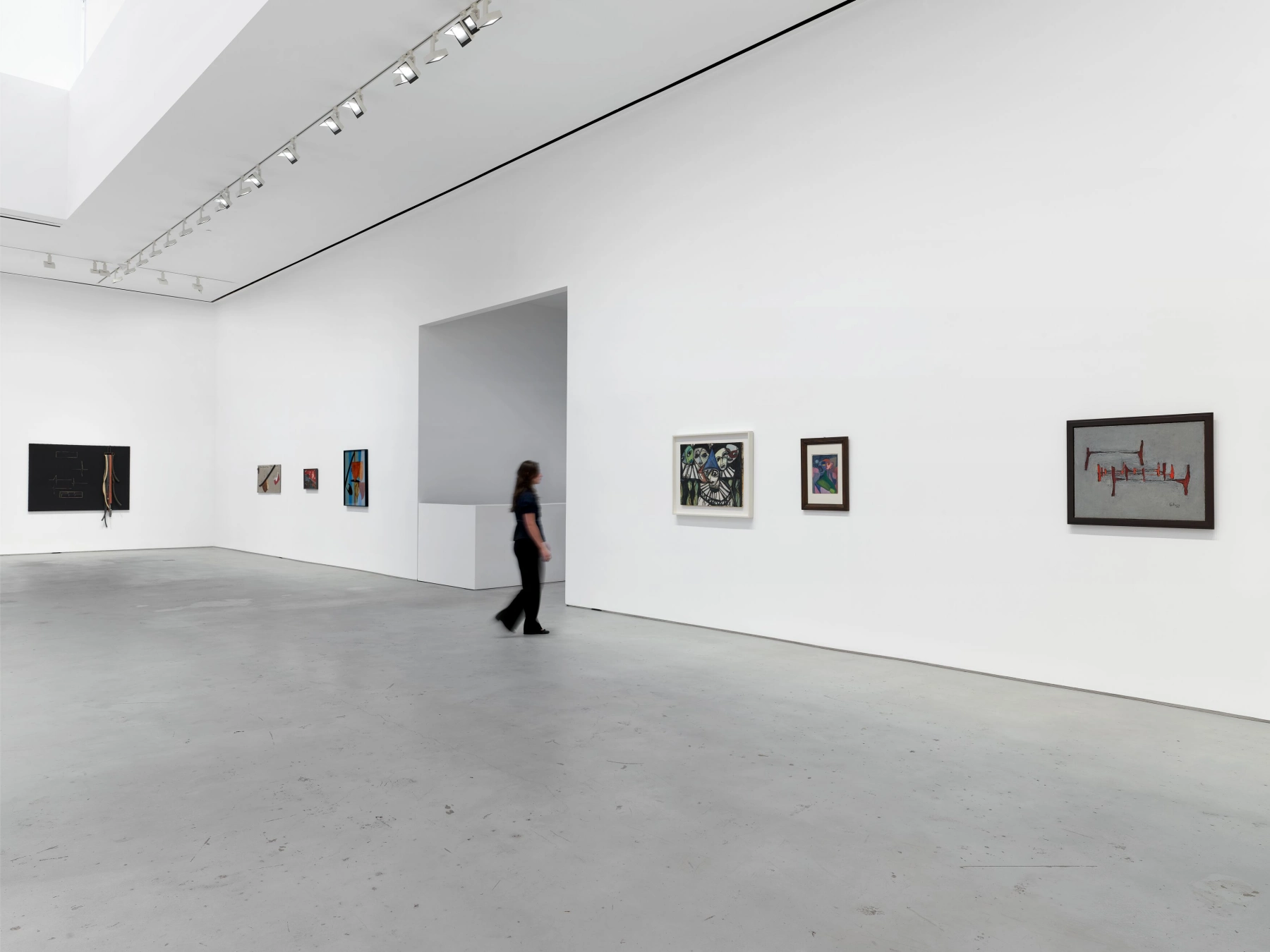
‘I See You You See Me’ eschews the categorization of her work into discrete periods in order to trace the remarkable continuity of focused experimentation and profound cultural foresight as the throughlines of her practice. The prescient quality of Rama’s mind—her instinctive apprehension of how her art would progress—is apparent in even the earliest composition on view, ‘Dorina (Appassionata)’ (1943). This small watercolor foreshadows what would become an enduring autobiographical preoccupation with the body, desire and agency.
Rama’s figuration evolved markedly by the end of the forties with paintings such as ‘Pagliacci (Clowns)’ (1949). Here, a prominent grid structure underpins the titular clowns’ costumes and faces—with eyes that hold the viewer’s gaze with a deliberate, almost sentient intensity—presaging her decisive move toward abstraction in 1951 and anticipating her engagement with the Movimento Arte Concreta (MAC), the Milan-based movement which sought to establish a framework for rigorous, rational, non-representational art based on geometric forms and mathematical principles. While MAC’s axioms provided important structure for Rama’s practice at the time, her work quickly assumed a more dynamic and irregular character, ultimately leading to her departure from the group around 1960—a testament to the independent vision that would come to distinguish her work.
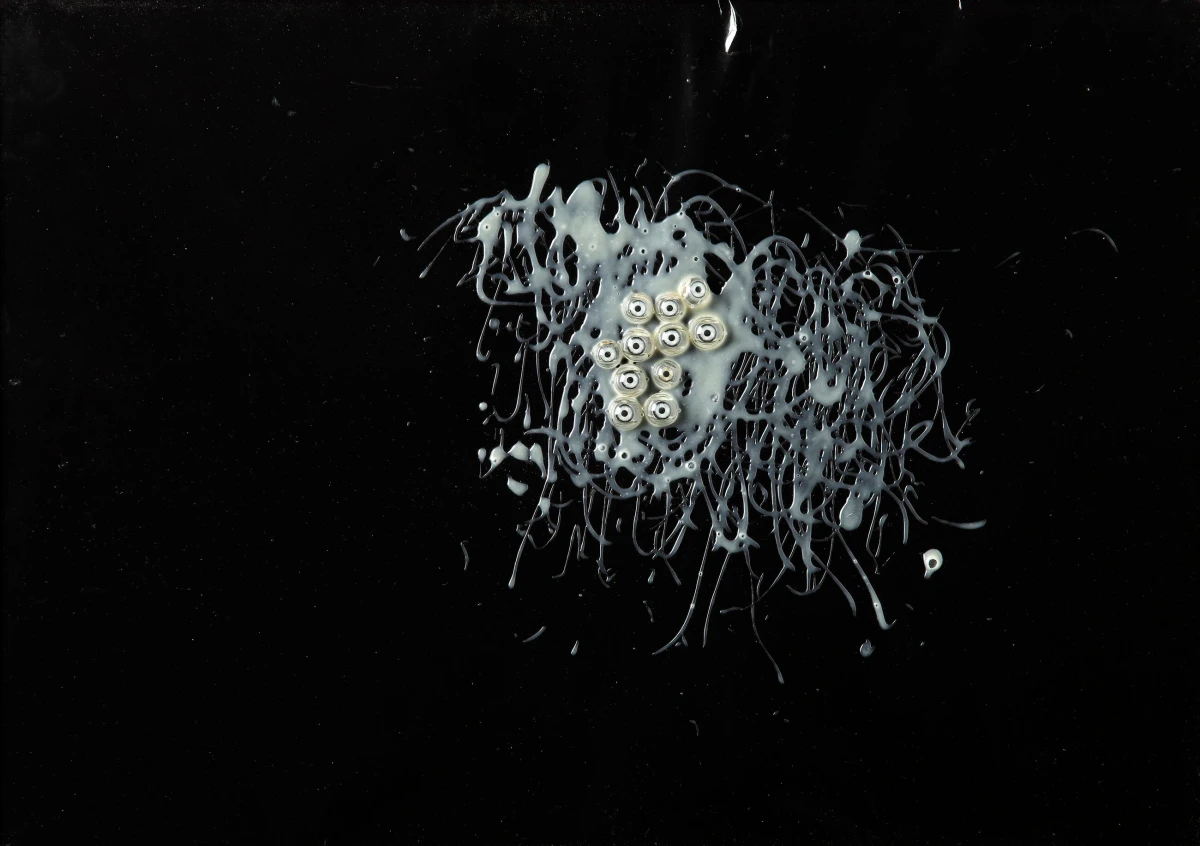
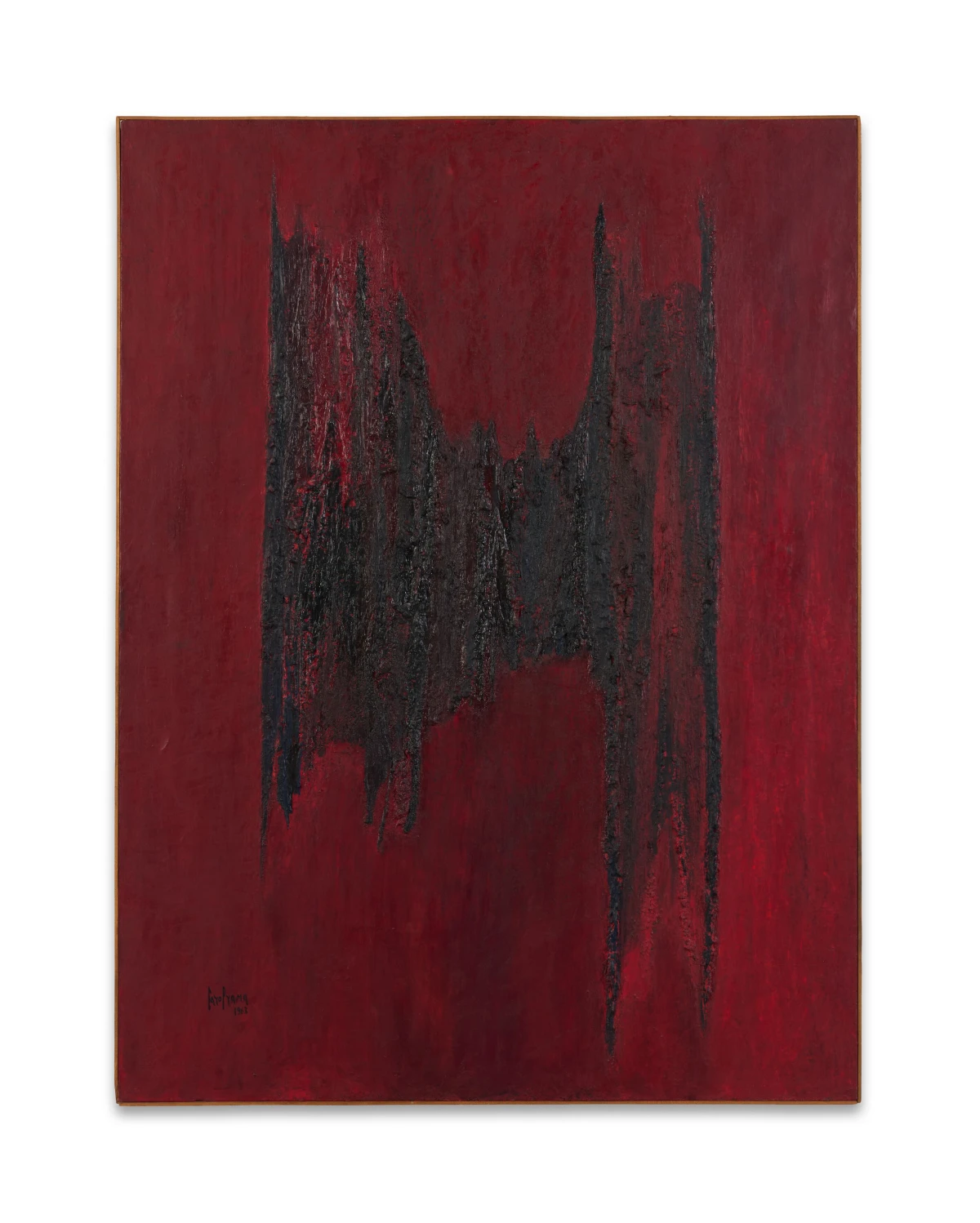
In the early 1960s, Rama began making paintings on paper, expanding and softening her abstract oil paintings into compositions that recalled diagrams of energetic waves. ‘Untitled’ (1963), near monochrome and anchored by a single dynamic gesture, exemplifies Rama’s desire to disrupt conventional compositional syntax. That ambition finds its fullest expression in her next dramatic conceptual shift—to bricolage. By introducing everyday objects like wires, metal shavings and syringes into the pictorial plane, Rama signified her own rejection of consumerism and the artistic status quo by inviting a sensorial rather than logical reading of her art. Many of the bricolage works incorporate three-dimensional doll’s eyes, extending her longstanding engagement with motifs of sight (also evident in earlier pieces such as ‘Pagliacci’). Taxidermic and unnerving, these eyes return the viewer’s gaze, unsettling the traditional one-way dynamic of looking while asserting a palpable bodily presence and a corresponding psychological intensity.
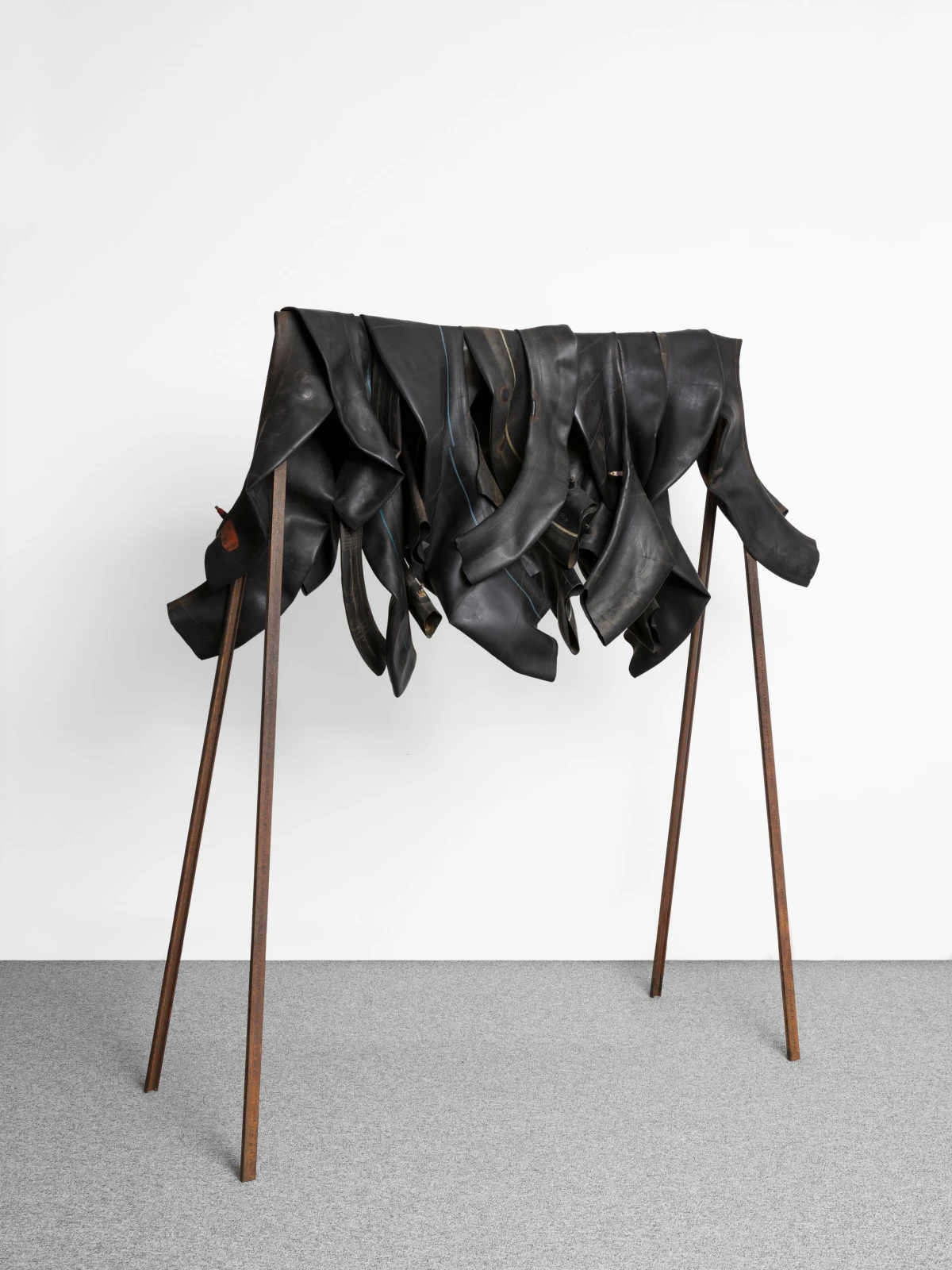
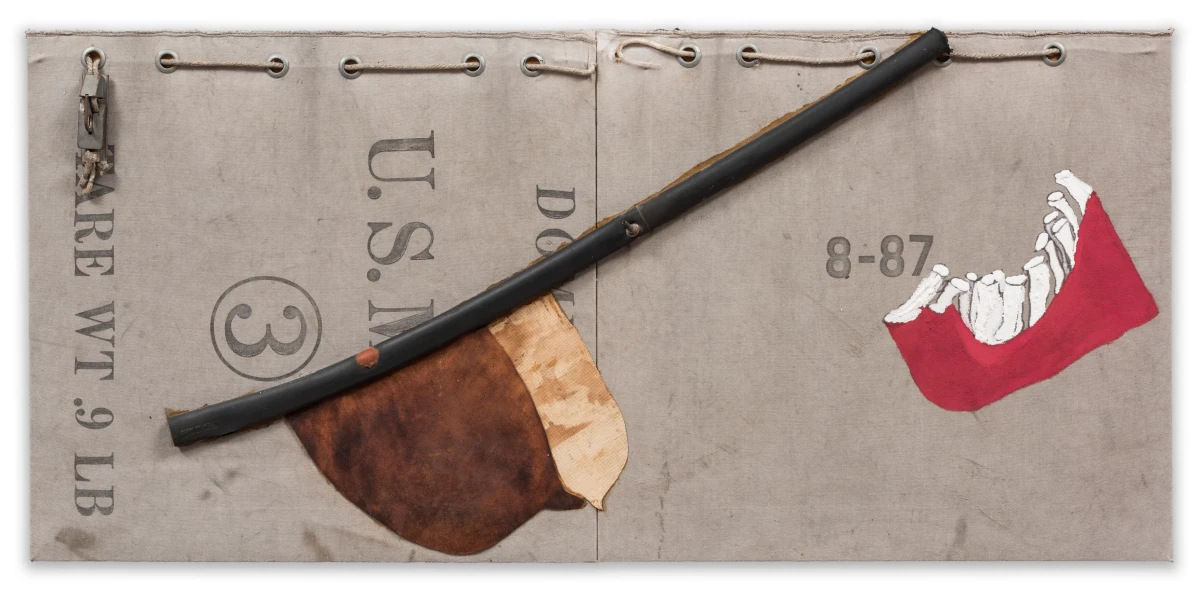
This motif carries forward into the Napalm Pictures (1968 – 69). Created in the context of the Vietnam War and rendered in spray paint on monochrome grounds—often incorporating the doll’s eyes—these works evoke burned, tormented bodies while sustaining her enduring focus on the entanglement of corporeality and eros. Her engagement with found objects extended beyond the canvas: car innertubes, in particular, became a recurring element across subsequent pieces and appear here in compositions like the wall relief ‘La guerra è astratta (War Is Abstract)’ (1970), another rumination on the horrors of war, and ‘Presagi di Birnam (Omens of Birnam)’ (1986), one of the only sculptures Rama ever made.
The most recent works in the exhibition belong to Rama’s Mad Cow series from the 1990s, inspired by the first European outbreak of the disease and its unsettling collapse of boundaries between animal and human. These deconstructed bovine anatomies—often described by Rama as self-portraits—extend her sustained effort to destabilize the body while revisiting earlier concerns with undiminished inventiveness. The series encapsulates the spirit of her entire oeuvre: cyclical yet progressive, persistent yet radically open to transformation.
About the artist
Over more than seven decades, Carol Rama (b. 1918, Turin; d. 2015) developed a radical body of work that addressed connections between desire, sacrifice, eroticism and repression. Today, Rama is considered one of the most original and individualistic artists to emerge from the 20th Century. By constructing a visual cosmos where transgression leads to liberation, Rama countered assumptions about sexuality and representation, offering a retort to the societal conventions and the prevailing far-right political ideologies that defined the fascist- dominated Italy of her youth. She set neither boundaries nor hierarchies between painting, drawing, sculpture and printmaking, pulling all of these mediums into her image universe. ‘My self-assurance exists only across from a sheet of paper that needs to be filled in,’ Rama once declared. ‘Work is the only way to drive off my fears. My rebellion consists of painting.’
During the late 1990s, Rama’s work finally attracted interest among a new generation of artists, curators and critics. Rama’s art has since galvanized ever-expanding attention and avid scholarship. She was awarded the Golden Lion for Lifetime Achievement at the Venice Biennale in 2003 and major solo exhibitions of her work have been presented at the Stedelijk Museum, Amsterdam, Netherlands (1998); MACBA, Barcelona, Spain (2014); MAM, Paris, France (2015); The New Museum, New York NY (2017); and Schirn Kunsthalle, Frankfurt, Germany (2024), among others.
Selected prominent museum collections which have holdings of Rama’s work include The Art Institute of Chicago, Chicago IL; Centre Pompidou, Paris, France; Collezione Intesa Sanpaolo, Milano, Italy; Galleria d’Arte Moderna, Bologna, Italy; GAM, Galleria Civica d’Arte Moderna e Contemporanea, Turin, Italy; MACBA, Museu d’Art Contemporani de Barcelona, Barcelona, Spain; MAM, Musée d’Art Moderne de Paris, Paris, France; MART, Museo di Arte Moderna e Contemporanea di Trento e Rovereto, Rovereto, Italy; MEF, Museo Ettore Fico, Turin, Italy; MoMA, The Museum of Modern Art, New York NY; Museo del Novecento, Milan, Italy; Sammlung Goetz, Munich, Germany; Stedelijk Museum, Amsterdam, Netherlands; Tate, London, UK; and Uffizi Gallery, Florence, Italy.