+1 212 247 0082
Open: Mon-Fri 10am-6pm & by appointment
Visit
Open: Mon-Fri 10am-6pm & by appointment
100 11th Avenue, NY 10011, New York, United States
Open: Mon-Fri 10am-6pm & by appointment
Visit
Sat 18 Apr 2026 to Fri 7 Aug 2026
100 11th Avenue, NY 10011 Benny Andrews: Migrants
Mon-Fri 10am-6pm & by appointment
Artist: Benny Andrews
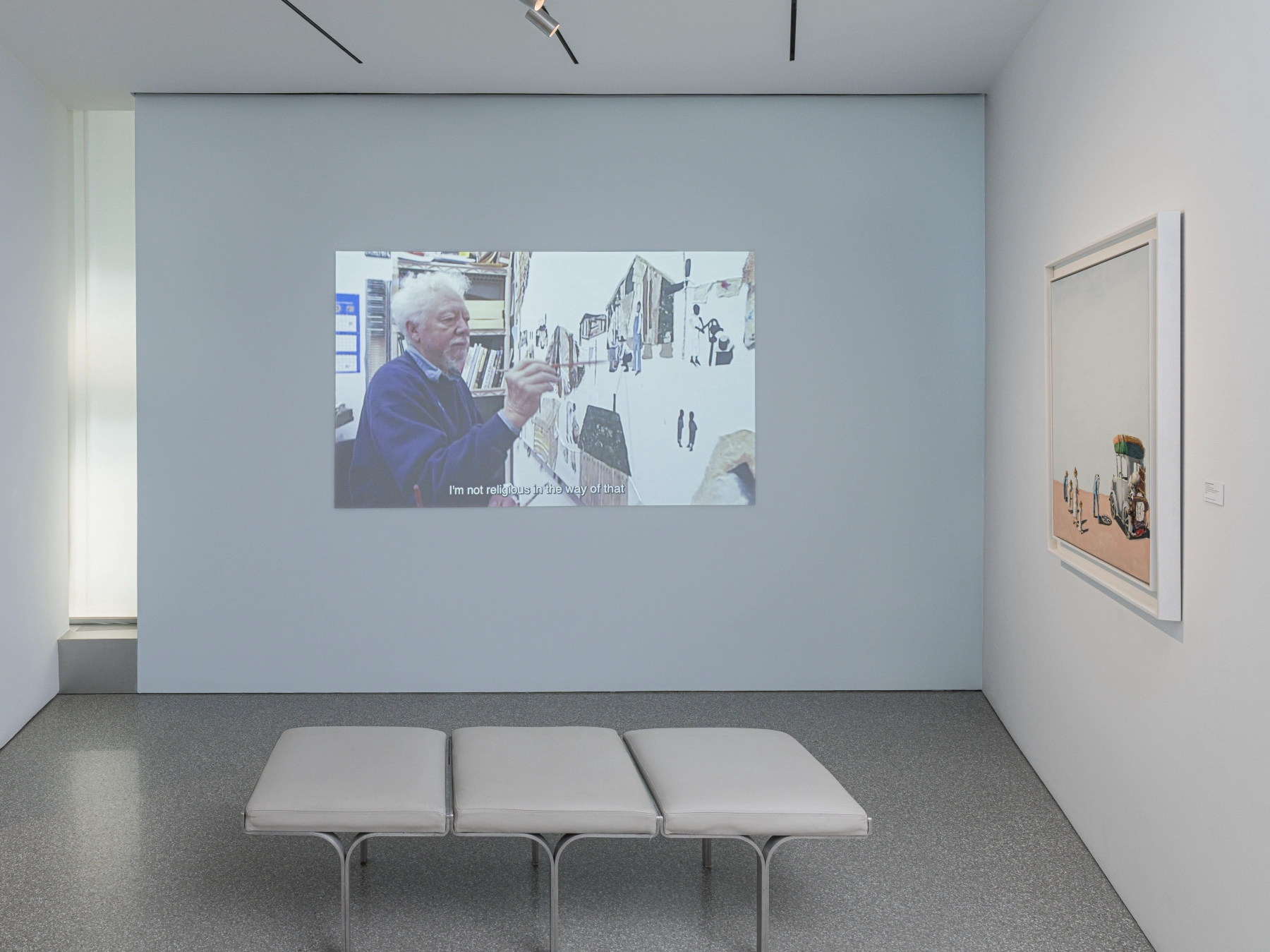
I’m living a life and I want to just say something about it. I’m not religious in the way of wanting to make testimonials but it amounts to the same thing. I’d like to say something while I’m here and the best way for me to say it is with painting and drawing.
- Benny Andrews [1]
Michael Rosenfeld Gallery presents Benny Andrews: Migrants, the gallery’s fourth solo exhibition celebrating the work of Benny Andrews (1930–2006). Created between 2004 and 2006, The Migrant Series is the artist’s last body of work created before his death in November 2006. In the series, Andrews traced three historical migration routes that connected to his own Black, White, and Cherokee ancestry: the Great Migration of the 20th century, in which millions of Black Americans moved from the South to the North, the 1930s Dust Bowl exodus from the Great Plains that was driven by environmental and economic hardship, and the 19th century forced migration of Native Americans in what has become known as the Trail of Tears. By shedding light on human resilience amidst the injustices of history, the series exemplifies Andrews’ humanist approach as an artist who recognized the power of history and sought to leverage the past to inform the future.
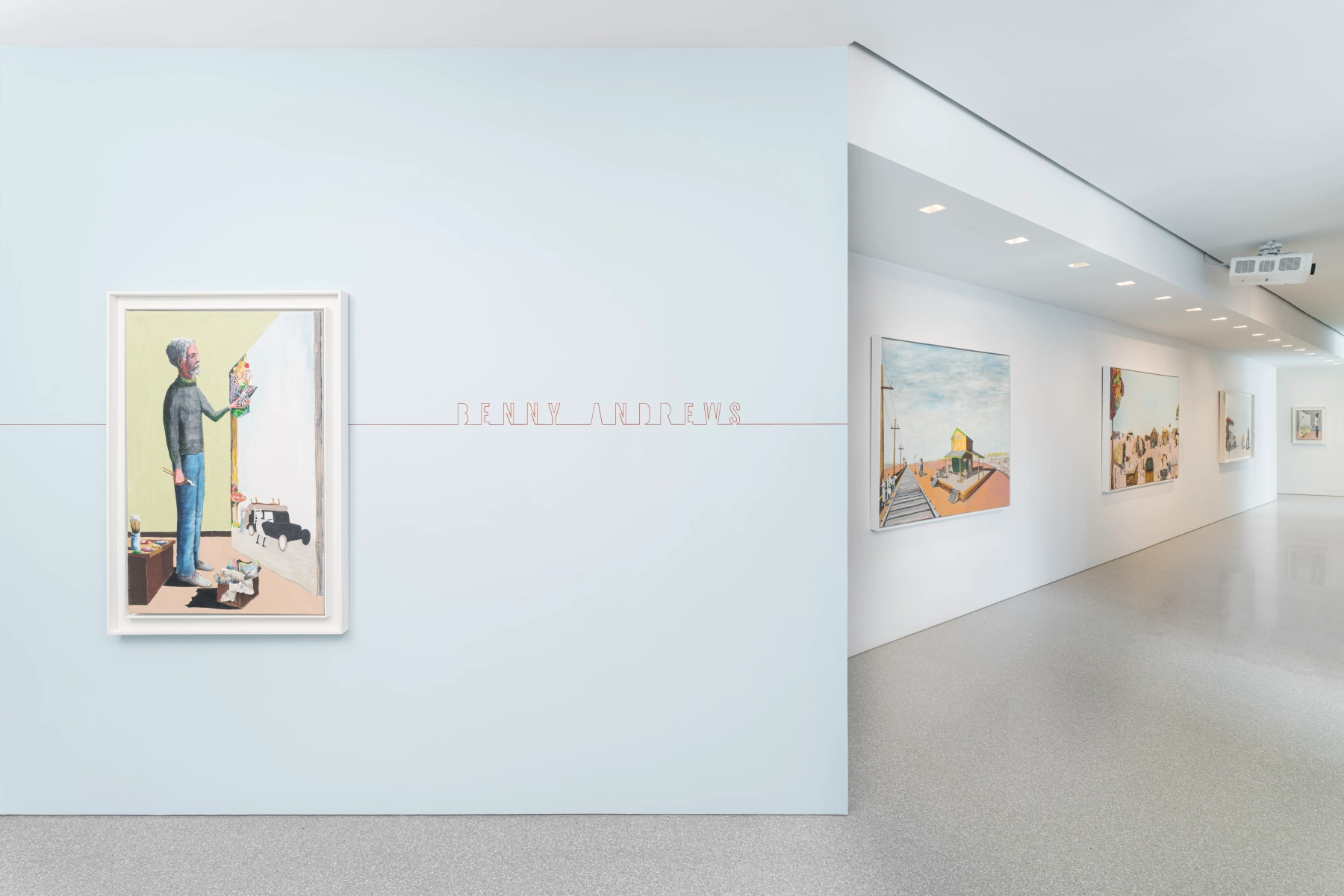
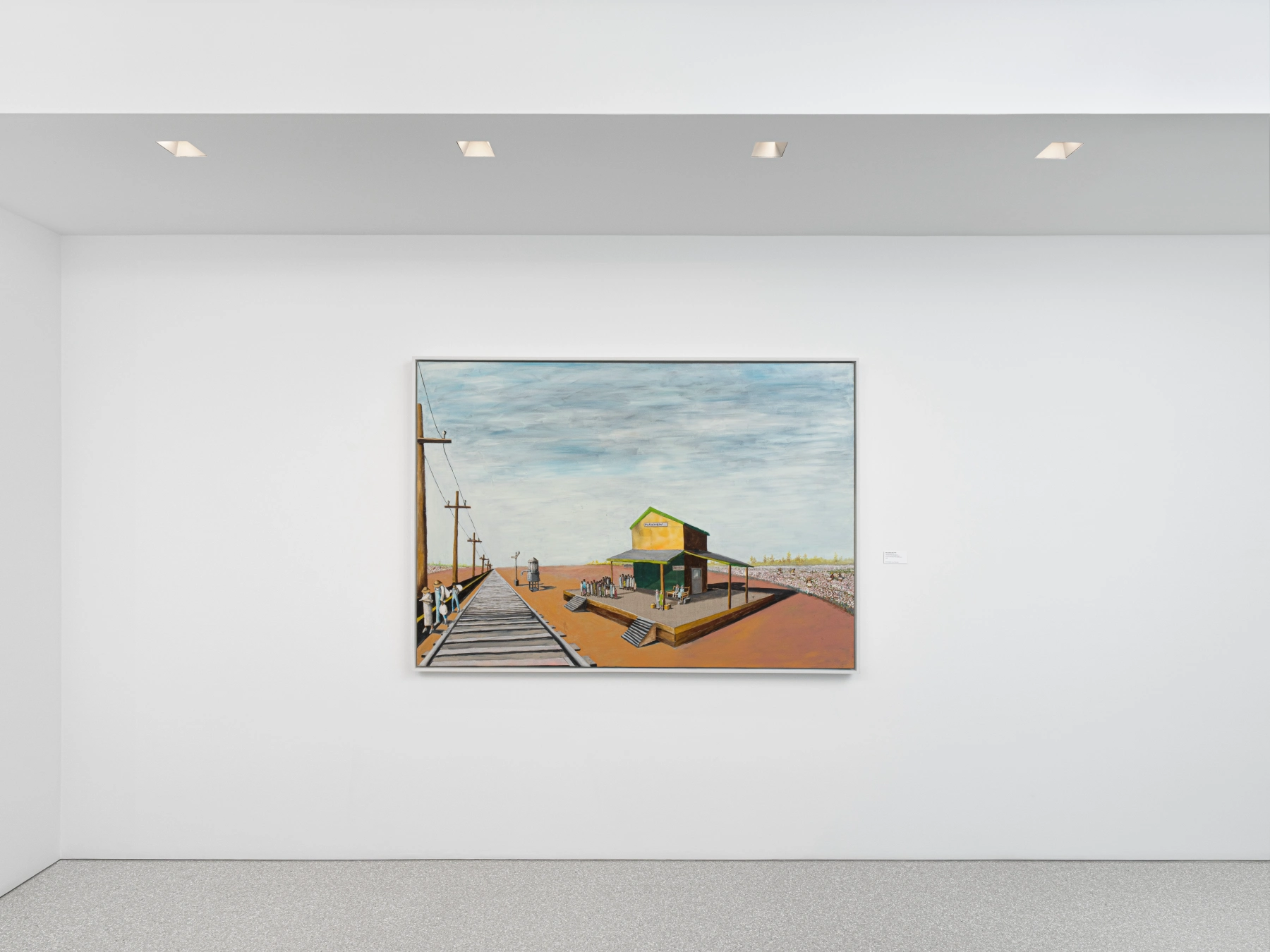
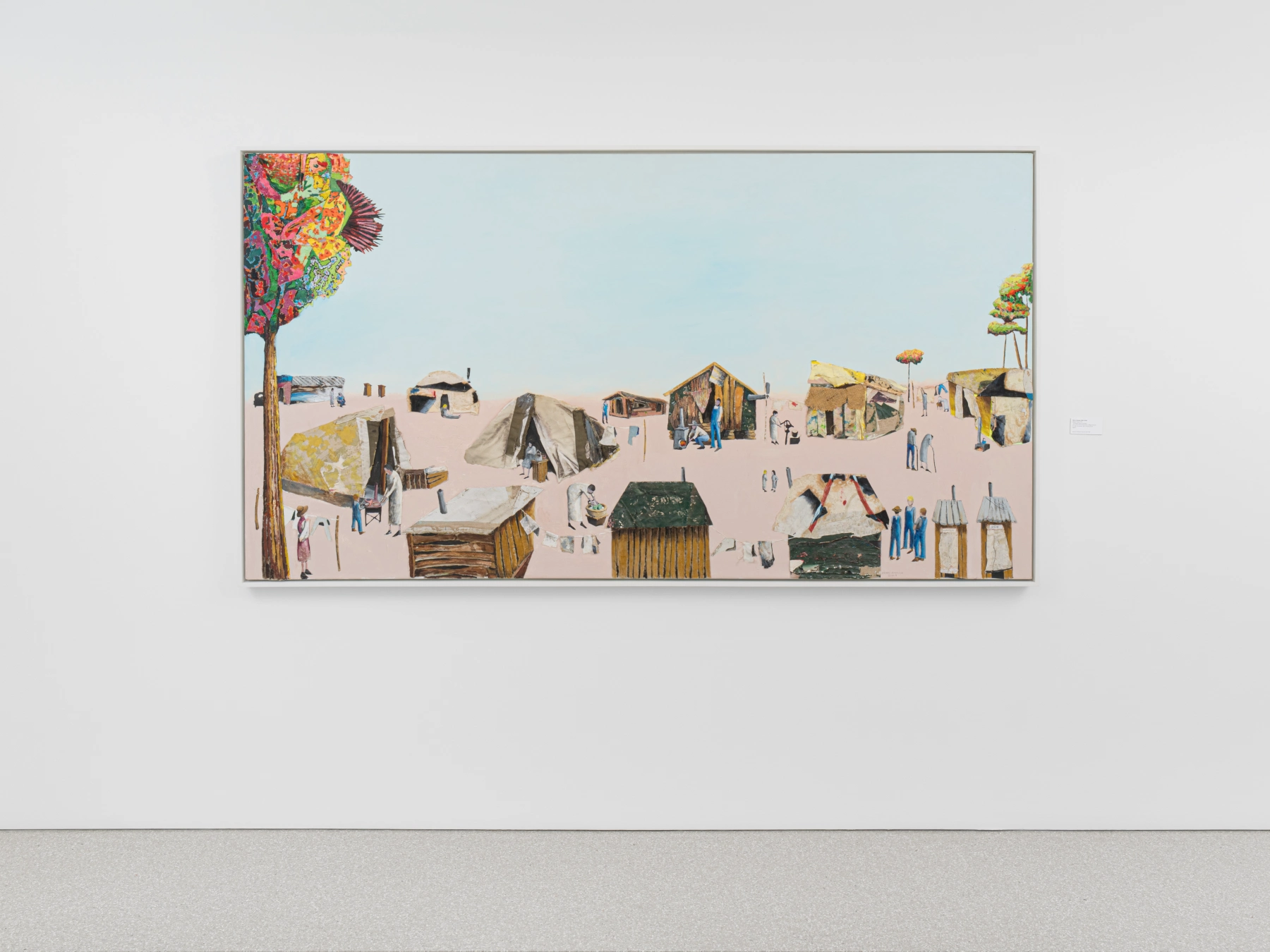
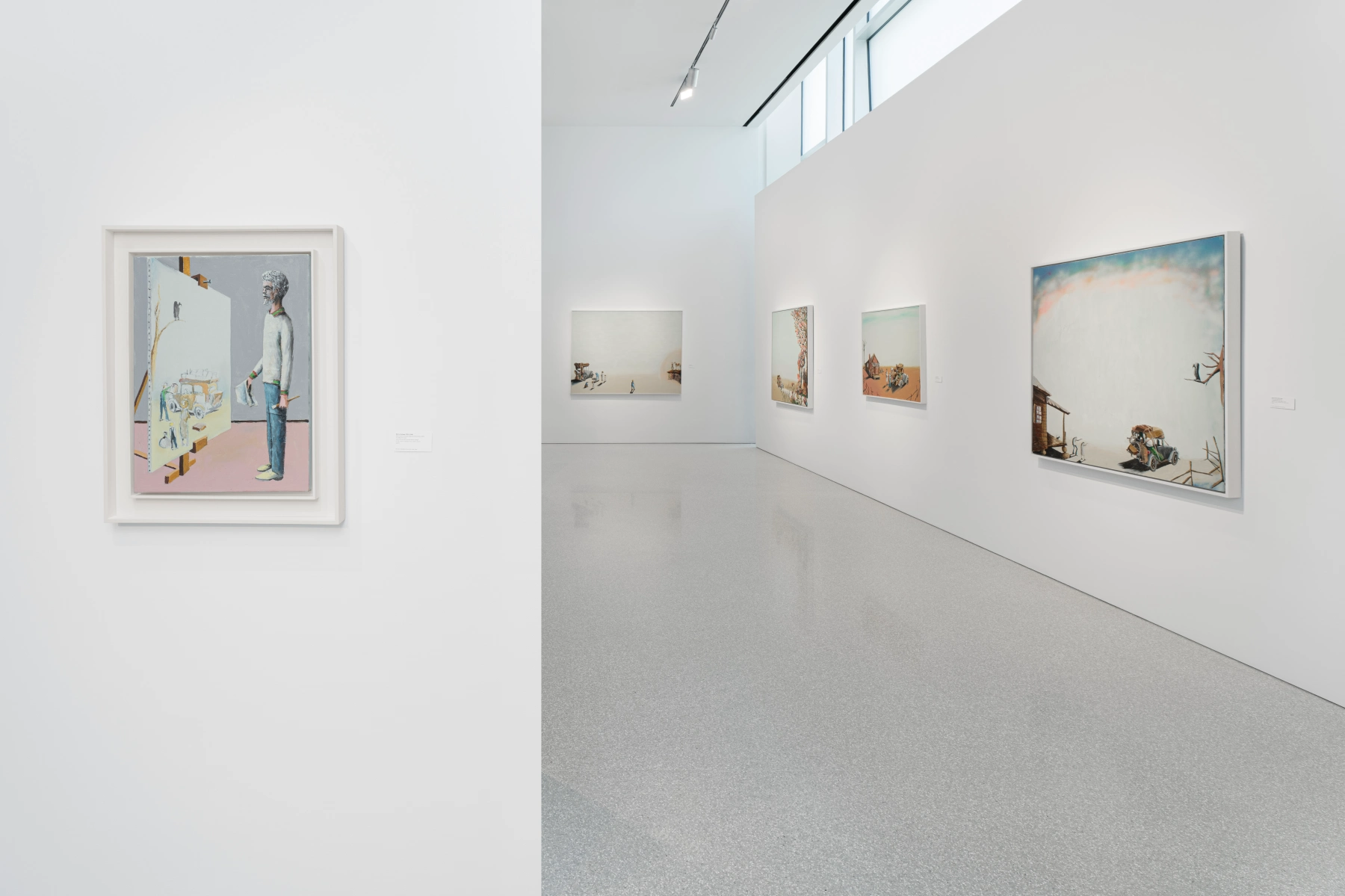
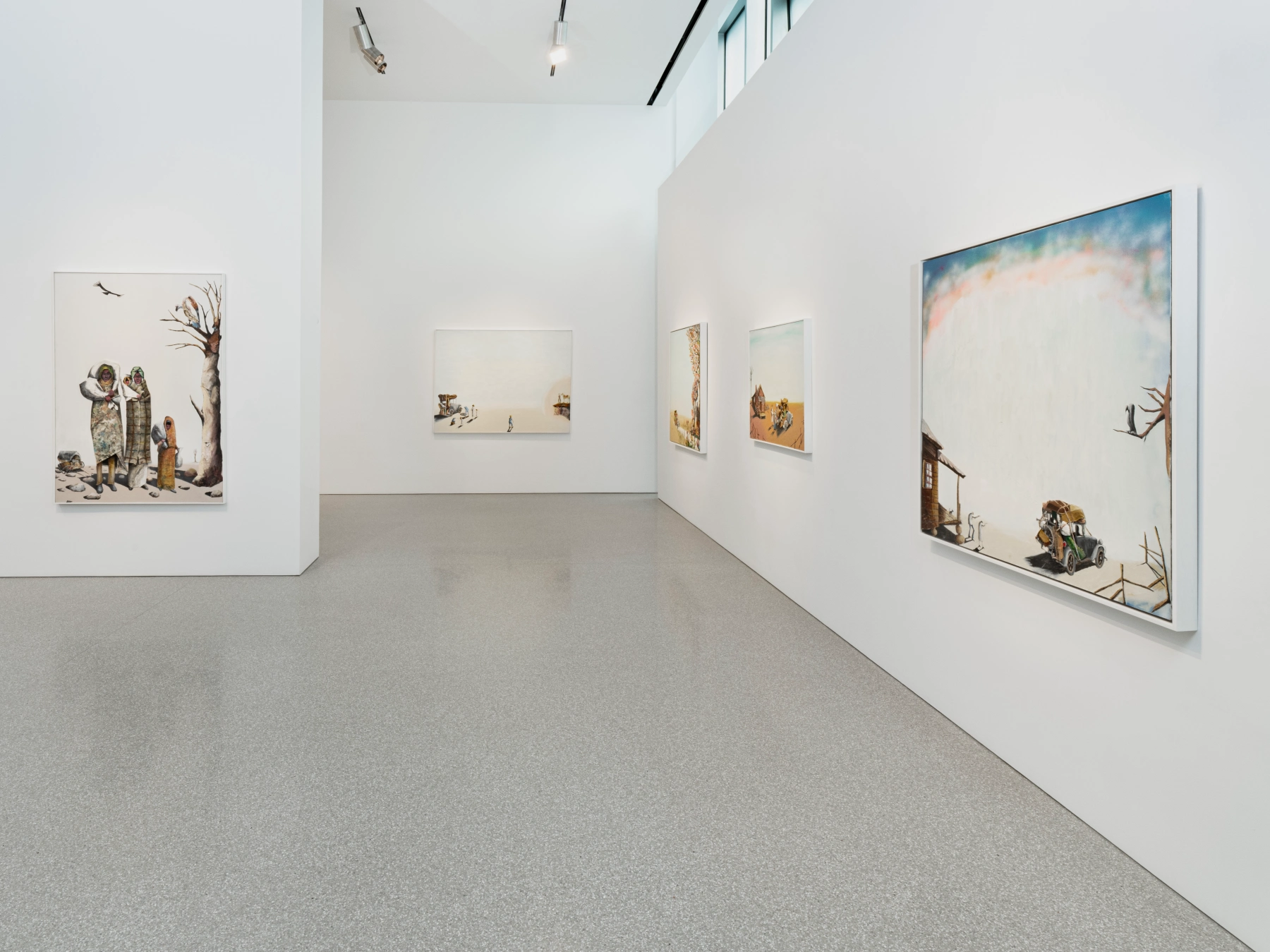
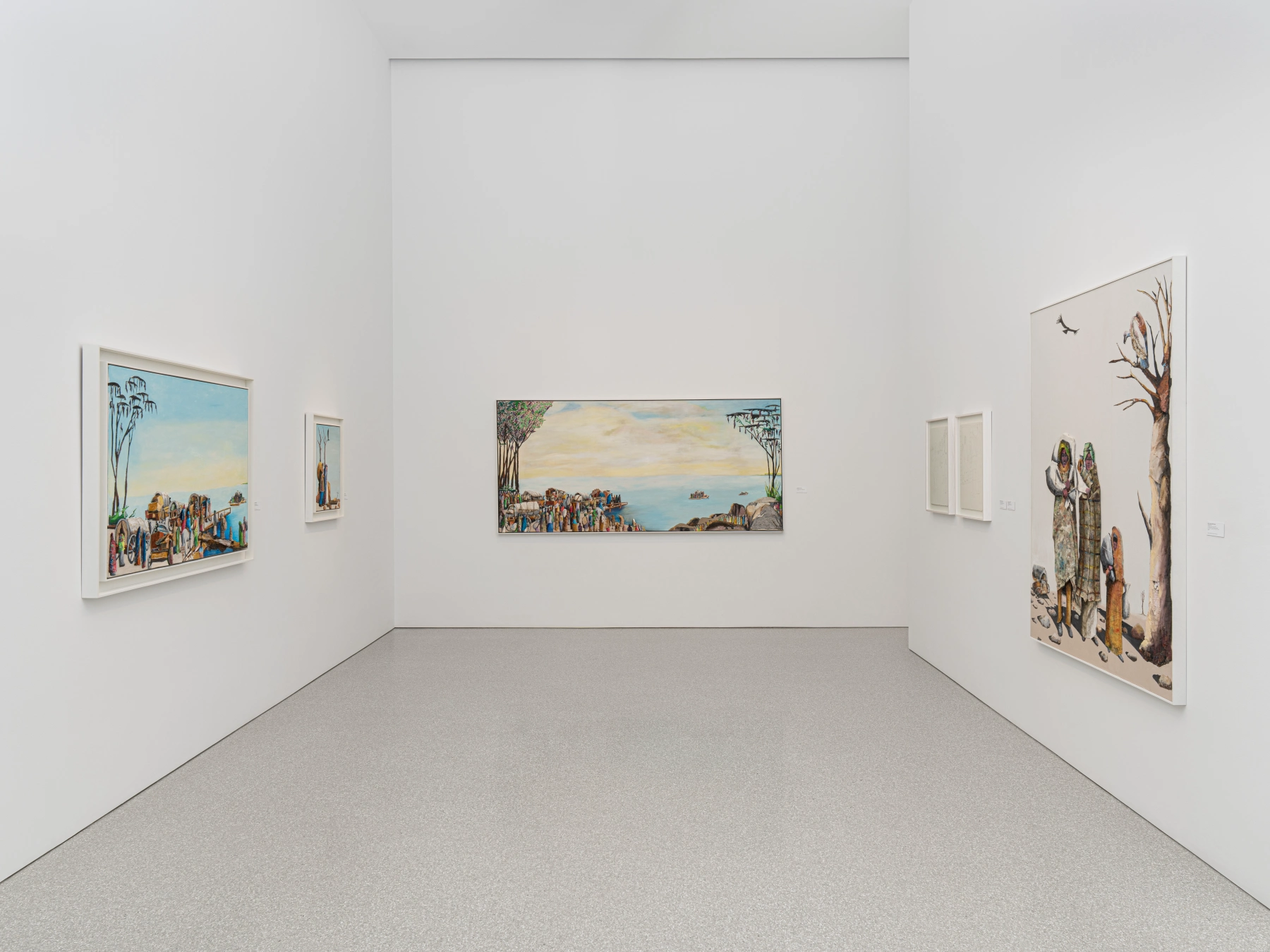
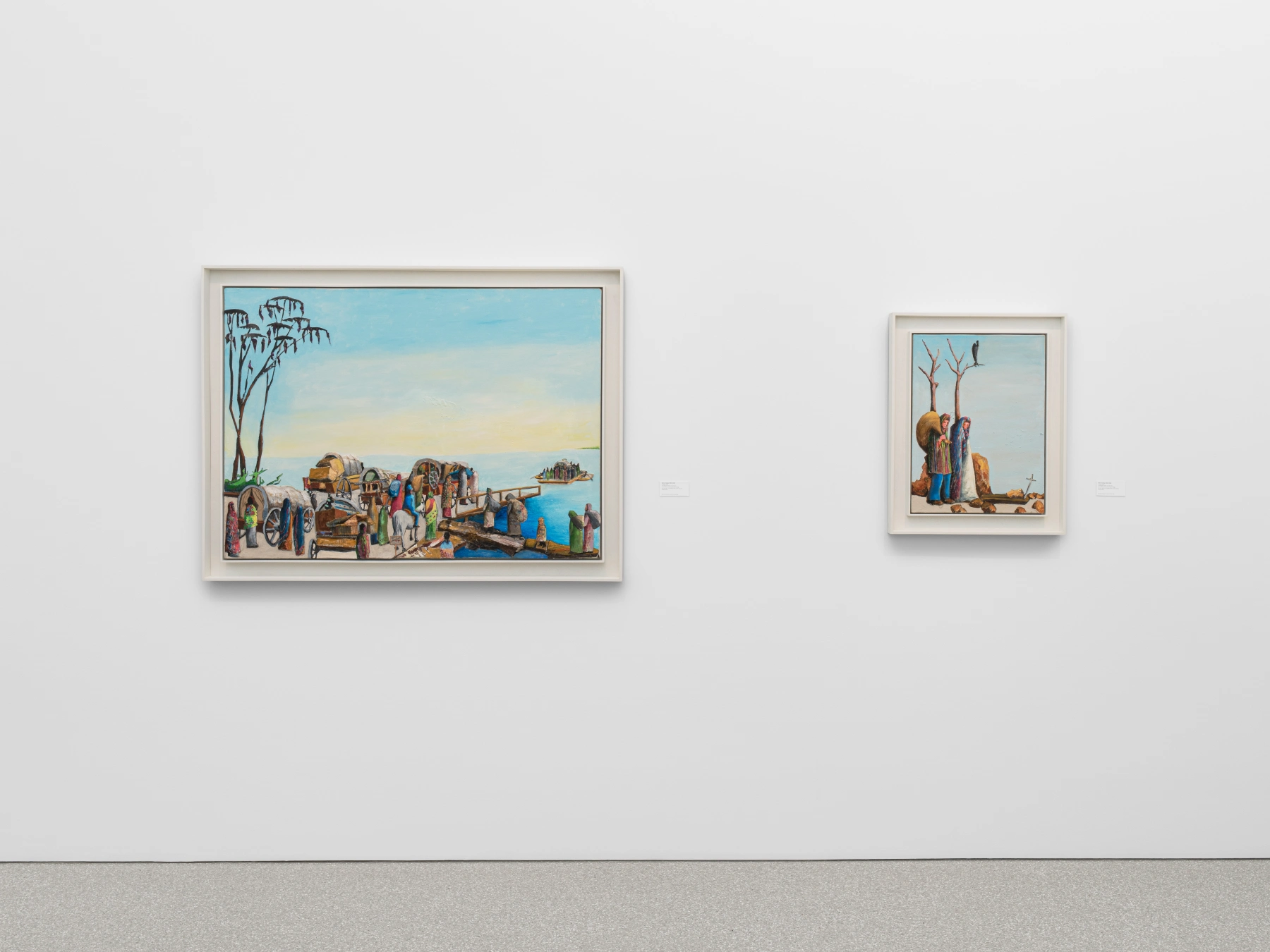
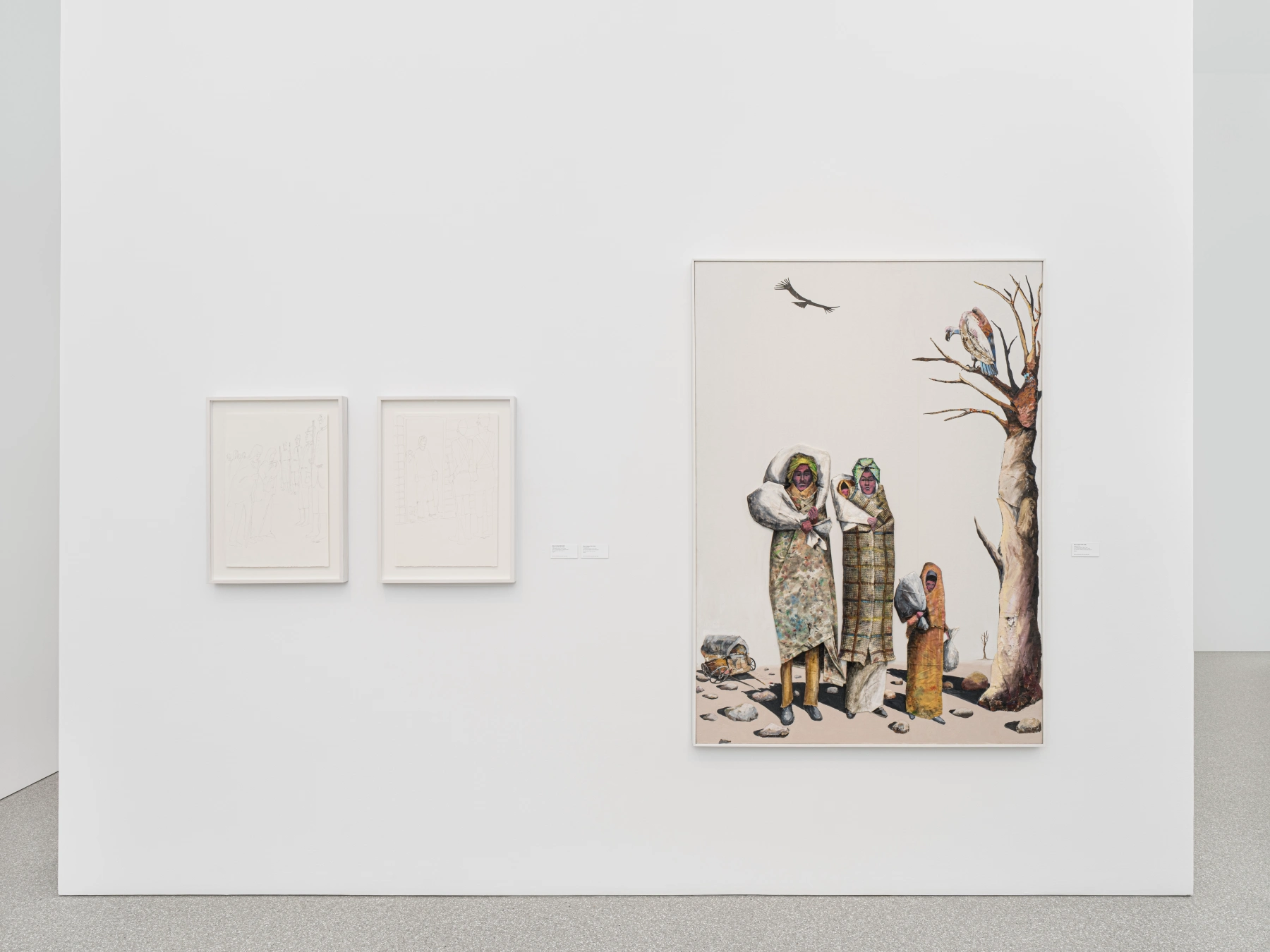
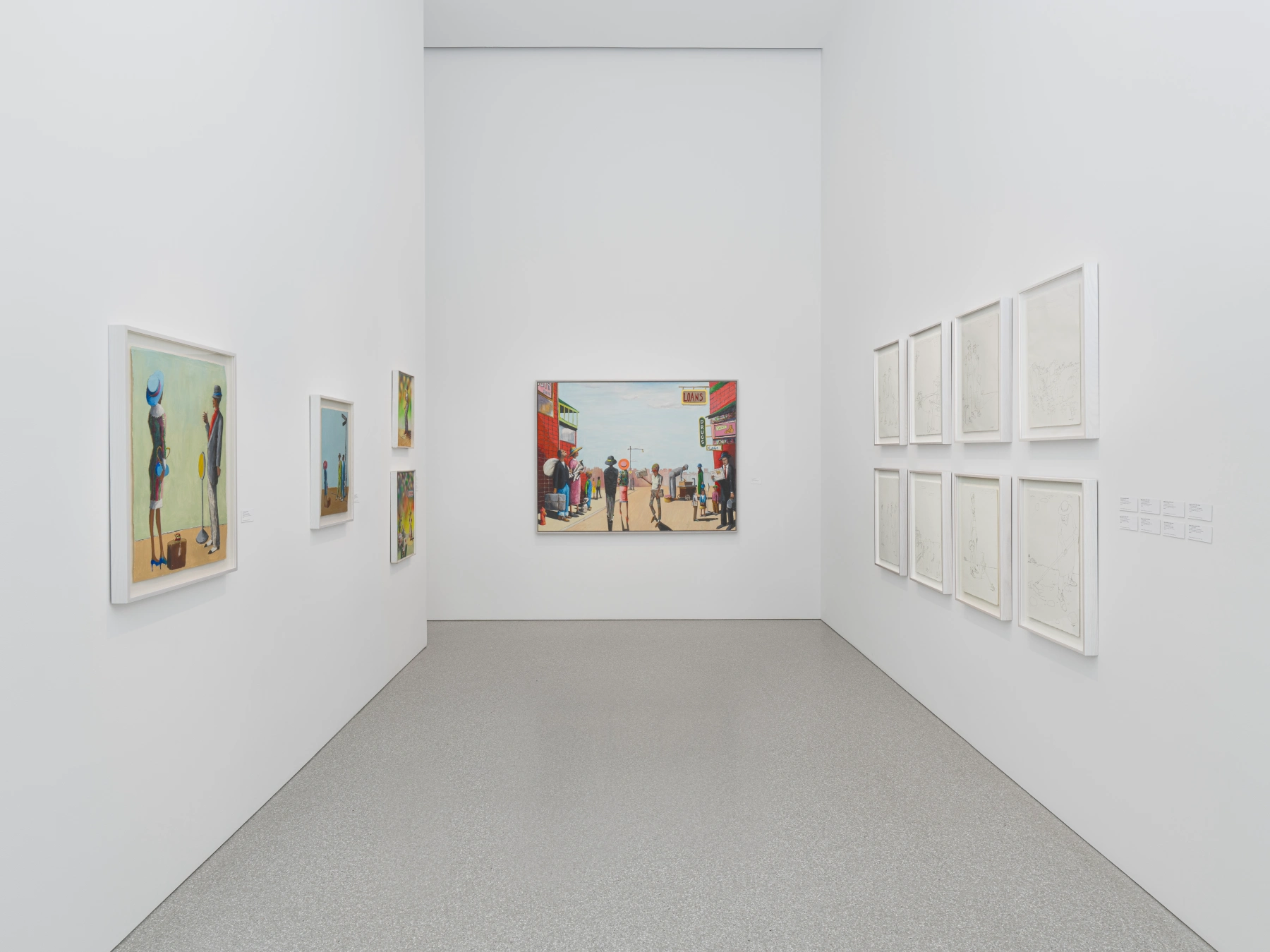
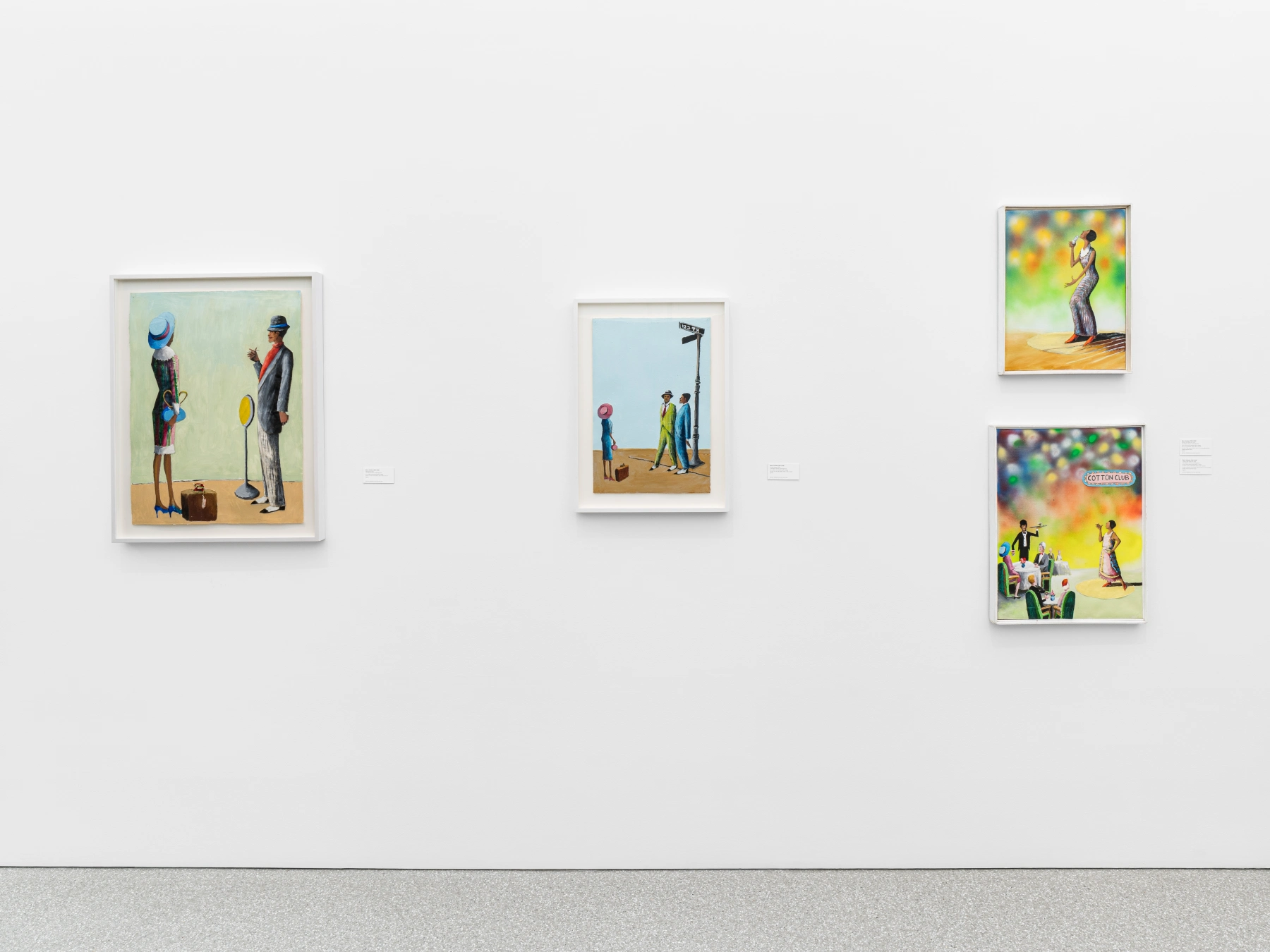
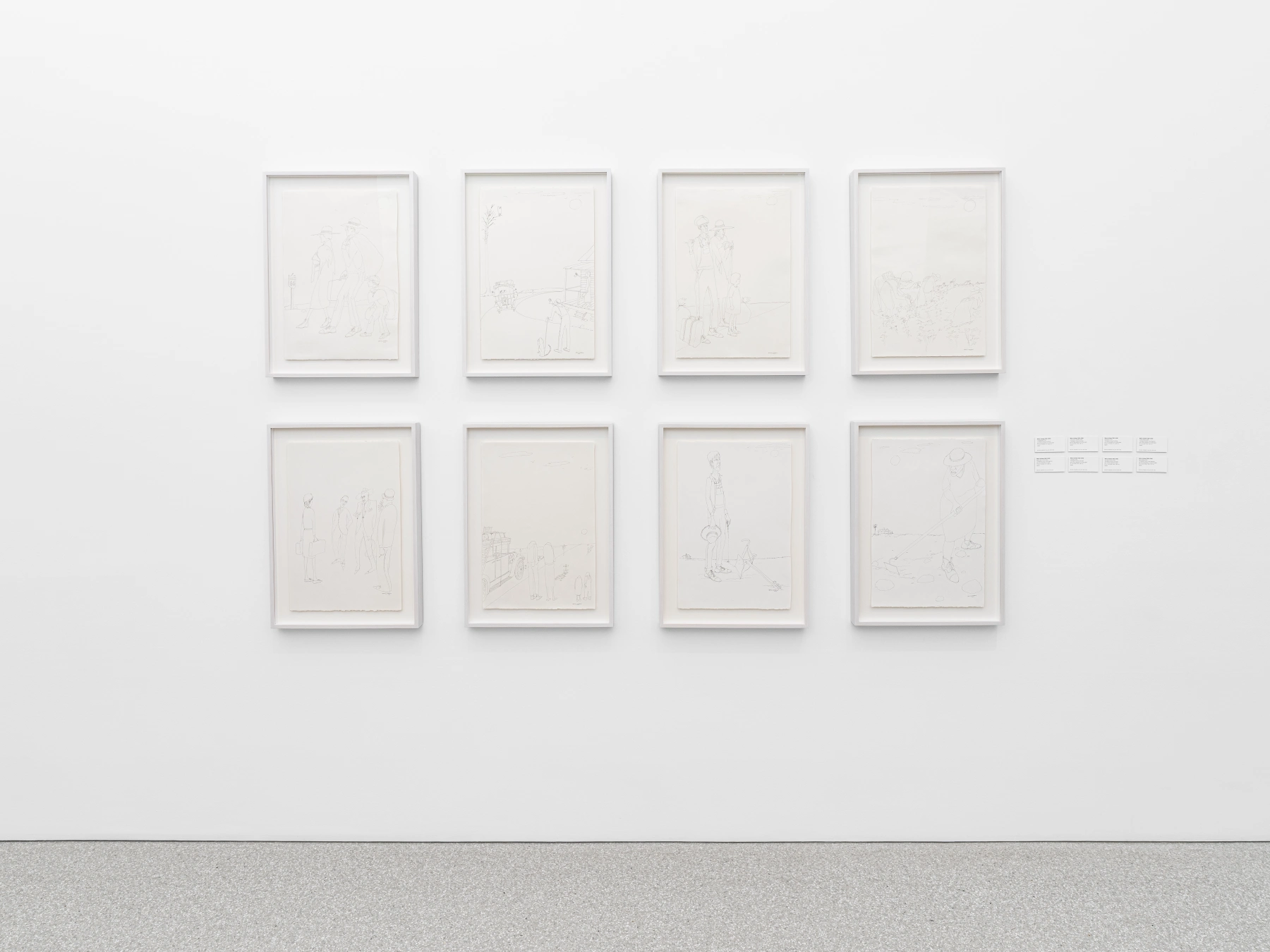
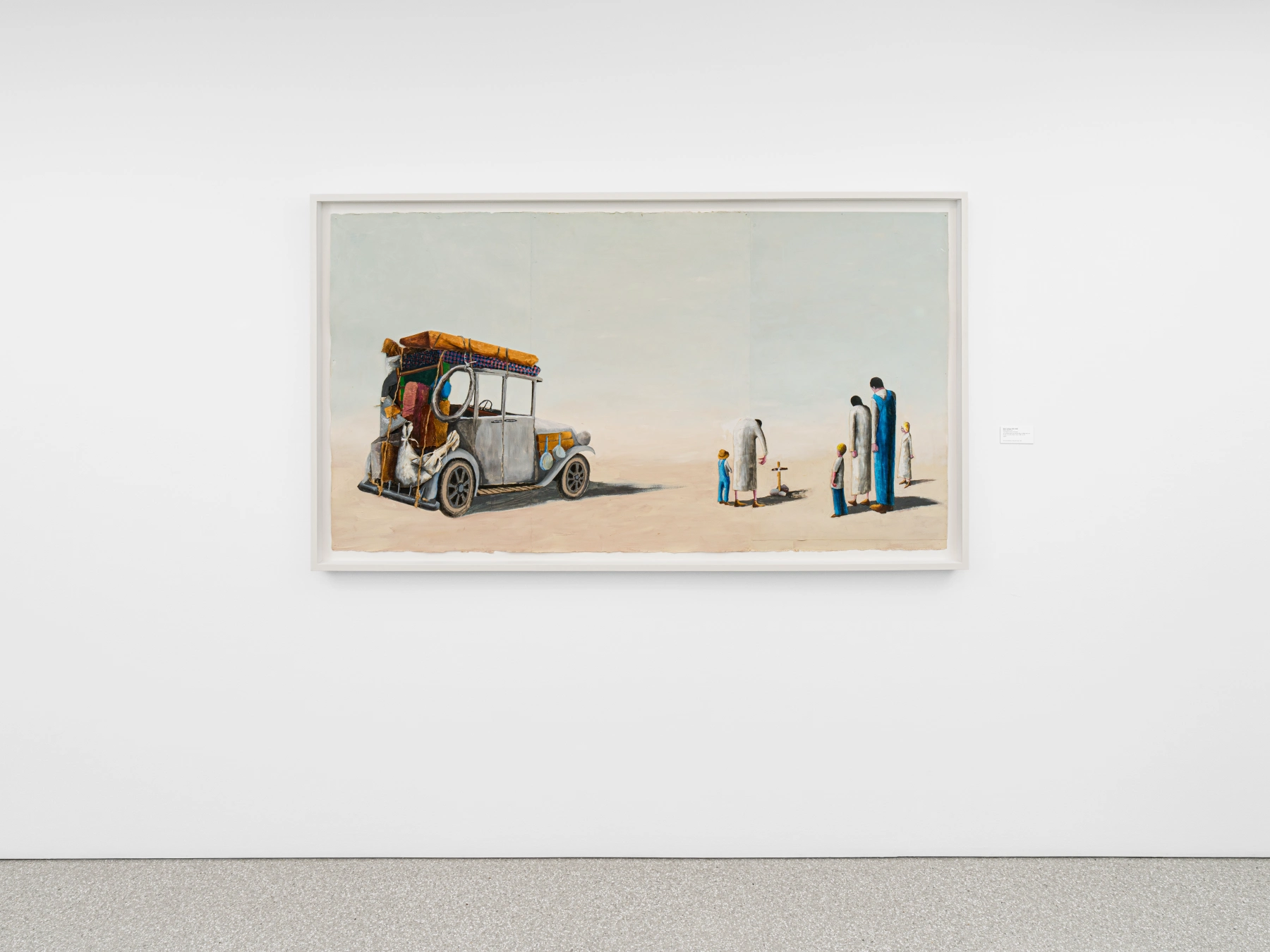
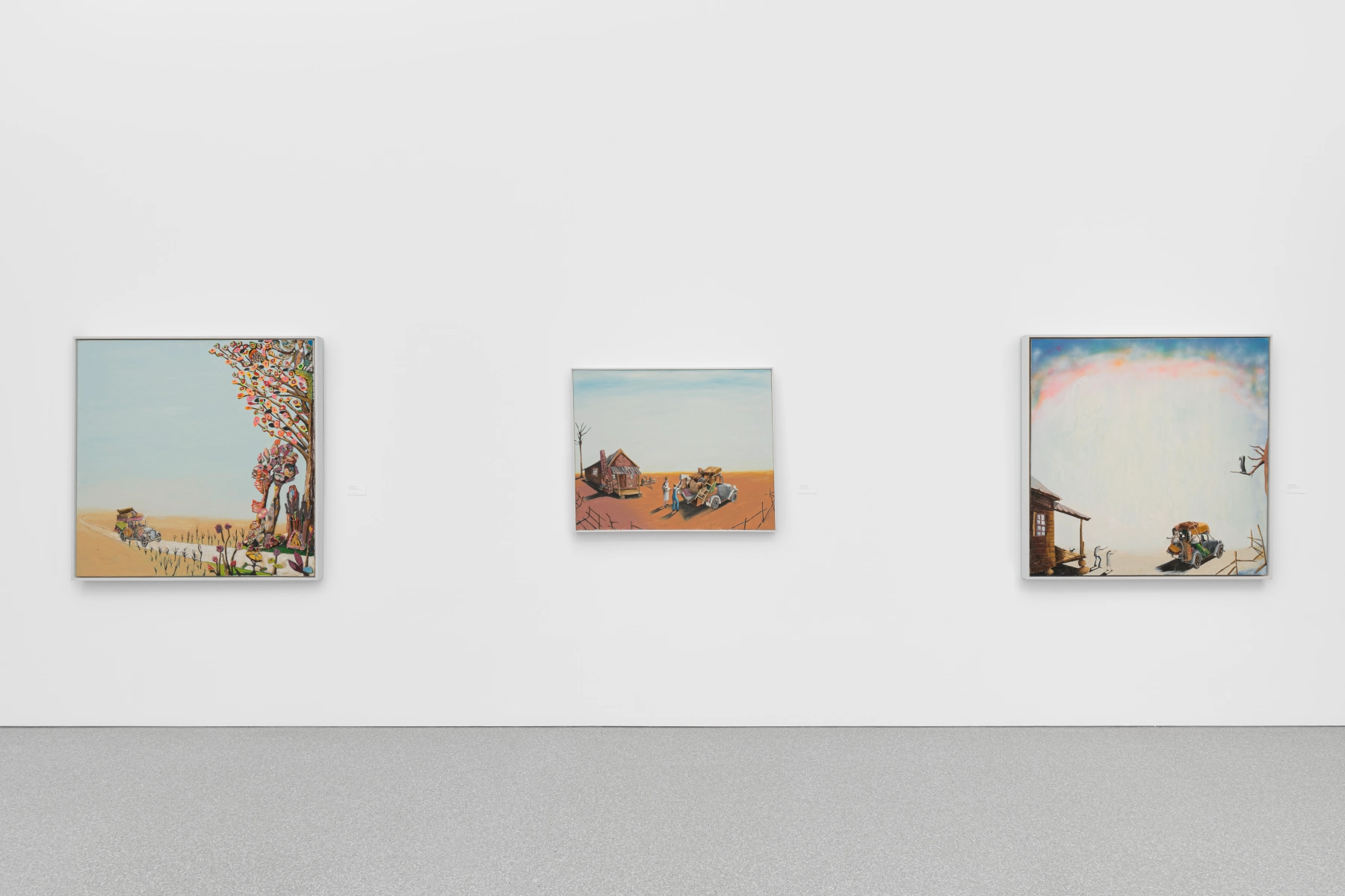
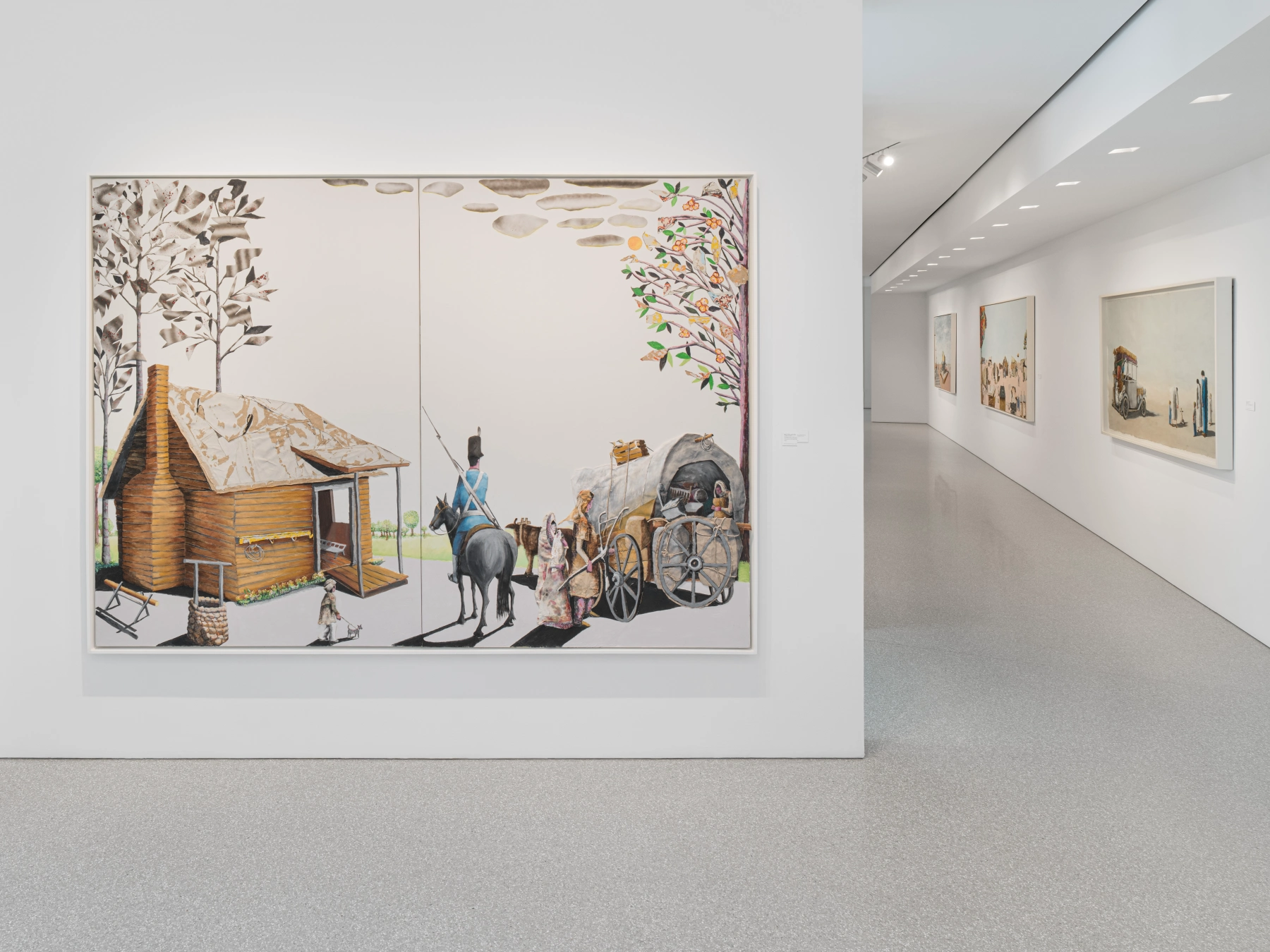
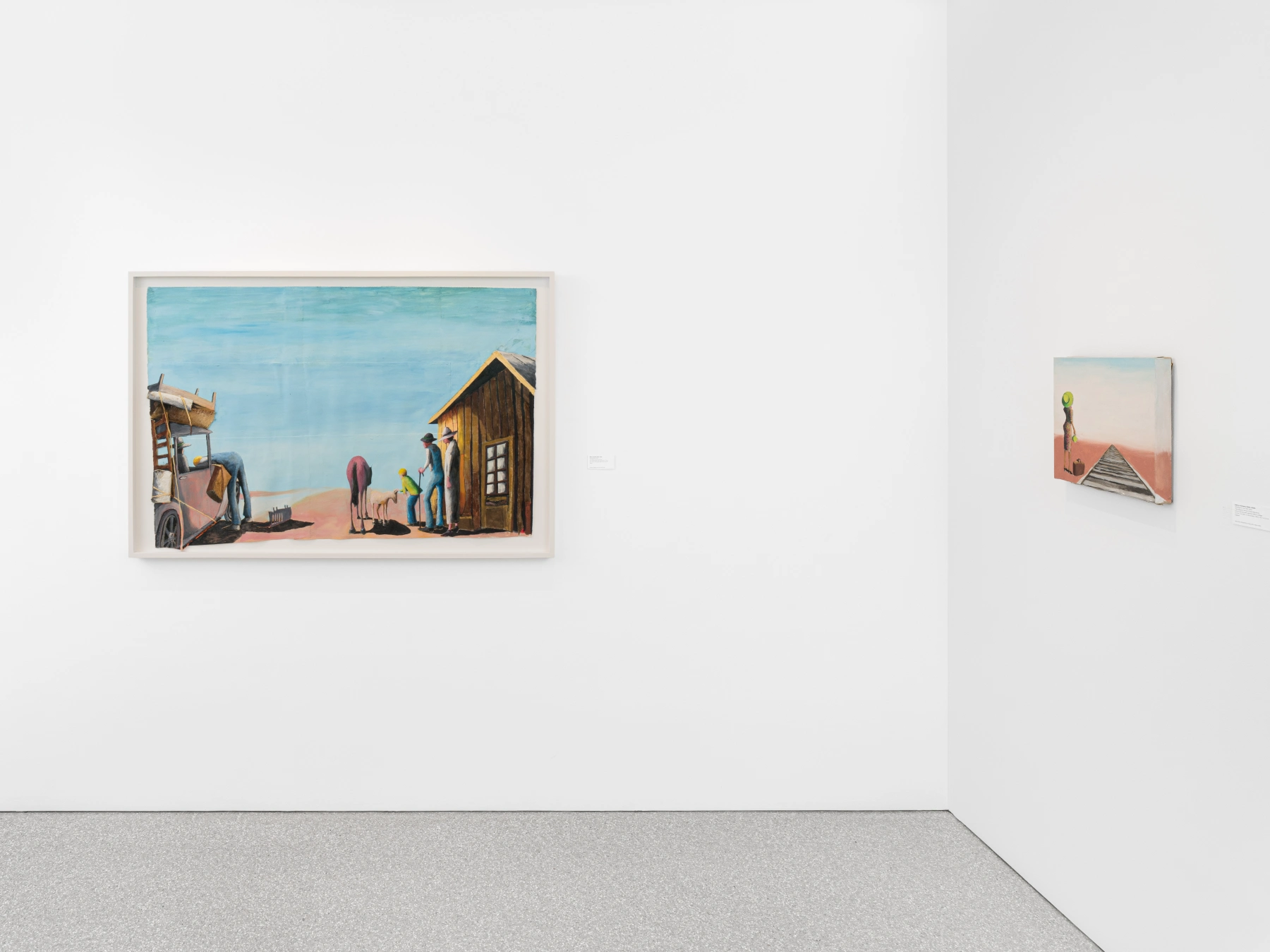
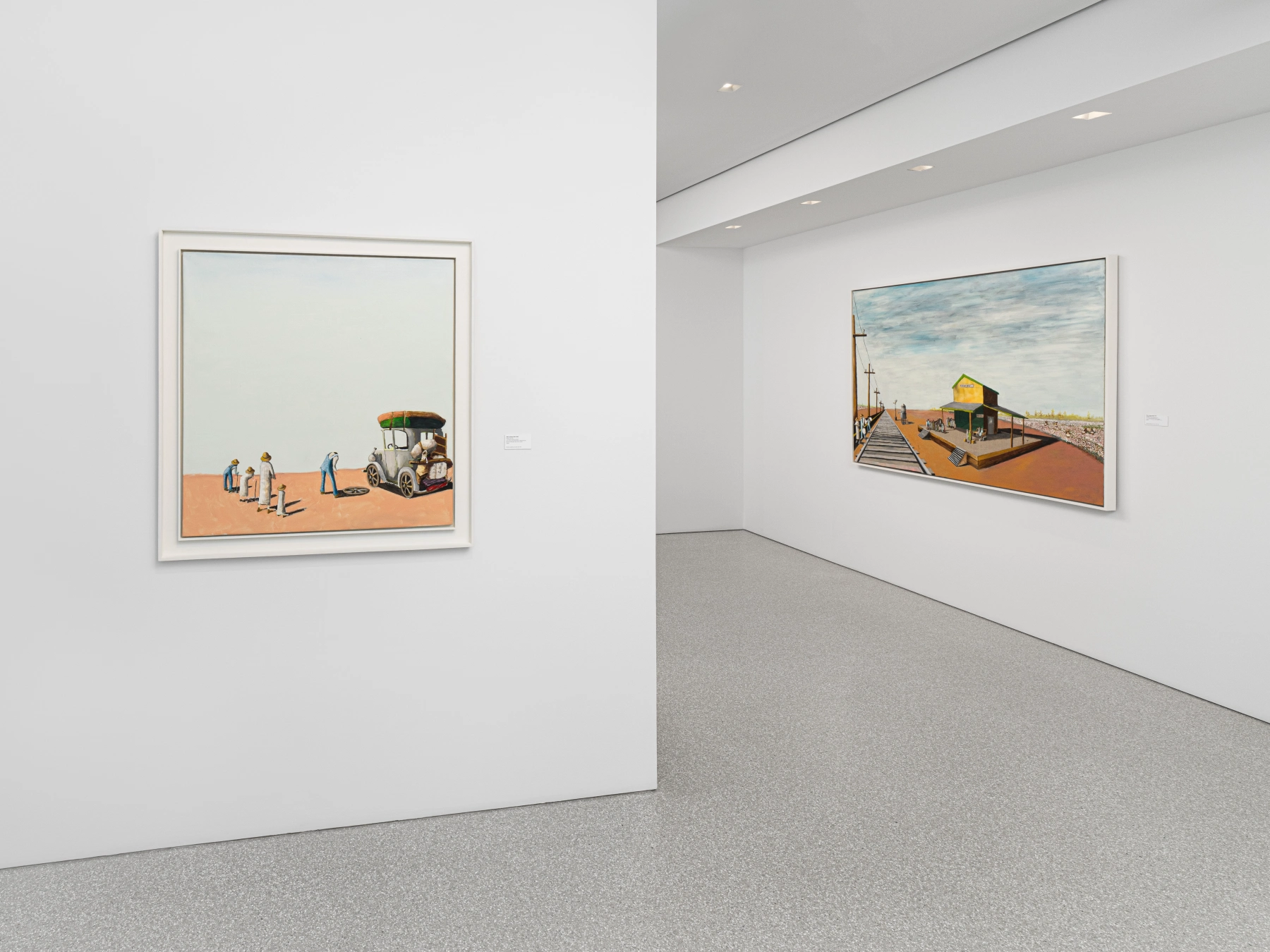
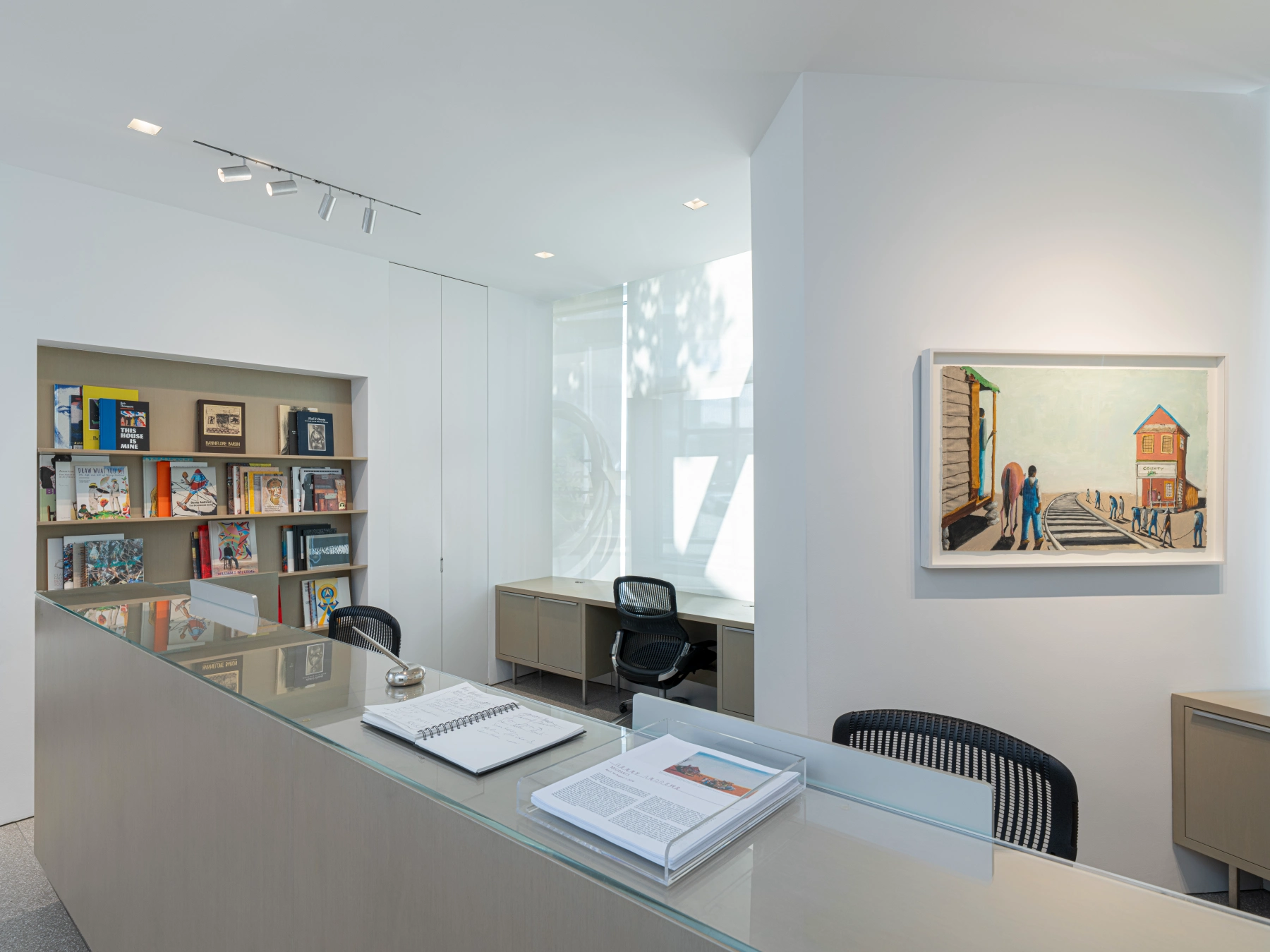
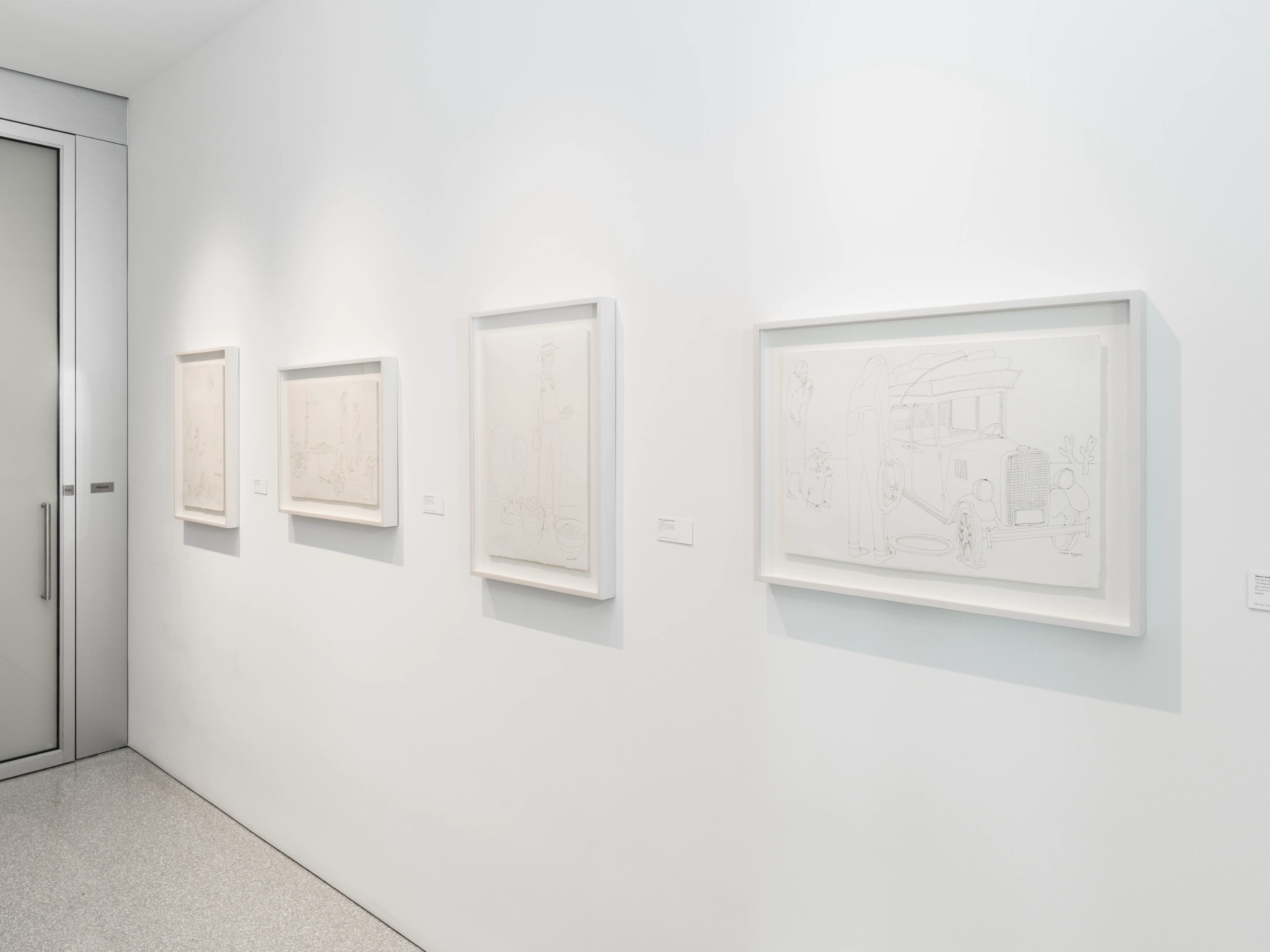
The Migrant Series comprises ink drawings and collage paintings completed in Andrews’ signature rough collage technique, in which he incorporated textile fragments, thread, and his own repurposed painted canvas into his compositions. At turns somber, joyous, expansive, and intimate, the works in the series foreground the human experience of migration. Andrews, a self-described “people’s painter,” depicted in The Migrant Series scenes of hardship, oppression, racism, strength, and hope. These timeless works speak to the political and the personal, the universal and individual, and the past, present, and future.
Scheduled to coincide with the 250th anniversary of the United States, Benny Andrews: Migrants highlights the enduring relevance of Andrews’ ambitious series and poignantly speaks to the political crisis we face as a nation. As the artist wrote in his journal: “To be honest, too much has been allowed to be swept under the rugs of history, and though the clock cannot be turned back, we can most certainly revisit those times and events in ways that the present and future good, decent and well-meaning people can draw from it to look at today and tomorrow’s problems under a more fair and honorable approach.”[2]
To create The Migrant Series, Andrews set out to follow the routes traveled by the subjects of his series. Though the artist had completed many of his Dust Bowl and Great Migration works by spring of 2004, he embarked on his first road trip in June of that year, driving along Route 66 from Oklahoma to California just as the Dust Bowl migrants had. The next March, he followed the path that the Cherokee were forced to march by the American government in 1838, traveling through the Carolinas and Georgia before arriving in Oklahoma. While Andrews had planned to focus his third trip on the Great Migration, he instead went to New Orleans in February and April of 2006 to witness the displacement caused by Hurricane Katrina and conduct a series of art workshops for school children. Andrews was deeply moved by his time in New Orleans and, though he never created any works in relation to Hurricane Katrina, his trips gave him first-hand insight into the migrant experience that reinforced what he had learned in his previous travels.
During his travels, Andrews conducted in-depth research: reading novels, biographies, and historical accounts, visiting important sites, and interviewing scholars, museum directors, and locals. Andrews’ journey is recorded both in a journal and in film footage taken by documentary filmmaker, Stanley Staniski. In collaboration with the artist and Richard Gruber, then-director of the Ogden Museum of Southern Art, Staniski created a seven-minute film that was included in the debut exhibition of The Migrant Series, which opened in April 2004 at the Ogden. An extended version of Staniski’s short film will play continuously in the gallery, providing viewers with an intimate look into Andrews’ studio practice and his intention for this series. On the occasion of this exhibition, with the full support of the Andrews-Humphrey Family Foundation, Staniski has been commissioned to complete a full-length film that will further reveal Andrews’ journey across America.
Benny Andrews: Migrants will be accompanied by a fully illustrated catalogue featuring new scholarship and excerpts from the artist’s journal.
Michael Rosenfeld Gallery has represented the Benny Andrews Estate since 2009. In 2013, the gallery presented Benny Andrews: There Must Be A Heaven, the first comprehensive retrospective since the artist’s death, which was accompanied by a catalogue with an essay by Lowery Stokes Sims. The second presentation of the artist’s work, Benny Andrews: The Bicentennial Series, opened in 2017 and was accompanied by a fully illustrated catalogue with an essay by Pellom McDaniels III. The gallery presented its third solo exhibition of the artist’s work in the fall of 2020. Titled Benny Andrews: Portraits, A Real Person Before The Eyes, the presentation focused on the artist’s career-long commitment to portraiture; an over-sized catalogue published for the exhibition includes contributions by Jessica Bell Brown, Connie H. Choi, and Kyle Williams, Director of the Andrews-Humphrey Family Foundation.
[1]Benny Andrews, quoted in “The Migrant Series” directed by Stanley Staniski (2004).
[2]Benny Andrews, “The Migrant Series Journal,” entry dated June 26, 2004, 32-33.