Open: Tue-Sat 10am-6pm
5036 W Pico Blvd, CA 90019, Los Angeles, United States
Open: Tue-Sat 10am-6pm
Visit
Todd Gray: Portals
Perrotin Los Angeles, Los Angeles
Artist: Todd Gray
Perrotin Los Angeles presents Portals, the gallery’s debut exhibition with LA-based artist Todd Gray (b. 1954). Featuring Gray’s iconic photo sculptures, the exhibition coincides with the public unveiling in April of his monumental LACMA commission Octavia’s Gaze for the museum’s new David Geffen Galleries.

Other Timescapes
by Ekow Eshun
In Physics of Blackness, the scholar Michelle M. Wright argues that although Blackness is often defined as a “what,” it is more accurate to speak of it as a “when” or a “where.” In her formulation, Blackness is not a fixed or singular racial category but a collective condition—a tapestry woven out of multiple encounters of people, place and history; from slavery, colonialism, and migrations, to lived everyday experience—with no one moment fully determining its meaning.
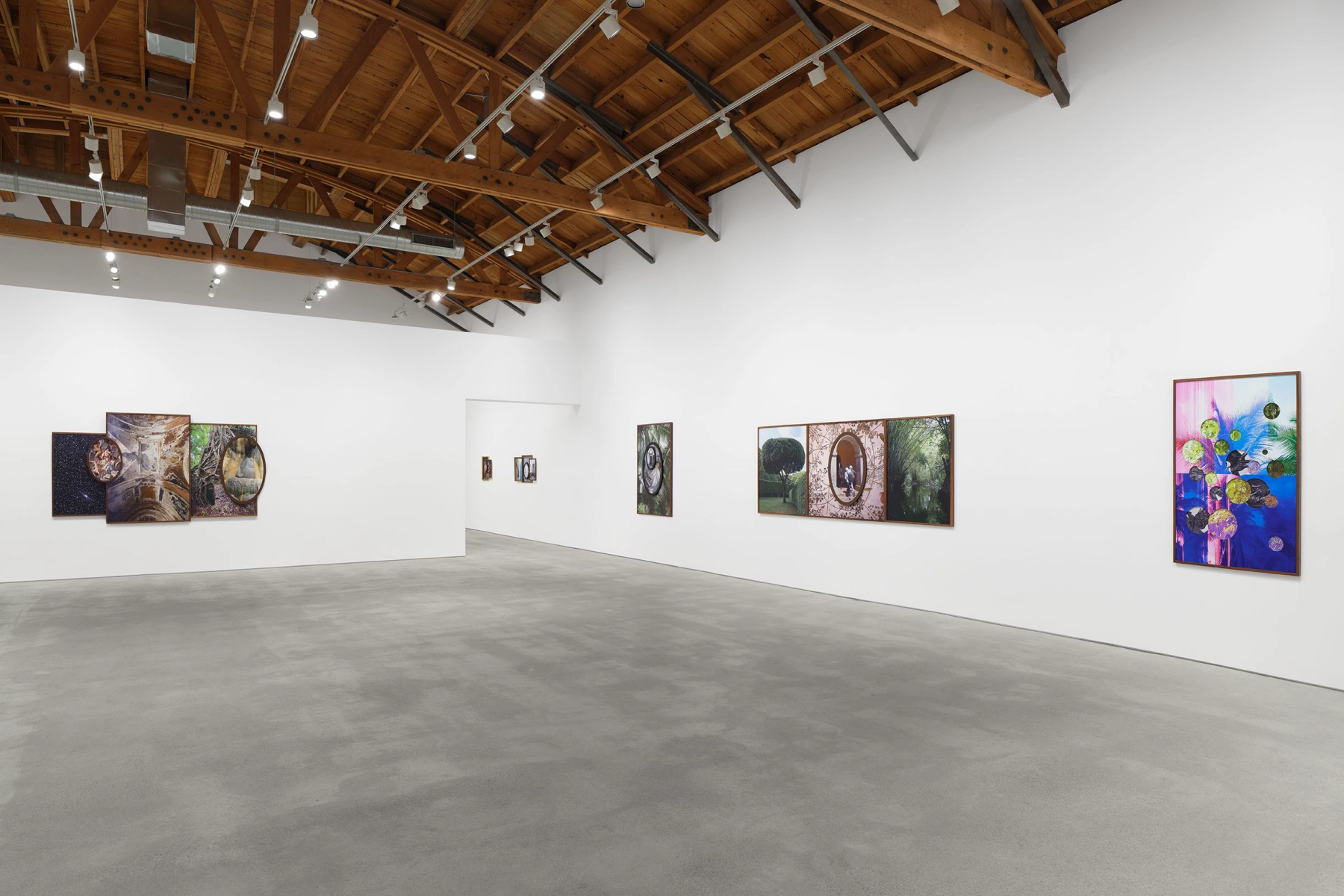
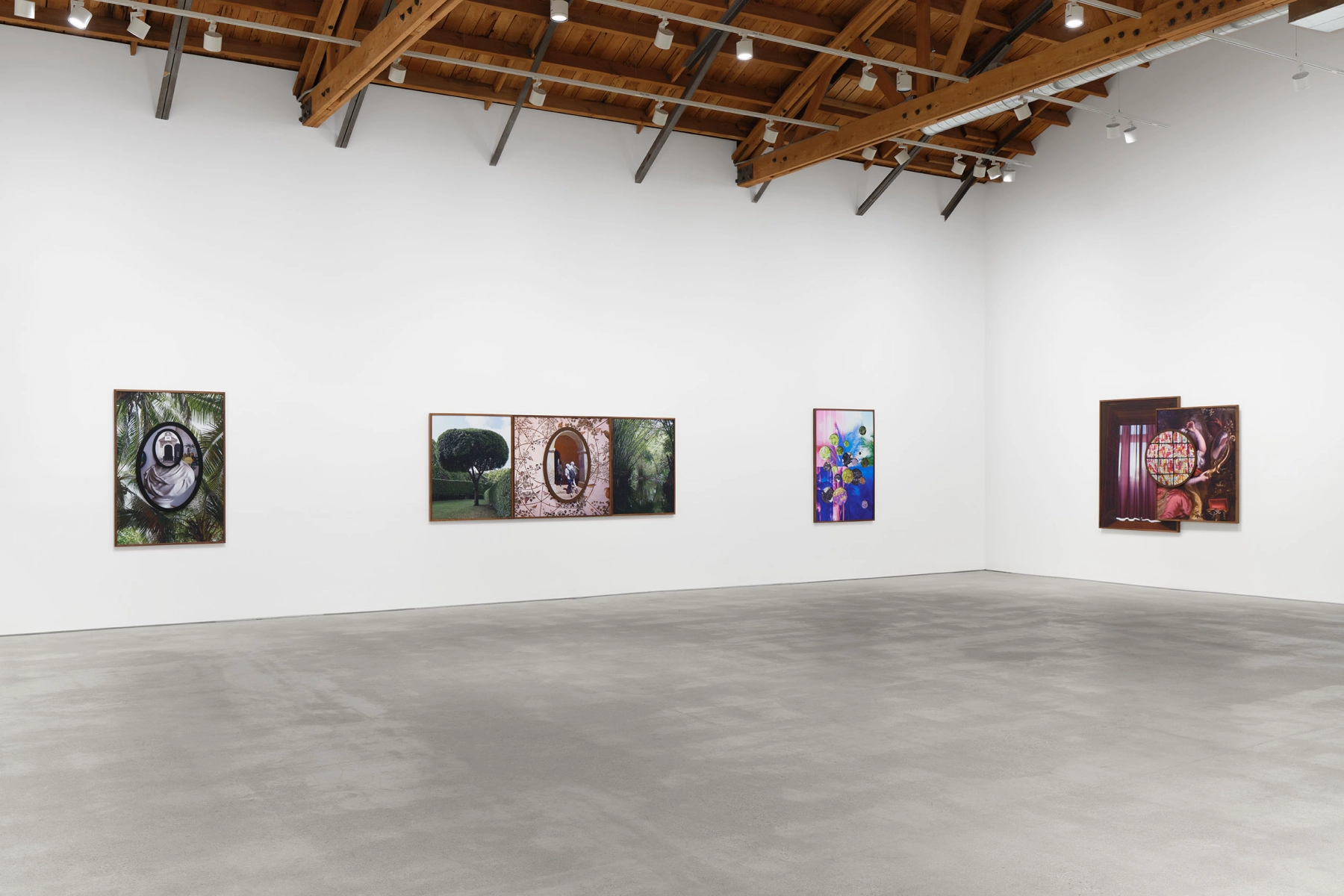
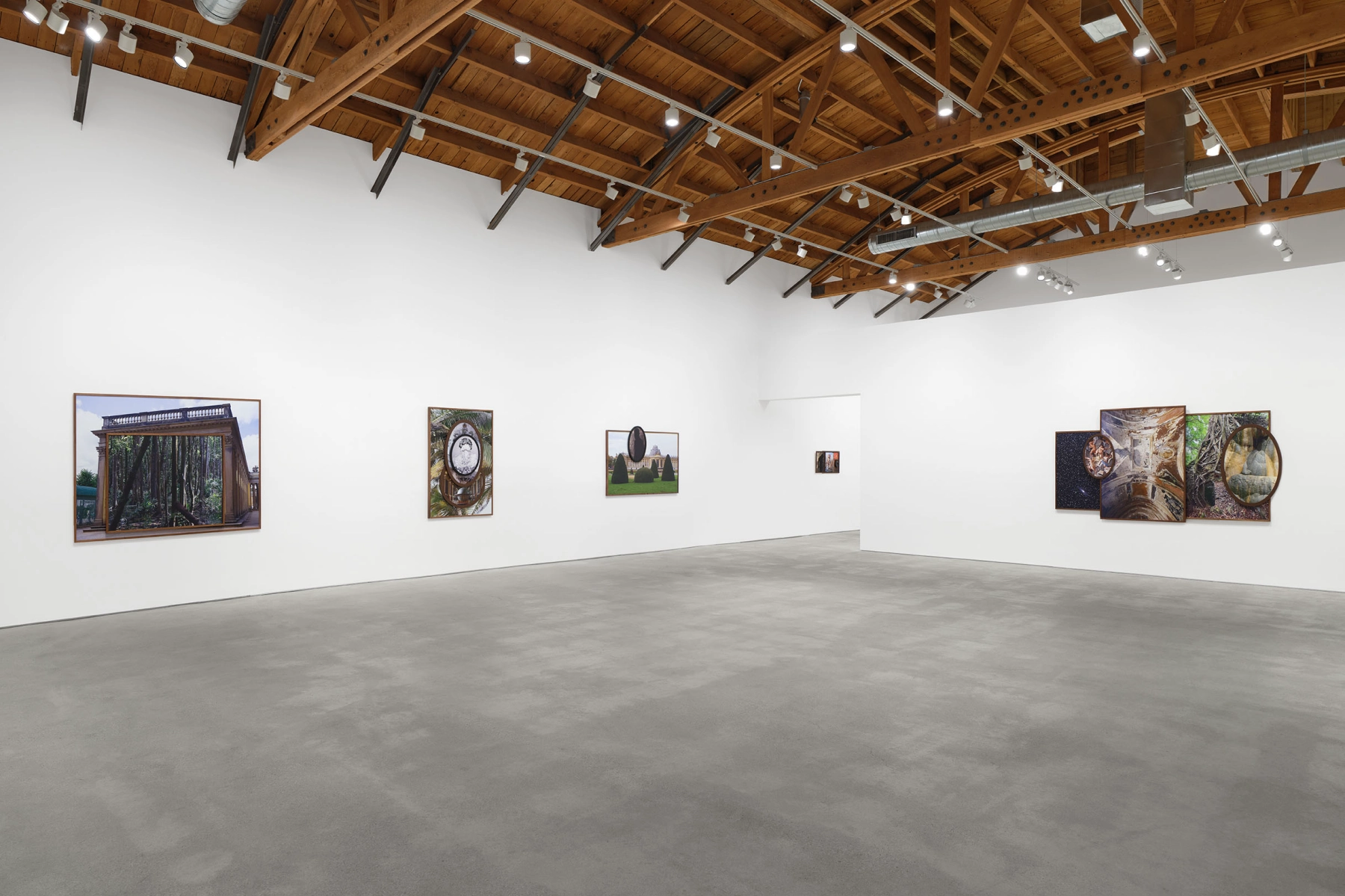
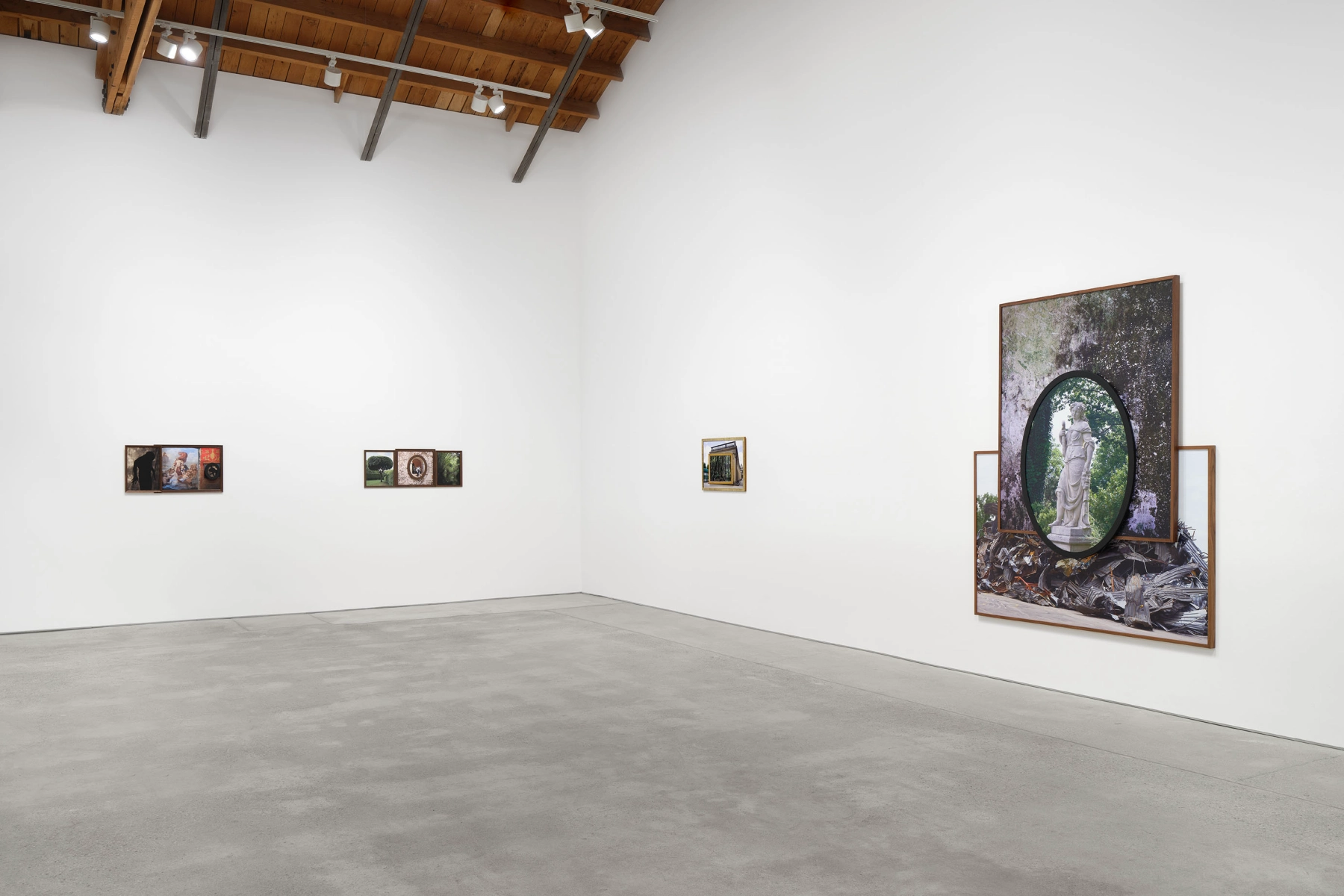
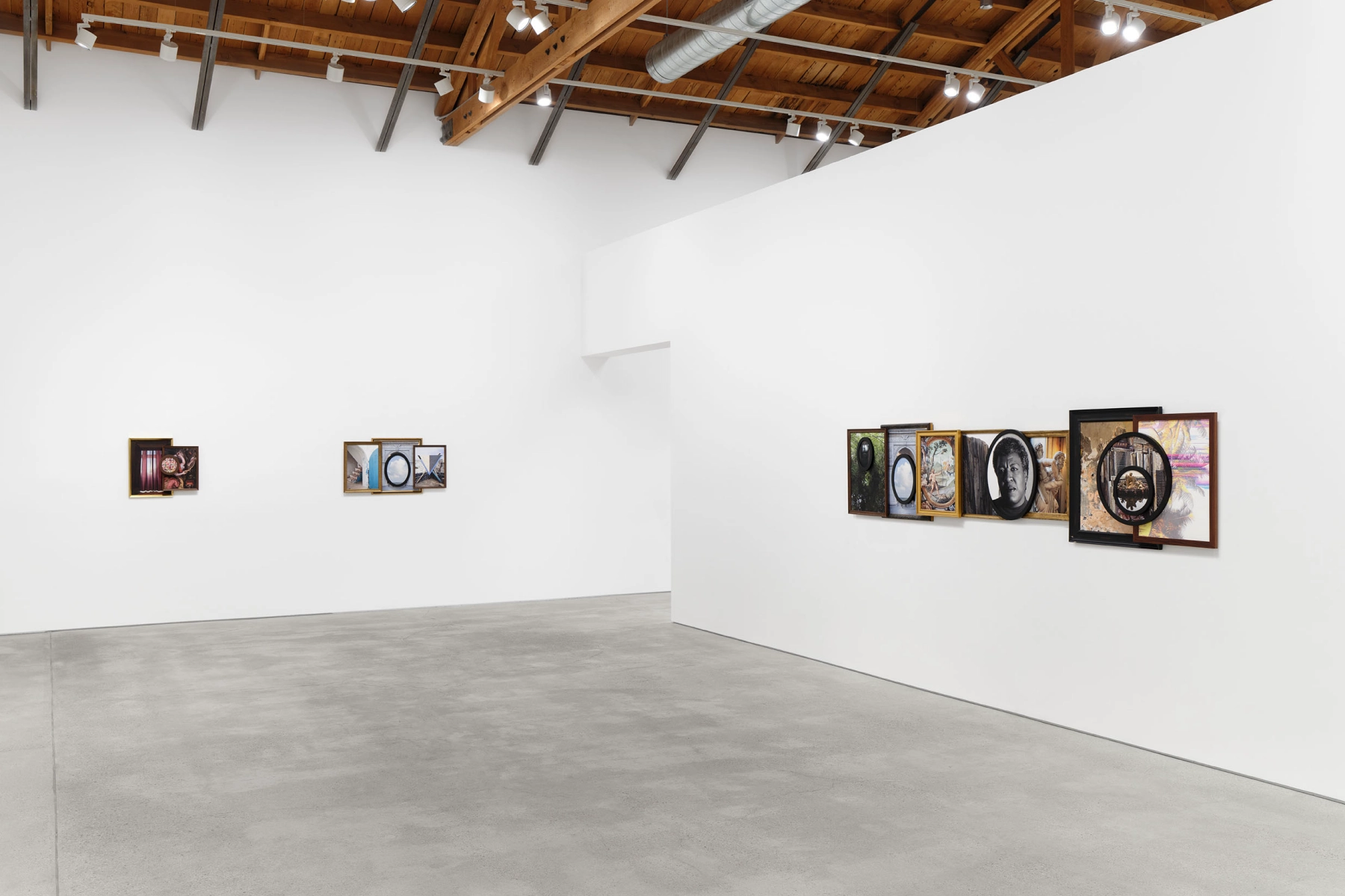
This temporal understanding of Blackness finds a powerful visual evocation in the work of Todd Gray. Portals presents a new collection of the artist’s photographic assemblages in which images of European formal gardens and Renaissance interiors are juxtaposed with West African landscapes and the material remains of colonial power and slavery. Across the exhibition, Black presence in the Atlantic world is articulated as a simultaneous experience of seeing and being. Of bearing witness to, and being a participant in, the ongoing currents of history.
Paradox of Liberty (Monticello, Elmina, Akwidaa), for example, offers a striking articulation of the interlacing of individual experience with collective memory. The backdrop depicts palm trees in Akwidaa, Ghana, where Gray has a house and studio. Superimposed on this scene is a marble bust of Thomas Jefferson, photographed by Gray at the third president’s Monticello estate in Virginia. Jefferson’s face is itself overlaid with an image of the entrance to a dungeon at Elmina slave fort in Ghana. Entanglements stretch across history. The palm trees evoke a Western fantasy of tropical idyll even as they recall Milton’s Paradise Lost and the biblical expulsion of humanity from Eden. Jefferson’s likeness, meanwhile, cannot be separated from the historical record of the more than 600 enslaved people he owned and who were forced into labor on Monticello’s 5,000-acre plantation.
Viewed together, the works in Portals offer a reminder of how the lives of Black people in the West have been shaped by legacies of racial othering. For centuries, a linear narrative of progress has cast people of African origin as perpetually primitive while positioning the West as its civilizational opposite, the former representing darkness and savagery, the latter, epitomizing knowledge and civilization. In the eighteenth century, such hierarchies flourished beneath a veneer of objective rationality. “The Negro can be disciplined and cultivated but is never genuinely civilized,” wrote the philosopher Immanuel Kant. “He falls of his own accord into savagery.” Jefferson declared that “all men are created equal” while also disdaining Black people as lacking in “memory, reason and imagination.” Yet far from being “fixed in nature” as Jefferson insisted, racial identity is a fluid, contingent, always-in-motion proposition. As the cultural theorist Stuart Hall put it, “‘Black’” has always been “an unstable identity, psychically, culturally and politically. It, too, is a story, a history. Something constructed, told, spoken, not simply found.”
The thrill of Gray’s practice is that rather than offering a counter-narrative to the binary opposition of Western progress and Black savagery, he rejects linear thinking altogether. A precociously talented photographer, Gray began taking pictures at fifteen in the early 1970s. He documented the Rolling Stones on tour and was published in Life magazine while still in high school, and his archive now spans five decades. Yet Gray is also acutely aware of photography’s origins as a nineteenth-century technology that helped sustain colonial-era systems of power and control. Inspired by Hall’s insistence on the complexity of culture and identity, he wields the camera as a means of “challenging hegemony [and] breaking away from normativity.”
The assemblages in Portals are constructed using both found and bespoke frames. Images are layered, offset, and, in some cases, glitched—sourced from damaged memory cards and rendered in vivid pinks and blues. The result is a series of works defined by exhilarating uncertainty: charged, unexpected juxtapositions that are “not logical but relational” in their affinities.
The exhibition’s title underscores these visual strategies. Derived from portalis, meaning doorway or threshold, a portal is an in-between space—not a destination but a point of entry, a connector between different realms or states of being. In Past Imperfect (promise of amnesia), the classical façade of Sanssouci Palace in Potsdam Germany appears to open onto verdant wetlands in Nigeria. In Kind of Blue in a Silent Way an image of the cosmos captured by the Hubble Space Telescope is paired with a mural from Fort Apollonia in Beyin, Ghana, along with a naked silhouette of Gray, and a stained-glass window from the Church of Saint-Séverin in Paris.
With its suggestion of routes into “other timescapes, landscapes, or mindscapes,” the title also places Gray in dialogue with a lineage of Black artists and writers who have turned to time travel and temporal disruption to explore the uncertainties of diasporic life. We might think of the time-displaced protagonists of Octavia Butler’s novel Kindred and Haile Gerima’s film Sankofa, for example, abruptly transported from the present into the plantations of the antebellum South. Or Julie Dash’s Daughters of the Dust, a movie narrated by an unborn child, that blurs past, present, and future in its explorations of memory, tradition and myth.
The conventional understanding of the photograph is that it fixes in place a moment in time. But Gray’s works instead offer a diasporic vision of the world in which everything is connected and in motion. The future resonating with the past. The present shaped by history and memory. By legacies of oppression and dreams of liberation. And everything happening at once. So that to encounter a work like Into This Wild Abyss/The Womb of Nature is to see a dance in motion. It is to hear a chorus in attunement. It is to glimpse an expanding universe seen from a space telescope in low Earth orbit. Figures falling through the sky in a Renaissance fresco. The ruins of a colonial fort in Ghana being slowly subsumed by the jungle. And each framed image a portal, giving way to yet further realms. Yet further ways of seeing and being.