21 Woodstock Street, W1C 2AP, London, United Kingdom
Open: Mon-Fri 10am-6pm, Sat 11am-4pm
Wed 11 Feb 2026 to Sat 2 May 2026
21 Woodstock Street, W1C 2AP Post-War Perspectives
Mon-Fri 10am-6pm, Sat 11am-4pm
Alternate views on reality in post-war France.
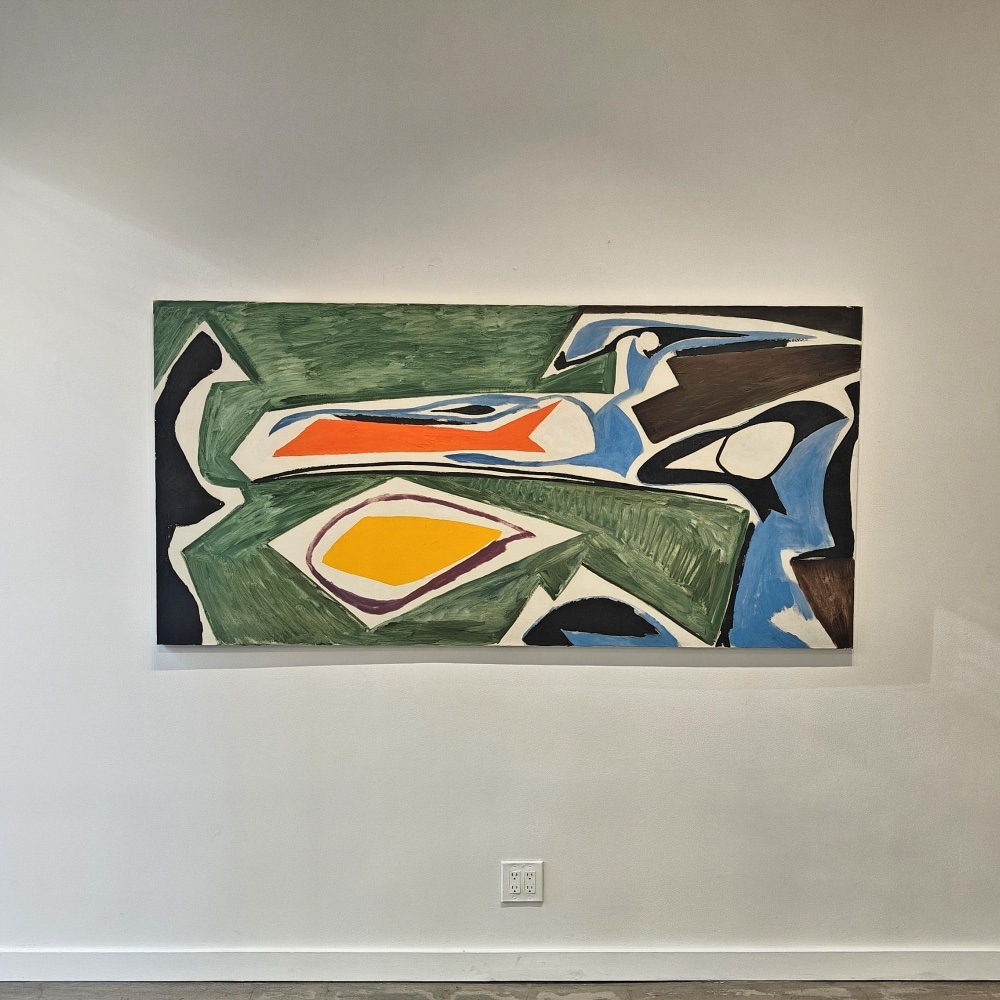
Choosing one’s perspectival viewpoint was rarely ever a purely aesthetic decision, but during the febrile atmosphere of post-war France conventional rules no longer existed and artists were free to define their own perspectives on the new reality, a collection of which we explore in this exhibition.
A multitude of competing voices filled the intellectual atmosphere of Liberated Paris, from the Catholic “Essentialiste” philosophy of Emmanuel Mounier, which encouraged focus on the eternal rather than the illusory, and perhaps most aligned with the poetical expression of artists such as Jean Le Moal, Gustave Singier, and Léon Gischia, of the coyly named “Jeunes Peintres de la Tradition Francaise”; to the call from the widely prevalent Communist supporters that included leading Surrealist André Breton and poet Louis Aragon, for art to uphold a social conscience, such as that of André Fougeron who won the Prix National des Arts in 1946; while Merleau-Ponty’s 1945 publication of the “Phenomenology of Perception”, fuelled the popularity of Sartre’s Existentialism that encouraged awareness of one’s individual primal response.
In this crucible of ideas and ideologies, a kaleidoscope of non-abstract movements arose, some re-purposing elements of earlier European movements, such as Cubism and Fauvism; while others took inspiration from further afield geographically and temporally. The CoBrA group sought to reconnect with a “universal primitivity” through naïve instinctive forms inspired by hallucinations and folklore, as seen in the early work of Georges Collignon and Marcel Pouget.
Amongst other idiosyncratic artists in the show are Valentine Prax and Bill Parker, both of whom combine naïve and surreal imagery in deceptively whimsical ways.
Whilst many of the works may no longer appear radical to us, they belie the fragile societal turmoil in which they were created, something this exhibition encourages us to reflect on.
Sign Up & Never Miss a Show