+44 2077 348888
Open: Mon-Fri 11am-6pm, Sat 10.30am-2.30pm
Visit
Open: Mon-Fri 11am-6pm, Sat 10.30am-2.30pm
12 Brook’s Mews, W1K 4DG, London, United Kingdom
Open: Mon-Fri 11am-6pm, Sat 10.30am-2.30pm
Visit
Gavin Turk: The Escapologist
Ben Brown Fine Arts, London
Wed 11 Mar 2026 to Fri 22 May 2026
12 Brook’s Mews, W1K 4DG Gavin Turk: The Escapologist
Mon-Fri 11am-6pm, Sat 10.30am-2.30pm
Artist: Gavin Turk
Q: When is a door not a door?
A: When it is ajar.
Ben Brown Fine Arts presents The Escapologist, the sixth solo exhibition of British artist Gavin Turk at the London gallery. The exhibition presents a new series of oil paintings depicting doors left ajar, each offering a glimpse into an ambiguous and surreal terrain beyond. Shown together, the works transform the gallery into a labyrinth of thresholds. Each painting functions as a portal, drawing the viewer towards a narrow opening that reveals a field of smooth, liquid brushwork. These passages dissolve into bands of luminous colour that suggest an atmospheric horizon, generating unstable optical effects that coax the eye into a false sense of depth.
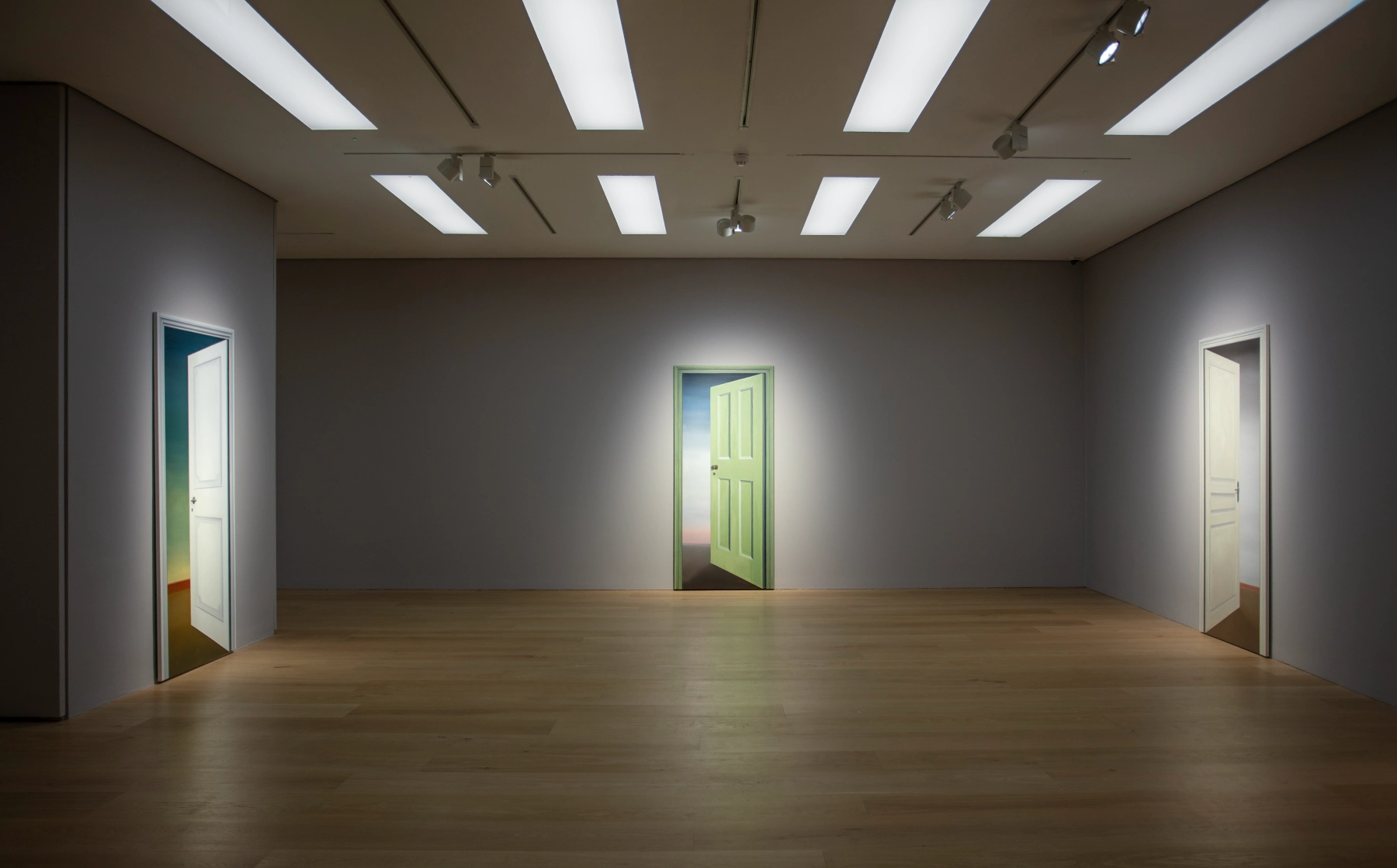

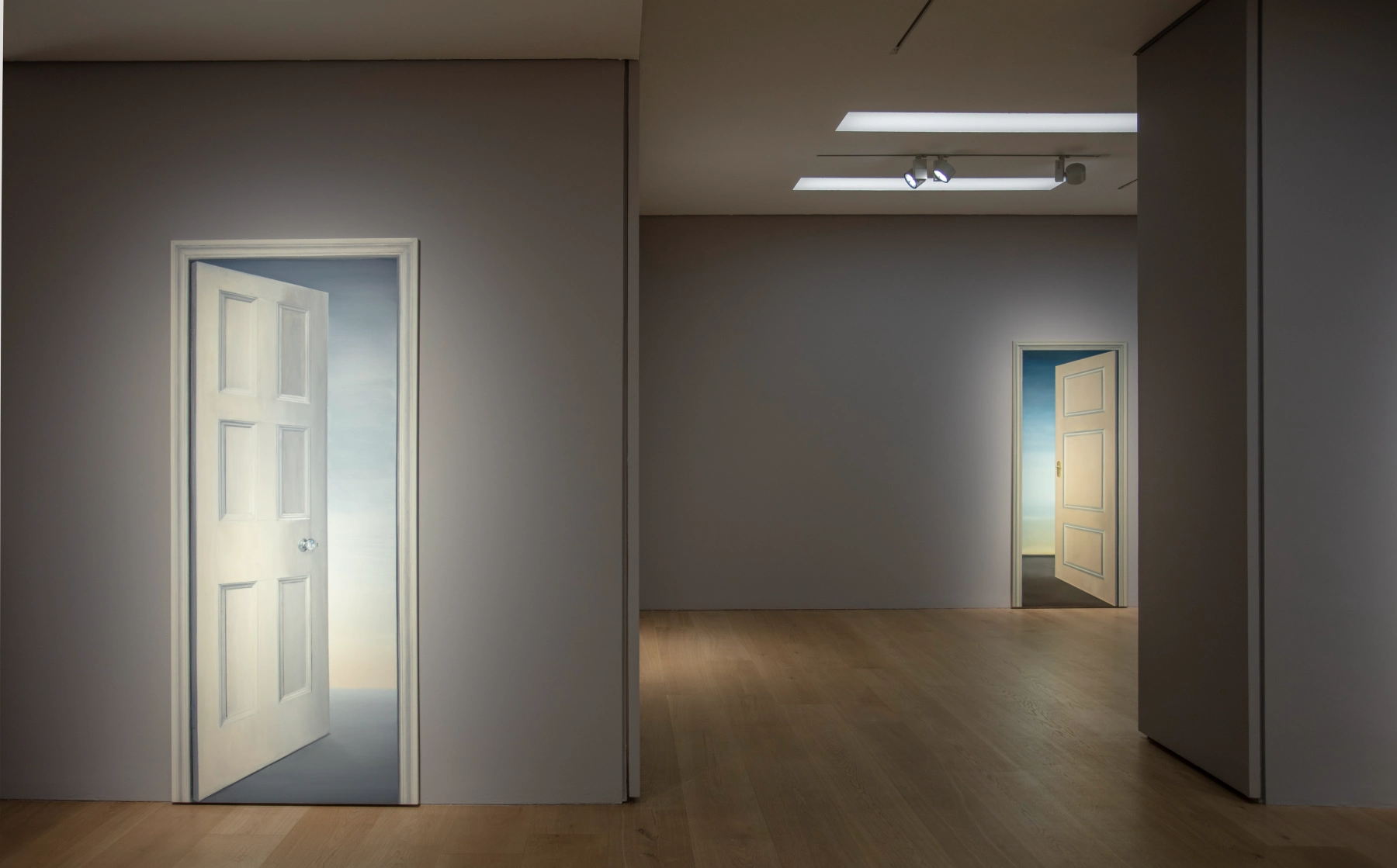
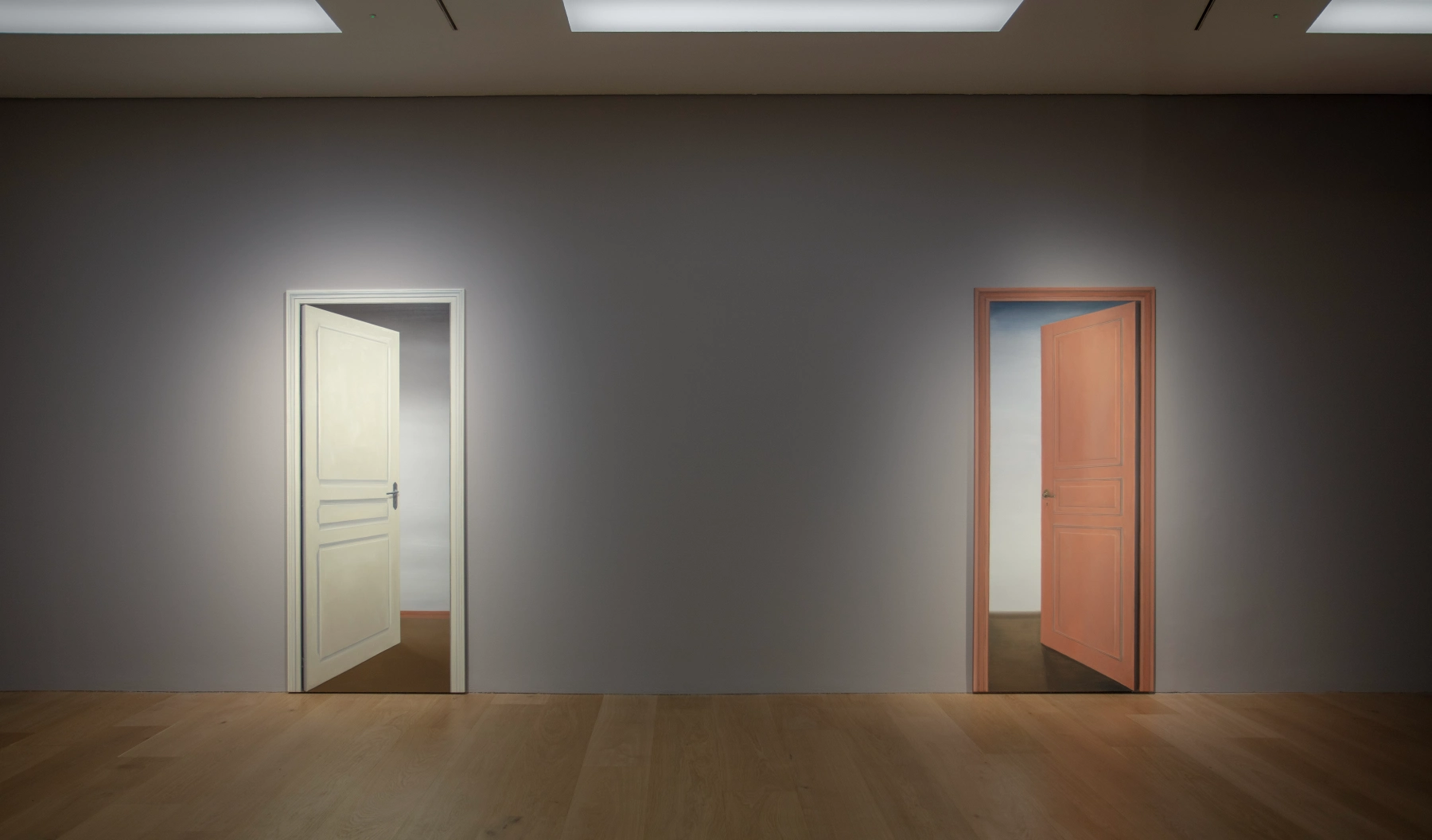
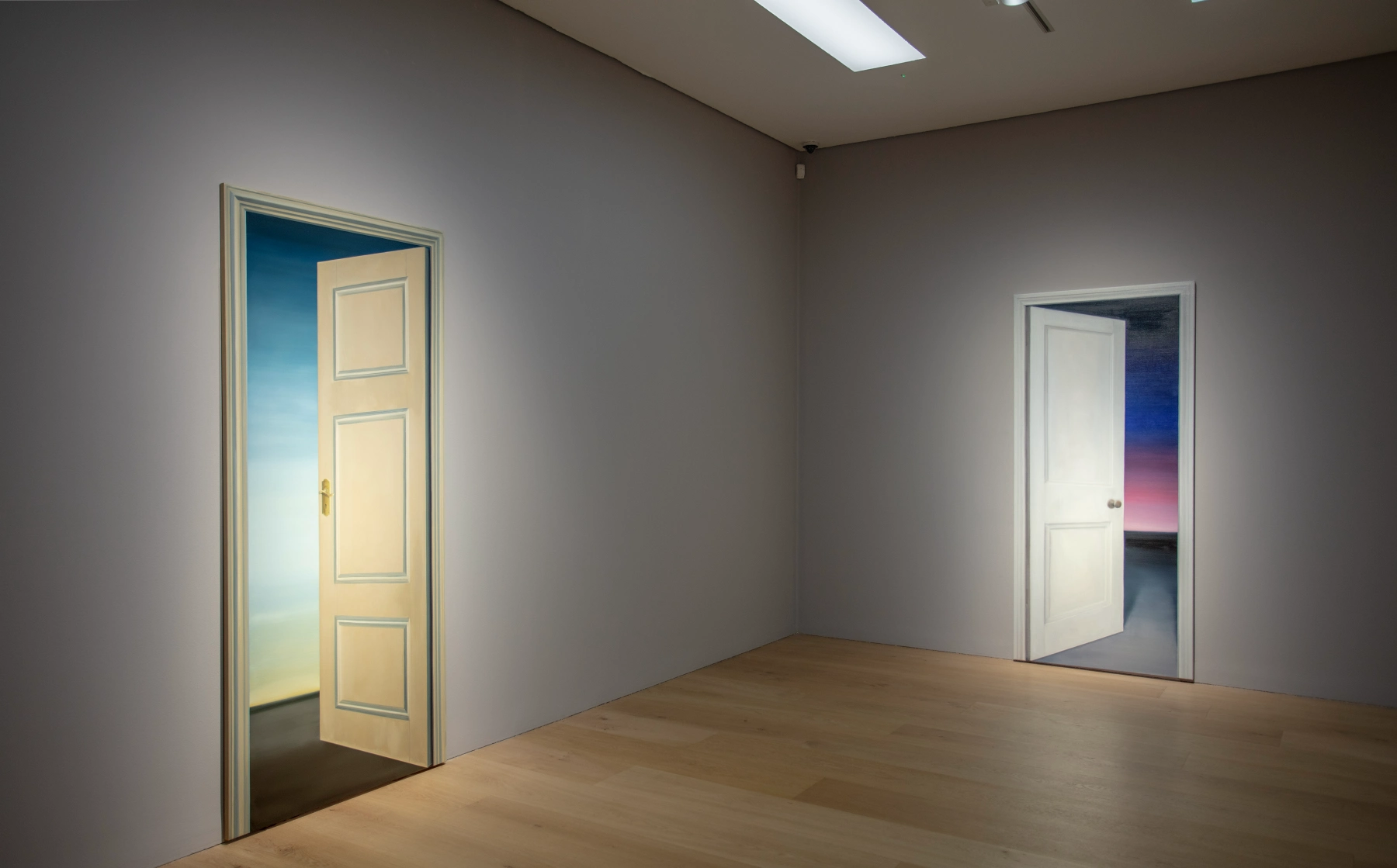
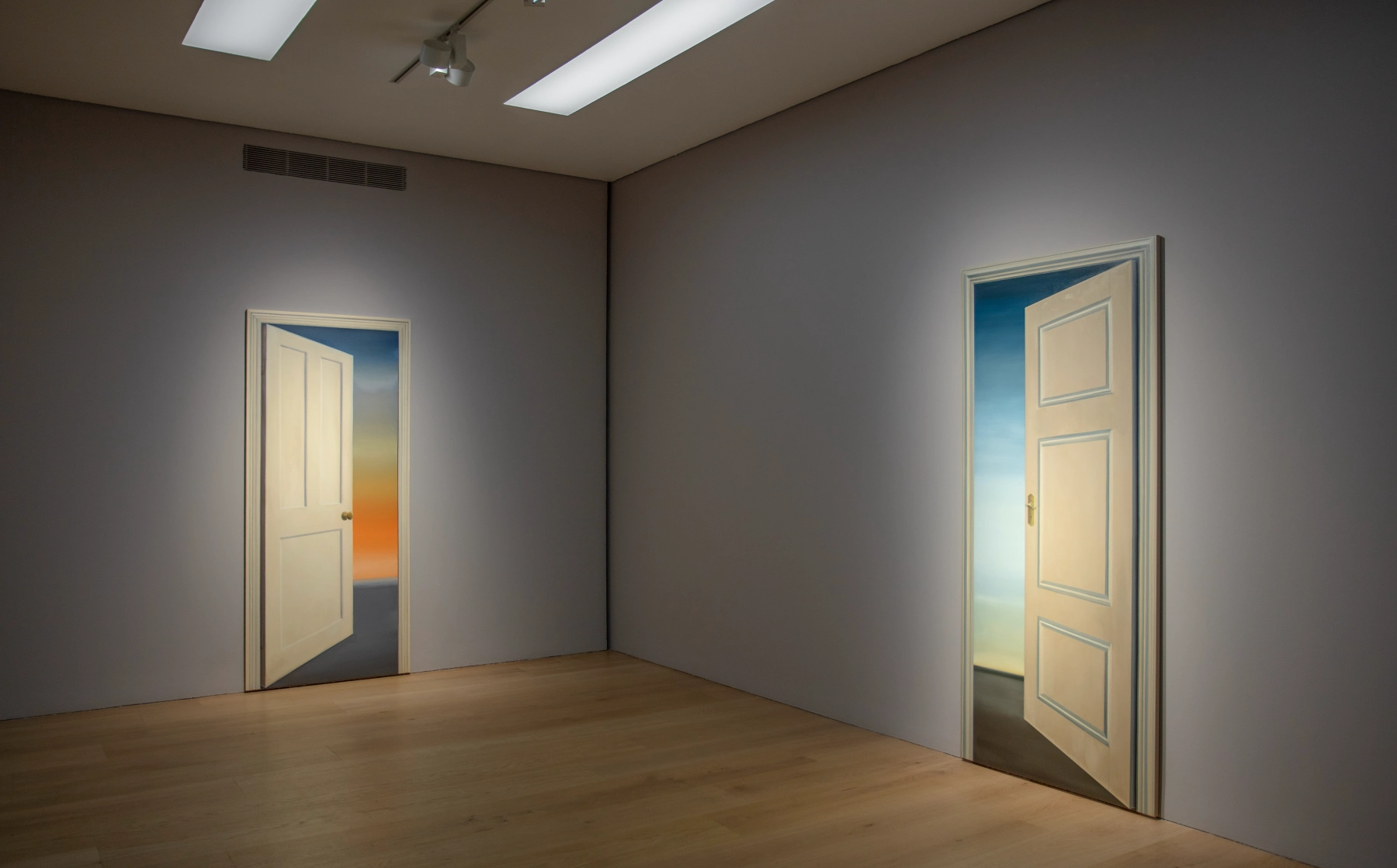
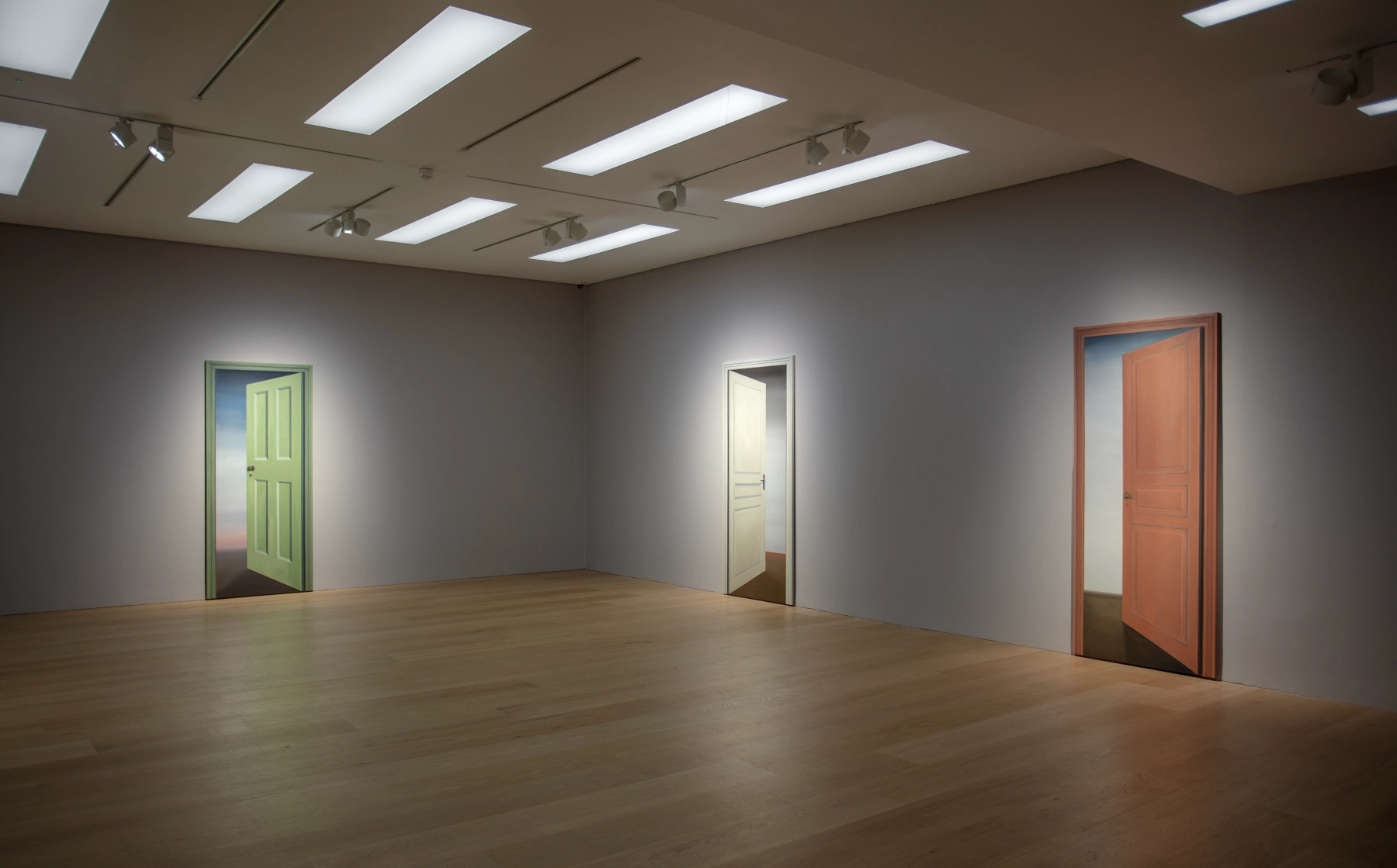
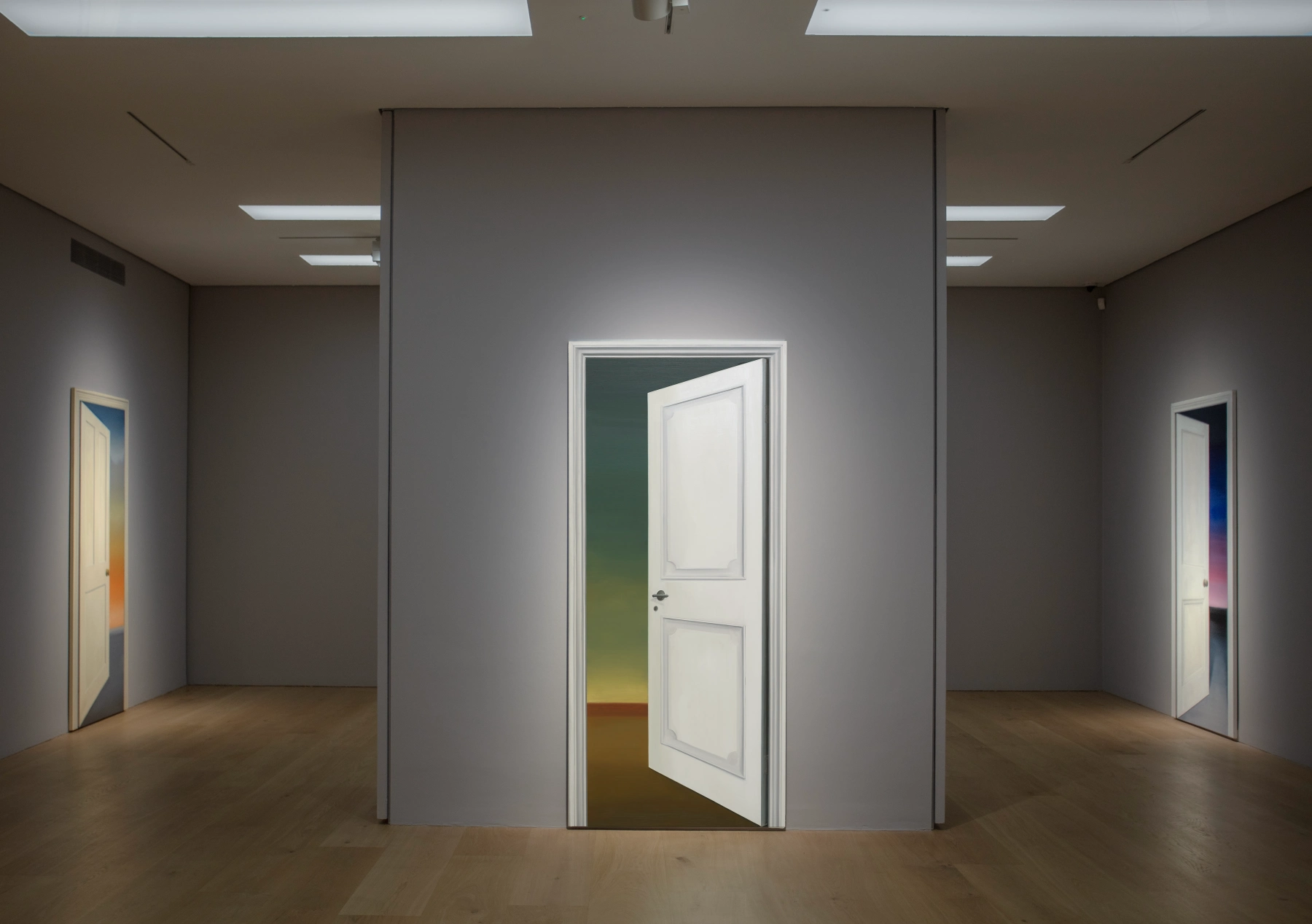
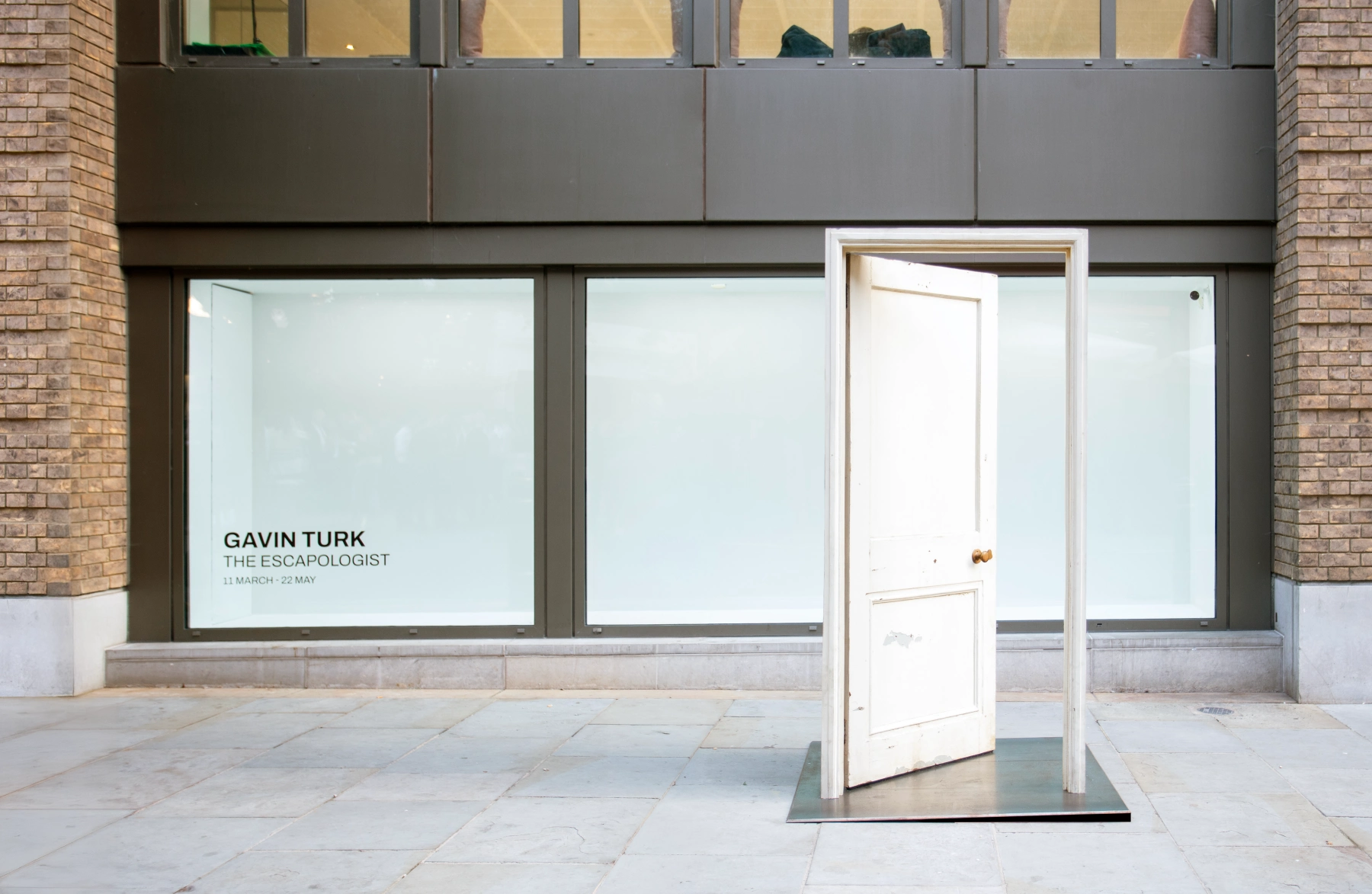
For more than three decades, Turk has relentlessly interrogated the systems through which belief is produced – in images, in authorship, in value – using familiar forms, art historical tropes, psychoanalytic symbols and dreamlike objects to set perceptual traps. The door is a recurring motif in his practice and, like the egg that also appears throughout his work, carries both Surrealist symbolism and art historical weight. As Turk notes, “When I see a door in a doorframe, I also see an egg. An egg is all door, in that sense, the door is both a point of departure and arrival.” A ubiquitous object, the door embodies paradox. It marks both beginnings and endings and defines the unstable relationship between inside and outside.
As with much of Turk’s work, these paintings engage directly with art history. They draw on Surrealist ideas of psychological thresholds, Renaissance ideas of painting as a window, and conceptual disruptions of function and space. The works recall the uncanny domestic interiors of René Magritte, the metaphysical stillness of Giorgio de Chirico, and Marcel Duchamp’s Door, 11 rue Larrey (1927), a single door suspended between two doorways, perpetually both open and closed.
Meticulously rendered in trompe l’oeil, the paintings draw on Gerhard Richter’s Tür series of 1967. Richter’s doors were not depictions of real architecture but constructed images that borrowed the authority of photography in order to undermine it. By applying photographic realism to an invented subject, Richter exposed the instability of representation and the fallibility of perception. Turk extends this logic further. Rather than asking what is real, he asks why we trust what we see. If Richter’s doors probed the limits of painting in the face of photography, Turk’s doors speak to a contemporary condition in which images are endlessly convincing yet fundamentally unreliable. These works offer not passage, but the promise of it, positioning perception itself as the site of escape.
Turk’s engagement with the door is also shaped by a broader philosophical lineage. William Blake’s The Marriage of Heaven and Hell (1793) proposed that human perception limits, rather than reveals, reality – an idea later taken up by Aldous Huxley in The Doors of Perception (1954).
The exhibition title points to this sleight of hand. An escapologist is defined by illusion, misdirection and belief, succeeding only because the audience wants to be convinced. Turk’s paintings promise escape, yet hold the viewer in suspension, exposing the mechanisms through which images persuade and expectations take hold. As the artist observes, "Escapology is the science of escaping, perhaps art and creativity is a form of escape, or a paradigm shift."
The exhibition also marks a deeply personal moment for the artist. Returning to the studio following a medical sabbatical that confronted his own mortality, vulnerability and endurance, Turk reflects on both individual experience and a wider human condition. Set against a climate of global cultural, economic and psychological instability, the works articulate a shared state of uncertainty and suspended meaning. The doors become sites of existential pause – thresholds that hold the viewer between one state of being and another.
In The Escapologist, Turk draws on a lineage in which painting has repeatedly tested the reliability of vision. Yet where Richter exposed the fault lines between painting and photography, Turk turns his attention to a contemporary condition shaped by endlessly persuasive images. In an age in which images are designed to convince rather than to be questioned, The Escapologist insists on doubt. It reopens the act of looking as a deliberate, reflective practice, suggesting that meaning is not found beyond the threshold, nor in escape from reality, but in the uneasy human experience of standing still and looking – aware of what cannot be known, yet compelled to look nonetheless.
Gavin Turk (b. 1967, Guildford, Surrey) is a conceptual artist whose work interrogates ideas of authenticity, authorship and the ‘myth’ of the artist. Drawing on Surrealist methodologies, his practice is self-reflexive and often knowingly parodic, questioning the art world’s value systems and the construction of the artist’s persona. Turk came to prominence with his postgraduate degree show at the Royal College of Art where he presented Cave (1991): an empty, whitewashed room bearing a blue heritage plaque inscribed with his own name. The installation announced a sceptical, postmodern view of artistic status and reputation, establishing the use of his name as a recurring device within his practice. It brought Turk immediate notoriety following the attention of Charles Saatchi and led to his association with the generation of Young British Artists (YBAs). Since then, Turk has developed a wide-ranging body of work that examines the cultural and economic frameworks surrounding art and its makers. He frequently reconfigures the visual languages of artists who precede him, using art history as material through which questions of originality, influence and inheritance are explored. Working across sculpture, painting, photography, and print, Turk has pioneered approaches now familiar within British contemporary art, including painted bronze, waxwork, art-historical appropriation, and the use of discarded materials.
Turk studied at the Chelsea School of Art (1986 -1989) and the Royal College of Art (1989-1991), both in London. Turk’s work is held in numerous public collections worldwide, including the Tate, London; Museum of Modern Art (MoMA), New York, NY; Museum für Moderne Kunst (MMK), Frankfurt; Saatchi Gallery, London; San Francisco Museum of Modern Art (SFMoMA), CA; Musée Magritte, Brussels; British Council, London; and the Victoria and Albert Museum (V&A), London.


