381 Broadway, NY 10013, New York, United States
Open: Tue-Sat 10am-6pm
Artist: Marianne Huotari
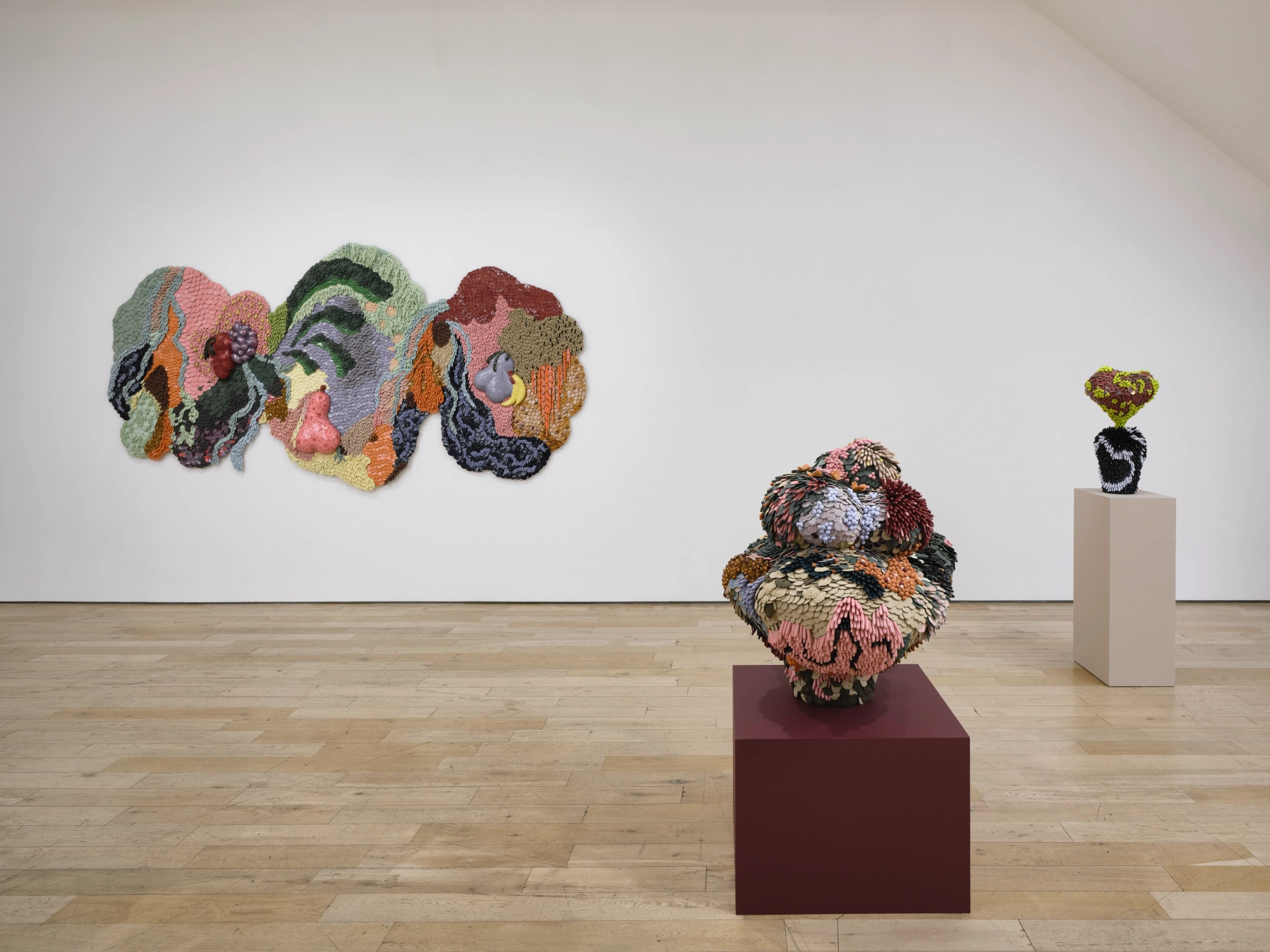
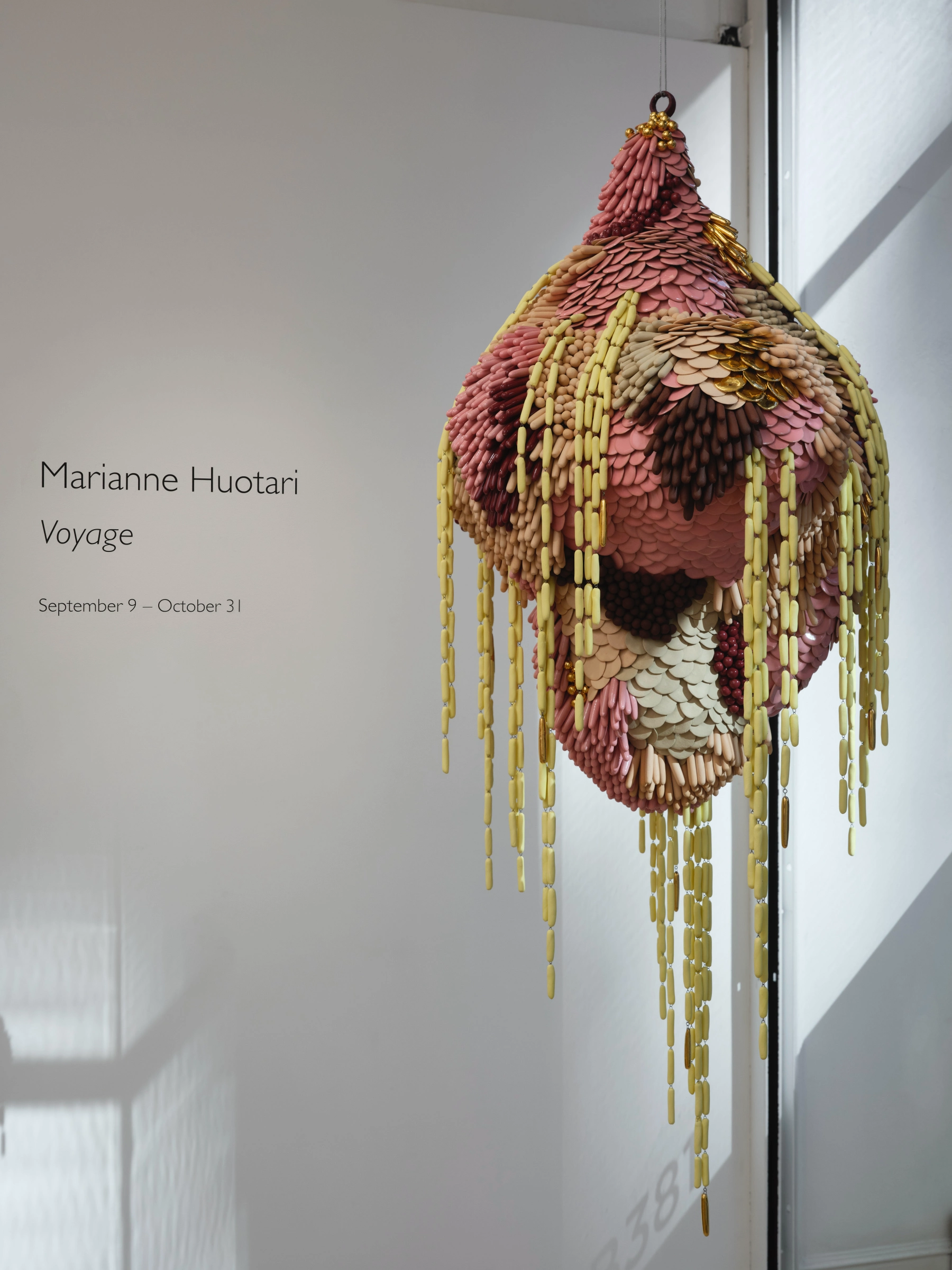
HB381 presents Voyage, a solo exhibition of new works by Marianne Huotari (Finnish, b. 1986). Huotari's meticulously beaded sculptures and wall tapestries reimagine traditional Finnish rya textiles. Through a care-intensive process of craftsmanship, Huotari sculpts hundreds of oblong ceramic beads and petals by hand before sewing them onto a metal armature with wire. The beads layer and bubble at will, similar to the woven knots in ryijy. Her color palate mimics that of the original woolen fibers; creams and light greens alongside pinks and muted blues populate her tapestries and free-standing sculptures.
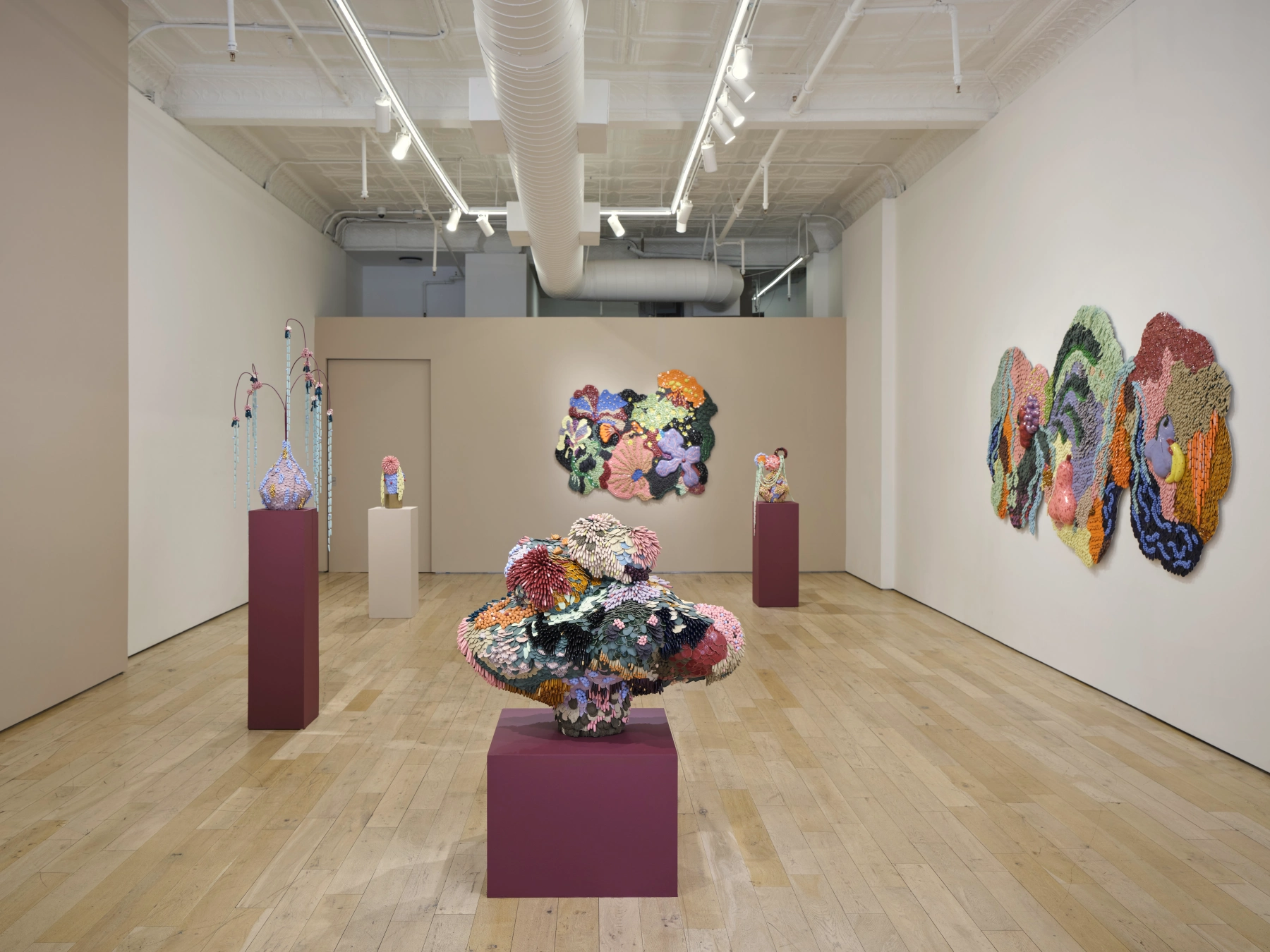
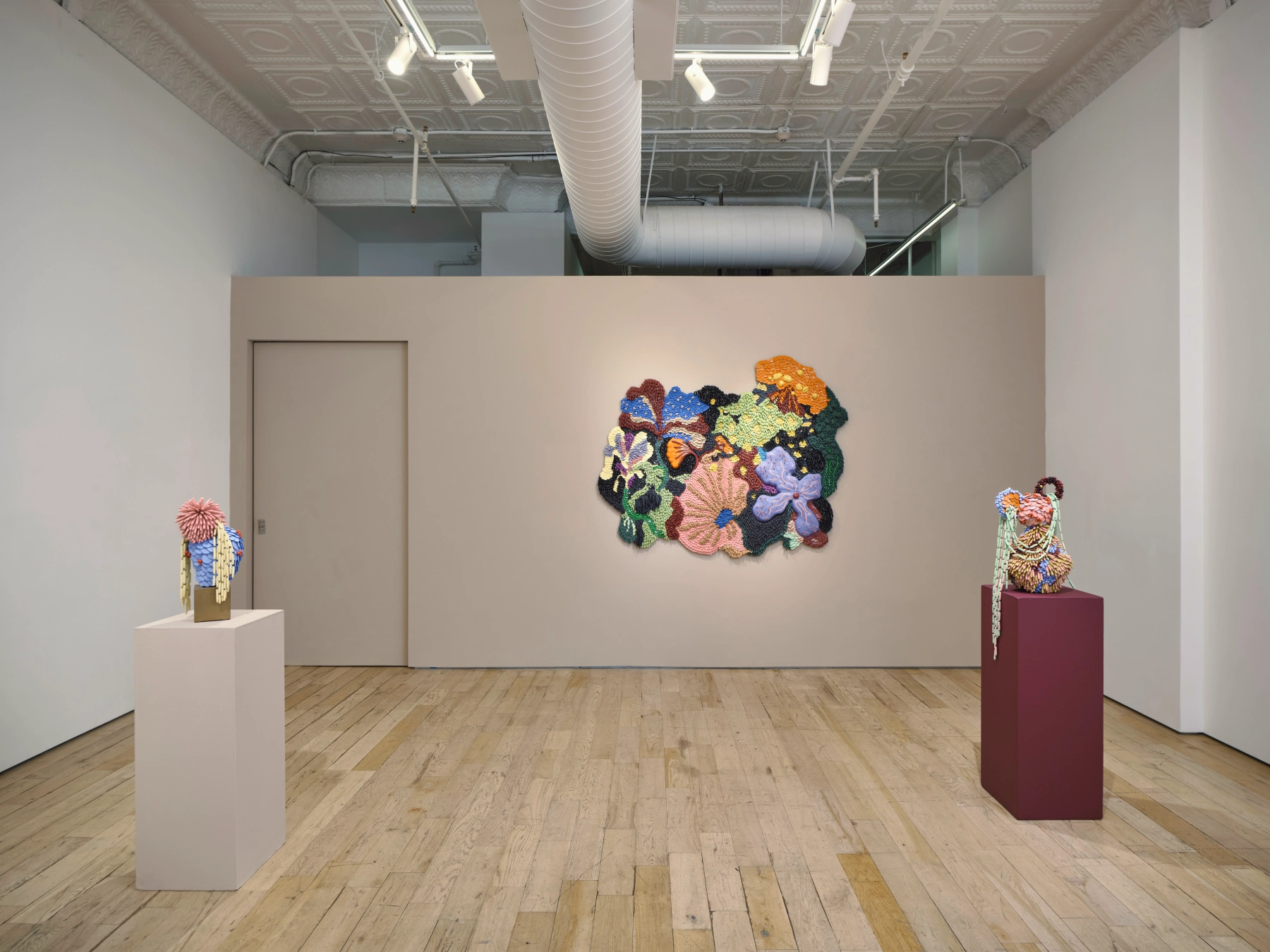
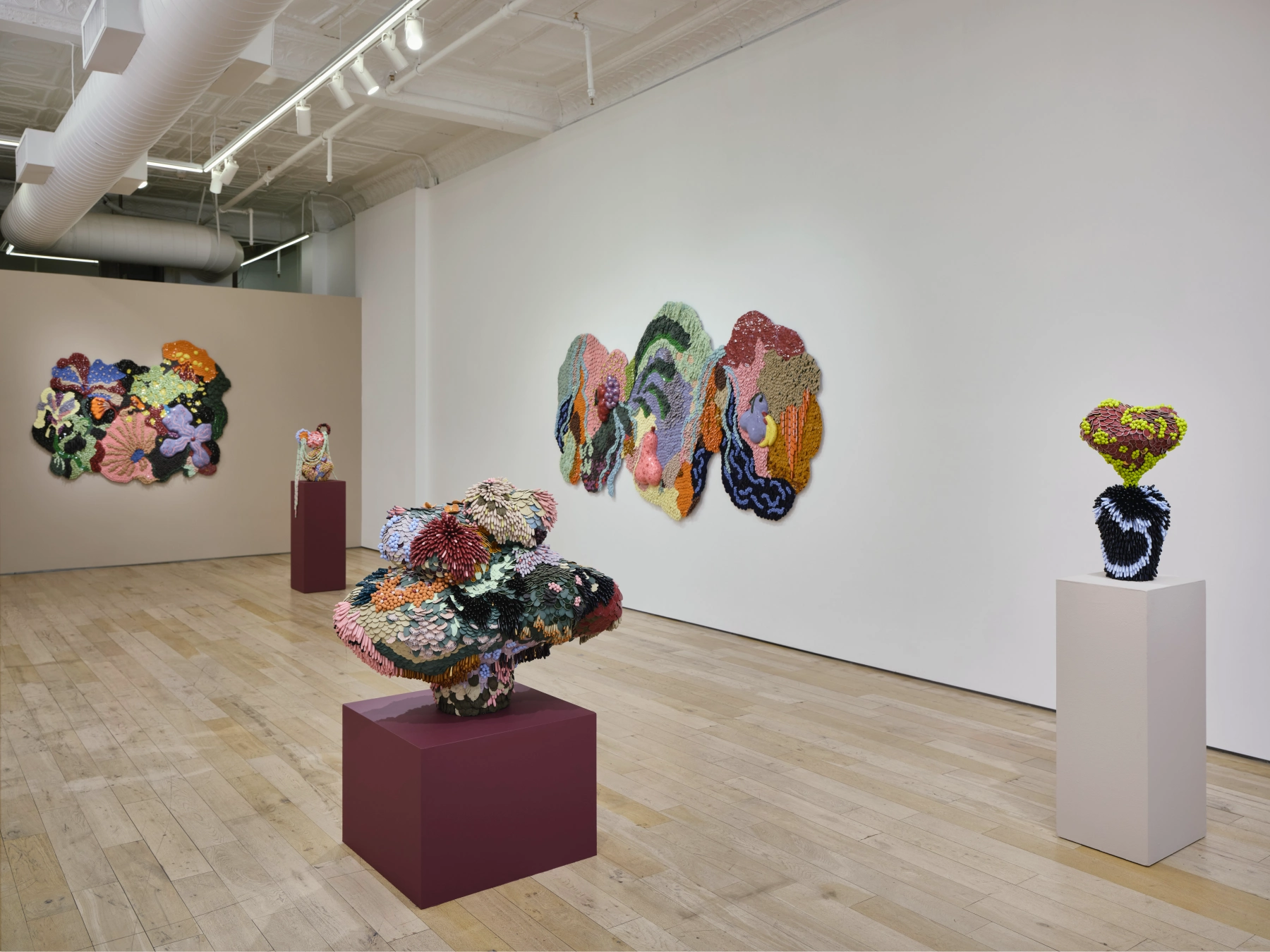
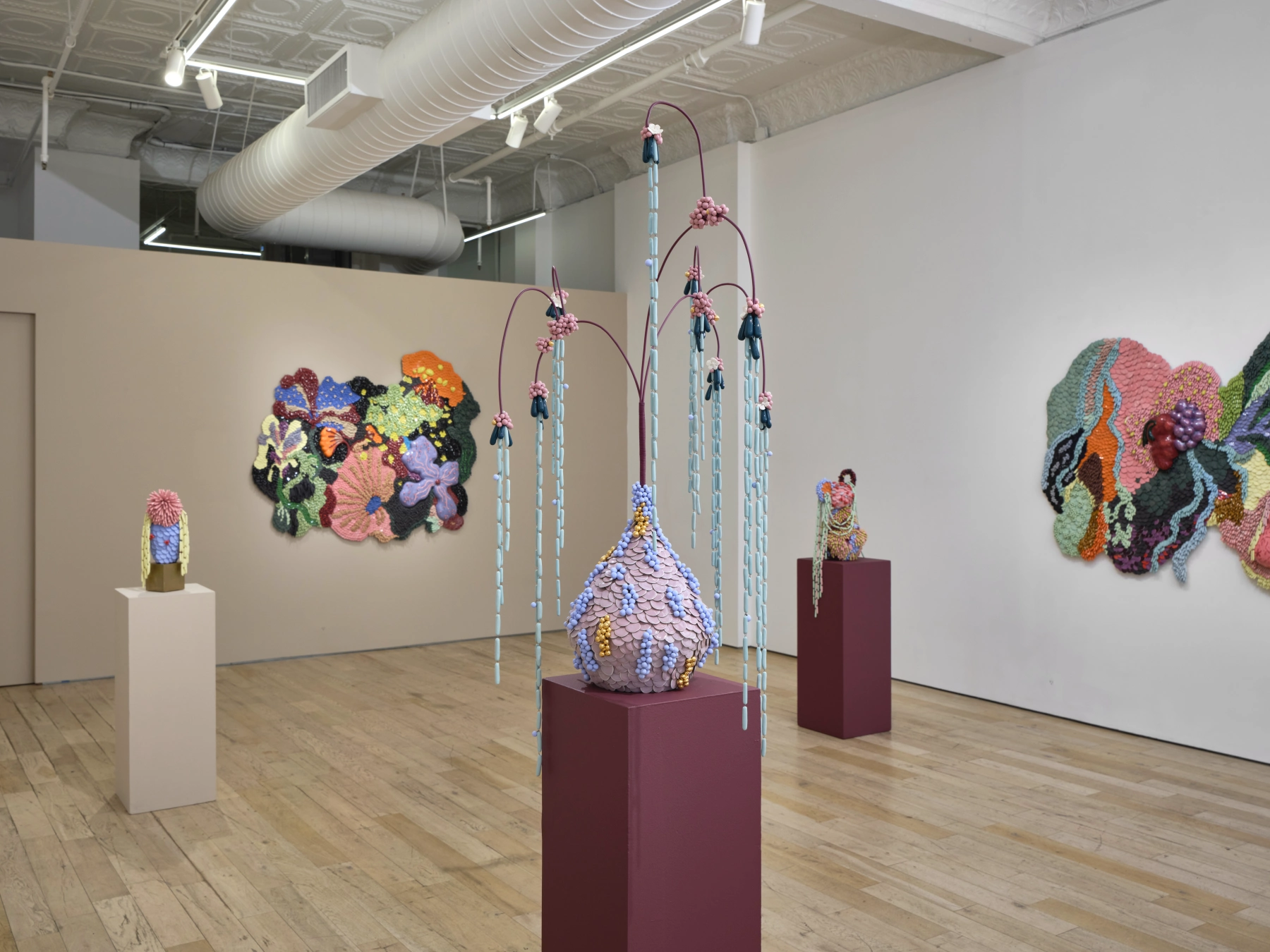
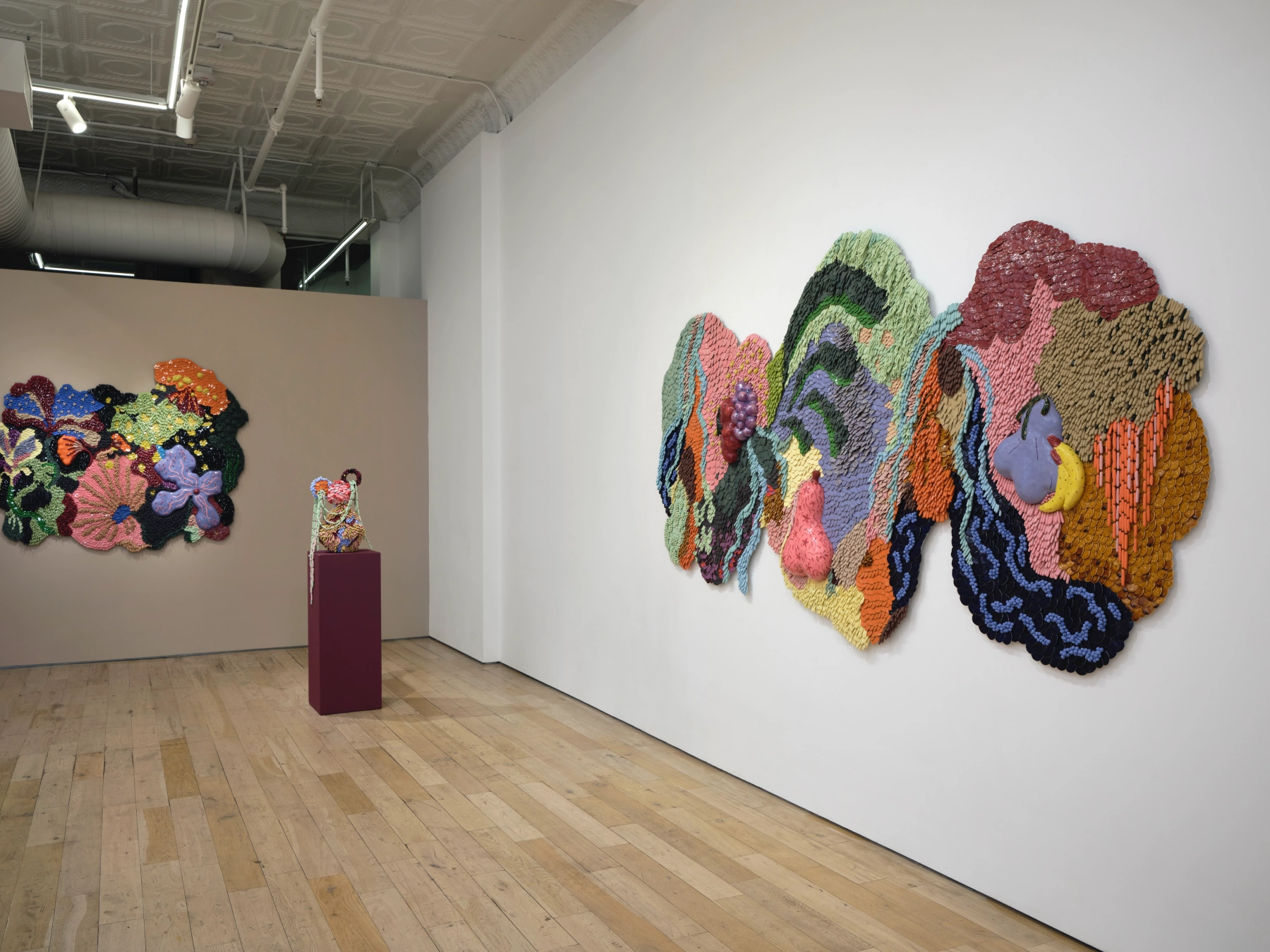
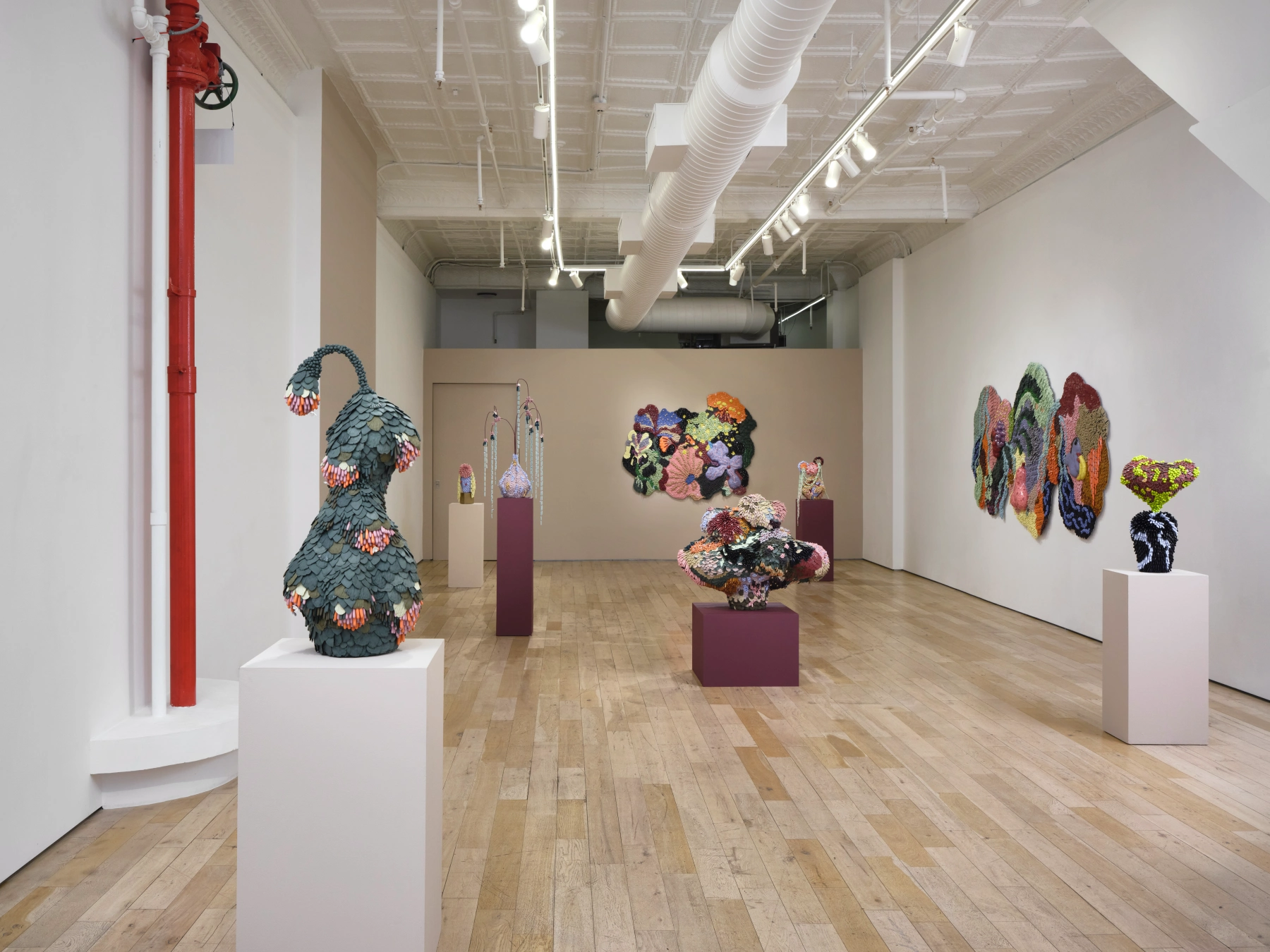
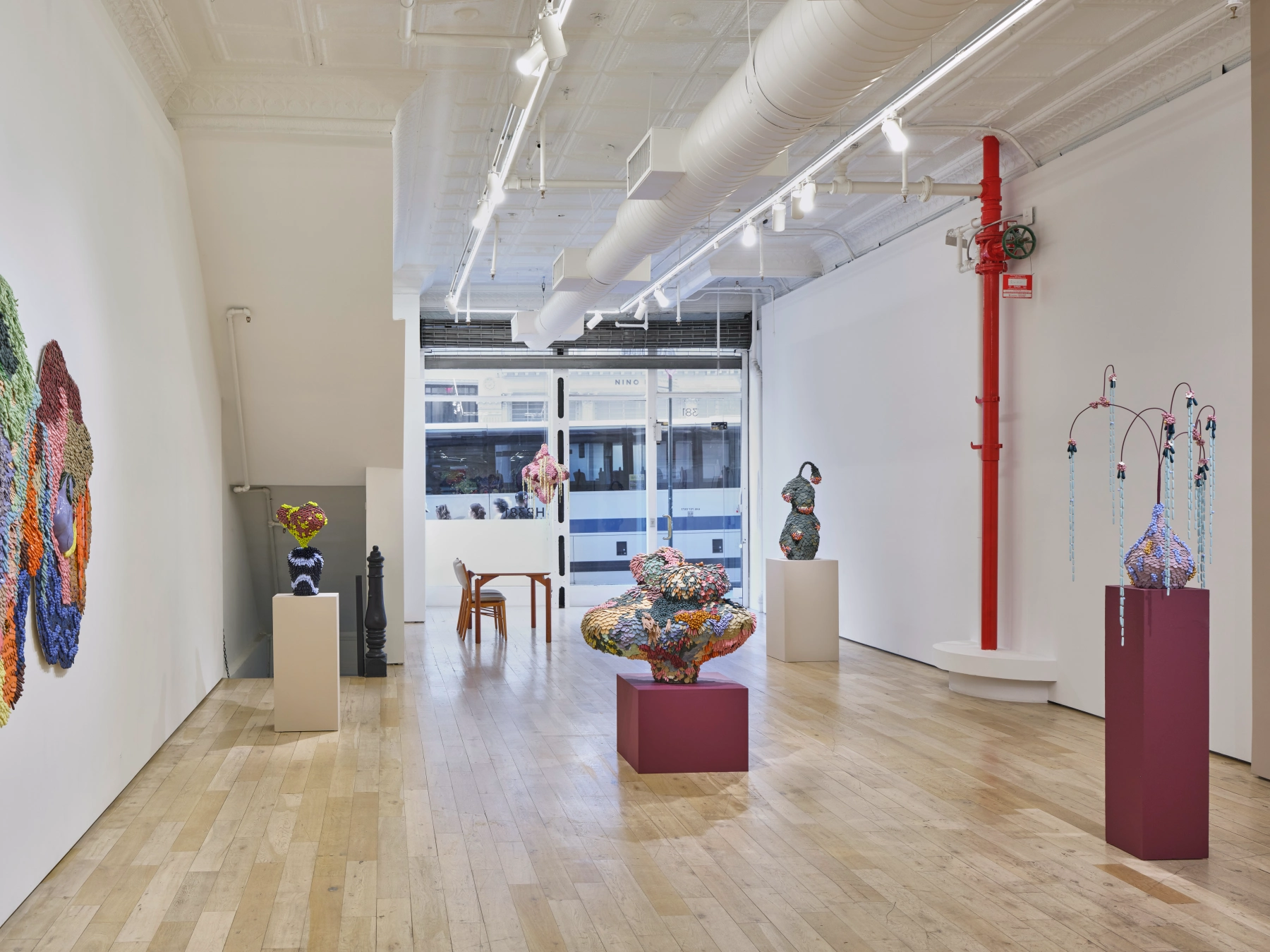
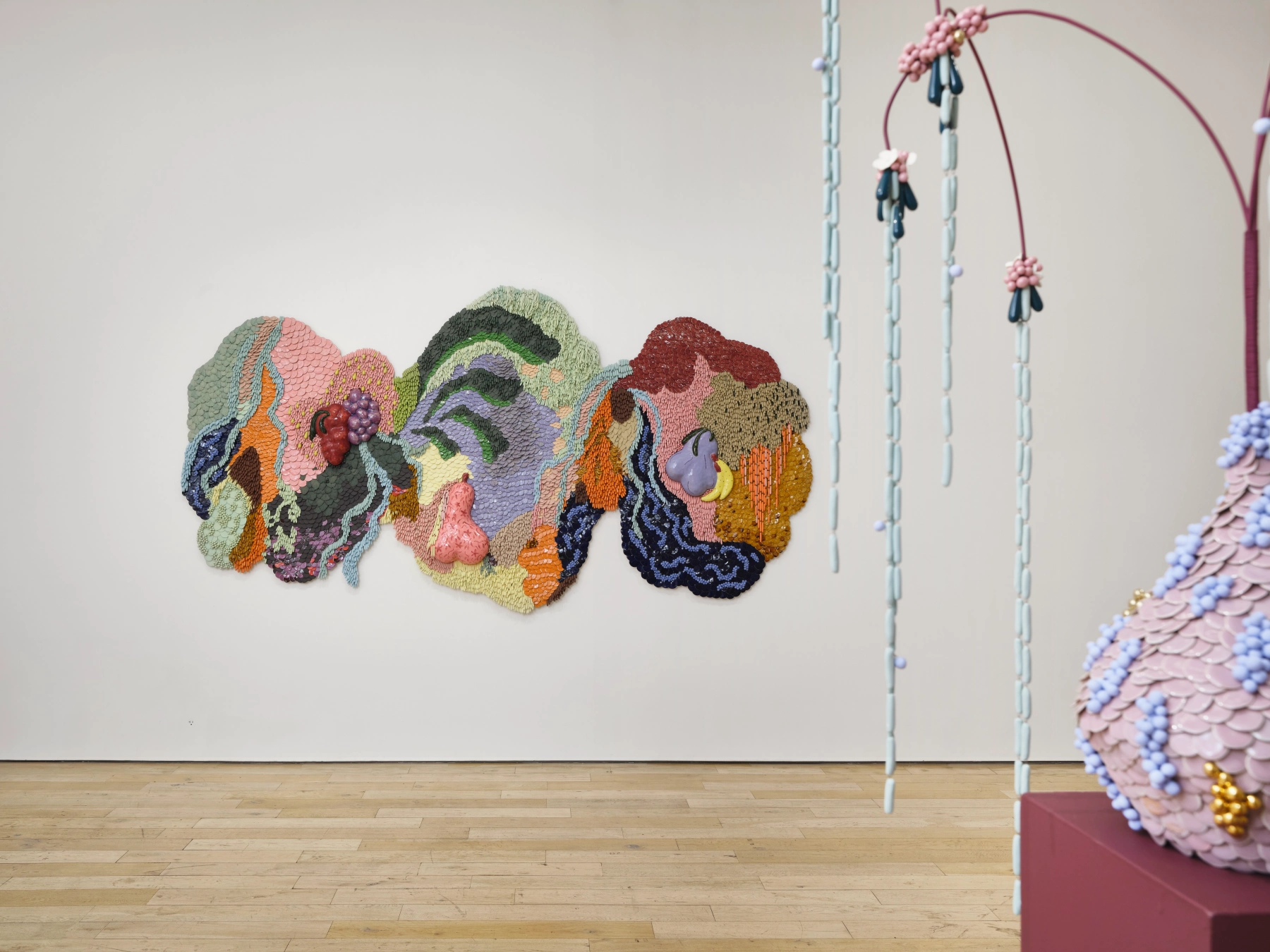
Huotari’s measured hands-on process allows her to decelerate the rapidity of daily life and find a meditative rhythm in the act of creation. She approaches each item she creates with tenderness, whether it be a bead passing through her fingers or a wall hanging requiring countless hours of stitching. As a result, her final forms exude a warmth and sensation of delight.
The exhibition catalog features an essay, Fantastic Voyage, by curator Elizabeth Essner, excerpted below:
[The] symbolic push and pull between modernity’s technological rush and nature’s timeless mysteries is central to the works in Voyage. Huotari’s dream-like works nearly envelop the viewer—a strange and delightful refuge from today’s harsh realities. In her studio, hundreds upon hundreds of handmade clay elements—golden balls, petal-like discs, candy-colored capsules, play dough-like strings—transform into midnight gardens and imaginary creatures that live alongside her lush forms sprouting, blooming, and dripping with fringe. While the artist’s primary medium is ceramics, her practice could easily be described as world-building. The works in Voyage seem plucked from a place far more fantastic than our own—a realm in which you are invited to wander.
The narratives in Huotari’s work were not always at the forefront; before 2023, color-based abstractions were her métier. Artistic breakthroughs are often intertwined with daily life and a household move prompted this pivotal shift. As Huotari planned her new home, she dreamt of the kind of life her new space could hold. Soon her fields of color gave way to the picture plane of Shangri-La (2023) with its arched window of blue sky encircled by the delicate landscape with fruit tucked into the composition, an antecedent to By the Waterfall (2026), Huotari’s largest work to date.
In this work, pink and purple pears, grapes, and polka-dotted bananas reveal themselves within the lush flora and fauna and waterways flowing in ever-changing directions. Huotari describes the piece as a decorative carpet rendered in clay, making it unsurprising that her master’s degree at the elite Aalto University focused on textiles and surface design. In fact, until the end of 2025, Huotari worked as the creative director at the Finnish carpet firm, Finarte. Bringing her textile thinking to ceramics led the artist to a key source of inspiration: the woven Ryijy rug, long-pile knotted textiles that originated as Viking cloaks and came to be recognized as artistic achievements by the 20th century. Textile thinking also led Huotari to new rhythmic possibilities as she exchanged thread’s relative regularity for clay’s elasticity, opening an entirely new space for form and color to operate. In By the Waterfall (2026), clay channels leafy shrubs, blueberry bogs cut by turquoise streams, and a panoply of chromatic combinations.
Huotari’s search for pleasing color arrangements drives her work as color and emotion are deeply linked within her inner psyche. Tranquility is the feeling the artist strives to elicit and the slowness of her process underscores her aims. These intricate works require substantial time and labor as Huotari must make, fire, and attach each ceramic bead in her often-monumental designs. For example, By the Waterfall took six months to create. The artist welcomes the meditative process, a counter to the hectic world and its high-speed production—her beads are “something you just cannot buy online,” she says. Huotari begins with a rough sketch that defines the form, but leaves an opening for improvisation as she works from her vast library of materials.
Marianne Huotari lives and works in Helsinki where she is a member of the Arabia Art Department Society. Her work has been shown widely in Finland, as well as throughout Europe, Asia, and the United States. Her collection Väre was made in collaboration with the Finnish National Museum. Huotari recently served as the creative director for the Helsinki-based design and rug company Finarte. In 2022, she was shortlisted for the Loewe Craft Prize and her work was exhibited at the Seoul Museum of Craft Arts. She is the recipient of the 2024 Taito-Finlandia Prize and an NYCxDesign Award. Huotari’s works are included in the collections of the EMMA Espoo Museum of Modern Art, the Finnish State Art Collection, and Palazzo Fendi in Milan, Italy.
Sign Up & Never Miss a Show