+33 1 42 18 49 86
Open: Tue-Sat 11am-1pm, 2-7pm
Visit
Open: Tue-Sat 11am-1pm, 2-7pm
208 boulevard Saint Germain, 75007, Paris, France
Open: Tue-Sat 11am-1pm, 2-7pm
Visit
Giorgio Morandi. Un lieu de l'infini.
Galleria d’Arte Maggiore g.a.m., Paris
Artists: Arman - Lee Ufan - Lucio Fontana - Josef Albers - Giorgio Morandi - Ettore Spalletti
An outsider, but never indifferent, Morandi has emerged unscathed from the great transformations of art, yesterday and today, leaving us a body of work whose extraordinary relevance continues to surprise. «Tacitly faithful to itself though different, through imperceptible variations on the surface and considerable ones in substance», Morandi’s painting moves through time and seems to reach out to 1987, when a monographic exhibition organized at the Hôtel de Ville de Paris at the initiative of Madame Chirac was already questioning the artist’s ability to remain perpetually contemporary. A “Morandi condition” was already evident then and is reaffirmed today as Galleria d'Arte Maggiore g.a.m. has chosen to explore it in this exhibition at its Paris venue, revisiting some of the dialogues with contemporary and post-war artists previously presented. Morandi’s paintings are thus placed in dialogue with works by Lee Ufan, Josef Albers, Ettore Spalletti and Lucio Fontana.
The enduring relevance of Morandi’s work, as articulated in the opening text of the 1987 exhibition at the Hôtel de Ville de Paris, provides the starting point for this exhibition. Although forty years have passed since that landmark exhibition, realized in collaboration with the City of Bologna, the text written by Franco Solmi brings us back to a querelle that remains open: the search for the secret of an art that has traversed — and continues to traverse — the great transformations of yesterday and today without being diminished by them. In keeping with the spirit of one of the thinkers Morandi most deeply admired, Pascal, who wrote: «We never keep ourself in the present; we anticipate the future as too slow in coming, as if to hasten its course; or we recall the past to stop it, as being too swift» the Galleria d'Arte Maggiore g.a.m. sets itself the ambitious goal of investigating the secret of Morandi's enduring relevance by revisiting, in this Paris exhibition, several dialogues with contemporary and post-war artists, while also unveling an unprecedented and previously unexplored encounter «Giorgio Morandi / Mark Rothko», the latest major insight of Franco Calarota, now explored in greater depth in a volume featuring the contributions of leading scholars and institutions, including the National Gallery of Art in Washington, D.C., and the Rothko Foundation, represented by Christopher Rothko.
The exhibition unfolds around Morandi’s paintings, beginning with a Still Life placed in dialogue with Ettore Spalletti. This encounter was first developed in the 2014 - 2015 exhibition at Galleria d'Arte Maggiore g.a.m. in its historic Bologna premises. Spalletti chose to repaint the gallery walls in a delicate cream tone, transforming the exhibition space into a total work of art: an immersive total environment in which his works and Morandi’s created a single, suspended atmosphere. The result was an immersive experience, described by Francesco Bonami as a «duet between two sopranos. Lightness and power» and an exhibition that has entered numerous art-history books.
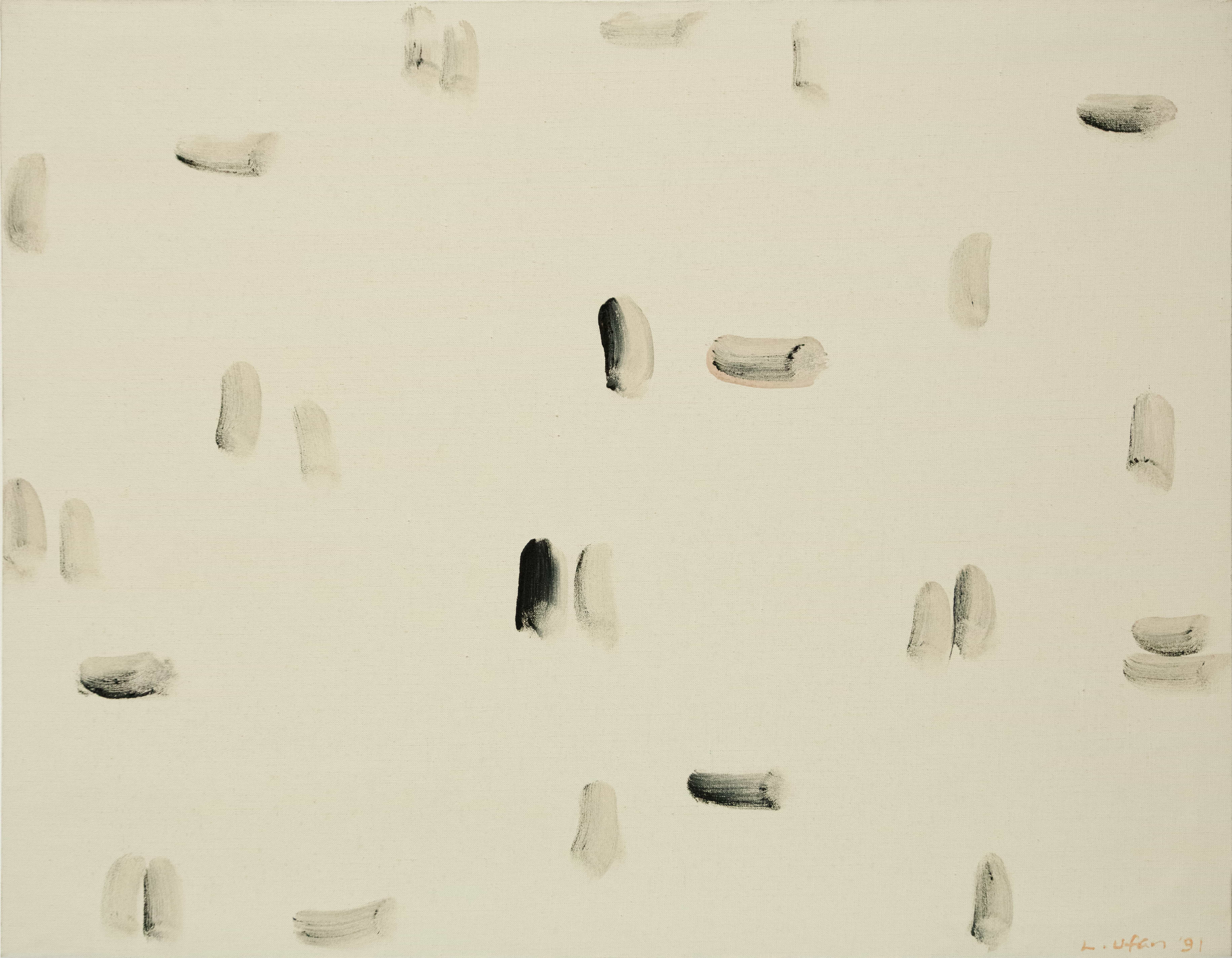
The investigation then continues with a Still Life from 1941 of particular historical importance, as it comes from the collection of Francesco Arcangeli (art historian and friend of Morandi), and was recently exhibited at the Palazzo Reale in Milan. It is placed in relation to the brushstrokes of Lee Ufan. This dialogue was first presented by Maggiore g.a.m. in 2017 at The Armory Show in New York. The relationship between the paintings emerged through «every subject studied with contemplation, every brushstroke considered with intimacy, every composition designed with meticulousness» revealing a point of convergence between a figuration tending toward abstraction and an abstraction becoming a meticulous pictorial imprint.
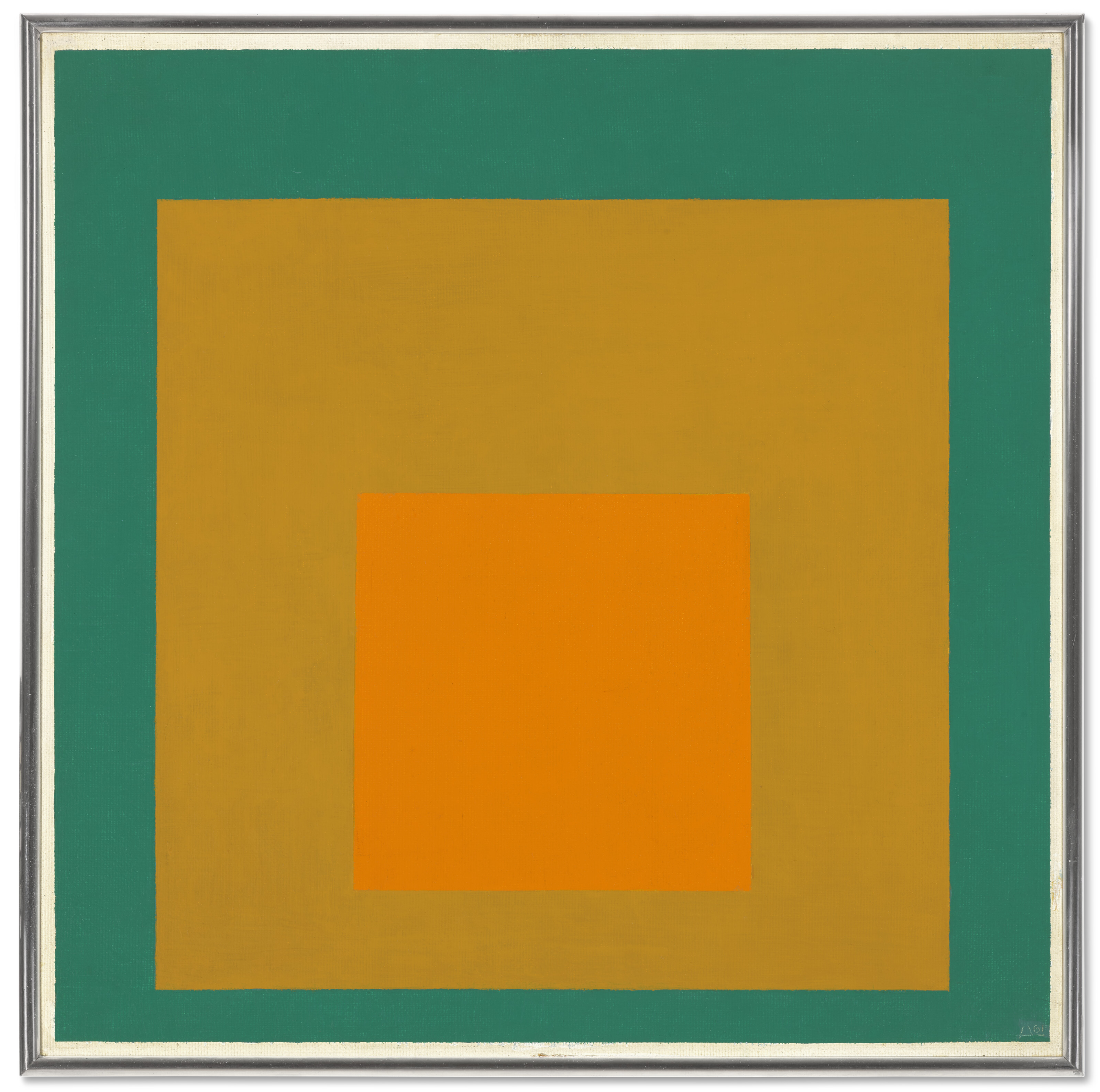
A third Still Life, whose construction is condensed into blocks, is then paired with another dialogue conceived by Franco Calarota: that with Josef Albers. In his Homage to the Square series returns, with the same persistent seriality that characterizes Morandi’s bottles and objects, to the main theme of the square approaching the fundamental role of color—not only in the construction of their respective pictorial universes, but also in its inherent capacity to define forms and spaces across different planes.
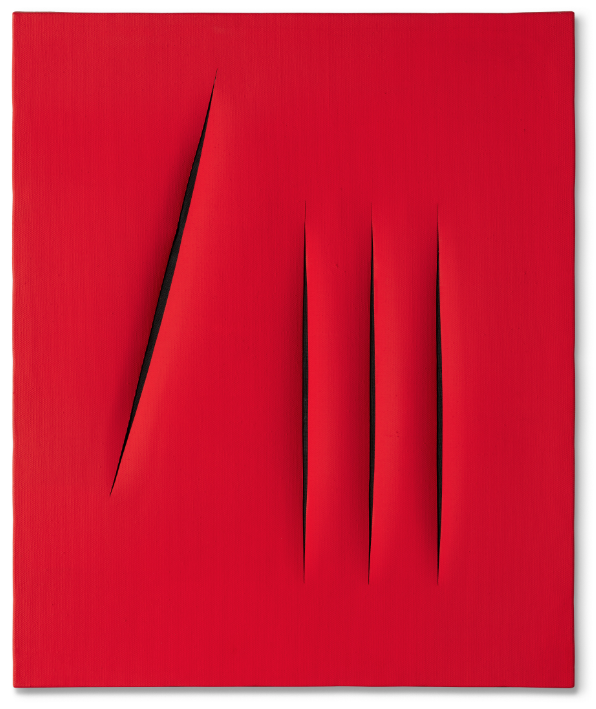
The final dialogue in the exhibition focuses on light that Morandi makes almost tangible within his paintings, and the light that emerges through the openings created in the Cuts by Lucio Fontana. This comparison was first explored by Maria Cristina Bandera in the exhibition at CAMeC in La Spezia in 2025. Its conceptual affinity recalls the dialogue with Josef Beuys presented by Maggiore g.a.m. in 2022. For Morandi, the task is «to tighten the meshes of pictorial language until the invisible becomes a phenomenon», while for Fontana - as for Beuys - it is the gesture that seeks to open «a passage toward infinity, an irreversible step toward the freedom of art».
Franco Solmi wrote in the introductory text to the 1987 exhibition at the Hôtel de Ville de Paris:
«Morandi’s emblematic images seem to settle at the dangerous center, or at the boundaries, of a widespread theme of revolt, of an insinuating refusal—now somewhat more openly expressed—of the system of codes that today have come to threaten the secret substance of individual style [...] If today’s pictorial image, and perhaps that of a hypothetical tomorrow, were truly able to recognize itself as different while remaining faithful to itself, it could prove to be one of the rare instruments of resistance against the infinite conformisms that characterize the imaginary, including the aesthetic imaginary, of the electronic age. Transgression and resistance, not absolute negation, because art, and particularly that of Giorgio Morandi, can exist, endure through time and beyond the time of current events, but only by establishing its own modernity, its own indispensable present. Morandi is indeed the painter in whom, perhaps more clearly than in anyone else, the burning tensions and formal dialectics have been brought to light and recomposed within the uneasy yet solid unity of an utterly personal style. [...] This position is almost untenable and often under threat. Yet it can be clearly observed in art, if it is true—as in this case—that a ‘Morandi condition’ has existed at every moment in history and still exists, at least as an aspiration of humankind, and particularly of the artist, toward total expression—in short, toward creation [...] The question of the meaning of the presence and detachment, of the contemporaneity and non-contemporaneity of Morandi’s work arises once again, immutable, like a dilemma that has always existed and continues to unfold: almost a discourse on things long loved or hated, which subtly fascinate or slowly poison. [...] The work of the solitary painter of Via Fondazza is certainly the symbol of a modern universality, one that may not be lost among human aspirations, but is irreparably threatened—the only universality our century can imagine: translating into images. [...] For Morandi, painting was then more than ever a place of the infinite, of a time without a present ».