Open: Tue-Sat 10am-7pm, Sun 12-6pm
Unter Altstadt 20, 6300, Zug, Switzerland
Open: Tue-Sat 10am-7pm, Sun 12-6pm
Visit
Surface Tension
Helvetika 1575, Zug
Artists: Michèle Buhofer - Marya Kazoun
Surface Tension brings together Michèle Buhofer and Marya Kazoun, whose works approach nature from opposite directions. Buhofer photographs extreme landscapes as they exist, while Kazoun constructs imagined organisms and environments. In both practices, nature can appear strangely unfamiliar. Existing terrain exceeds our usual sense of scale, while fabricated forms begin to acquire the presence of living things.
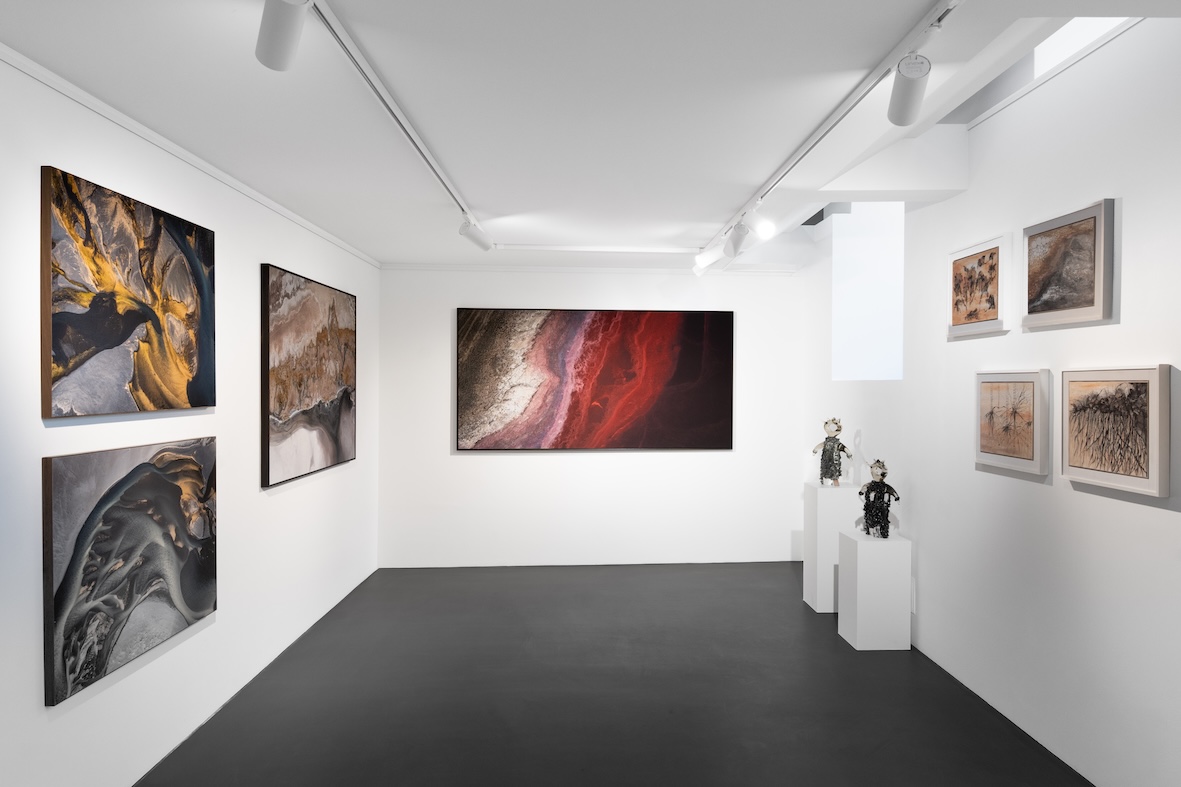
Surface Tension brings together Michèle Buhofer and Marya Kazoun, whose works approach nature from opposite directions. Buhofer photographs extreme landscapes as they exist, while Kazoun constructs imagined organisms and environments. In both practices, nature can appear strangely unfamiliar. Existing terrain exceeds our usual sense of scale, while fabricated forms begin to acquire the presence of living things.
Buhofer’s photographs grow from years of traveling through remote landscapes and wildlife habitats across continents, and the works in this exhibition alone move from Iceland and Greenland to Lake Magadi in Kenya and the border region between Chile and Bolivia. Her aerial images remove the horizon and with it the familiar measure of scale. Rivers can resemble veins, while mineral surfaces take on the appearance of skin. These are real places, yet the viewpoint transforms how they can be seen. Landscapes shaped over immense periods of time are encountered through photographic technologies that belong distinctly to the present. Her work brings geological time into contact with a contemporary way of seeing the earth.
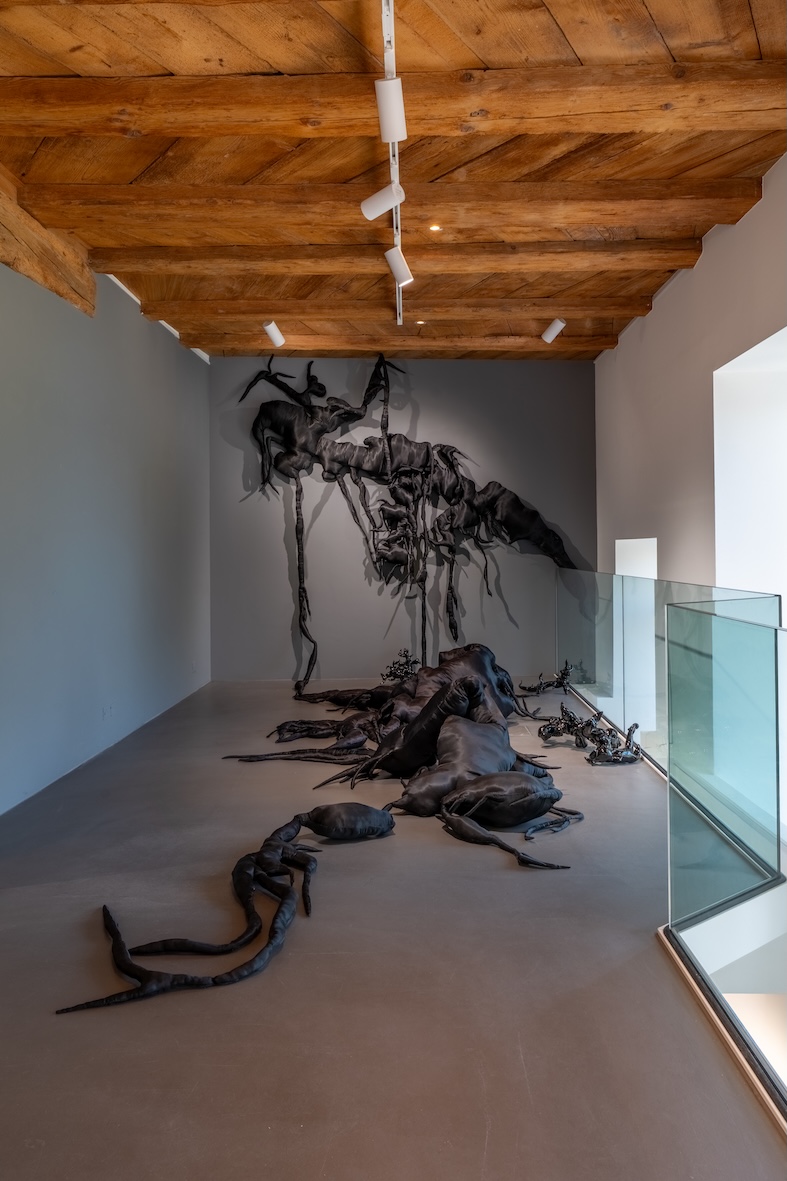
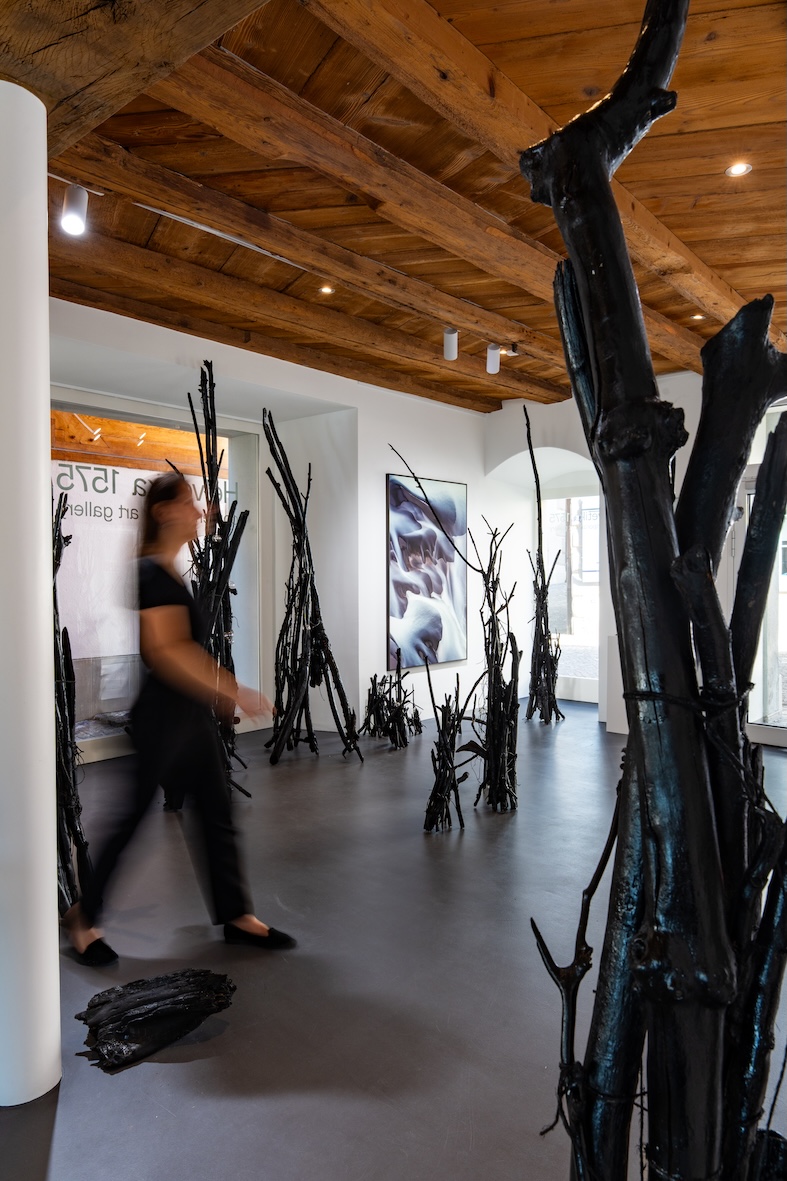
Kazoun builds worlds. Across a practice that has included large-scale installations and presentations at the Venice Biennale, she has developed organisms and environments with their own internal logic. Glass, wood, fabric and paper become the materials through which these imagined ecologies take physical form. Her sculptures have no direct counterpart in nature, yet they seem governed by recognizable processes of growth and adaptation. Forms extend through space and into the surrounding architecture. Sewing becomes a means of construction and repair, while glass gives them an almost anatomical presence.
Placed together, the two practices approach the boundary between the real and the imagined from different sides. Buhofer discovers forms within the earth that can appear almost invented. Kazoun creates forms that begin in imagination yet seem capable of belonging to their own ecology. The title Surface Tension refers both to the surfaces that run through the exhibition and to this unstable boundary. In Buhofer’s photographs, the surface of the earth moves toward abstraction. In Kazoun’s work, material surfaces become places from which another natural world can emerge.