Open: Wed-Sat 11am-6pm
110 New Cavendish Street, W1W 6XR, London, United Kingdom
Open: Wed-Sat 11am-6pm
Visit
Sawako Nasu: Curved Horizon
NISO, London
Artist: Sawako Nasu
The horizon is always far away. In a painting, however, it can be right in front of us. Curved Horizon, Sawako Nasu’s second solo exhibition at NISO, begins in the space that opens between these two distances.
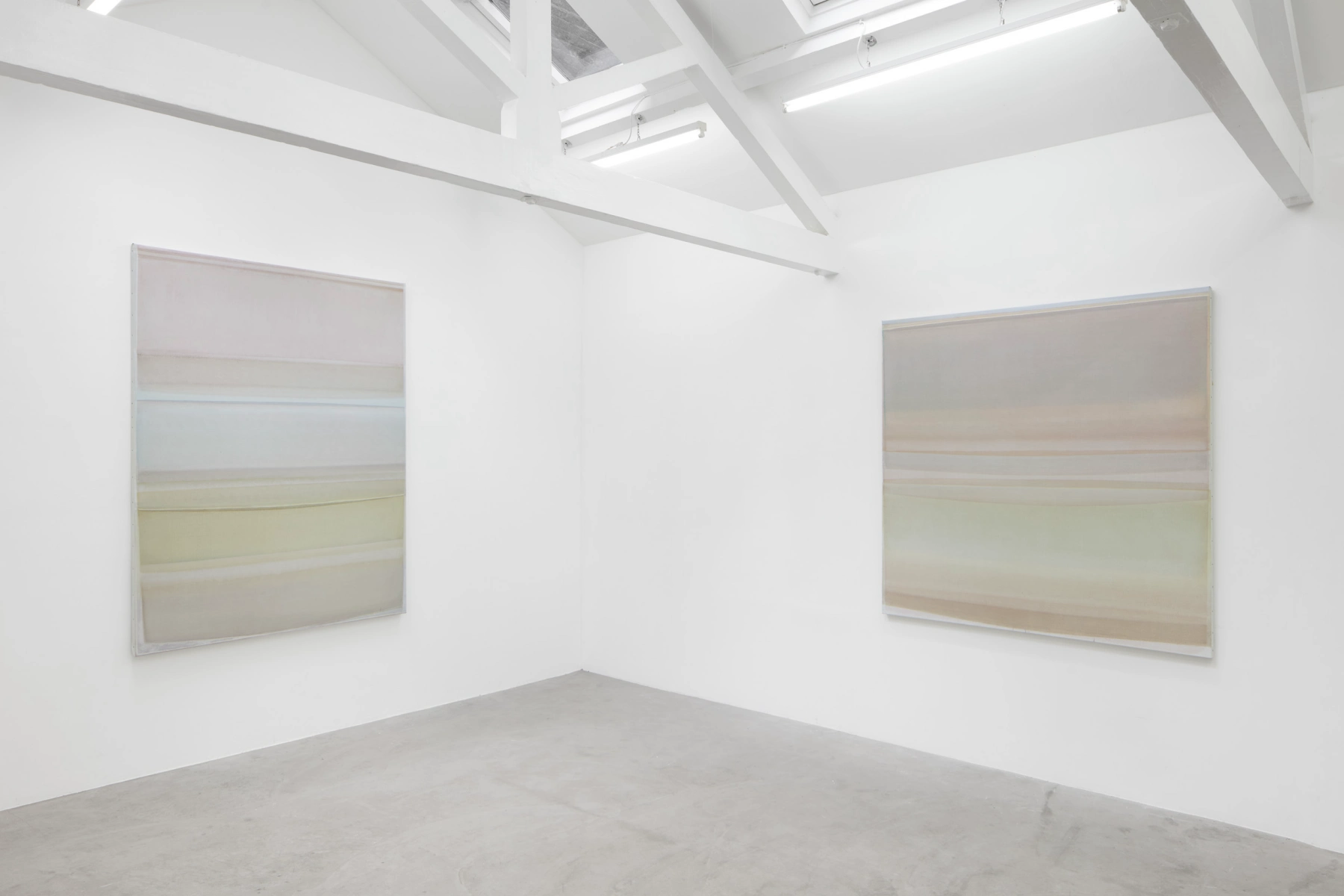
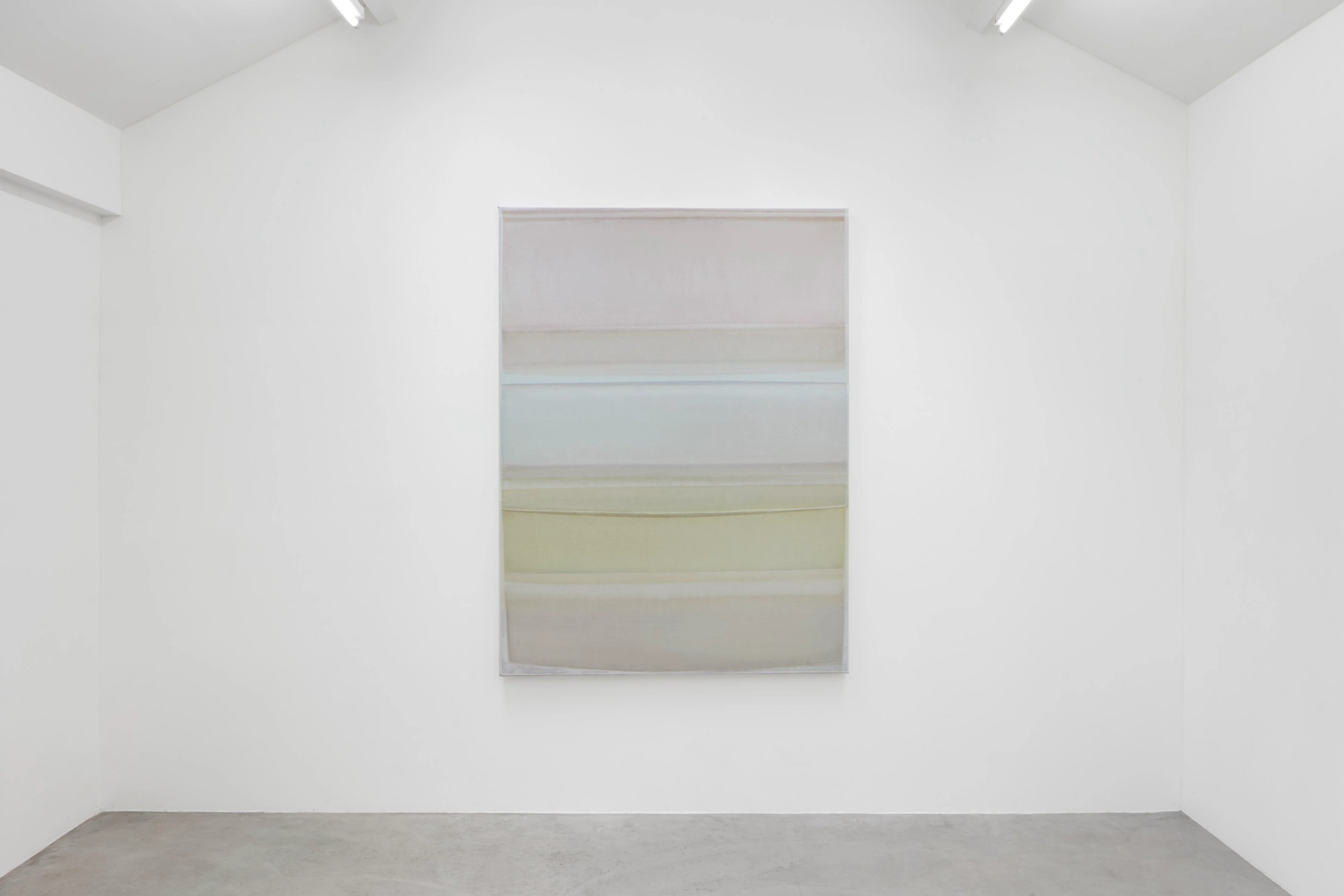
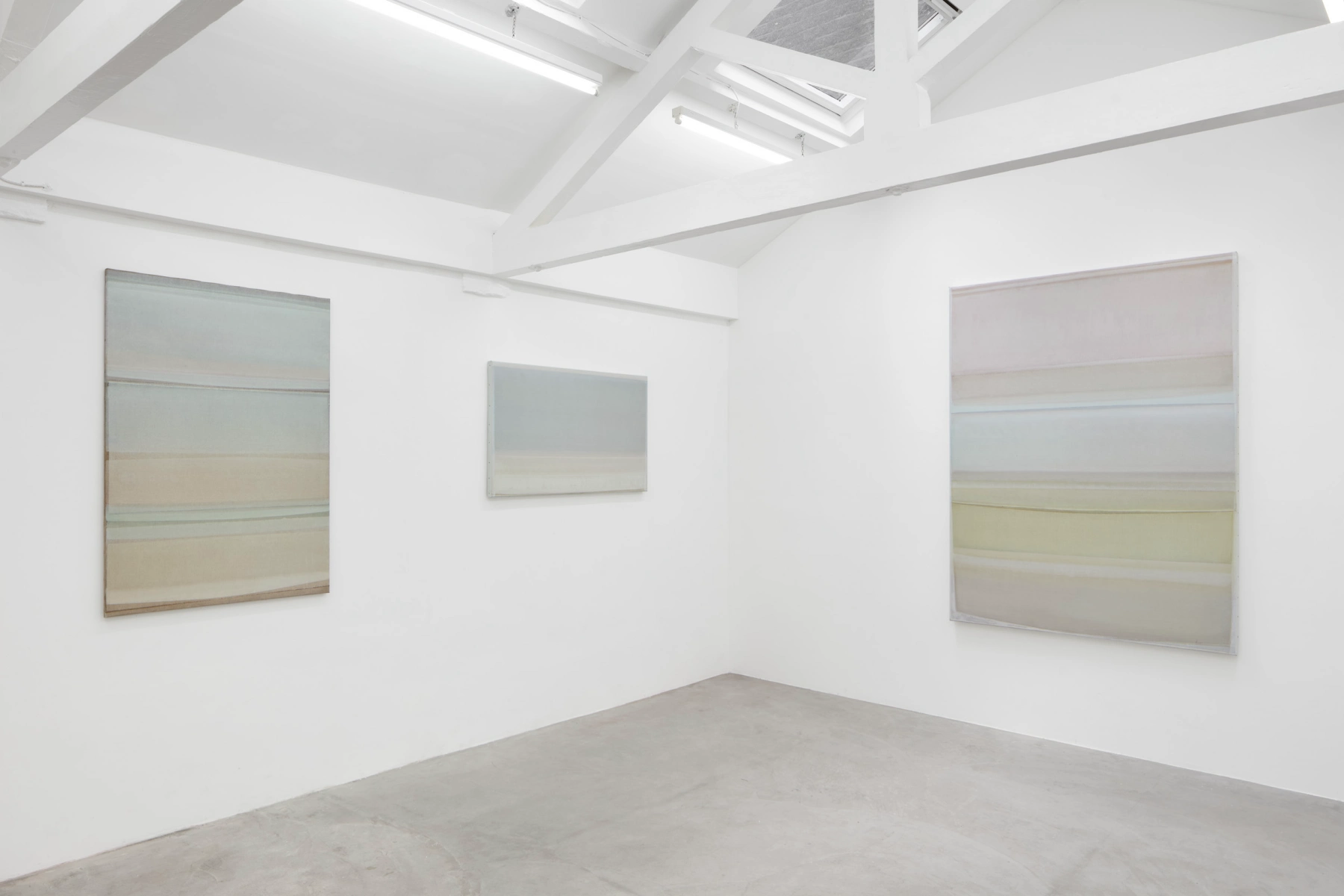
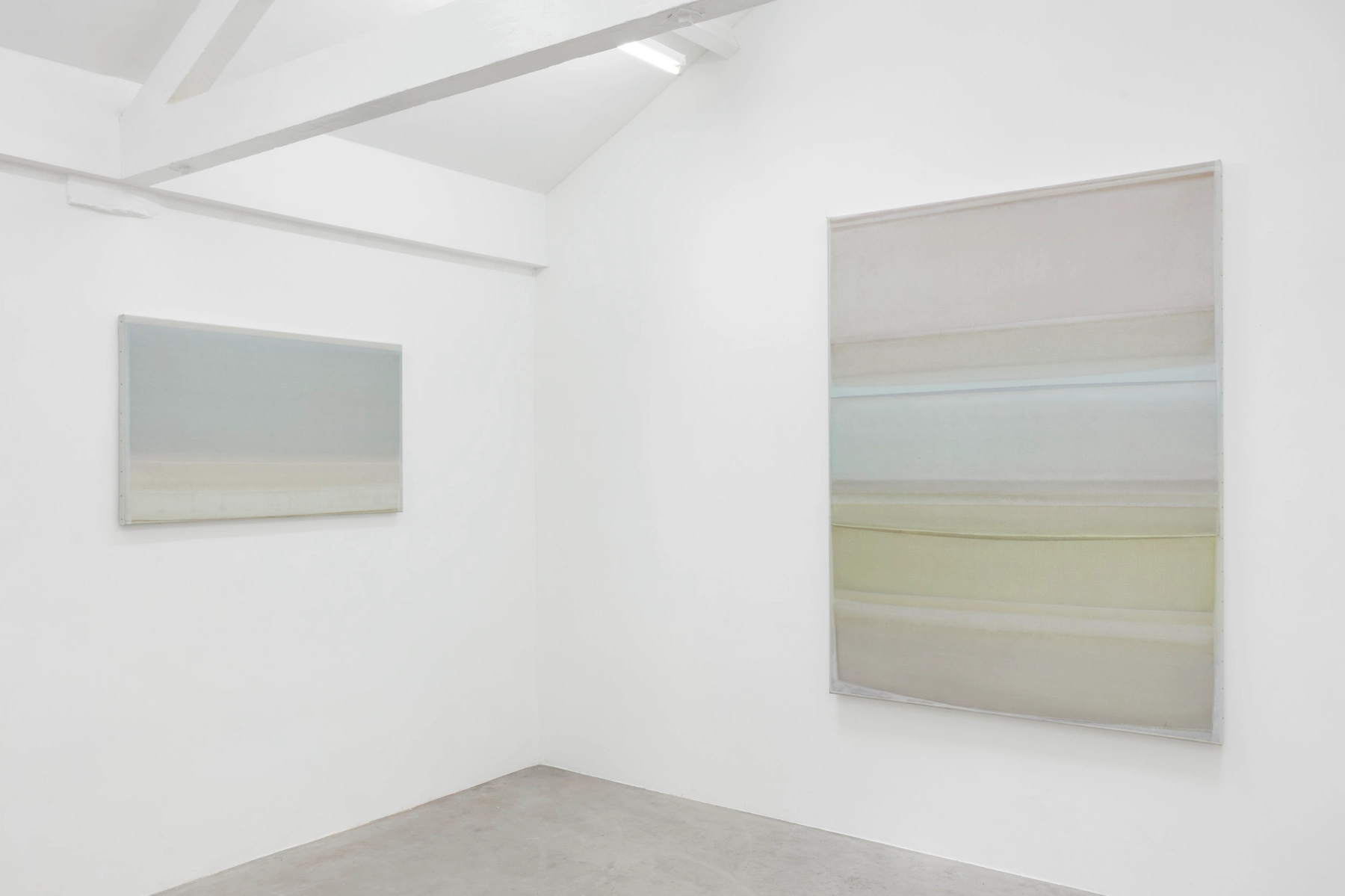
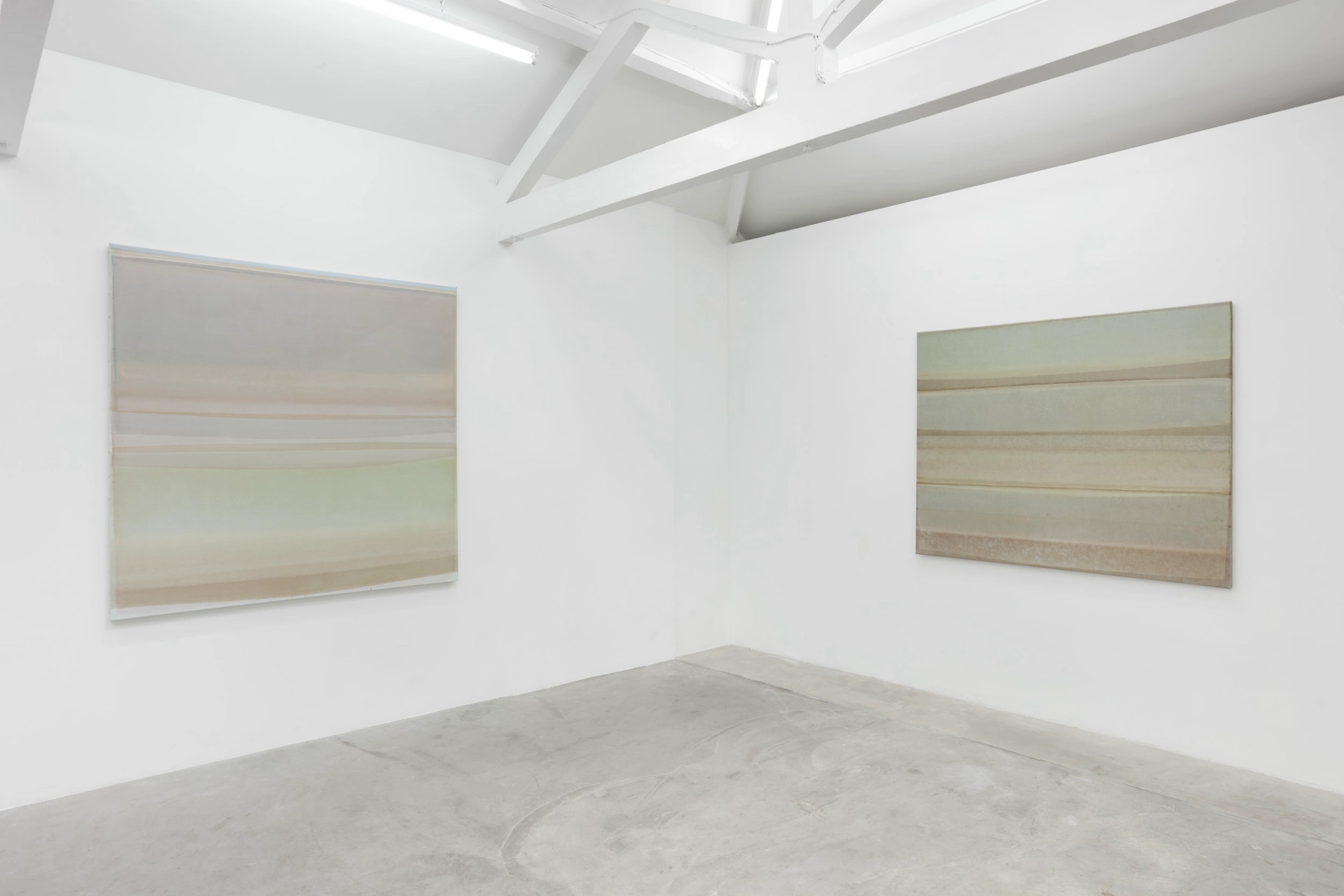
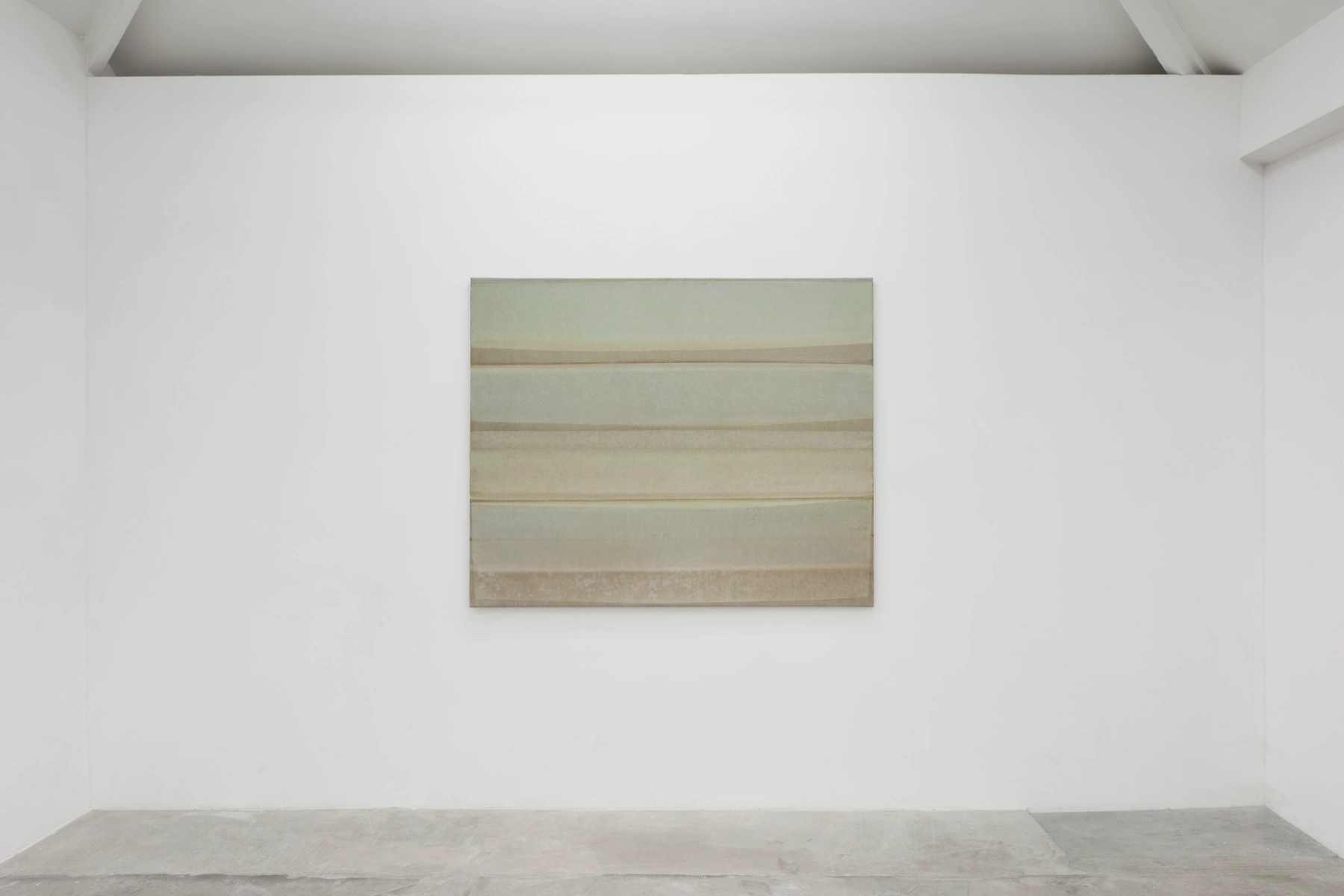
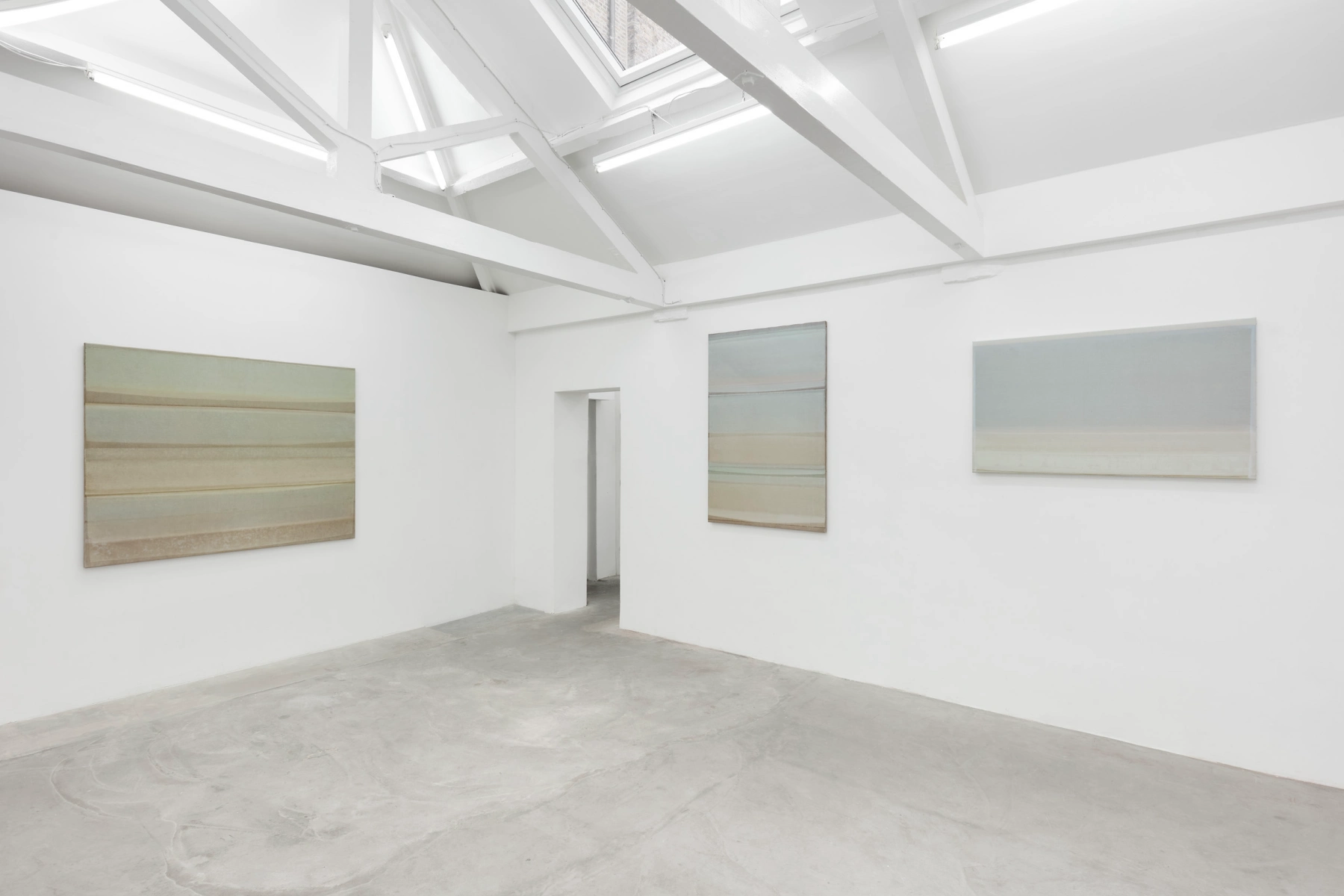
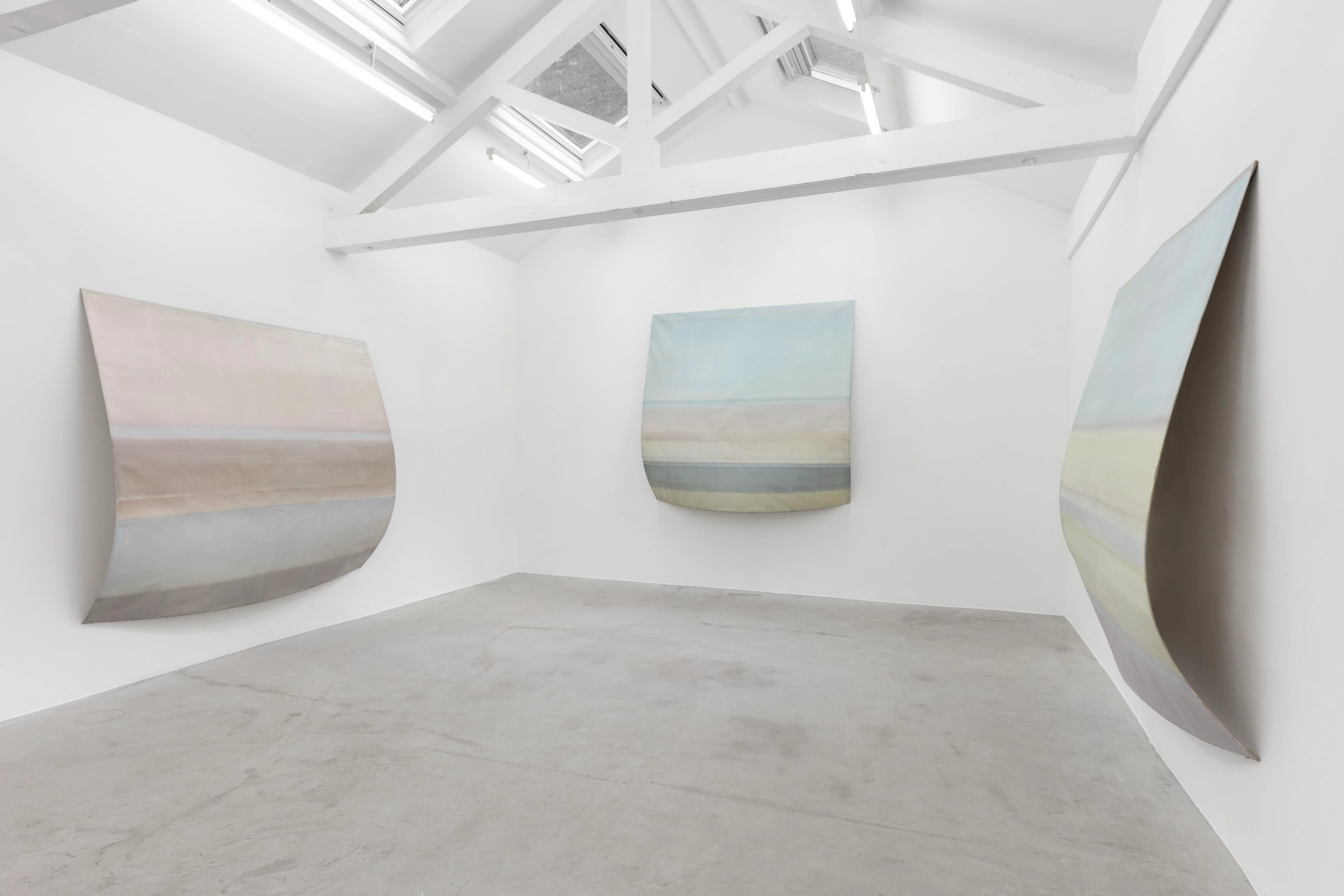
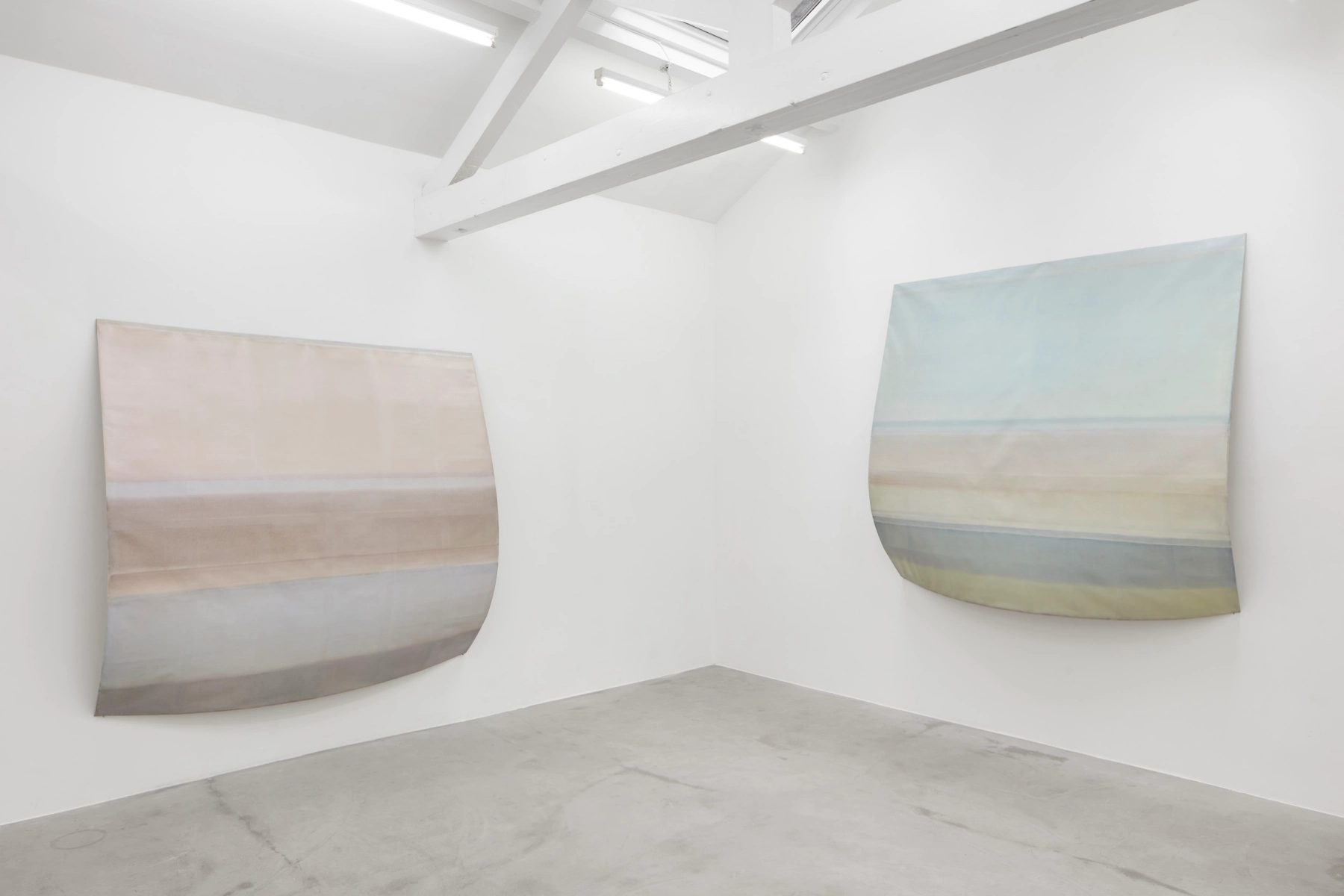
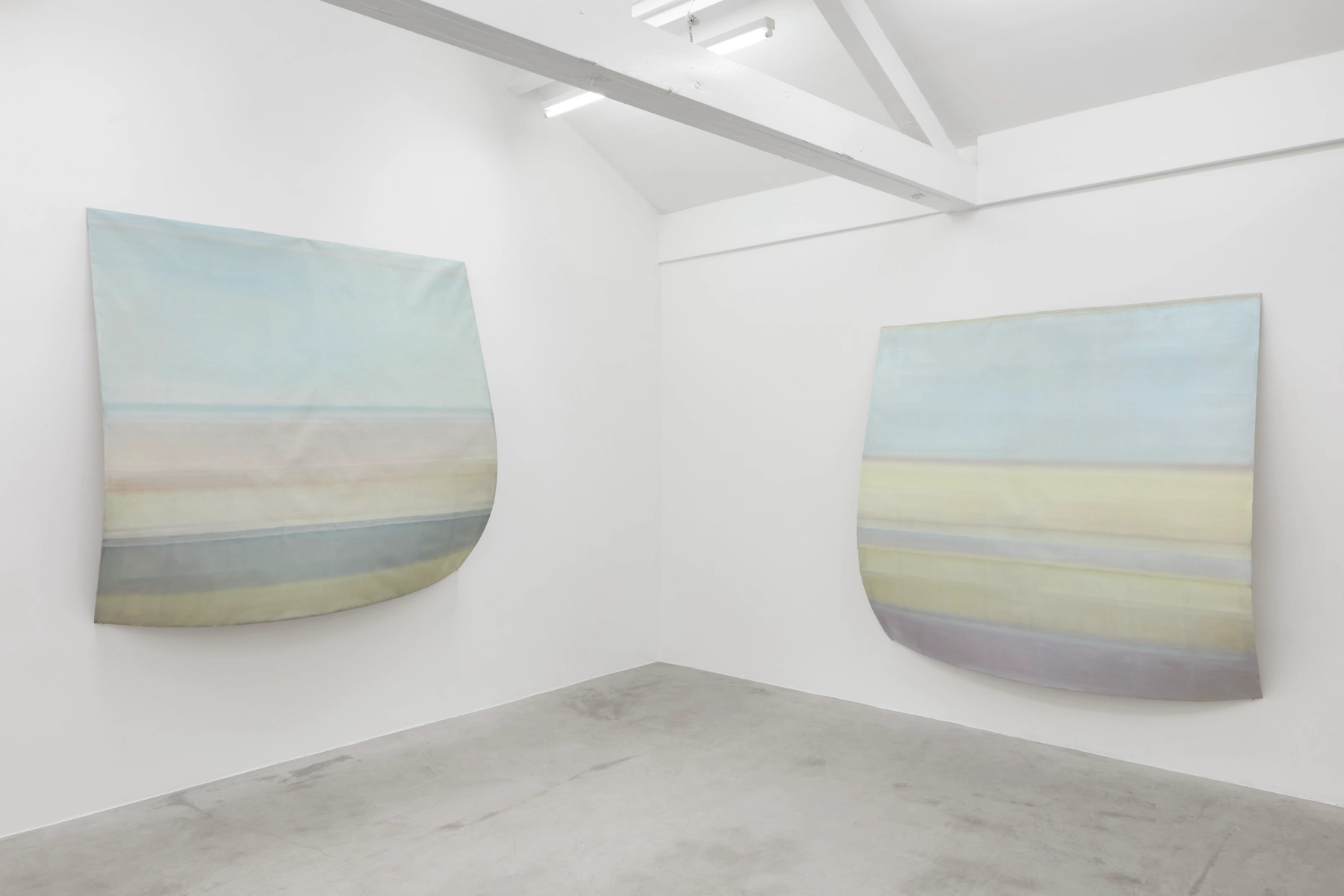
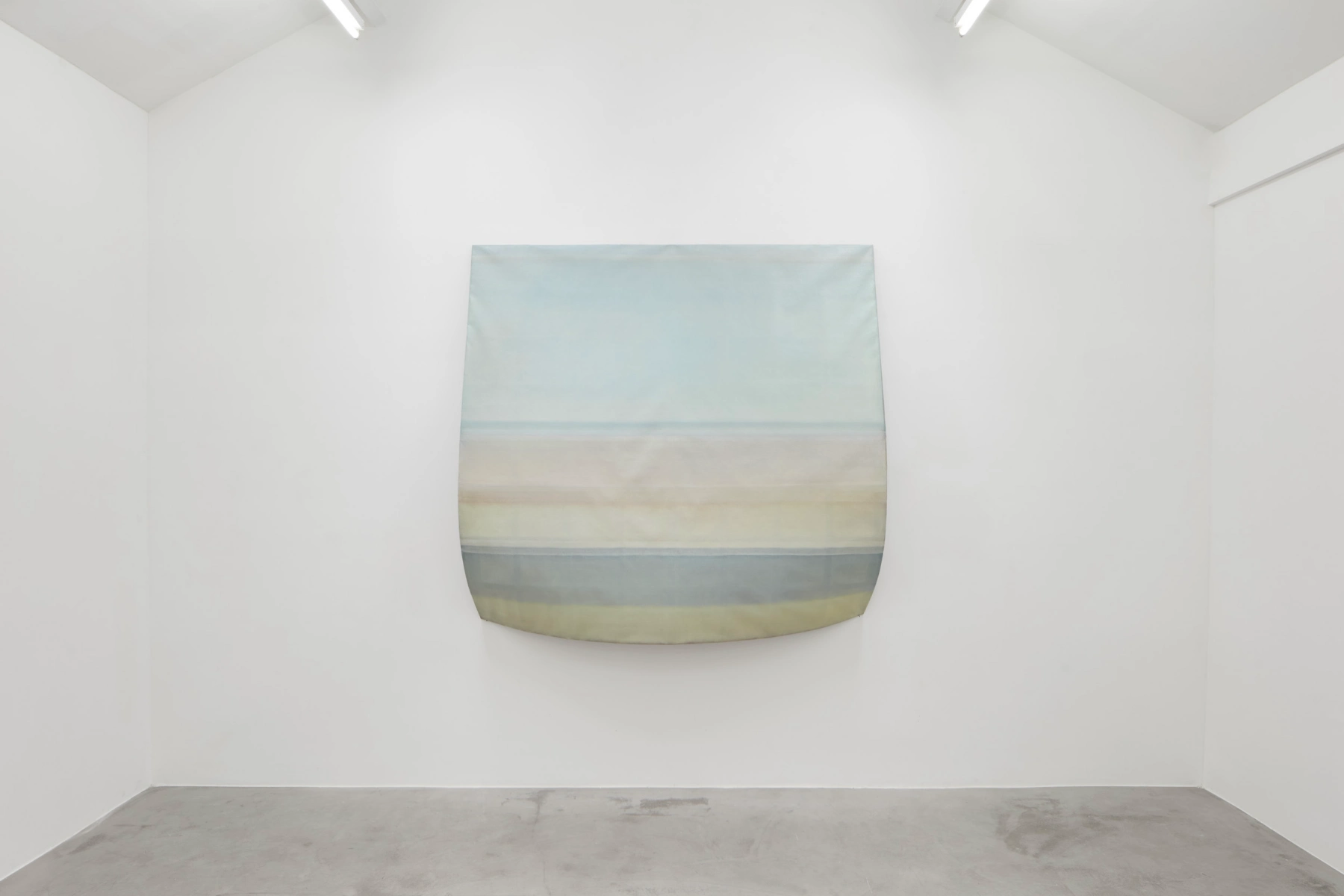
The eye follows a line, a change in colour, a sense of depth, and moves away, only to return to the surface soon afterwards. A drip, an area where paint has been removed, or a change in the fabric itself interrupts this movement. For Sawako, this proximity does not contradict depth. It makes it possible. For an image to move into the distance, something must bring us back to what is in front of us.
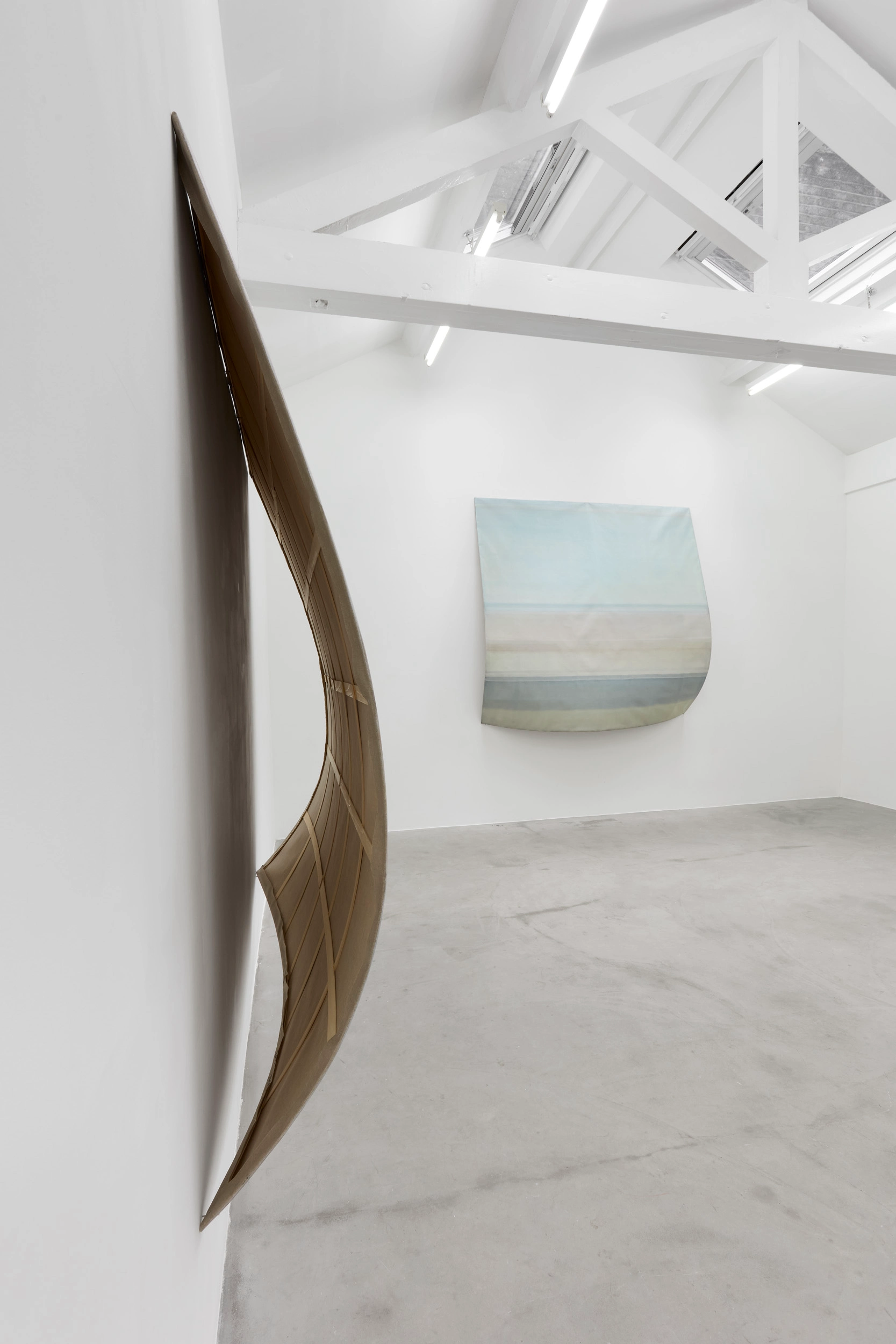
The exhibition brings together conventional and structural canvases. In the former, the surface remains flat while the horizon line curves slightly. In the latter, almost the opposite happens: the line is painted straight, but the flexible canvas curves and pulls away from the wall. In one case, the image curves; in the other, the support.
Distance no longer belongs only to what we see within the painting. It also exists between the canvas and the wall, and between the work and us. As we move in front of it, these distances begin to affect one another.
Sawako uses an unexpected word to describe what she is looking for: weakness. “I think something weak can accept everything.” She does not mean a fragile or hesitant painting. She wants to reduce the authority of each element so that none imposes itself on the others. Image, surface, colour, structure, space and accident can remain together without having to organise themselves around a protagonist.
Something similar happens in the way she builds colour. If she puts green underneath, she may put red on top. Each layer erases part of the assertion of the one beneath it without making it disappear completely. The colour fields that emerge from this process appear transparent to her. What we see still contains something of what has been covered.
So when she speaks of reintegrating painting, she does not mean putting a whole back together. She uses another image: strands of yarn left tangled together, with no need to separate or order them. She also wonders whether a painting could hold together without a main melody, without a subject that gathers and orders everything else.
To think about this absence of a centre, Sawako imagines a beach. One watches the sun go down, not because one has decided to, but because at that moment there is nothing else demanding attention. Around us, the sea leaves behind things that have come from elsewhere and gradually lost their meaning along the way. Nothing orders them or determines what deserves to be looked at. Once there, they all become part of the landscape.
Sawako also says that she wants to make boring or insignificant paintings. She does not use these words ironically. She is interested in a painting that does not need to impose itself or continually explain what it means. Something can remain still and, precisely for that reason, accept things that a more assertive image would exclude or immediately turn into part of an argument.
Perhaps this is where the horizon becomes important again. A slightly curved line leads the eye into the distance. The material and the canvas bring it back towards us, while the curvature of the support opens a real distance between the painting and the wall. Neither movement fully imposes itself on the other.
The horizon can be very far away and, at the same time, right in front of us.
Text written by Christian Domínguez Dietzel