+1 212 716 1100
Open: Tue-Sat 10am-6pm
Visit
Open: Tue-Sat 10am-6pm
525 West 21st Street, NY 10011, New York, United States
Open: Tue-Sat 10am-6pm
Visit
Maia Ruth Lee: Double Vision
Tina Kim Gallery, New York
Artist: Maia Ruth Lee
"But human beings do not perceive things whole; we are not gods but wounded creatures, capable only of fractured perceptions."
-Salman Rushdie, "Imaginary Homelands," 1982
Tina Kim Gallery presents Double Vision, Maia Ruth Lee's second solo exhibition with the gallery. Bringing together a new body of paintings from the artist's ongoing series Bondage Baggage, as well the debut of new sculptural and video works, the exhibition examines migration as a condition of simultaneous perceptions, where multiple histories, temporalities, and systems of knowledge coexist.

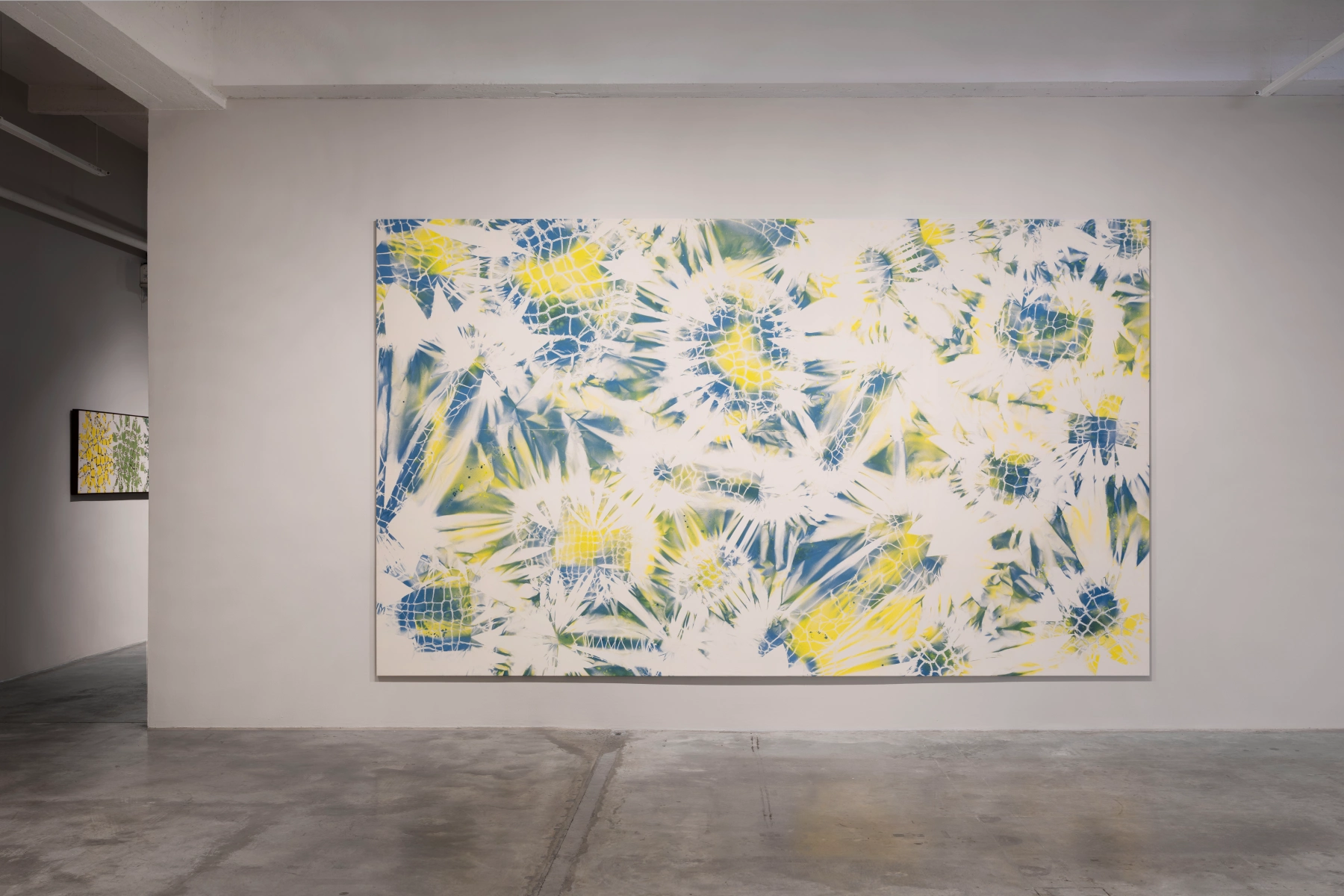
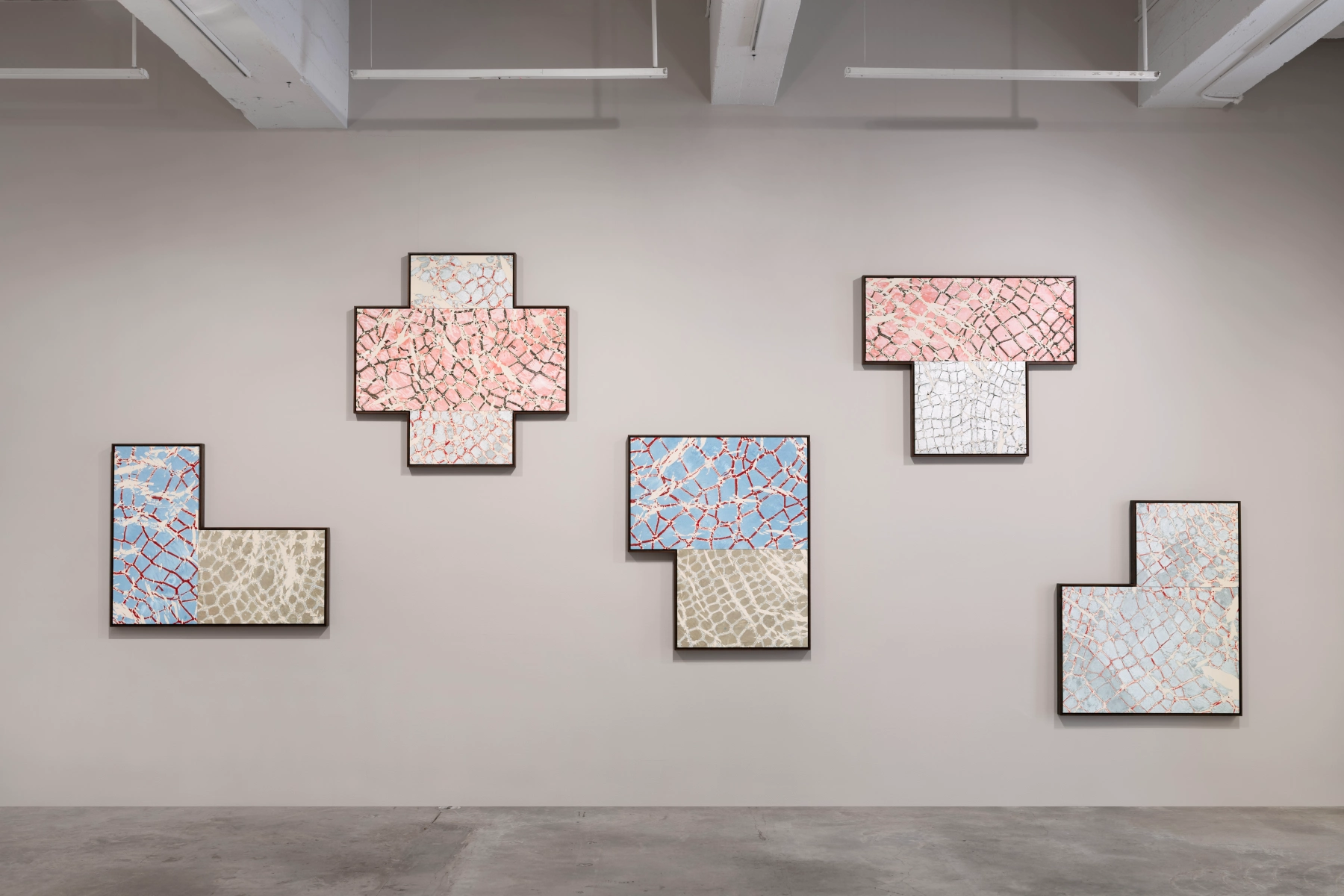
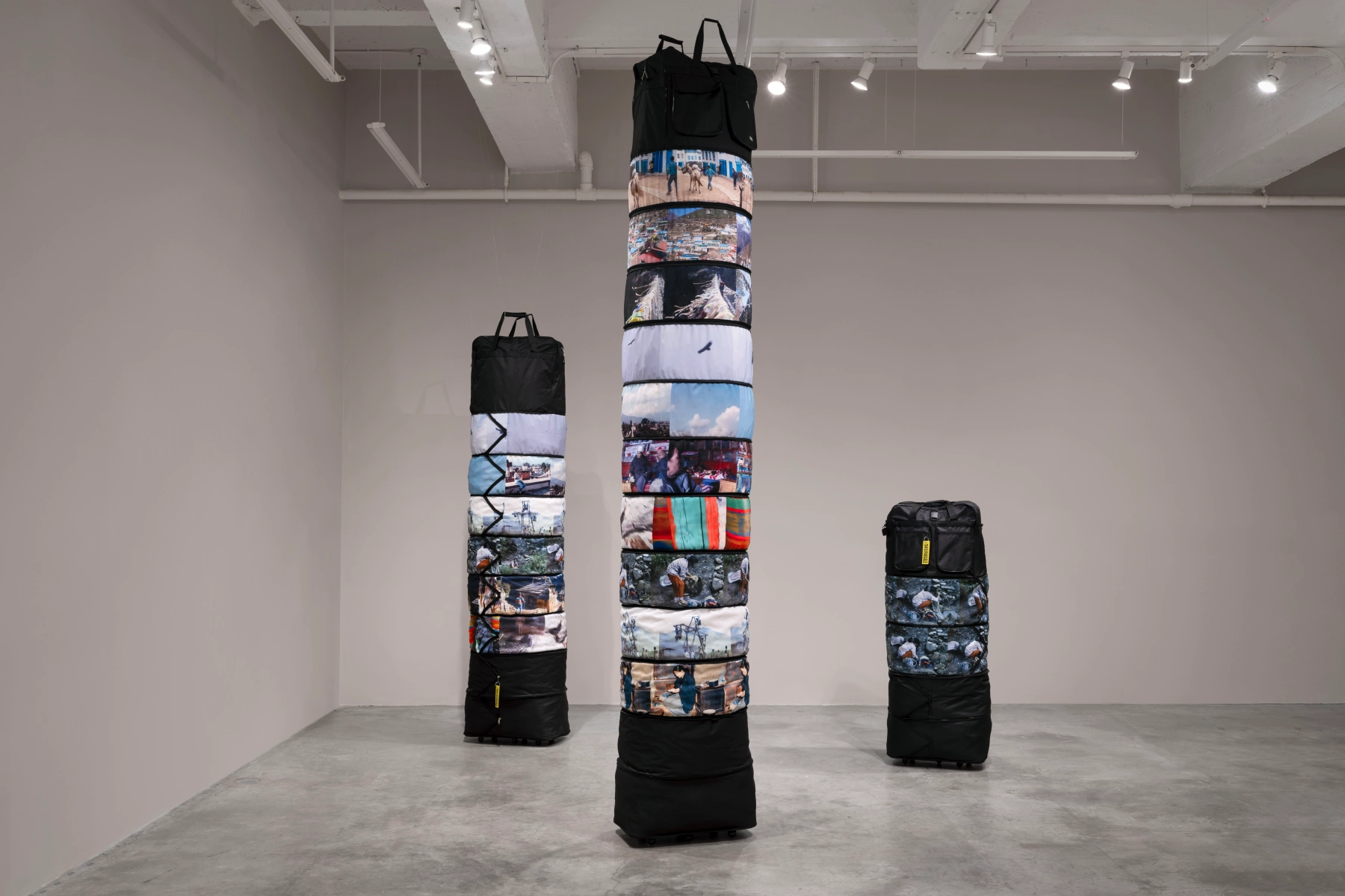
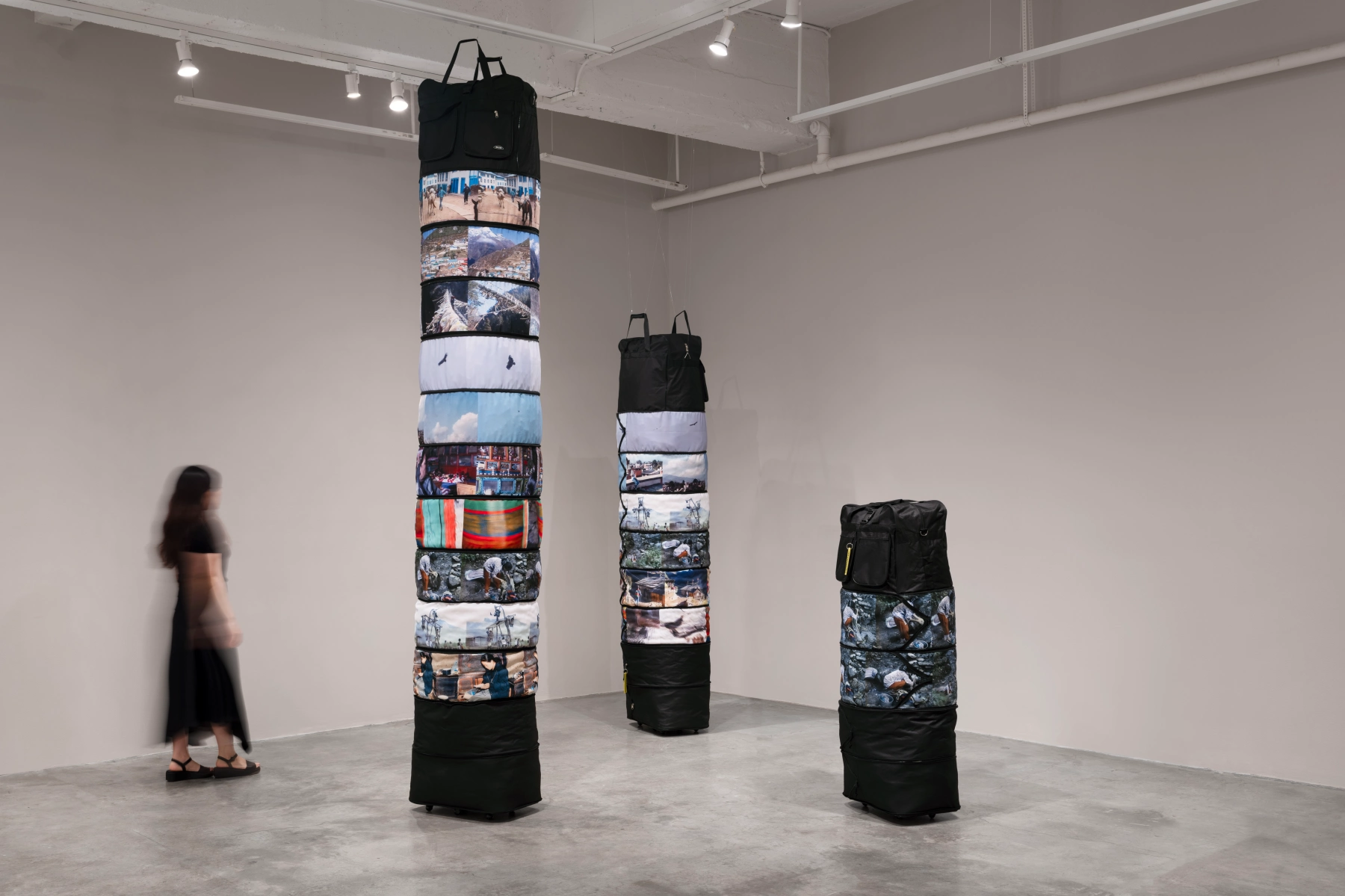
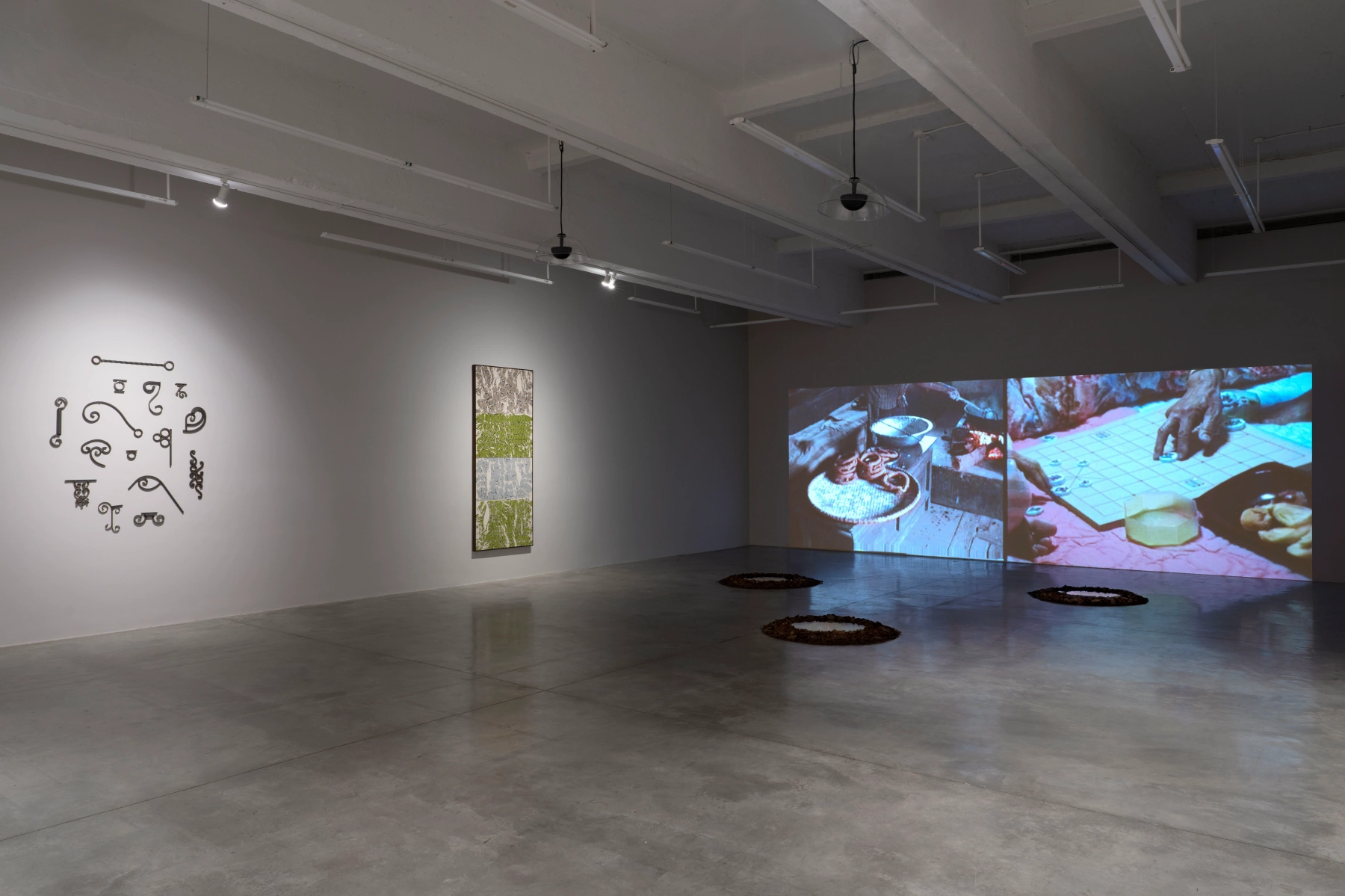
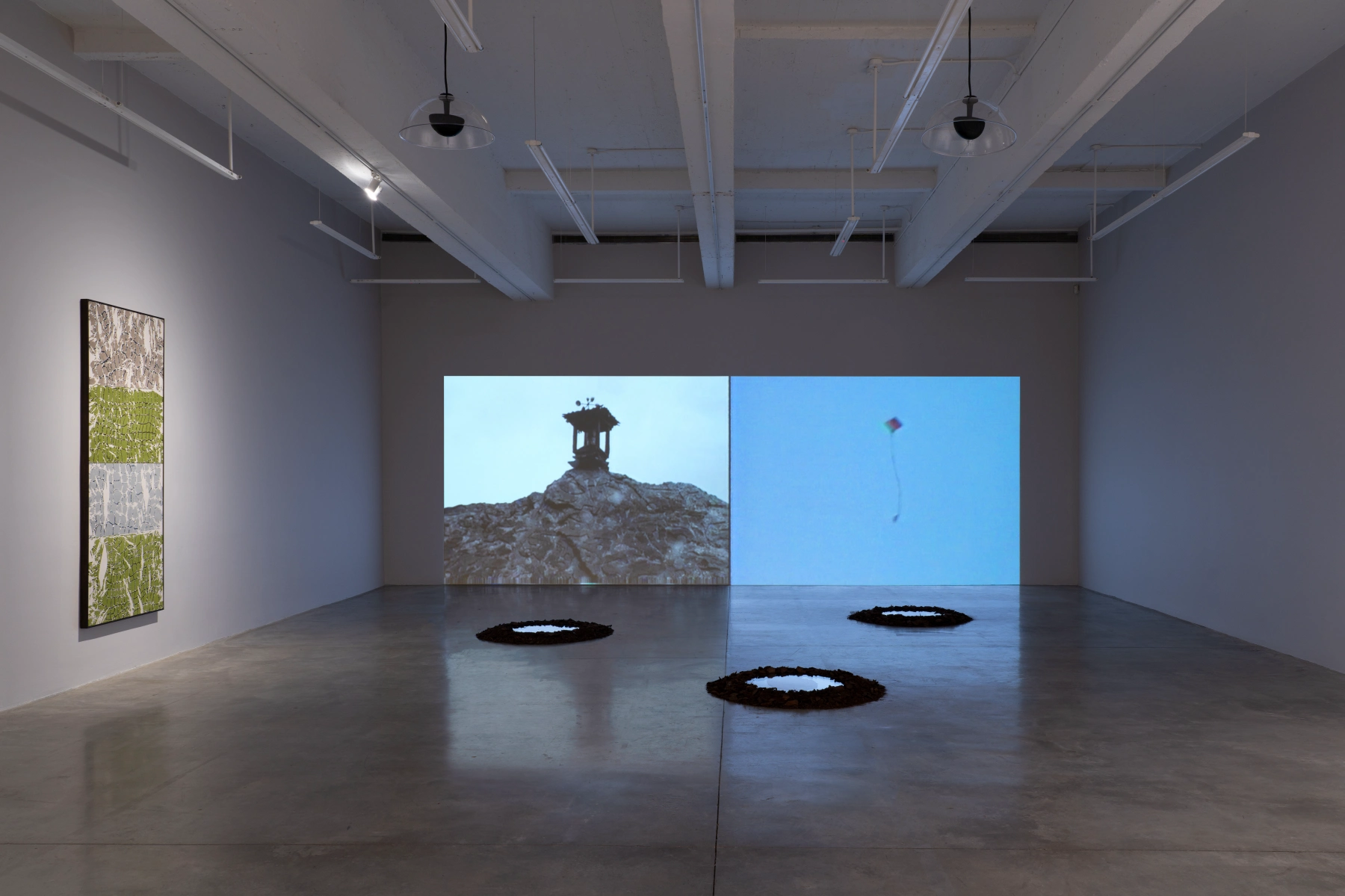
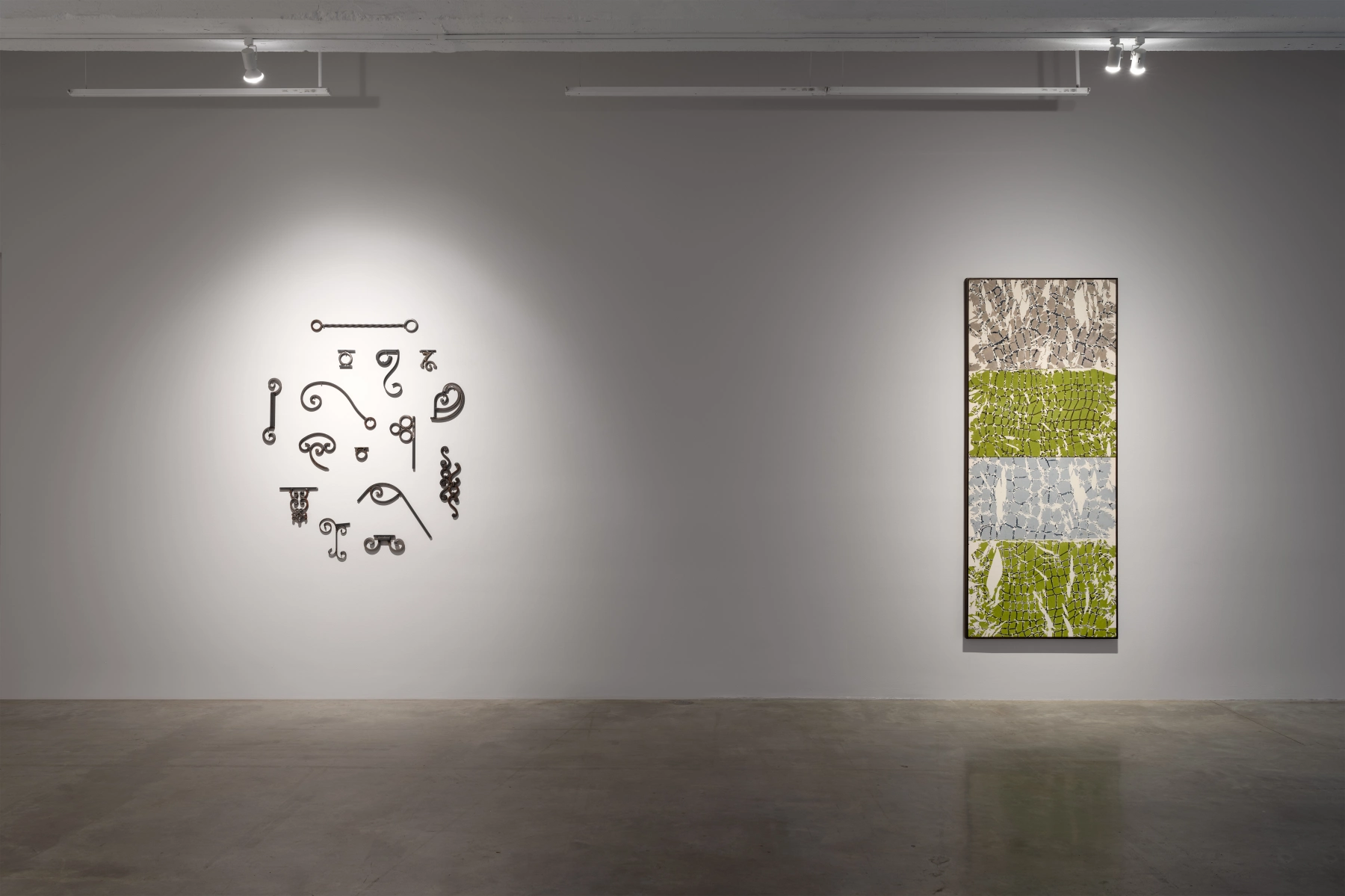
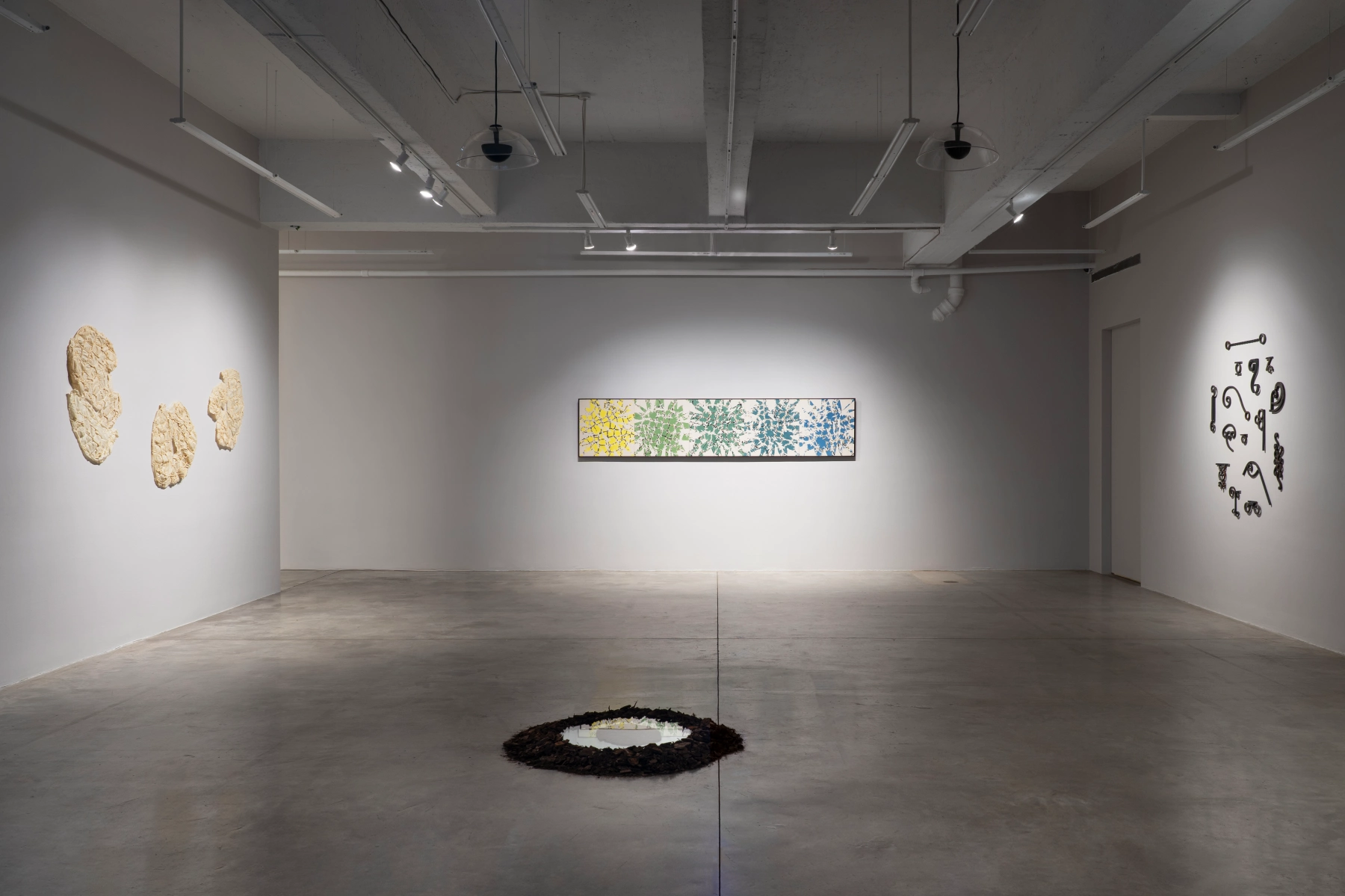
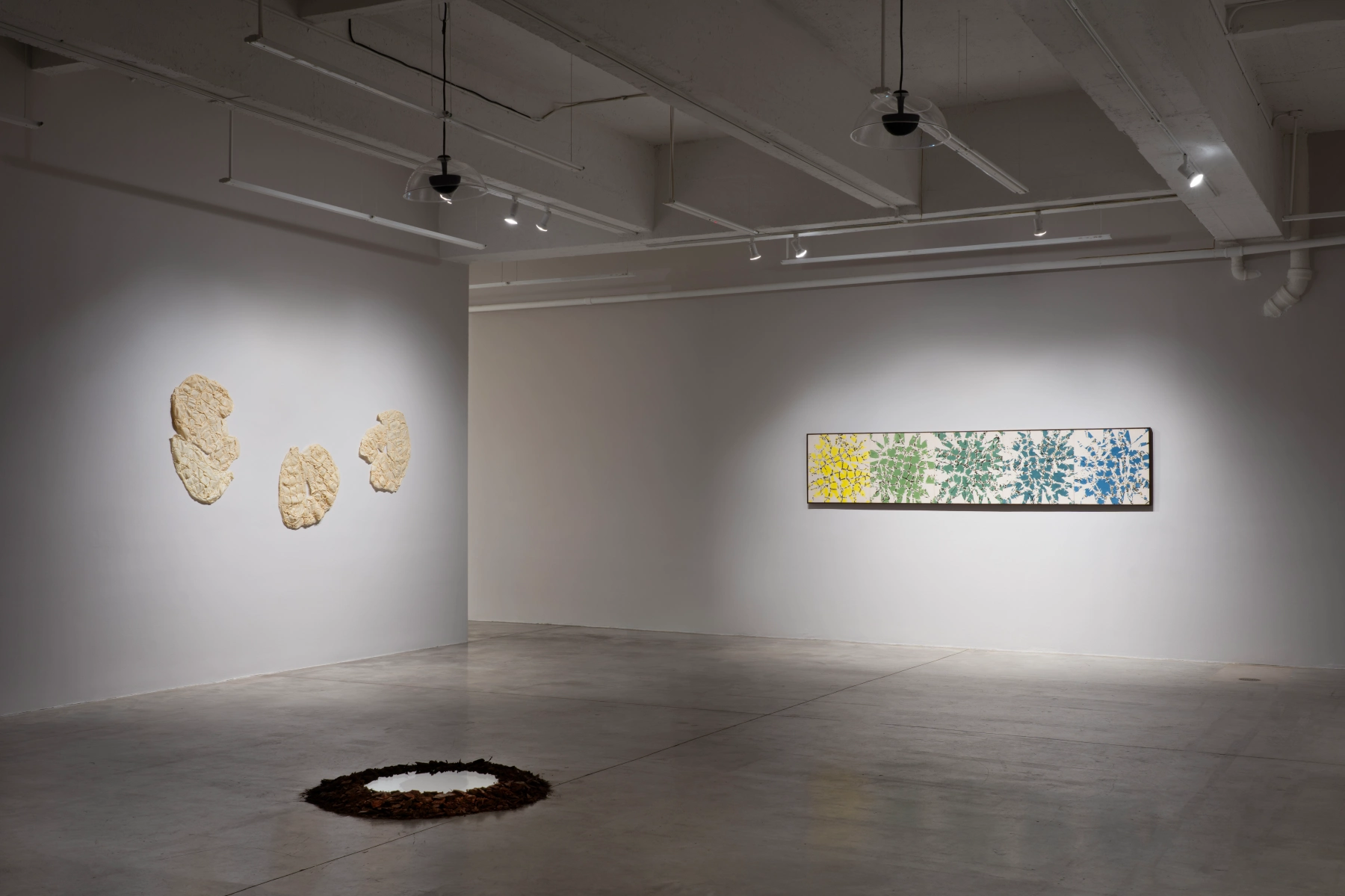
Lee's exhibition takes its title from the writings of Homi Bhabha and Salman Rushdie in which the migrant's double vision is described as an experience of contemporaneously seeing both the place left behind and the place one now inhabits, understanding that neither view is complete on its own. For Lee, this doubled vision is both a metaphor and a way of working through memory and material. Across both gallery spaces, her works expand and contract between image and sculpture, and memory and record. Lee's forms are stacked, unfolded, mirrored, and reassembled, suggesting that identity is something continually built through accumulation rather than a singular or fixed point of origin.
Anchoring the exhibition is a presentation of new Bondage Baggage paintings, Lee's ongoing series inspired by the rope-bound luggage of migrant laborers and travelers in Nepal, where she was raised. In Lee's practice, the suitcase is a generative metaphor. Luggage acts not as simply a functional object of transport, but as a vessel where memory, absence, expectation, and aspiration collide. Each painting begins as a wrapped canvas bundle that is tightly bound with rope; its surface is then painted. Once untethered and unfurled, the compressions, creases, and folds in the fabric leave behind spontaneous, map-like patterns.
Lee will debut a new sculptural series that extends the Bondage Baggage process through the introduction of latex molds of her original sculptures. The translucent latex sculptures preserve the form and surface imprint of the bound bundle after its contents have been released. The bundled latex sculptures rest atop mirrored surfaces: reflections producing unstable doubles that fracture the viewer's perception. Throughout the exhibition, the artist makes double vision manifest as a physical experience, with every form existing alongside another version of itself.
The exhibition also introduces a new body of Lee's sculptural, ready-made objects that further the suitcase's resonance as an archive that carries and records histories, languages, and lived experiences. Canvases printed with video stills, including stills of the artist's mother in the Himalayas, are sewn into suitcases. The resemblance between the artist and her mother is uncanny-yet another instance of doubled vision-and by visualizing her mother within the object of the suitcase, one can't help but draw parallels between the vessels of travel and those of motherhood.
A newly commissioned video installation draws from Lee's family archive, incorporating home footage recorded by her father in Nepal and Korea. Raised by linguists who spent much of their lives in Nepal translating the Bible, Lee grew up in a household where translation was an act of divine care. With this work, Lee traces her past up to this present moment, honoring the life cycle and movements of her own journey across continents, times, and peoples.
For this exhibition, Lee also revisits her acclaimed steel Glyph sculptures-first introduced in the 2019 Whitney Biennial-with a new addition to the series. This body of work is deeply rooted in the distinct architectural and visual language of New York City. This is a significant series for Lee because it marks a return to the city where she lived for a decade before moving to Salida, Colorado in 2020. The glyphs are made from salvaged architectural fragments sourced throughout the city, including elements from fences, doors, gates, and windows. Lee's glyphs consider migration, memory, and the layered histories of resilience embedded within the urban landscape. The assembled works occupy a space between language and sculpture, an open-ended set of symbols that are vaguely familiar, yet stubbornly illegible forms.
Double Vision proposes an understanding of identity that expands outward while simultaneously stacking inward, of life as an ever-evolving state shaped by displacement and belonging alike. Lee shows us that histories can be layered rather than replaced, and identities can expand even as they remain tethered to earthly forms. Mirrors, suitcases, sculptures, textiles, salvaged objects, and paintings become sites of doubled perception, where memory is continually folded back upon itself and the boundaries between past and present remain deliberately unresolved. Lee's practice comprises an ever-expanding archive that is in a constant state of assembly, ever shifting through acts of stacking, transporting, translating, and seeing.
Maia Ruth Lee (b. 1983, Busan; lives and works in San Francisco) has held solo exhibitions at Primary Nottingham (UK), Institute of Fine Arts, New York University (NY), The Museum of Contemporary Art Denver (CO), François Ghebaly Gallery (LA), and Mai 36 Galerie (CH). Lee has participated in numerous group exhibitions at institutions including Santa Barbara Museum of Art and Aspen Art Museum, as well as the Sky High Farm Biennial 2025 (NY); Prospect 6., New Orleans; and the 2019 Whitney Biennial. Lee attended Hongik University in Seoul, and the Emily Carr Institute of Art and Design in Vancouver, Canada. Lee was the recipient of the Gold Art Prize in 2021 and the Rema Hort Mann grant in 2017. Her work is held in the public collections at the Whitney Museum of American Art, Philadelphia Museum of Art, and Syracuse University Art Museum.
Read exhibition text