+61 2 9698 4696
Open: Tue-Sat 10am-5pm
Visit
Open: Tue-Sat 10am-5pm
799 Elizabeth Street, Zetland, NSW 2017, Sydney, Australia
Open: Tue-Sat 10am-5pm
Visit
Lara Merrett: Stilling
Sullivan+Strumpf, Sydney
Thu 20 Aug 2026 to Sat 12 Sep 2026
799 Elizabeth Street, Zetland, NSW 2017 — Google
Tue-Sat 10am-5pm
Artist: Lara Merrett
Sullivan+Strumpf introduces Lara Merrett’s ‘Stilling’, a new body of work shaped by her lifelong connection with the ocean, presenting new fluid abstractions created through poured pigments and dyes on textile. Dissolving the conventional frameworks of painting, these works incorporate detailed, hand-stitched elements using naturally dyed threads: blues from indigo plant (Indigofera tinctoria), reds from morinda root (Morinda officinalis), and yellows from Jack tree heartwood (Cryptocarya glaucescens). Rather than treating the canvas as a neutral surface, Merrett allows gravity, absorption, movement and time to become active collaborators in the making of each work.
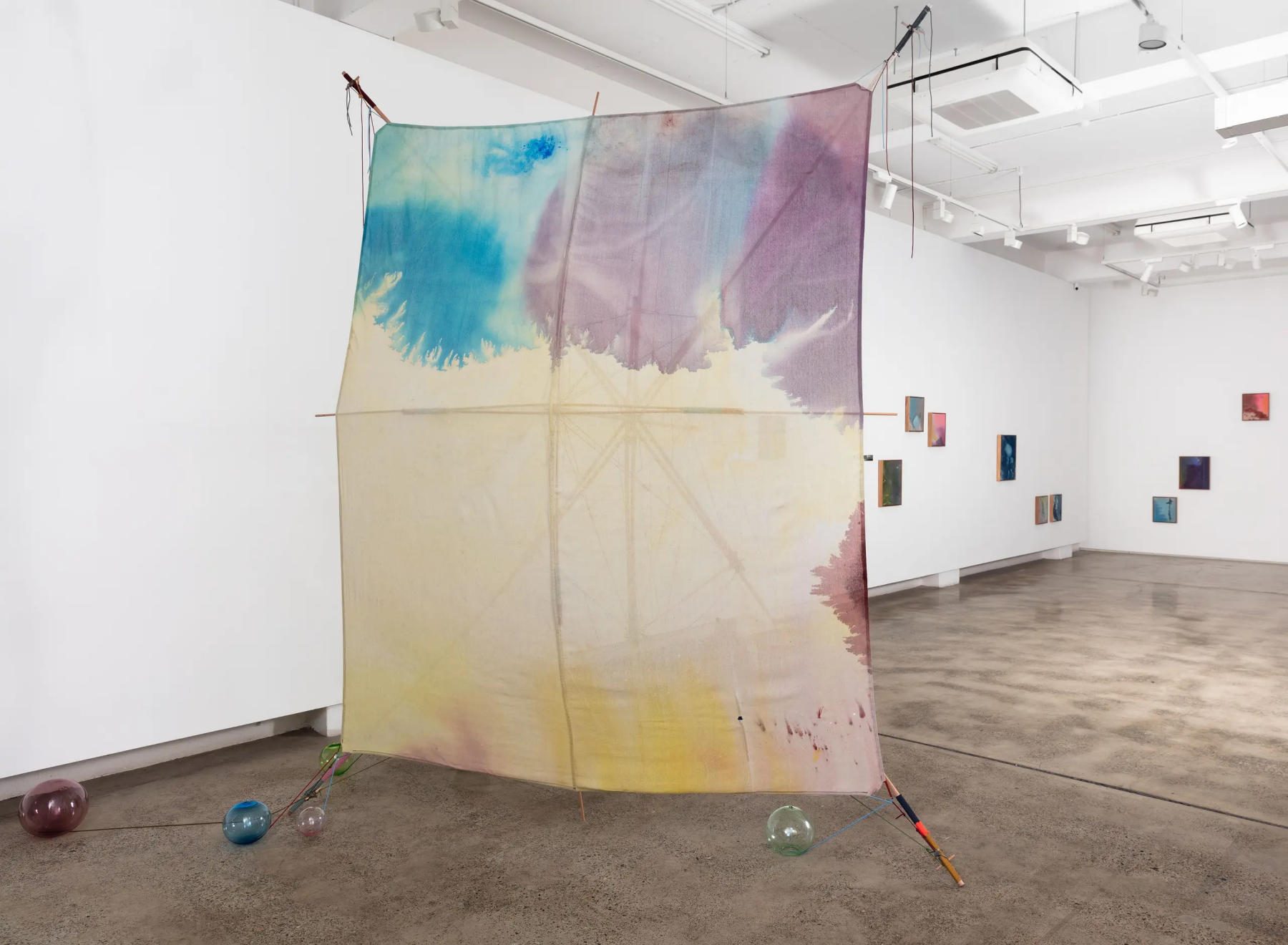
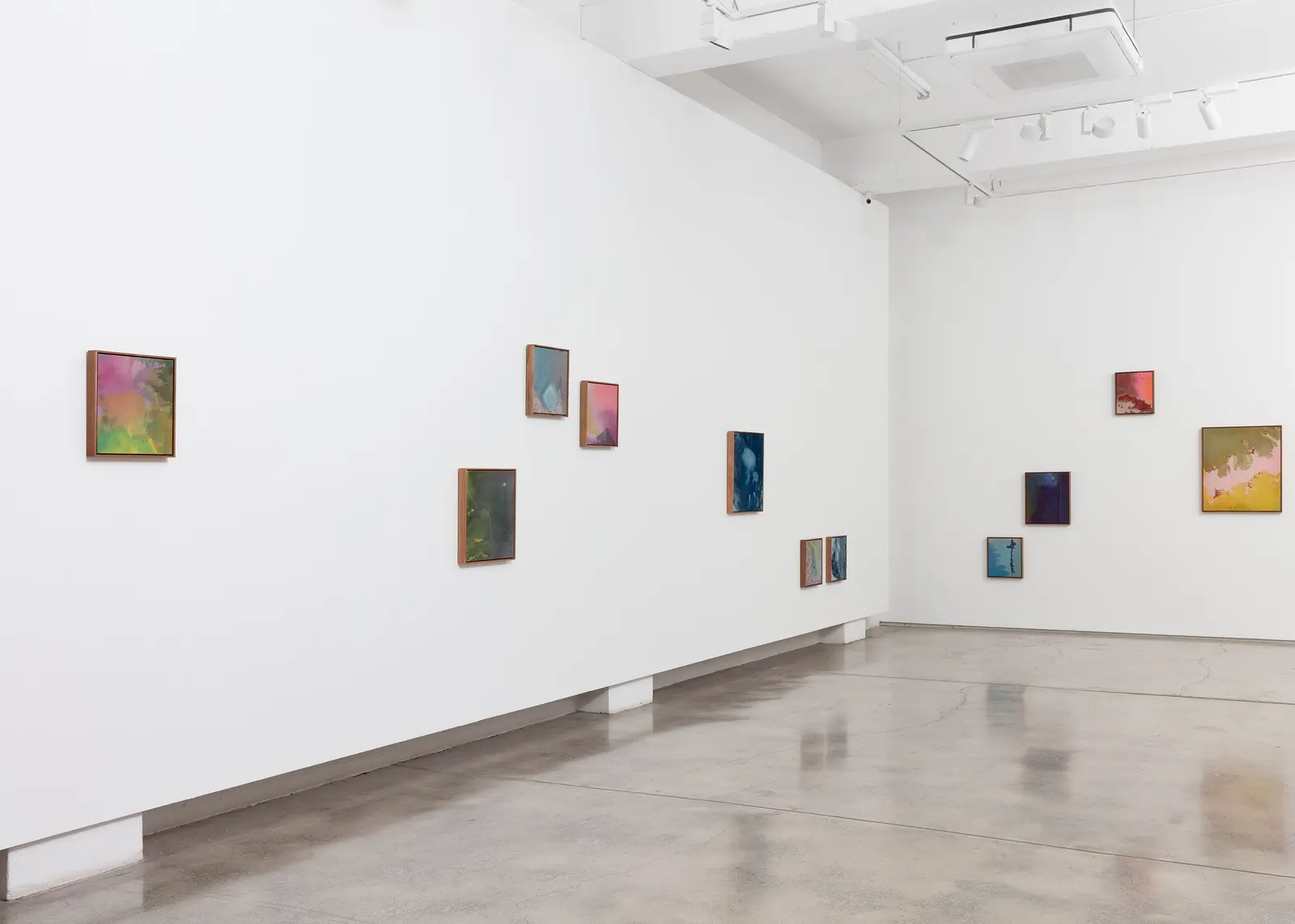
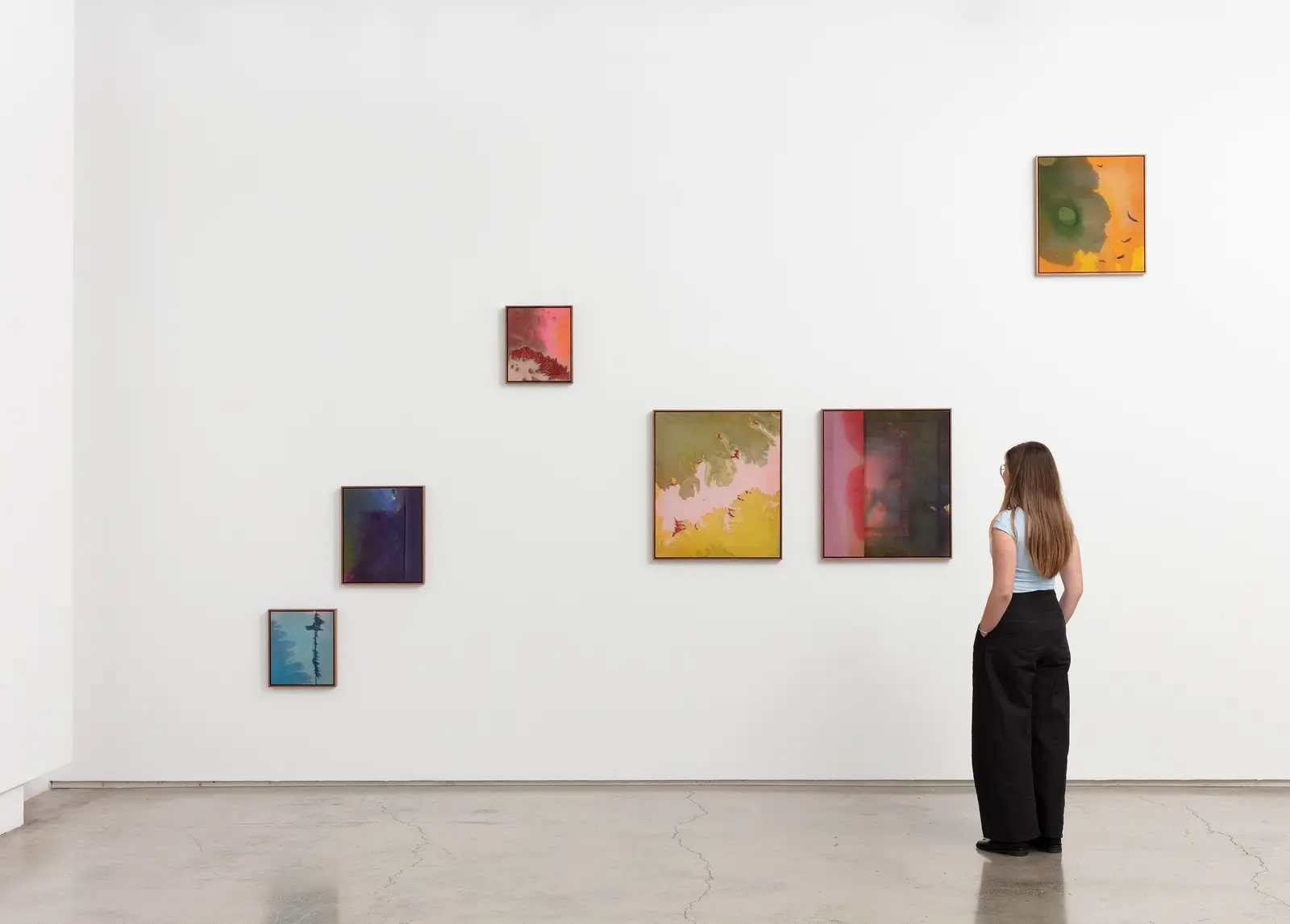
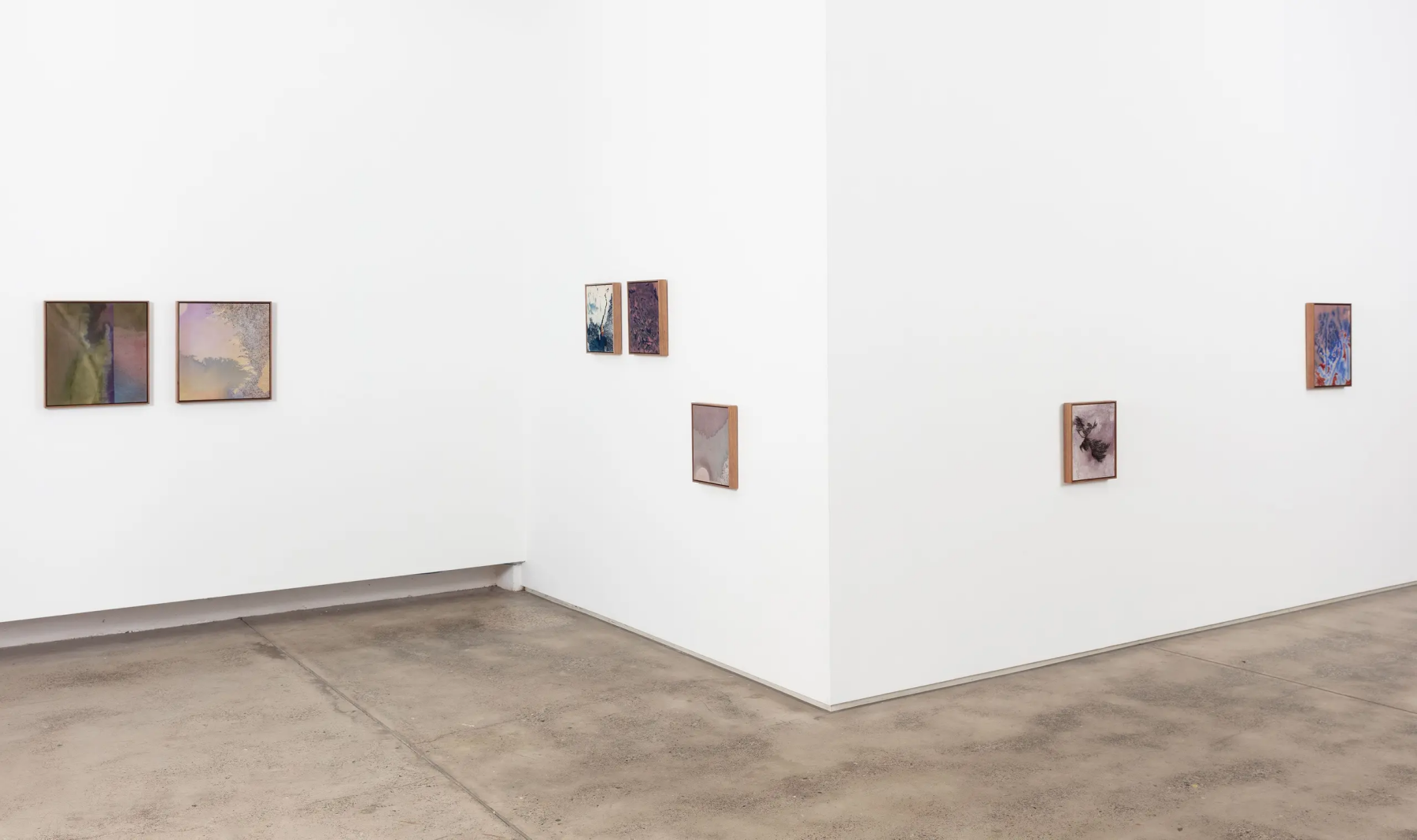
Lara Merrett's expanded painting practice sits within a lineage of artists who have reimagined painting as a material, spatial and an embodied encounter rather than a fixed image. Her fluid abstractions, created through poured pigments and dyes on textile, dissolve the conventional frameworks of painting. Rather than treating the canvas as a neutral surface, Merrett allows gravity, absorption, movement and time to become active collaborators in the making of each work.
This approach enters into dialogue with the radical propositions of the Supports/Surfaces movement of the late 1960s and early 1970s. Rejecting the conventions of easel painting, these artists foregrounded the physical components of painting itself: the support, the surface and the material conditions. Merrett's practice also recalls the innovations of Helen Frankenthaler, whose pioneering soak-stain technique transformed the relationship between pigment and raw canvas, progressing the Abstract Expressionism and Colour Field movements in the 1950s.
By working directly with unstretched textiles and allowing colour to permeate and pool across fabric, Merrett similarly expands painting beyond the limits of the stretched canvas. In Stilling, this investigation extends into a large-scale freestanding work, where painted textile is suspended across a curved framework of timber poles, further testing the spatial and sculptural possibilities of painting. The installation expands the idea of the ‘supports’ beyond its physical construction, drawing attention to the often unseen structures, relationships and forms of knowledge that make an artwork possible. In this way, Merrett’s interest in support resonates with the writing and practice of artist Celine Condorelli, whose work considers the hidden infrastructures that underpin artistic production.
As Merrett explains, “The support is on many levels – I’m interested in ideas of the artist working in communities, alongside others, and the importance of crediting those that come before us or help us. Creating work is not singular; this speaks to larger themes of working on Country and the knowledge systems I am working from – First Nations connections that go back millennia.” Her works occupy space as much as image, inviting viewers to experience painting as something immersive and continually unfolding.
At the same time, Merrett’s recent practice is informed by contemporary ecofeminist thought, particularly ideas of relationality and interdependence articulated through hydro-feminism: rather than understanding water as simply a subject to be represented, hydro-feminism considers bodies, environments and waterways as fundamentally interconnected. These ideas resonate throughout Merrett’s practice, where pigments move according to the behaviour of water, materials respond to humidity and gravity, and painting becomes a record of ecological and environmental processes.
Her current interdisciplinary research examines these concerns through collaborations with marine scientists working to restore the ecological balance of Sydney Harbour. Centred on the long-spined sea urchin (Centrostephanus rodgersii), Merrett investigates how organic materials can enter the studio through processes of holding, grinding, dehydrating and pigment extraction. These experimental methods position the studio as a site of research, where artistic practice intersects with ecological restoration and care-based approaches to knowledge.
Across this body of work, abstraction becomes a way of thinking through relationships rather than representing fixed forms. Material, process and environment remain inseparable, allowing each painting to register the movement of water and the interconnected environmental systems from which it emerges.