
Sign Up & Never Miss a Show
- free weekly opening and closing emails
- free weekly exhibition selection emails
- save and favourite exhibitions
Rivington Place, EC2A 3BA, London, United Kingdom
Open: Wed & Fri 11am-6pm, Thu 11am-9pm, Sat 12.30-6pm
Thu 8 Oct 2026 to Sat 13 Feb 2027
Rivington Place, EC2A 3BA — Google
Wed & Fri 11am-6pm, Thu 11am-9pm, Sat 12.30-6pm
Artist: Charan Singh
Curated by Bindi Vora
Celebrating the lives and collective resistance of gender fluid communities in India
Across South Asia, gender fluidity and sexual diversity have deep histories that have often been obscured and overlooked. Your Tongue in My Mouth examines how British colonial rule imposed rigid controls on gender expression and intimacy in India, criminalising long-established third gender, queer and trans communities.
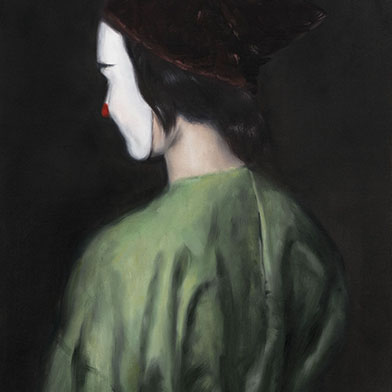
Charan Singh’s new portraits of Hijra, Kothi and trans people centre their agency as individuals and their shared histories; drawing on long-standing relationships Singh formed through more than two decades of HIV/AIDS advocacy and community organising. These new portraits affirm ways of belonging that existed long before colonialism, acknowleging the sitters’ right to define how they are seen, represented and understood.
The terms Hijra and Kothi refer to experiences of gender, identity and ways of life rooted in South Asian cultures that do not have direct English equivalents. For many Hijra, identity is connected not only to gender but also to shared traditions, cultural practices and social ties. Depending on the context, Kothi may speak to the ways gender, sexuality, desire and social relationships are expressed and understood.
Under British colonial rule, law became a tool for policing gender expression and intimacy. Section 377 of the Indian Penal Code (1861) criminalised sexual acts deemed to be ‘against the order of nature’, while the Criminal Tribes Act (1871) imposed restrictions on communities. These laws turned British colonial prejudice into public policy in India, with effects that continue to shape lives today.
Language sits at the centre of these histories. For many working class and economically marginalised queer people, barriers to education made vital information about HIV/AIDS harder to access and understand, particularly when much of it circulated in English with little available in the languages and dialects spoken. For communities already facing social and economic marginalisation, it also affected awareness of legal protections and human rights, further restricting access to healthcare and support.
At the heart of the exhibition a chronology traces how these histories have been written, contested and changed. Bringing together legislation, court judgments, community organising, political movements and acts of resistance from 1835 to the present, it rejects a simple story of progress. Instead, it shows how law has been used to define and control identities, while also being challenged through collective struggle. The chronology extends to the 2026 amendment to India’s Transgender Persons (Protection of Rights) Act (2019), which removed the right to self-identification and narrowed who could be legally recognised under the Act.
Singh’s portraits return us to the people living these histories – and to the collective resistance that continues to shape demands for rights and recognition.
Sign Up & Never Miss a Show