+44 20 7287 7750
Open: Mon-Fri 9am-6pm
Visit
Open: Mon-Fri 9am-6pm
27 Cork Street, W1S 3NG, London, United Kingdom
Open: Mon-Fri 9am-6pm
Visit
Approaching Abstraction
Alon Zakaim Fine Art, London
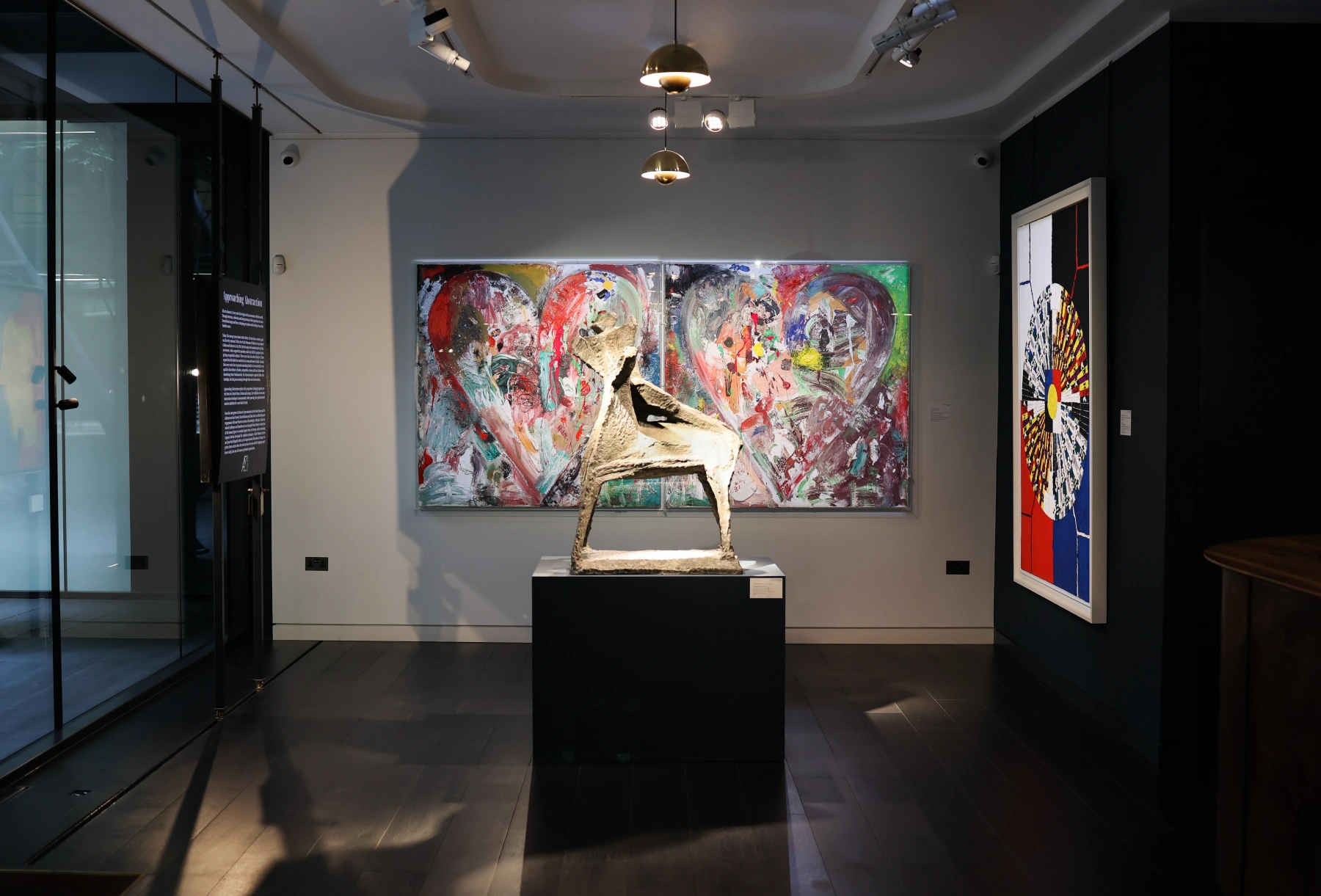
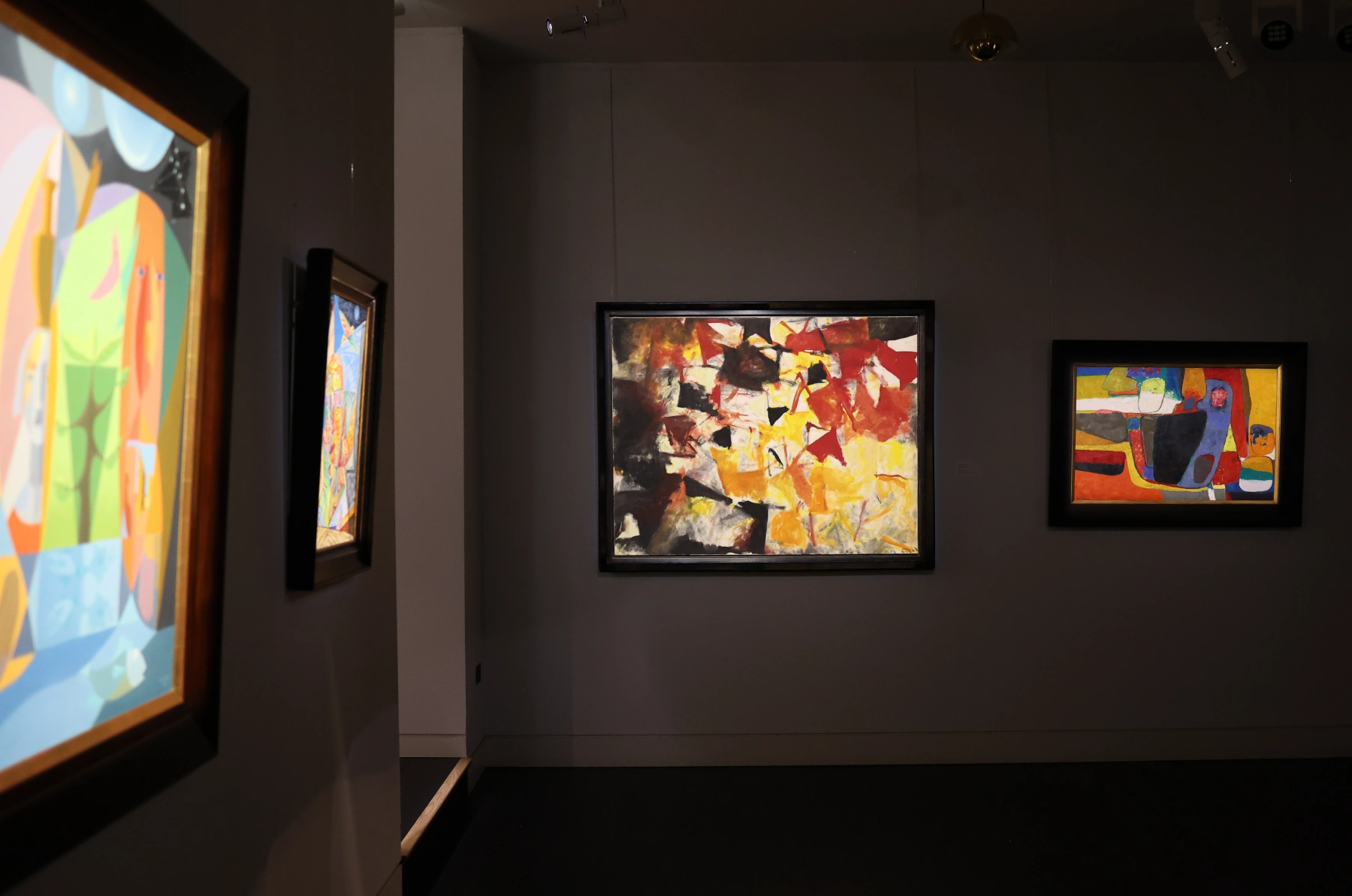
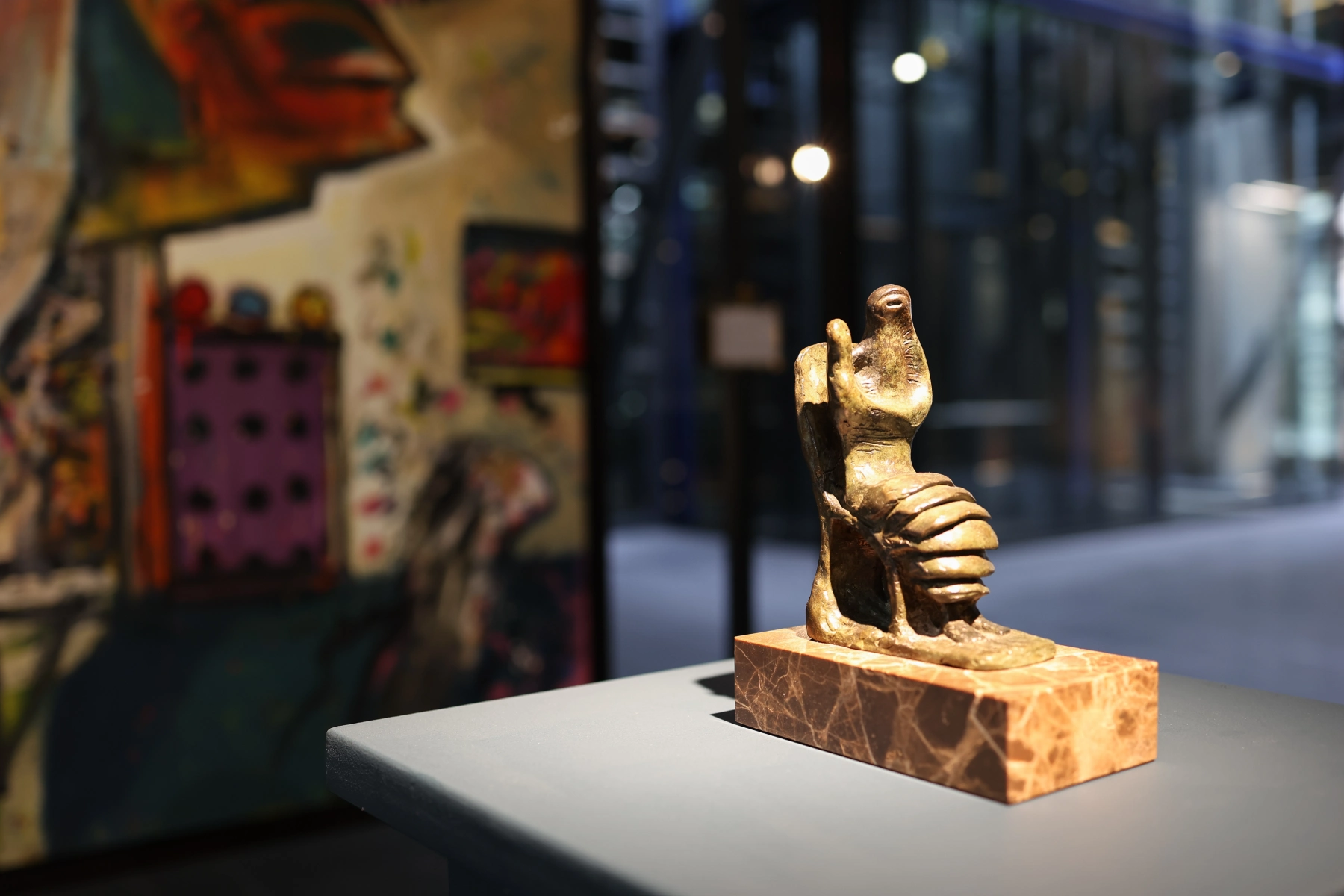
All art is abstract. Every work of art begins with an encounter with the world. Through selection, reduction and interpretation, lived experience is transformed into image and form, reshaping perception and inviting us to see the familiar anew.
Today, this concept seems almost self-evident. Yet less than a century ago it was fiercely contested. When New York’s Museum of Modern Art presented Cubism and Abstract Art in 1936, the first major international survey of the movement, critics argued that painting could only fulfil its purpose by depicting recognisable subjects. Three years later, the artist Charles G. Shaw argued that this belief was rooted less in reason and more in habit. To insist that every work of art represent something familiar is to overlook the very qualities that define it: rhythm, composition, colour and form. Rather than abandoning these fundamentals, the Abstractionists explored their relationships, deriving new meanings through their novel interactions.
Approaching Abstraction takes up that proposition. Bringing together artists from the United States, Britain and Europe, the exhibition traces how abstraction developed transnationally while pursuing that quintessential Modern ambition for a new kind of truth.
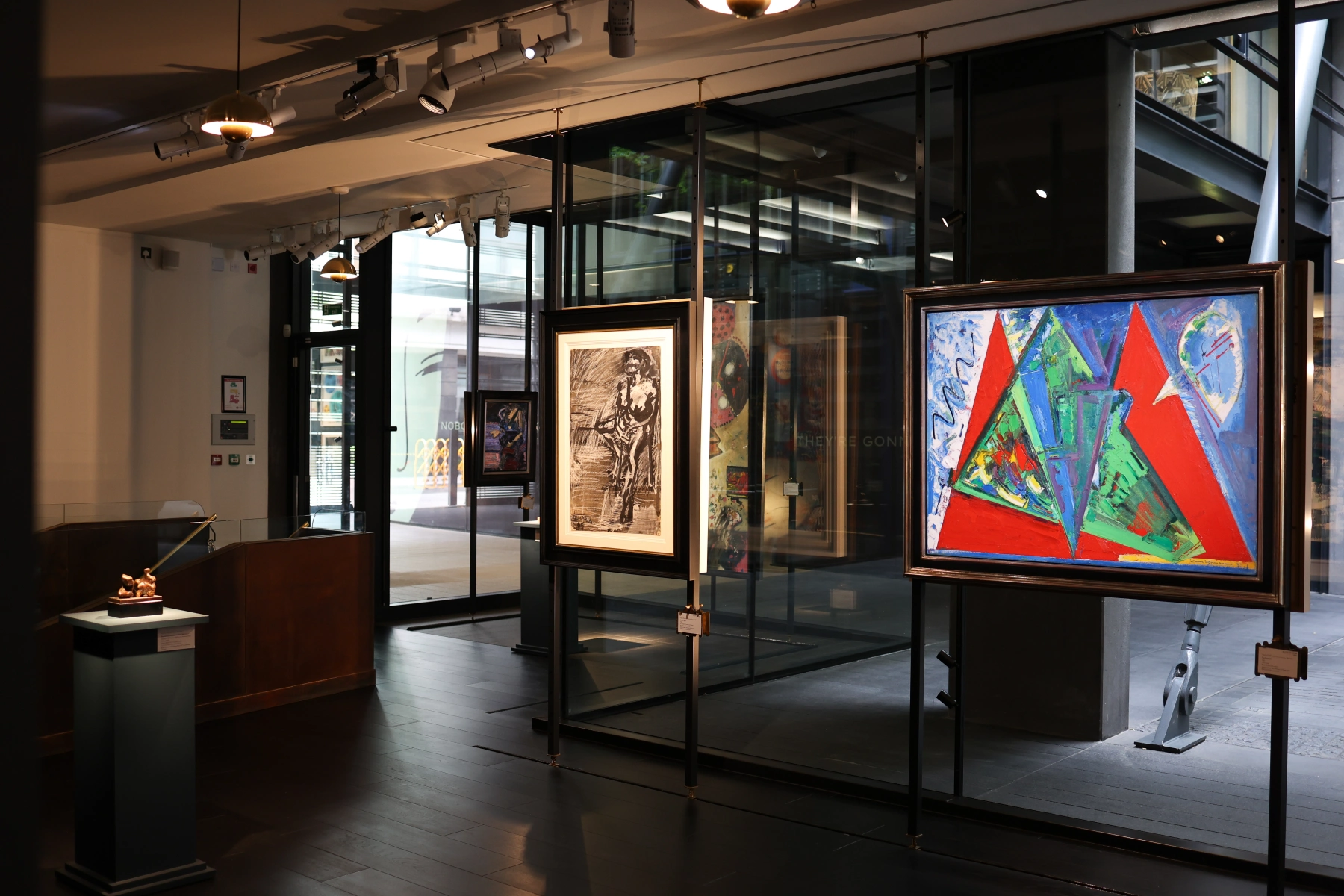
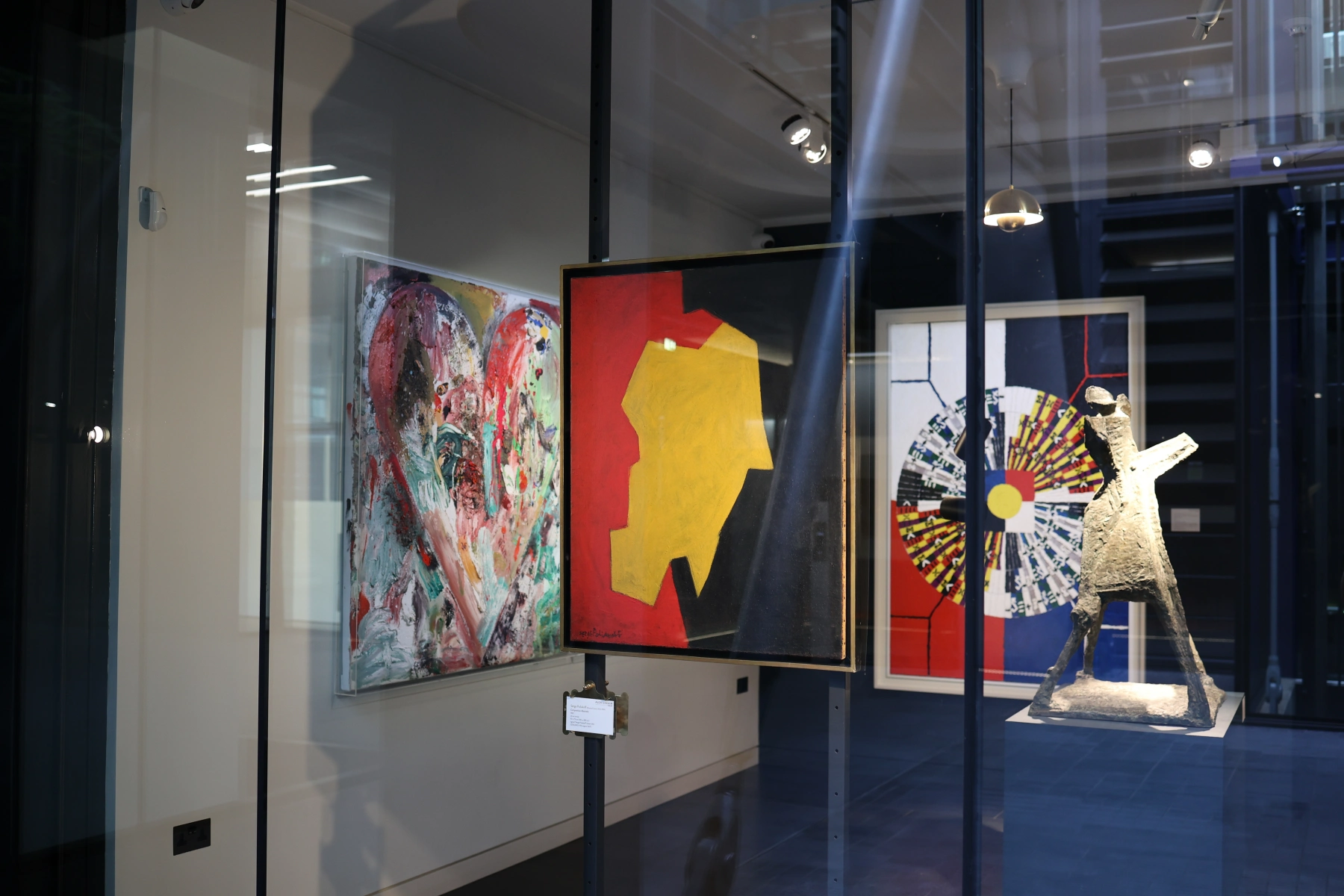
That aspiration announces itself immediately: three paintings face outwards from the gallery, framing the movement’s international reach and the sheer breadth abstraction can hold.
Serge Poliakoff’s Composition abstraite interlocks asymmetrical fields of saturated red, yellow and black into a finely balanced interplay of weight, tension and rhythm. Jean-Paul Riopelle reimagines the Icelandic landscape as a densely worked surface, its topography built from rapid palette knife and brushwork. Completing the trio is Sam Francis’s Untitled (SF90-1PRS), which combines sweeping gestures with luminous pools of colour. Painted, like two other works in the exhibition, after the artist’s near fatal plane crash in World War II, it reflects Francis’s transformation of painting into an expression of recovery, freedom and renewal. Together, they reveal that abstraction was never a singular style, but a shared language capable of continual reinvention.
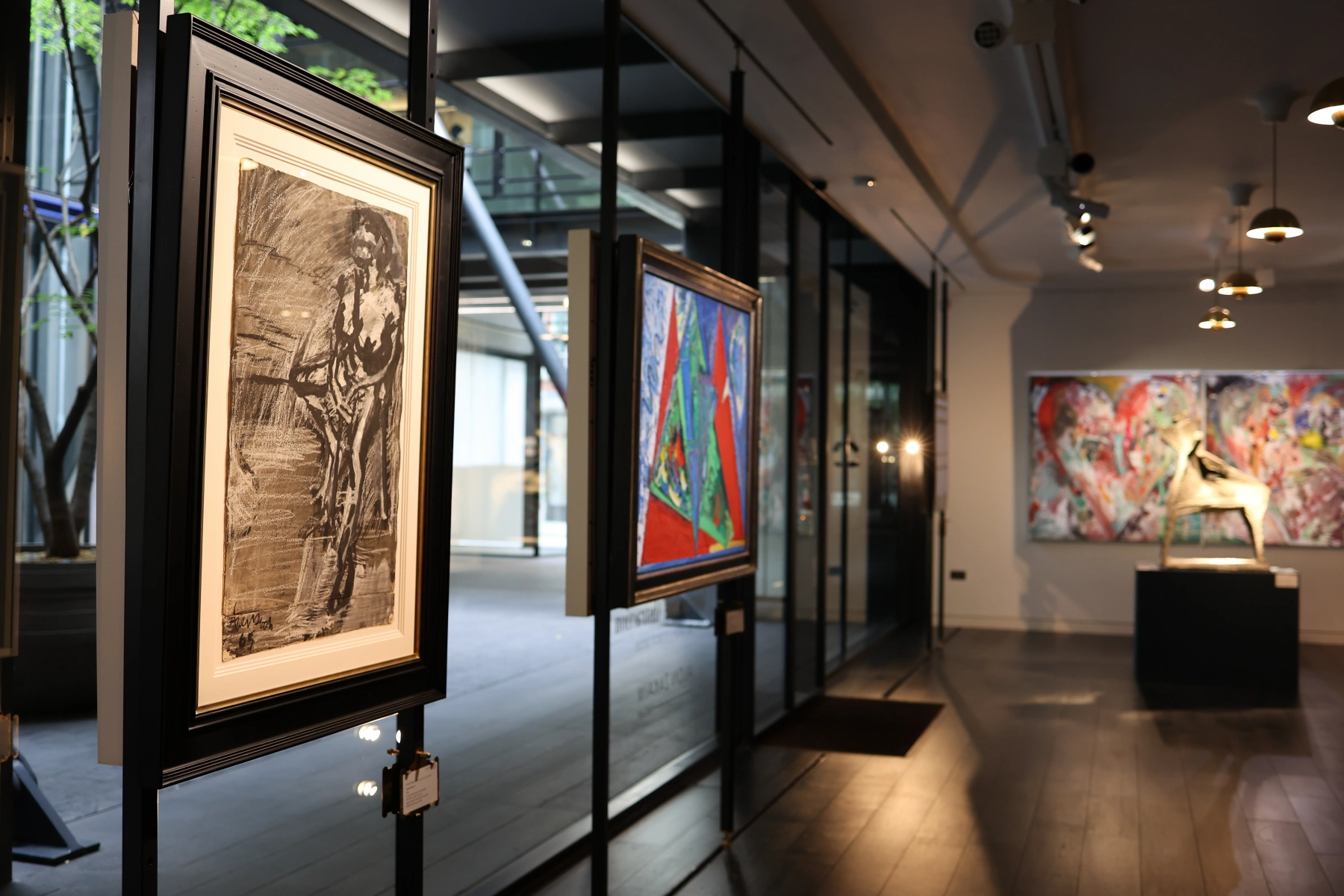
This transformation sits at the heart of Abstract Expressionism, where European Modernist ideas found new urgency in post-war America. Hans Hofmann’s Two Pyramids, praised by The New York Times on 11 October 1953 as "a vigorous expressionist statement... a slashing red design against dark green", echoes the luminous palette and lyrical composition of Kandinsky's late paintings, occupying the threshold between pure abstraction and emotionally charged space. Here, European Modernism is not simply inherited but reimagined, as abstraction turns toward gesture, scale and psychological intensity. Displayed near Jim Dine’s monumental diptychs, painted some seventy years later, Hofmann’s canvas reveals how these concerns have continued to resonate across generations.
Abstraction’s relationship with representation is tested most directly where it meets the figure. Frank Auerbach and Glenn Brown both work from the human sitter, with Brown’s Dead Relatives directly answering Auerbach’s J.Y.M. Seated in the Studio. But Brown’s painting is far more than an exercise in trompe l'oeil: rather than translating Auerbach’s impasto into a smooth, hyperreal surface, he radically reconfigures his source, presenting the figure decapitated, heightening its immediacy and lending the work an unsettling, almost voyeuristic intensity.
Where Brown intensifies the figure, others in the show pursue order instead. Auguste Herbin’s Nuit, Voile no. 4 (1943) exemplifies his alphabet plastique, a symbolic visual language in which colours and geometric forms correspond to letters of the alphabet and musical notation; here, the black and white arrangement subtly resolves into the initials "N" and "V", directly referencing the title. Both an autonomous work and a rare insight into the artist’s creative process, it reflects Herbin’s lifelong pursuit of a universal visual language.
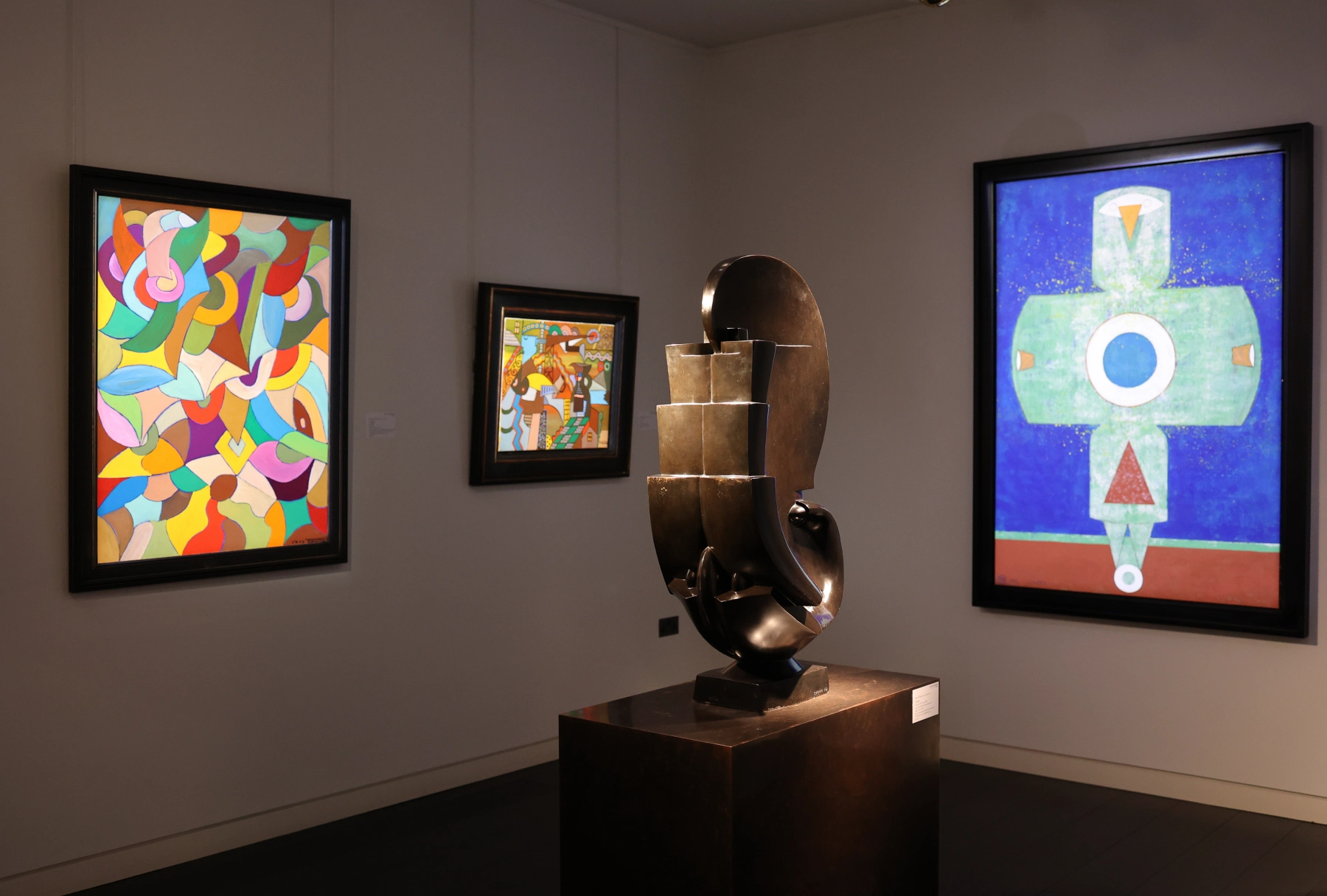
Post-war European abstraction reveals a similar elasticity across the movement, never settling into a singular style but remaining a shared language capable of expressing diverse artistic concerns. In works by Gino Severini, Leopold Survage and Maurice Esteve, abstraction remains deeply connected to the visible world. This is particularly evident in the trio of Severinis, in which the horse, the bicycle and mechanisation are progressively distilled into dynamic geometric structures. Across these works, whether through the geometry of Cubo Futurism, the lyrical ordering of colour and form, or landscape distilled into richly structured composition, abstraction emerges not through the rejection of observation but through its refinement.
From here, the exhibition traces abstraction from the French School to contemporary practice, tracking the movement's enduring capacity for reinvention. Françoise Gilot’s Enigma (1983) balances geometric clarity with symbolic ambiguity; constructed from interlocking circles, triangles and rectilinear forms, the composition hovers between abstraction and representation, suggesting a totemic, almost anthropomorphic presence. That legacy continues in the contemporary work of Ivan Turetskyy, Alexandre Istrati and Yvaral who show abstraction still evolving through new approaches to colour, geometry and perception.
Taken together, these works reveal that abstraction has never been a single destination, but a succession of approaches. Approaching Abstraction invites viewers to make that journey for themselves.