Hauser & Wirth has announced the worldwide representation of Los Angeles-based artist rafa esparza, in close collaboration with Commonwealth and Council.
Since the early 2010s, esparza has drawn on personal narrative, memories and his experience growing up in Los Angeles to weave together emanations of land, migration, desire and belonging in works that are dense and unabashedly sensual. At the center of his practice lies adobe, the traditional earthen building material his father taught him to make.
Mixed by hand from loam, straw, water and manure, adobe serves as both the physical matter and conceptual foundation for his sculptures, paintings and installations. Among the oldest building materials in the Americas, it carries multiple histories for esparza, tying him to family knowledge brought from Durango, Mexico, while also bearing traces of Indigenous technologies and ways of life that have endured for generations despite displacement and assimilation.
Collaboration is central to esparza’s practice. Working alongside friends, family members and fellow artists, many of them brown and queer, he has produced adobe bricks by the thousands for use in his objects and installations. The resulting artworks offer up evidence of such collective effort via visible straw, cracks, handprints and surfaces that continue to shift over time. esparza refers to the relationship between earth and identity as “brown matter”, a concept that links the color of adobe to brown skin, binding the material to lived experience. When his adobe structures enter museums and galleries, they carry the imprint of the people and processes that made them, challenging institutions to make new space for forms of knowledge, labor and community that often have existed for centuries beyond their walls.
Marc Payot, President at Hauser & Wirth, said: “We are thrilled to join Commonwealth and Council in representing rafa esparza, an artist of profound humanity and dedication to community. rafa brings real warmth to a conceptual practice that is enormously rigorous and disciplined, drawing the earth quite literally into works that mark time and the human hand while harkening to centuries of challenging questions about ownership, agency and belonging. It will be an honor to share his art with increasingly international audiences and new generations”.
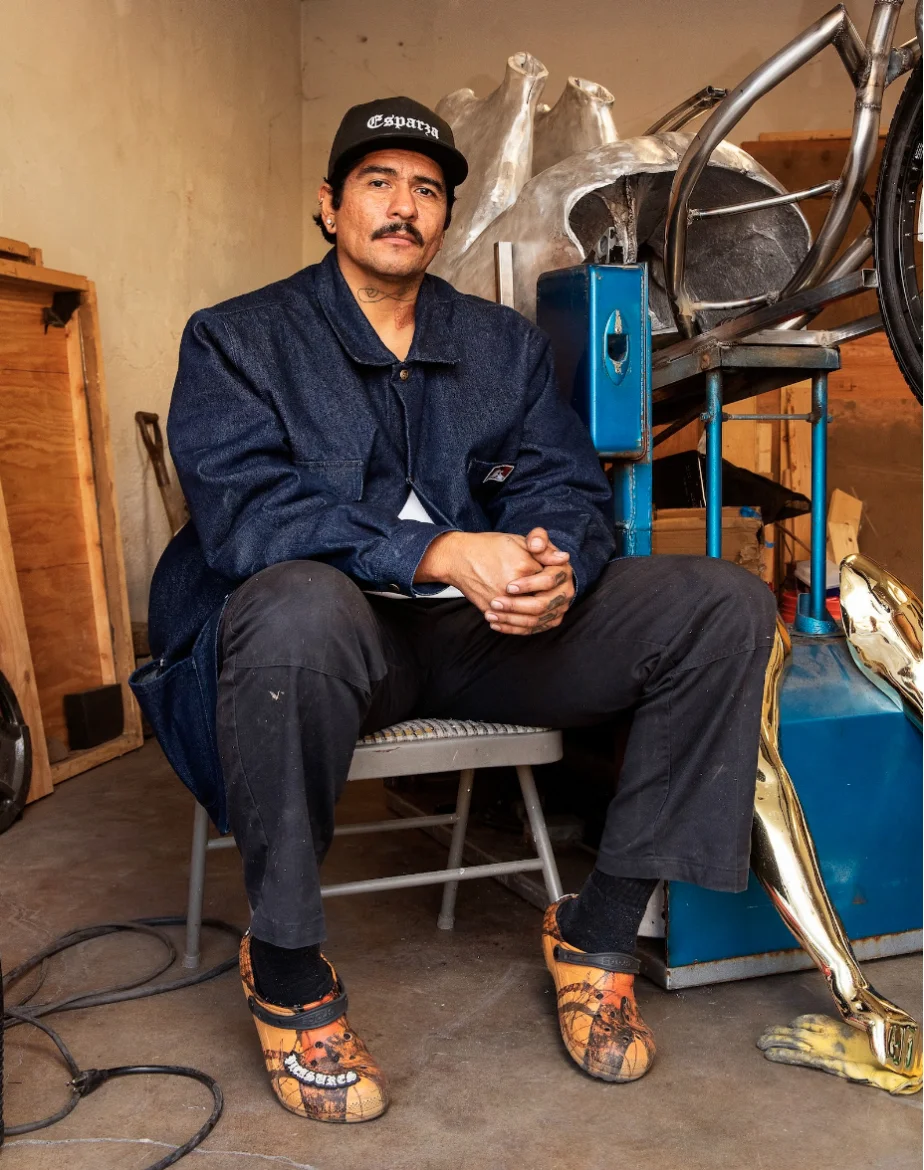
photo: Star Montana