Gallery News
for exhibition openings and closings, events and auctions,sign-up for the essential GalleriesNow weekly Newsletter here
the new GalleriesNow map!
May 4, 2024
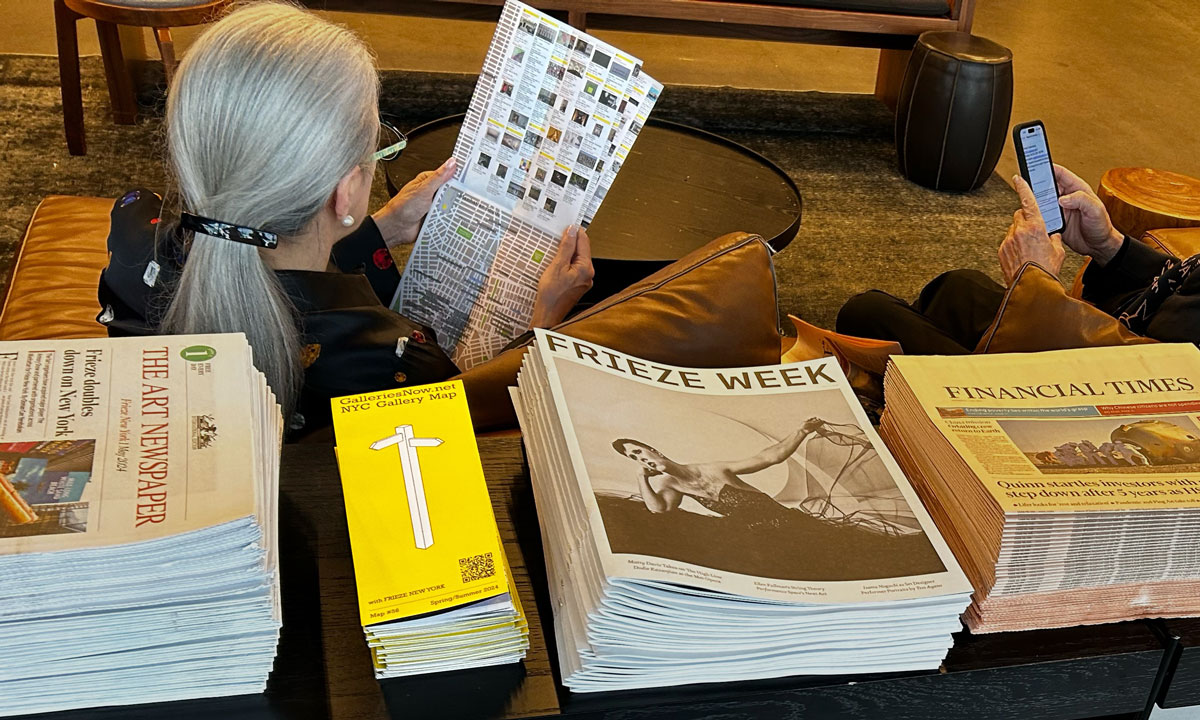
We are delighted to have published the new NYC Gallery Map in association with Frieze.
The maps are available at the Fair and at galleries across the city and there is an online version of the map here.
Check the Maps page for details of our other upcoming maps.
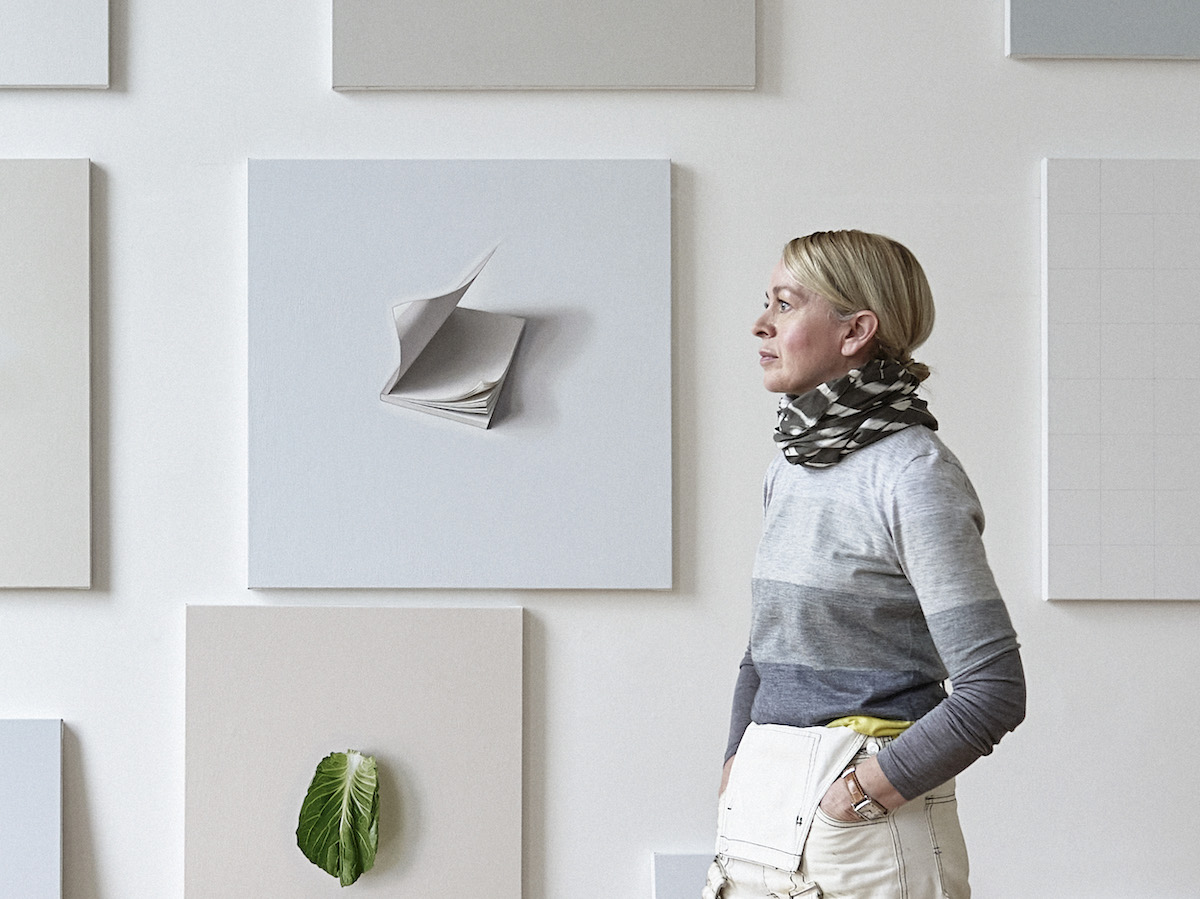
Lévy Gorvy Dayan announces representation of Alison Watt
May 3, 2024
Widely considered one of the leading painters working in the UK, Alison Watt won the National Portrait Gallery’s annual Portrait Award in 1987 while still a student at the Glasgow School of Art. She became known for figurative paintings, often portraying female nudes, before beginning in the late 1990s to focus on depictions of fabric, which had previously acted as supports or backdrops for her compositions.
Rather than eliminate the figure, her paintings evoke the human presence through its absence.
Watt’s work is rooted in an engagement with the past, particularly the attributes of historical European painting and sculpture. Although the human figure is no longer explicit in her work it is often implied. More recently, her painting has focused on the relationships between the genres of still life and portraiture, exploring narratives around everyday objects.
Watt’s first solo exhibition with the gallery, Breathing In, opens on May 9 at the East 64th Street space.
Photo: John McKenzie
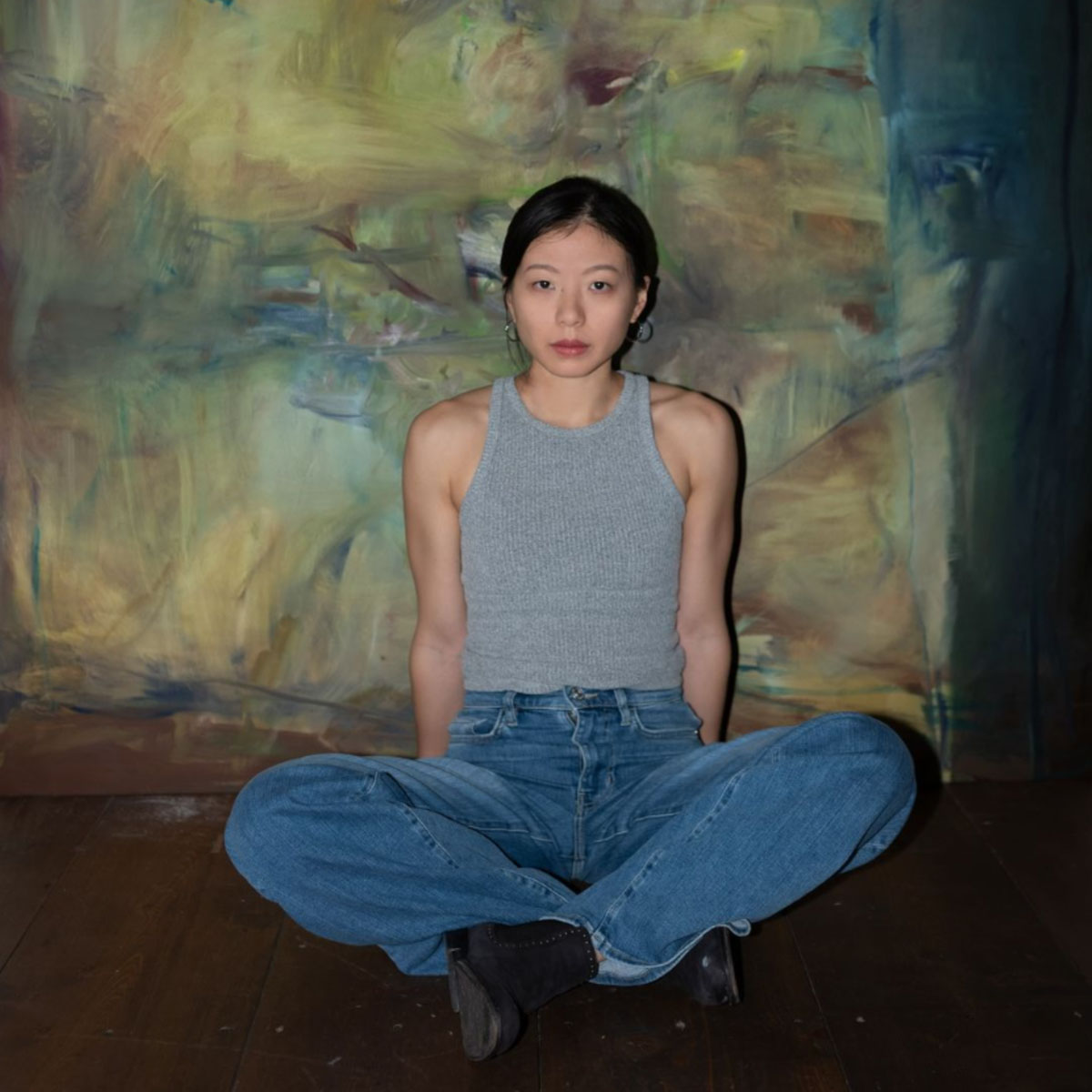
lbf contemporary announces representation of Tianyue Zhong
lfb contemporary, London has announced the representation of Los-Angeles based painter Tianyue Zhong.
Zhong is currently part of the group exhibition Phantasmagoria and her debut solo exhibition in the UK will be at the gallery in 2025.
Tianyue Zhong was born in Chengdu, China, and lives and works between China and the US. She creates paintings and drawings that illustrate the uncontrollable nature of life. After learning lithography, making artist books, and doing classical figure drawings, Tianyue started combining these techniques into her paintings. With a repetitive cycle of wiping, diluting, drawing, and layering, Zhong compares certain moments preserved in memories or photographs with her own stark feelings in the present.
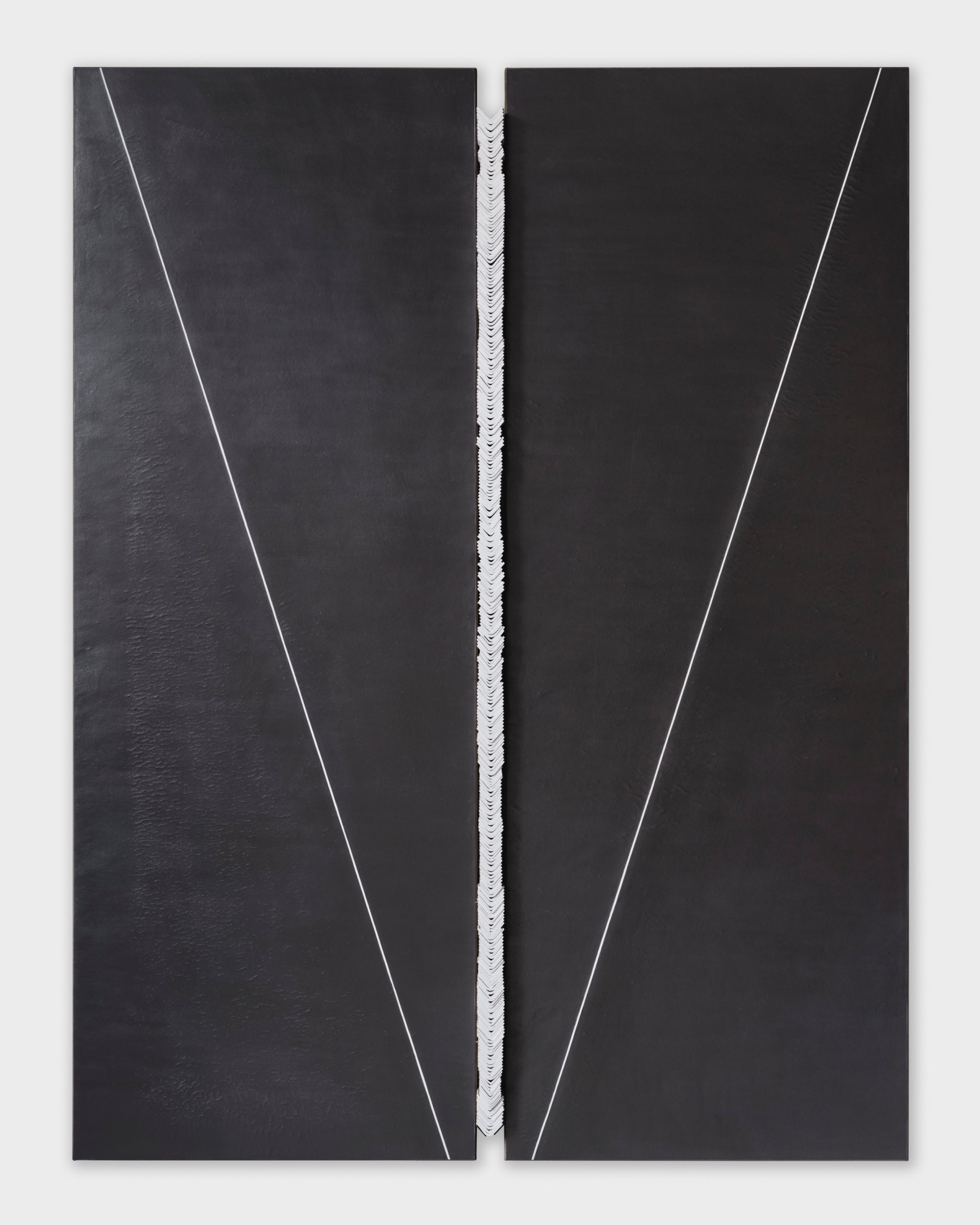
Lévy Gorvy Dayan announces representation of N. Dash
May 2, 2024
Lévy Gorvy Dayan announces representation of the New York-based artist N. Dash, whose debut exhibition inaugurates the gallery’s new London space in Mayfair.
Featuring a new series of multi-panel paintings, this exhibition is also Dash’s first solo exhibition in London.
Born in 1980 in Miami, Dash's artistic practice spans various media, including painting, sculpture, and photography. The artist received a BA from New York University in 2003 and an MFA from Columbia University, New York, in 2010. Dash’s work often explores concepts related to materiality, process, and the relationship between the human body and the natural environment.
Dash’s work has been the subject of solo exhibitions at SITE Santa Fe, New Mexico (2023–24); Stedelijk Museum voor Actuele Kunst (SMAK), Ghent (2022); Museum of Contemporary Art Santa Barbara, California (2019–20); Aldrich Contemporary Art Museum, Ridgefield, Connecticut (2019); Fondazione Giuliani, Rome (2017); and the Hammer Museum, Los Angeles (2014).
The artist's work is held in notable international collections at institutions such as the Museum of Modern Art, New York; Solomon R. Guggenheim Museum, New York; San Francisco Museum of Modern Art; Whitney Museum of American Art, New York; Hammer Museum, Los Angeles; and Stedelijk Museum voor Actuele Kunst (SMAK), Ghent, among others.
Lévy Gorvy Dayan's new London gallery opened in April 2024 at 35 Dover Street, the historic home of the Empress Club - one of the first women-only members’ clubs in the capital.

Pierre Huyghe awarded Grand Prix de la Fondation Simone et Cino Del Duca 2024
May 1, 2024
Marian Goodman Gallery has announced that Pierre Huyghe has been awarded the artistic Grand Prix, from the Fondation Simone et Cino Del Duca, on the recommendation of the Académie des Beaux-Arts.
The accolade celebrates Huyghe’s life and career as an internationally acclaimed artist, and will be awarded at the Institut de France during an official ceremony on 19 June 2024.
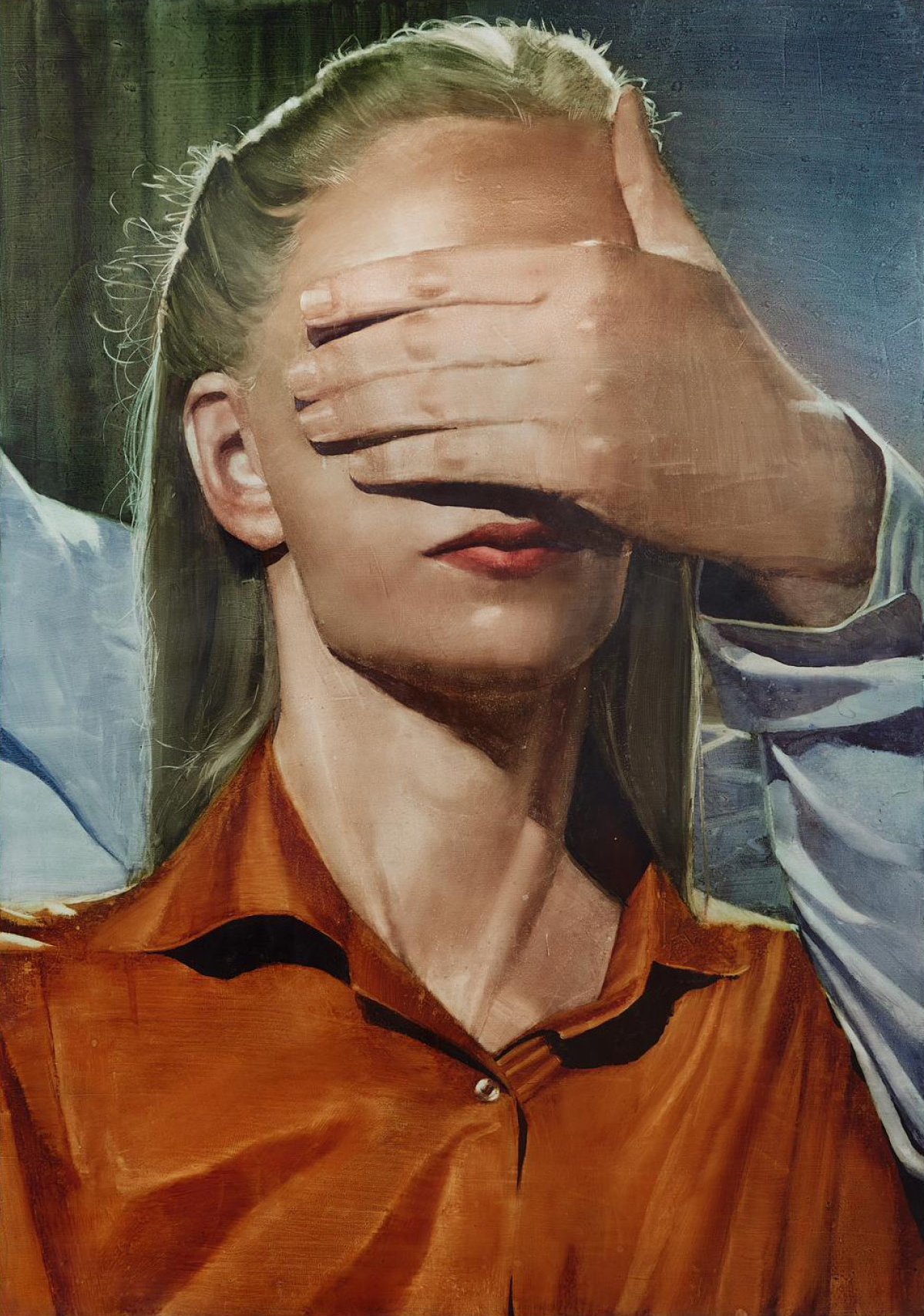
Modern Art now represents Joseph Yaeger
April 23, 2024
When sourcing a visual reference for a new painting, Joseph Yaeger seeks the concurrent sensation of attraction and disturbance, looking for an image that might be simultaneously jarring and enticing, with the artist driven by the subjective sensation that Roland Barthes memorably described as ‘the punctum’ of an image. Although initially intuitive, once certain themes or patterns begin to emerge in his selection, he will then cull and hone images more deliberately. In terms of process, Yaeger applies watercolour on thickly gessoed canvas or linen, centring the materiality of the pockmarked and undulating gesso in addition to the vicissitudes of the watercolour pigment. His compositions range and vary, from charged encounters between unknown protagonists in elusive environments, to more prosaic representations of animals and commonplace objects.
Attracted to pushing the boundaries of legibility, his compositions are typically cropped, both revealing and curtailing the viewer’s encounter with the scene, fostering an atmosphere of emotional and spatial ambiguity. While Yaeger’s writing practice evokes these phantasmatic spaces, with his illusory characters often made flesh, his painting attempts to grasp what language cannot convey. He has remarked how the action of painting exists outside of his own self, seeing his body as a conduit for the translation of an image: “The translation into paint I think of as a kind of projection – using my body as a projector, more specifically. I don’t sketch, nor do I use a projector, and I paint on the floor. The image, when everything is clicking, seems to emerge as if by magic out of the pooled paint. It’s genuinely quite mysterious to me – there is very little, if any, conscious or linguistic thought occurring in the act of painting.”
Joseph Yaeger b. 1986 Helena, Montana. Lives and works in London. Selected solo exhibitions include: Time Weft, The Perimeter, London, 2023; Just a Second, Antenna Space, Shanghai, 2022; Doublespeak, Project Native Informant, London, 2021; Power Ballads, vo Curations, London, 2020. Selected group shows include: Present Tense, Hauser & Wirth Somerset, Bruton, 2024; Accordion Fields, Lisson Gallery, London, 2024; Yuen-Yeung, k11, Shanghai, 2023; Sweet Days of Discipline, Hannah Hoffman Gallery, Los Angeles, 2022; A Mimetic Theory of Desire, David Lewis, New York, 2022; My Reflection of You, The Perimeter, London, 2022; after image, Mamoth, London, 2020.
artwork: Old long since, 2022
Ella Walker joins Pilar Corrias
April 3, 2024
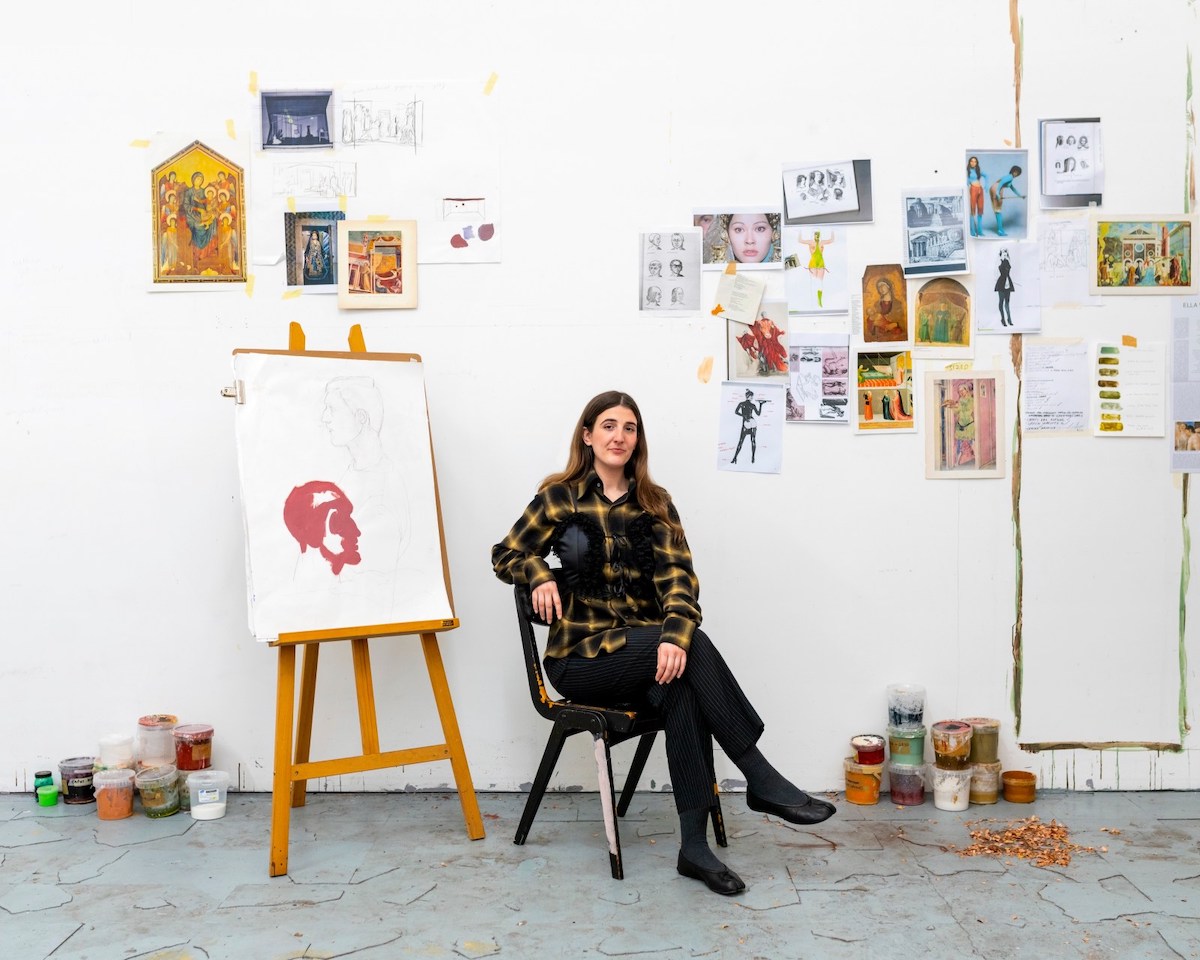
Pilar Corrias announces representation of the London-based artist Ella Walker.
Using both traditional and contemporary painting techniques and materials, Walker works from a myriad of source imagery – iconography, medieval manuscripts, and classical sculpture to modern ballet, fashion and the cinema of Fellini and Pasolini – unifying historic and contemporary figures and narratives within a single picture plane.
Walker applies light washes of acrylic dispersion, pigment, chalk and marble dust, with selective intensity to an absorbent and textured ground. Employing the spatial logics of fresco and its shallow depth of field, Walker builds her tableaux, placing her painted subjects within stage-like scenes that defy easy delineation between ecstasy, eroticism and suffering.
“Ella Walker is a brilliant artist, whose unique style and painting technique is captivating. Her paintings, layered with a complexity of themes and historical references, operate within the interstices of historic and contemporary visual cultures, creating a new painterly language in between. I am thrilled to be working with Ella on an international level and promoting her extraordinary practice alongside New York gallery Casey Kaplan.” – Pilar Corrias
Walker will have her first exhibition with the gallery later this year.
photo: Jooney Woodward
Dr Nicholas Cullinan appointed as new Director of the British Museum
March 28, 2024
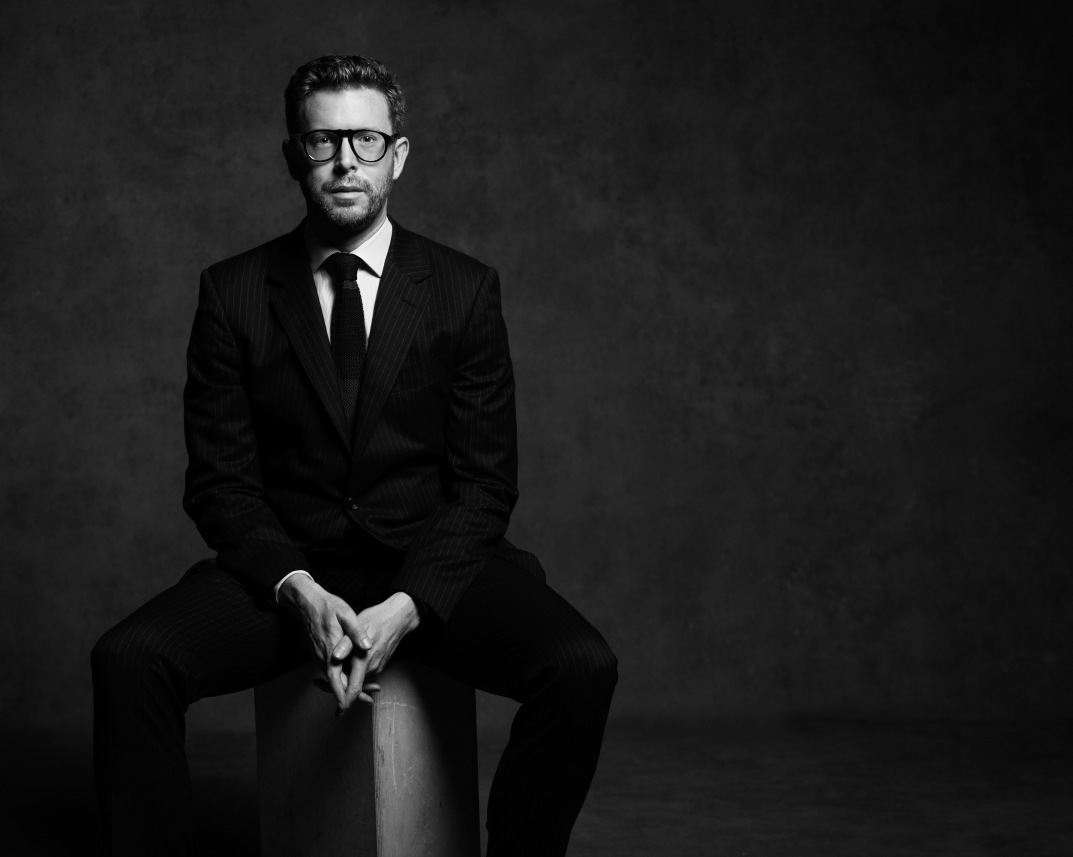
Dr Nicholas Cullinan OBE has been appointed as the new Director of the British Museum, following the unanimous approval of the Board of Trustees and the agreement of the Prime Minister.
Nicholas is one of the UK’s most admired and experienced museum directors, having successfully run the National Portrait Gallery since April 2015. During his time at the National Portrait Gallery Nicholas led the most significant transformation in the Gallery’s history, with a complete re-presentation of the Collection and major redevelopment of the building increasing public space by a fifth. Before that he worked at the Metropolitan Museum of Art in New York and Tate Modern in London as a curator, bringing an international perspective to his approach.
Nicholas takes over from Interim Director Sir Mark Jones and will take up his role in the summer.
photo: Zoë Law
Richard Serra, 1938 – 2024
March 27, 2024
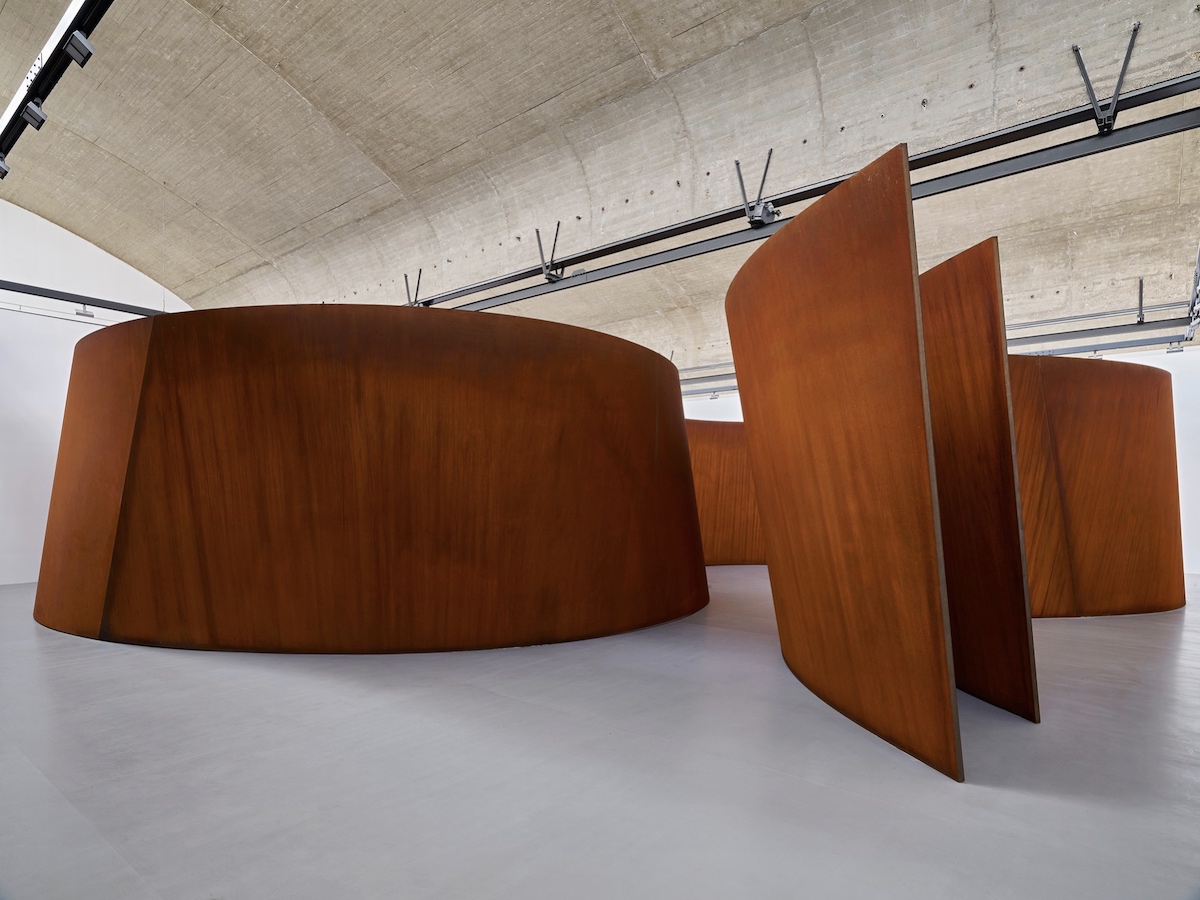
The death has been announced of Richard Serra at his home in New York. The American artist, perhaps best known for his monumental abstract sculptures, died of pneumonia at the age of 85.
Serra’s massive arcing sheets of oxidised steel - often weighing thousands of tonnes - became his hallmark and are installed in museums and public spaces throughout the world. Even his drawings - also integral throughout his work - were massive, daunting, and “heavy”.
Carmen Jimenez, who organised an exhibition of major Serra works in 2005 at The Guggenheim Museum, Bilbao, described the artist as “beyond doubt the most important living sculptor”.
Richard Serra: Six Large Drawings opens on Tuesday, April 9 at David Zwirner in London
Richard Serra: Casablanca runs until Tuesday, April 30 at Galerie Lelong & Co. in Paris
photo: Richard Serra: Transmitter @ Gagosian, Paris, Sep 2021 - Dec 2022 © 2021 Richard Serra/ARS, New York, Thomas Lannes
Jack Bell Gallery relaunches as Larkin Durey
March 26, 2024
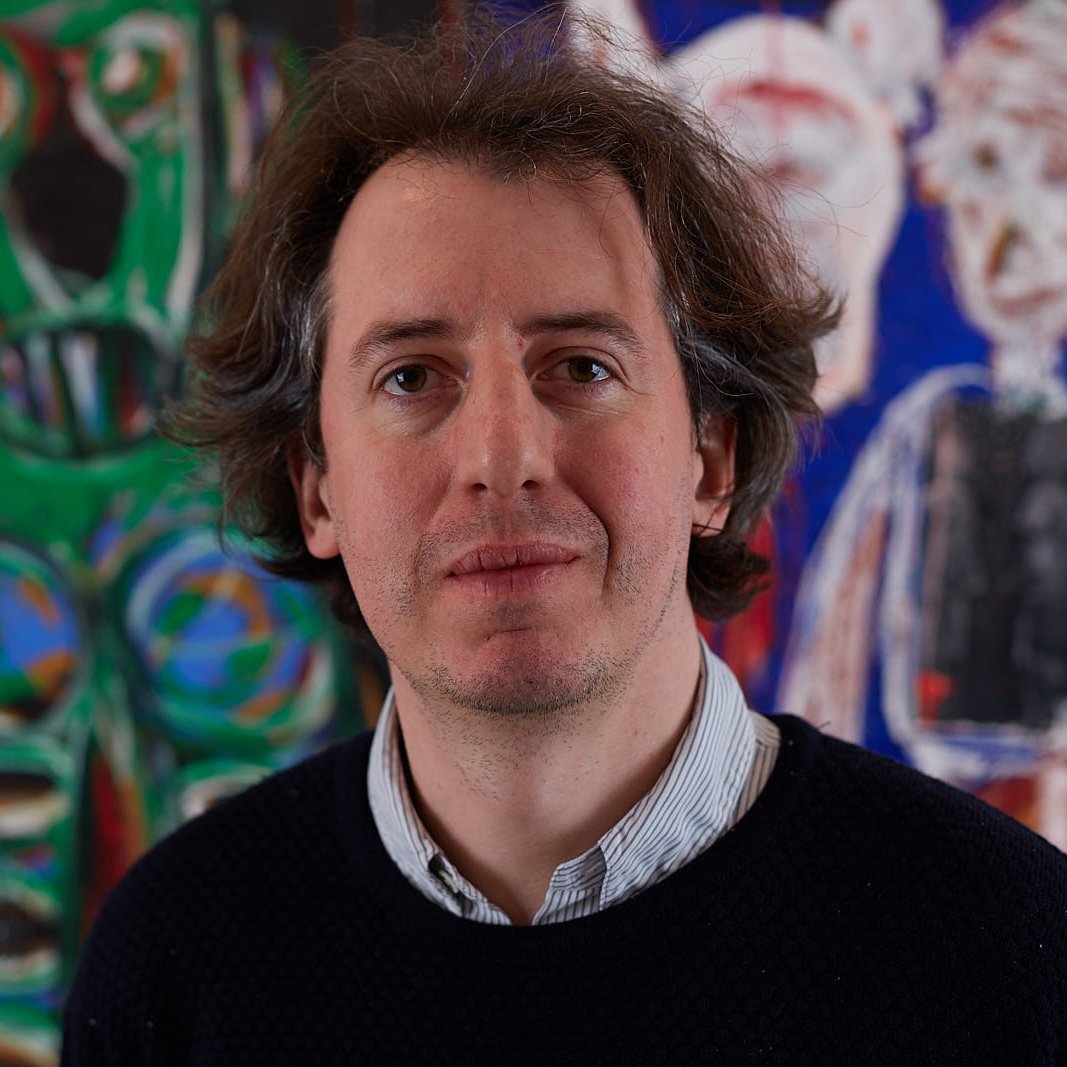
Oliver Durey is delighted to announce the launch of his newly rebranded gallery, Larkin Durey, operating under his sole direction and ownership. Originally opened in 2010 as Jack Bell Gallery, ex-partners Jack Bell and Oliver Durey shared over a decade of success together and have now taken the decision to part company to pursue independent ventures.
Larkin Durey remains in its well-loved location of Mason’s Yard, London and continues to strategically evolve its international contemporary program. The gallery’s new name reflects the revised positioning, an ethos of inclusivity where artists and collaborators are an extended family. Family is hugely important and Larkin Durey takes its name from Oliver’s two sons, who share his and his wife’s surnames. His wife, Monica Larkin, has extensive fashion and design experience in the luxury sector and will also be contributing to the development of the gallery’s visual brand presence.
Looking ahead, the gallery aims to strengthen its focus on each artist on the roster, increasing their presence locally, internationally & online. In 2024 the gallery will streamline its fair program building on existing stateside relationships in New York and has ambitions to develop a wider European program in 2025.
Larkin Durey opened with ‘Le Bapteme‘ by Marc Padeu on Thursday 14 March with the artist in attendance from Yaoundé, Cameroon.
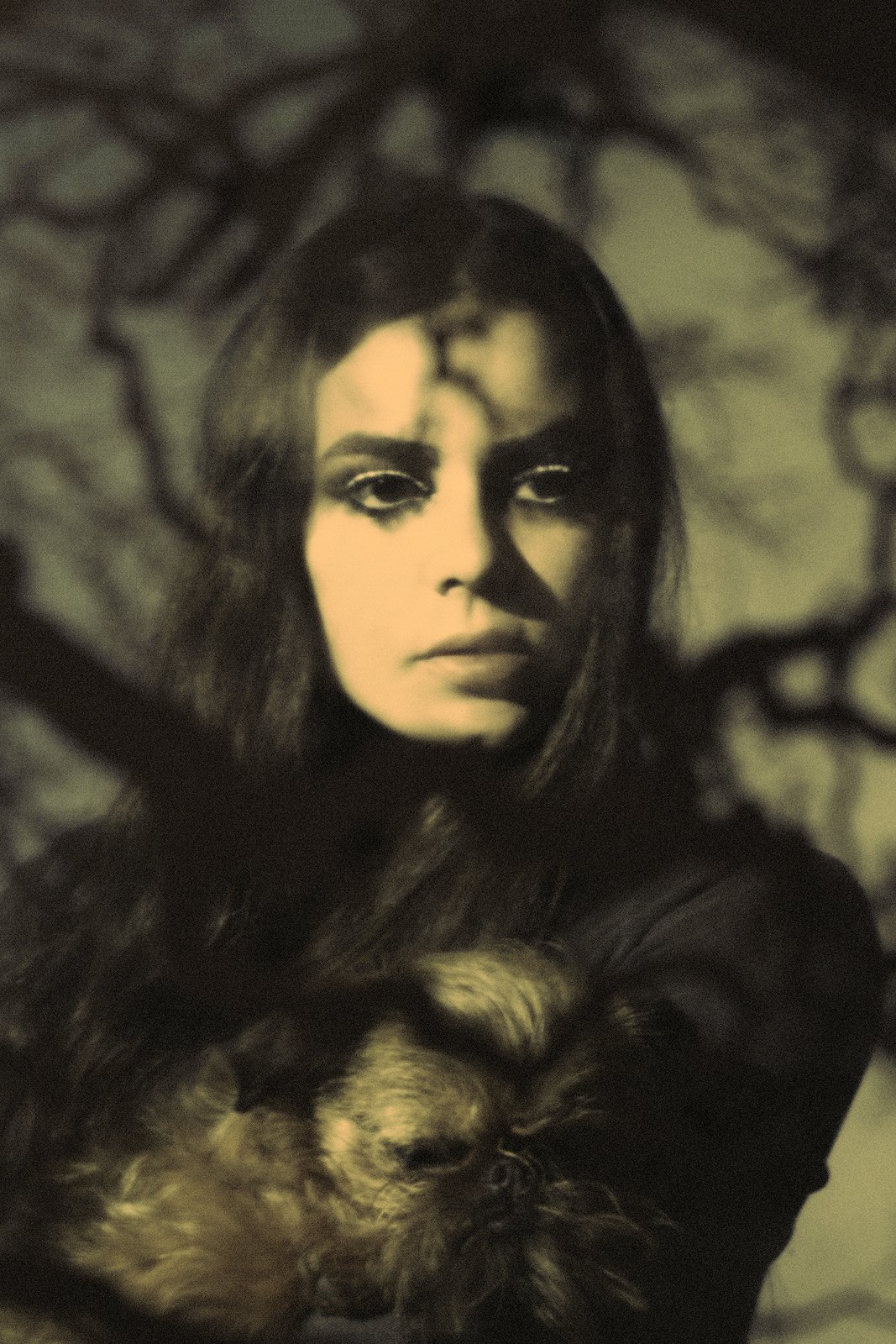
Capitain Petzel now represents Alexandra Metcalf
March 25, 2024
Capitain Petzel is pleased to announce the representation of Alexandra Metcalf.
Born in 1992 in London, UK, Alexandra Metcalf works in painting and sculpture, reinterpreting the history of gendered labor through antiquated ornamental traditions. Metcalf considers the way historic counter-culture movements shape aesthetics, with the intense patterns and coloring of her paintings representing domestic landscapes full of anxiety and populated by hysteric women. Metcalf mythologizes a dramatic descent into madness through exaggerated yet self-aware images related to historically established notions of femininity. One could see this as a satire of literary tropes or an attempt to depict the heightened levels of dramatic tension characteristic of operatic storytelling, where most things are to be seen in parentheses. Her fascination with craft is coupled with attempts to regender labor-intensive mediums historically seen as masculine, including stained glass, bronze casting, and handcrafted woodwork.
Alexandra Metcalf graduated from the Chelsea College of Art and Design, London and Rhode Island School of Design, Providence. Her work has recently been exhibited at 15 Orient Gallery, New York; Kunsthalle Zürich; Champ Lacombe, Biarritz; Fitzpatrick Gallery, Paris; LOMEX, New York; and Ginny on Frederick, London. Metcalf’s work is held in The Museum of Modern Art Library Collection, New York; The Perry and Marty Granoff Center for the Creative Arts, Brown University, Providence and The Perimeter, London.
A joint exhibition by Karla Black and Alexandra Metcalf is on view at Capitain Petzel through April 13, 2024.
photo: Jackson Hallberg
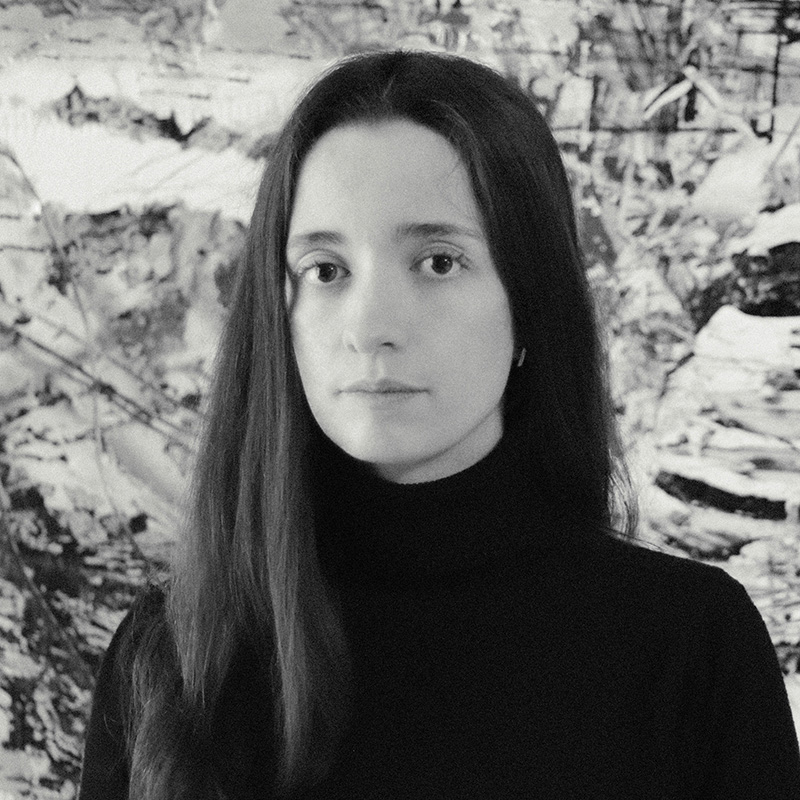
Galleria Continua announces representation of Barbana Bojadzi
Born in 1996, Barbana Bojadzi is an artist originally from Kosovo who currently lives and works in Provins, France. She graduated from the École Nationale Supérieure des Beaux-Arts in Paris in 2021, with honors from the jury. At the Beaux-Arts, she was mentored by Dominique Gauthier, Nina Childress, and Dominique Figarella.
In her artistic practice, Barbana Bojadzi is particularly interested in the memory associated to gesture, the idea of imprint, and its relation to Time. Her artworks are characterized by the accumulation of layers, colors, and textures, thus creating a stratification of meanings and materials, where the image emerges by a mechanism of extraction. Barbana Bojadzi is always seeking new technical processes, highlighting used and reclaimed materials that reflect the humility and simplicity we find in her work.
Barbana Bojadzi recently won the Khalil de Chazournes Prize, awarded by the Amis des Beaux-Arts de Paris, as well as the 2023 the Sisley - Beaux-Arts de Paris Prize for Young Creation, and one of her works is now part of the Société Générale Art Collection. She was also part of many group shows, including 'Société Générale Art Collection' at the Société Générale Tower, Puteaux (France) and 'Felicità' at POUSH, Aubervilliers (France).
The artist’s first solo exhibition at Galleria Continua opens on April 2, 2024.
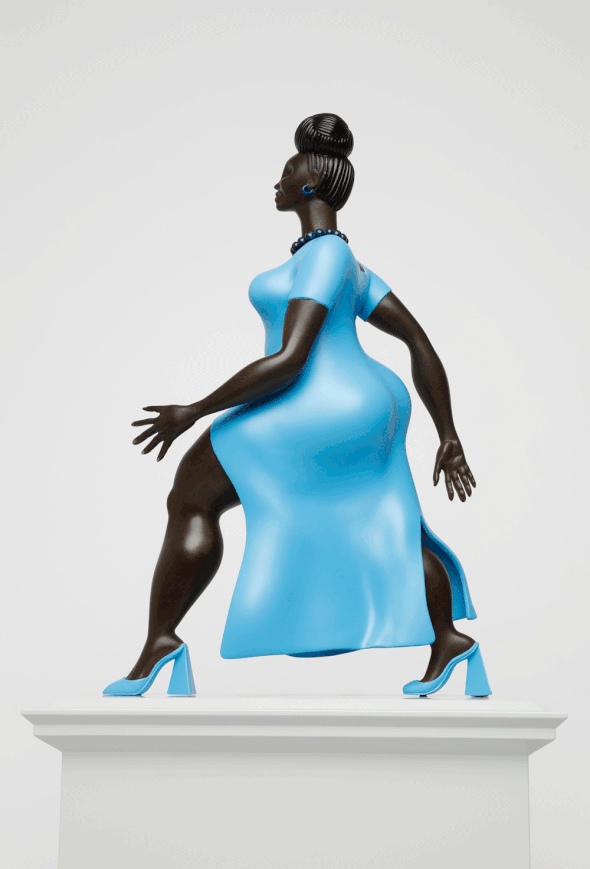
Tschabalala Self awarded 2026 Fourth Plinth Commission
March 15, 2024
Galerie Eva Presenhuber and Pilar Corrias are pleased to announce that Tschabalala Self’s work has been selected for the 2026 Fourth Plinth commission. The Fourth Plinth in Trafalgar Square is one of the most important art commissions worldwide, putting new work by internationally renowned artists into the heart of London. Self’s sculpture, titled Lady in Blue, pays homage to a contemporary woman, who could be one of many Londoners walking through Trafalgar Square. Made of bronze, she will reference the square’s existing monuments, but will be patinated with Lapis Lazuli, a refined blue pigment in use since antiquity.
“I am honoured that the public and Fourth Plinth Commissioning Group have selected my work,” Self says. “Lady in Blue will bring a woman to Trafalgar Square that many can relate to. She is not an idol to venerate or a historic figurehead to commemorate. She is a woman striding forward into our collective future with ambition and purpose. She is a Londoner, who represents the city’s spirit.”
Tschabalala Self (b.1990 Harlem, USA) lives and works in New York’s Hudson Valley. Self is an artist who builds a singular style from the syncretic use of both painting and printmaking to explore ideas about the black body. She constructs depictions of predominantly female bodies using a combination of sewn, printed and painted materials, traversing different artistic and craft traditions. The formal and conceptual aspects of Self’s work seek to expand her critical inquiry into selfhood and human flourishing. Solo exhibitions by Tschabalala Self include EMMA – Espoo Museum of Art, Espoo, FI (2024); Swiss Institute, New York, NY, US (2024); CC Strombeek, Grimbergen, BE (2023); Kunstmuseum St. Gallen, St. Gallen, CH (2023); Le Consortium, Dijon, FR (2022); Baltimore Museum of Art, Baltimore, MD, US (2021); ICA, Boston, MA, US (2020); Hammer Museum, Los Angeles, CA, US (2019); Frye Art Museum, Seattle, WA, US (2019); Yuz Museum, Shanghai, CN (2018); Tramway, Glasgow, UK (2017); and Parasol Unit Foundation for Contemporary Art, London, UK (2017).
photo: James O. Jenkins/GLA
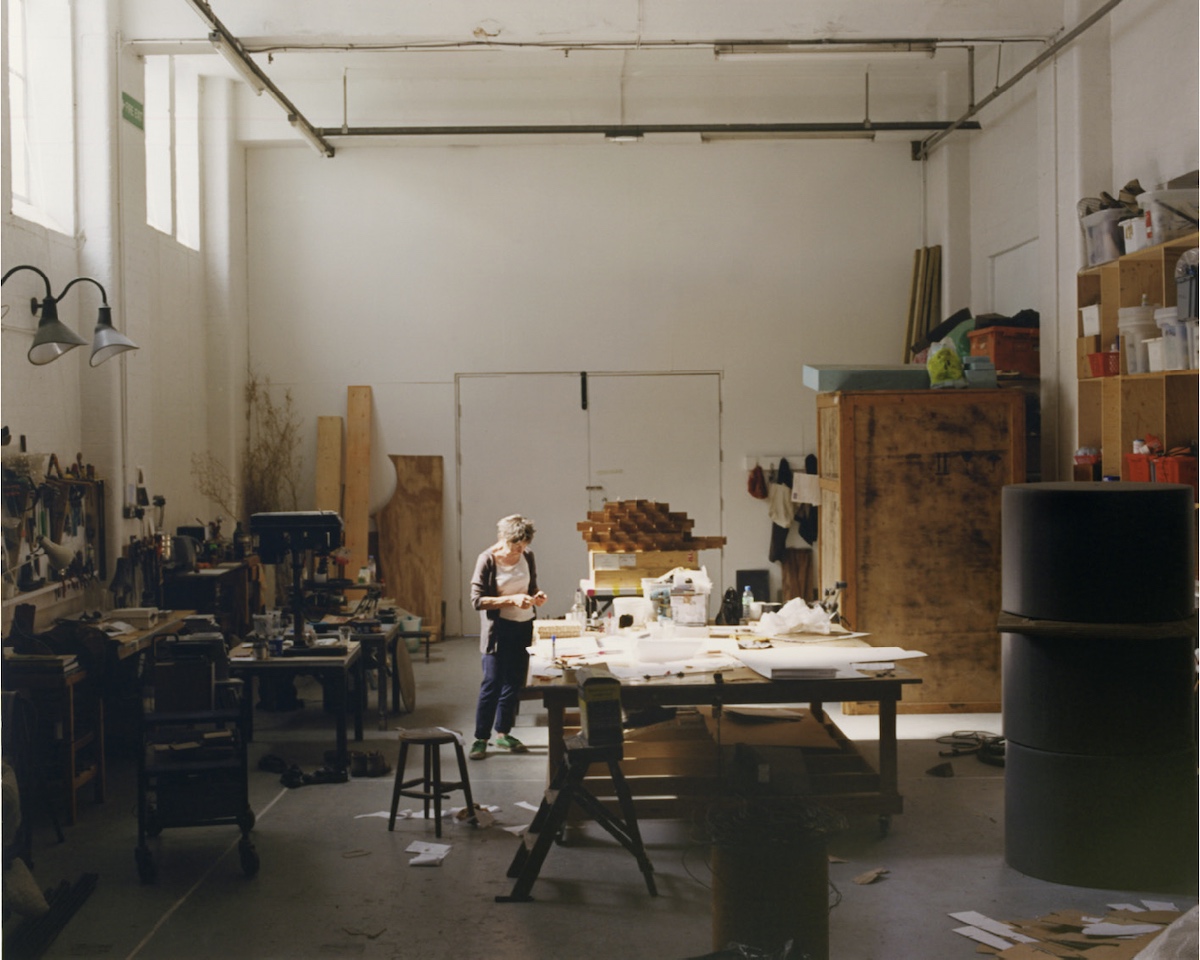
Alison Jacques announces the representation of Alison Wilding
March 7, 2024
Alison Wilding is one of Britain’s foremost sculptors, known for her mostly abstract sculptures made with a wide range of materials and processes. Wilding’s first solo exhibition with the gallery will open in September this year.
Alison Wilding’s sculpture has challenged expectations since she first rose to prominence as part of the “New British Sculpture” in the 1980s. Over five decades, Wilding’s work – characterised by her particular manipulation of materials – continues to evolve and test boundaries. By combining both ancient and modern materials, her sculptures create conversations across time and space, producing new experiences of viewership in the present.
“Sometimes it’s the material that feels wrong that is the correct thing to use, because it’s more interesting, or tells you something that you didn’t know before” - Wilding
Wilding’s first major solo exhibition was at the Serpentine Gallery, London in 1985, and her first international solo exhibition was at the Museum of Modern Art, New York in 1987. Wilding was elected to the UK’s Royal Academy in 1999, and was awarded an OBE for her services to art in 2014.
photo © Toby Coulson

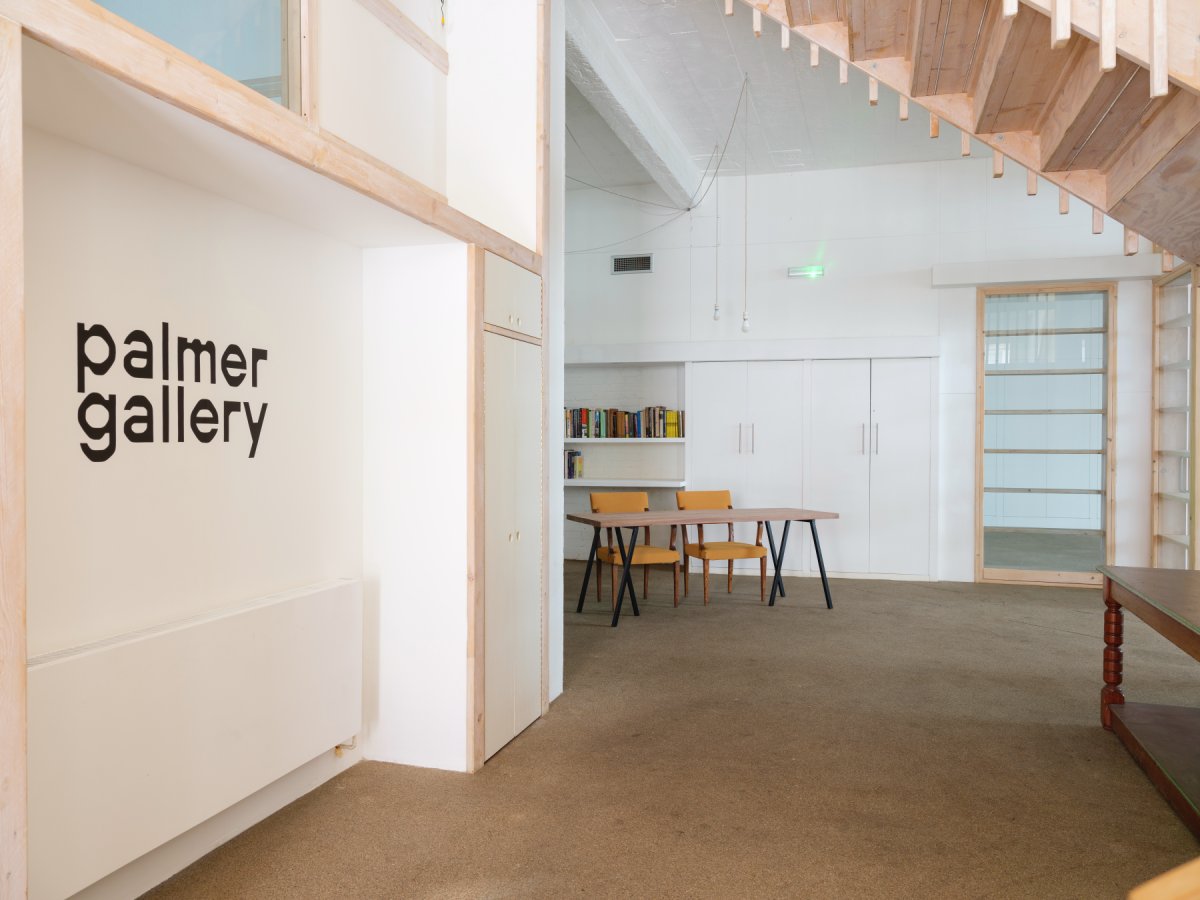
Palmer Gallery opens in London’s Lisson Grove
March 5, 2024
Founded by Lucas Giles and Will Hainsworth in 2024, Palmer Gallery is a space dedicated to identifying and developing the strongest emerging artistic talent of today. The gallery is situated in London’s Lisson Grove, in a 1000 ft2 former-factory built in the 1920’s by the Palmer Tyre Company, who produced parts for the Spitfire, Hurricane and Lancaster Bombers during The Second World War.
The gallery programme focuses on cross-disciplinary artists working across painting, sculpture, video, performance, light and sound installation, creating an immersive exhibition space. This multi-sensory approach embraces a holistic view of contemporary art while championing an institutional dedication to framing and contextualising complex artistic practices. Palmer Gallery’s core mission is to allow artists to express themselves and thrive in an open, supportive and experimental environment; fostering a culture of creative freedom and connection among the gallery’s artists and the wider community.
The gallery’s inaugural exhibition, Field of Difference, a group presentation featuring eleven emerging artists, will be on view from 8 March until 6 April.
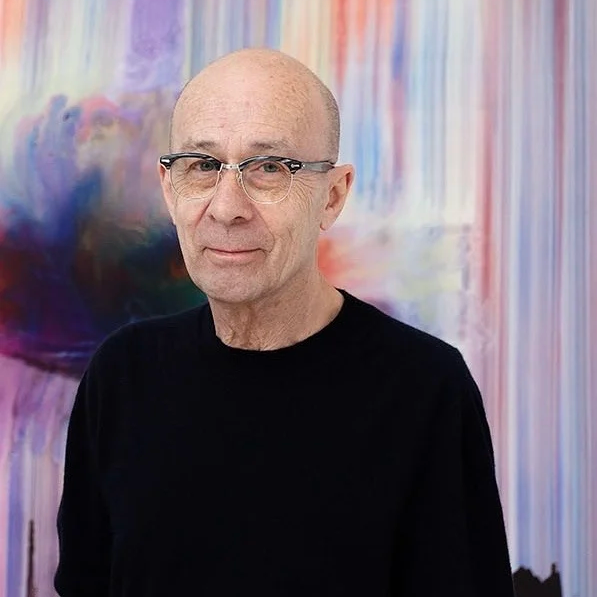
Bernard Frize now represented by Marian Goodman
February 27, 2024
Marian Goodman Gallery announces the representation of Bernard Frize.
Bernard Frize was born in 1949 in Saint-Mandé, France. He lives and works in Berlin, Germany. For the past 45 years Frize has developed a singular practice that has continuously questioned the role of the artist and the act of painting itself. By working serially, and according to restrictive measures and protocols, Frize has released himself from subjectivity and allowed a self-generative framework to take shape and evolve over time, from one series to the next.
For Frize, the basic elements of painting (paint, brush, canvas), alongside its sensual and intellectual pursuits, are sublimated according to a pre-determined methodology, and are ultimately concealed by the process of its making, or as Frize concedes, “the method has disappeared under the conditions of its realization.”
The artist's inaugural exhibition with the gallery will be in November 2024 in Los Angeles.
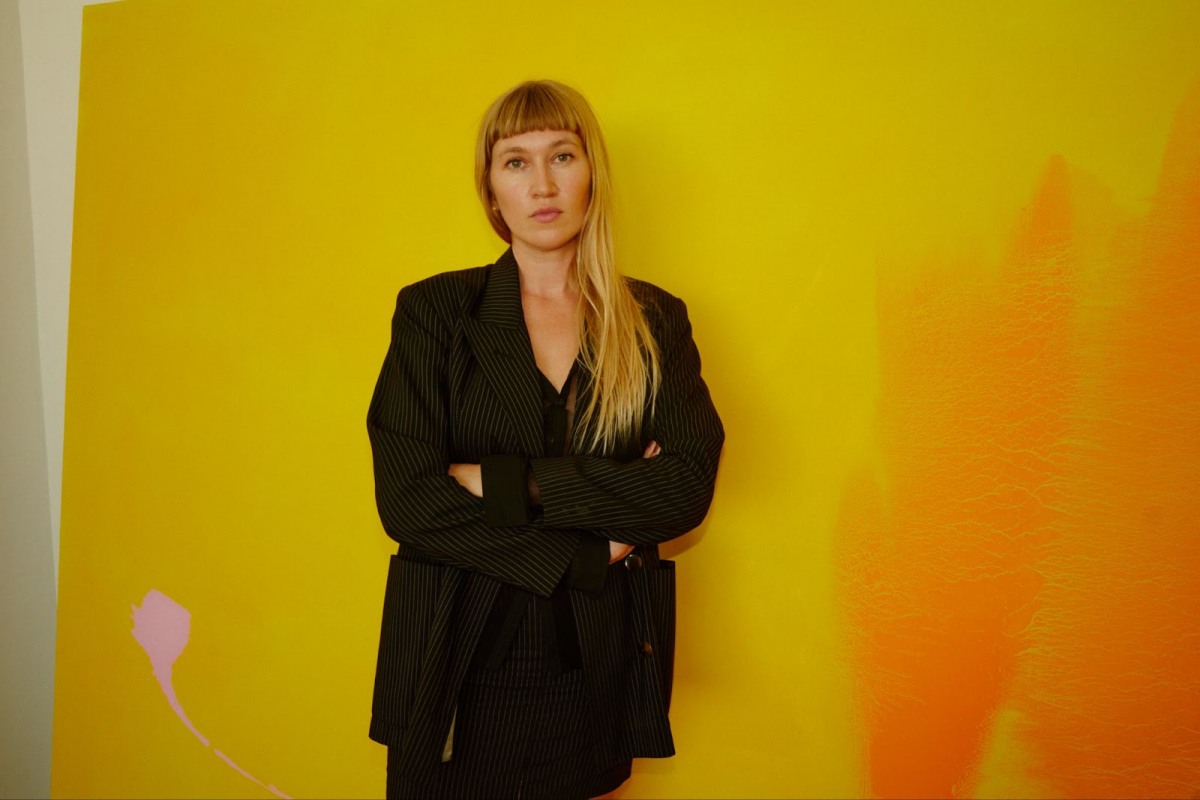
David Zwirner announces representation of Emma McIntyre
David Zwirner is pleased to announce the representation of New Zealand–born and Los Angeles–based painter Emma McIntyre in collaboration with Château Shatto. In the fall of 2023, McIntyre’s work was the subject of a celebrated solo presentation, An echo, a stain, at David Zwirner’s 34 East 69th Street location in New York. An exhibition of the artist’s work is planned for David Zwirner’s Hong Kong gallery.
McIntyre creates vivid abstractions imbued with chromatic and gestural energy. Instinctual yet deeply considered, her canvases explore the material and alchemical possibilities of painting. Employing oils and unconventional substances, like resin and oxidized iron, the artist juxtaposes boldly painted strokes, swaths of vibrant color, and hints of figurative imagery in her atmospheric canvases. McIntyre pairs chance-based, intuitive processes with a repertoire of motifs and compositional strategies gleaned from a close study of art history, synthesizing a range of impulses and motifs—from the aesthetic sensibilities of Renaissance and rococo artists such as Piero della Francesca and Jean-Antoine Watteau to the formal techniques, conceptual structures, and iconography of twentieth-century painters, including Helen Frankenthaler, Sigmar Polke, and Cy Twombly—and reformulating these divergent threads into a fresh and unbridled mode of painting that is uniquely her own.
photo: Brad Torchia
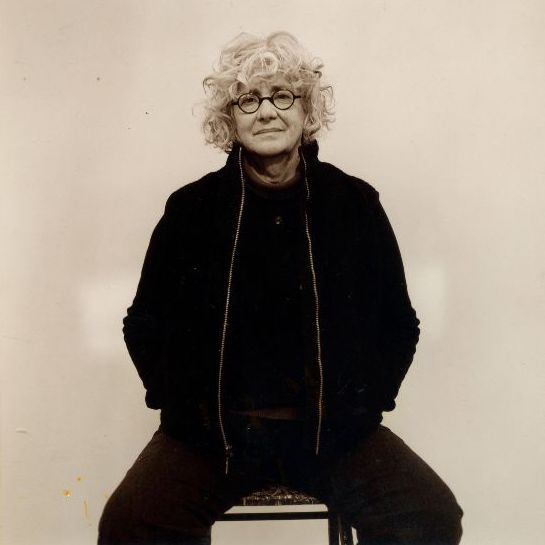
Joan Snyder joins Thaddaeus Ropac
February 23, 2024
It has been announced that American artist Joan Snyder has joined Thaddaeus Ropac, who will represent her in Europe and Asia in collaboration with Canada gallery. Her first solo exhibition with Thaddaeus Ropac will be in November 2024 at the gallery’s London space.
“Joan Snyder's important contribution to the field of American abstraction from the 1970s onwards is distinguished by her intuition for fearless mark making and composition. The unmistakable qualities of her painterly gesture forcefully communicate the joys, pains and beauty of being alive in the world. Her practice over the course of nearly six decades has remained steadfast to a deeply felt truth.” - Thaddaeus Ropac
Fuelling abstraction with biography, Joan Snyder consciously works against the male-dominated conventions of Minimalism, Abstract Expressionism and Colour Field painting, which were prevalent in the New York art scene into which she emerged in the 1970s. Building a vocabulary of recurring personal motifs – from roses and breasts, to ponds and mud, totems, screaming faces, grapes, scrawled words, cherry trees and moons, pumpkins and sunflowers – she pushes the formal possibilities of paint while developing a complex materiality through an additive process of collaged materials.
Joan Snyder’s oeuvre is structured around three main groups of work: the Stroke paintings, Symphony paintings and Field paintings. While the Stroke paintings explore the ‘anatomy of a painting’ through brightly coloured bars that dance across her canvases, the Symphony paintings assert the fundamental influence of music in her artmaking. In turn, uniting the thematic with the formal and symbolic, her Field paintings depict the agricultural landscapes she encountered upon relocating from New York to more rural surroundings in the mid-1980s. Her all-over treatment of the canvas establishes a creative field in which she sows her imagery, colours and gestures to fuse formal experimentation with ideas of mythical and personal cyclical renewal.
“Joan Snyder’s paintings create a field that implies we are in the landscape rather than apart from it... Both abstract and representational. Both pretty and aggressive. Both layered and flat. Both composed and improvisational. Both observational and invented. An instance of a human consciousness, trying to make sense of itself in the world.” - Helen Molesworth
For six decades Snyder has reimagined the narrative potential of abstraction through her paintings, drawings and printmaking. Her works are held in major institutional collections, including the Art Institute of Chicago, IL; Harvard Art Museums, Cambridge, MA; The Jewish Museum, New York; The Metropolitan Museum of Art, New York; Museum of Fine Arts, Boston; The Museum of Modern Art, New York; National Gallery of Art, Washington, D.C.; San Francisco Museum of Modern Art, CA; Solomon R. Guggenheim Museum, New York; and Tate Modern, London, among others.
Outset announces recipients of five awards
February 21, 2024
Outset has announced the recipients of five awards in Cycle V of the charity’s major arts funding programme, Outset Partners.
In its fifth cycle of funding, the programme has awarded a total of £235,000 across a range of agenda-setting museums, galleries and organisations to support challenging new art projects with a demonstrable transformative aspect for the creative sector.
The main Transformative Award has been granted to the Stellenbosch Triennale, which takes public art in the historic South African town to new heights in terms of its international reach, the scope and variety of the art to be showcased, as well as its intention to place creativity in critical dialogue with society.
Additionally, £25,000 Impact Awards have been given to:
- Yinka Shonibare Foundation/Guest Artists Space, ‘Re:assemblages’, programming inspired by an archive of African publications to support new published work by diverse artists and writers
- Art Gallery of York University, ‘At the Transit Bar’, a visiting curator series enabling cross-cultural research and exchange across Canada and the rest of the world
- arebyte Plugin, a tool for digital exhibition-making and curatorial practice
- STORE STORE Build, an after-school programme for young people to build a new community space in Hackney
Established in 2018, Outset Partners is a dynamic collective of international philanthropists who work together to meet the evolving needs of the global cultural sector. The group is facilitated by a Research and Strategy Lead for each cycle, who crafts a framework for Outset Partners’ decision-making, supporting their uniquely iterative and consensus-driven approach to funding transformation in the arts.